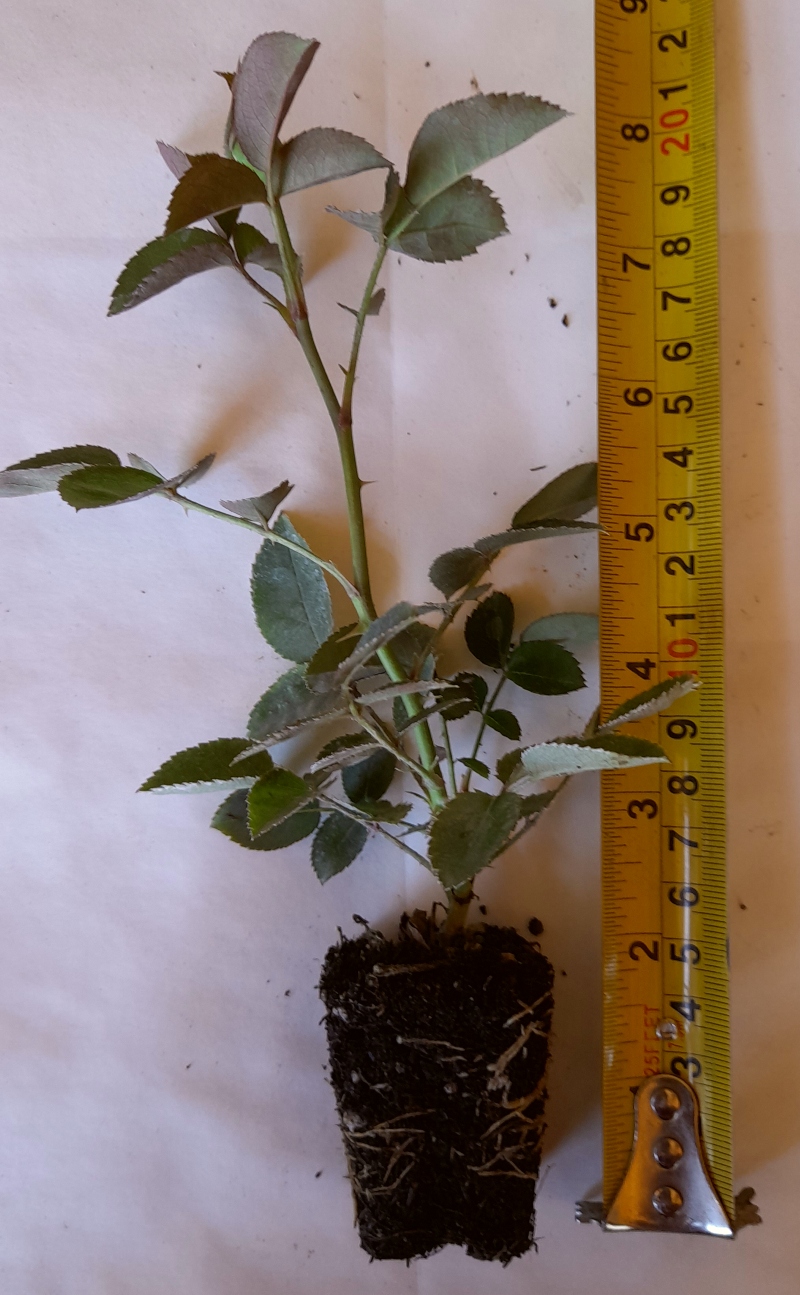
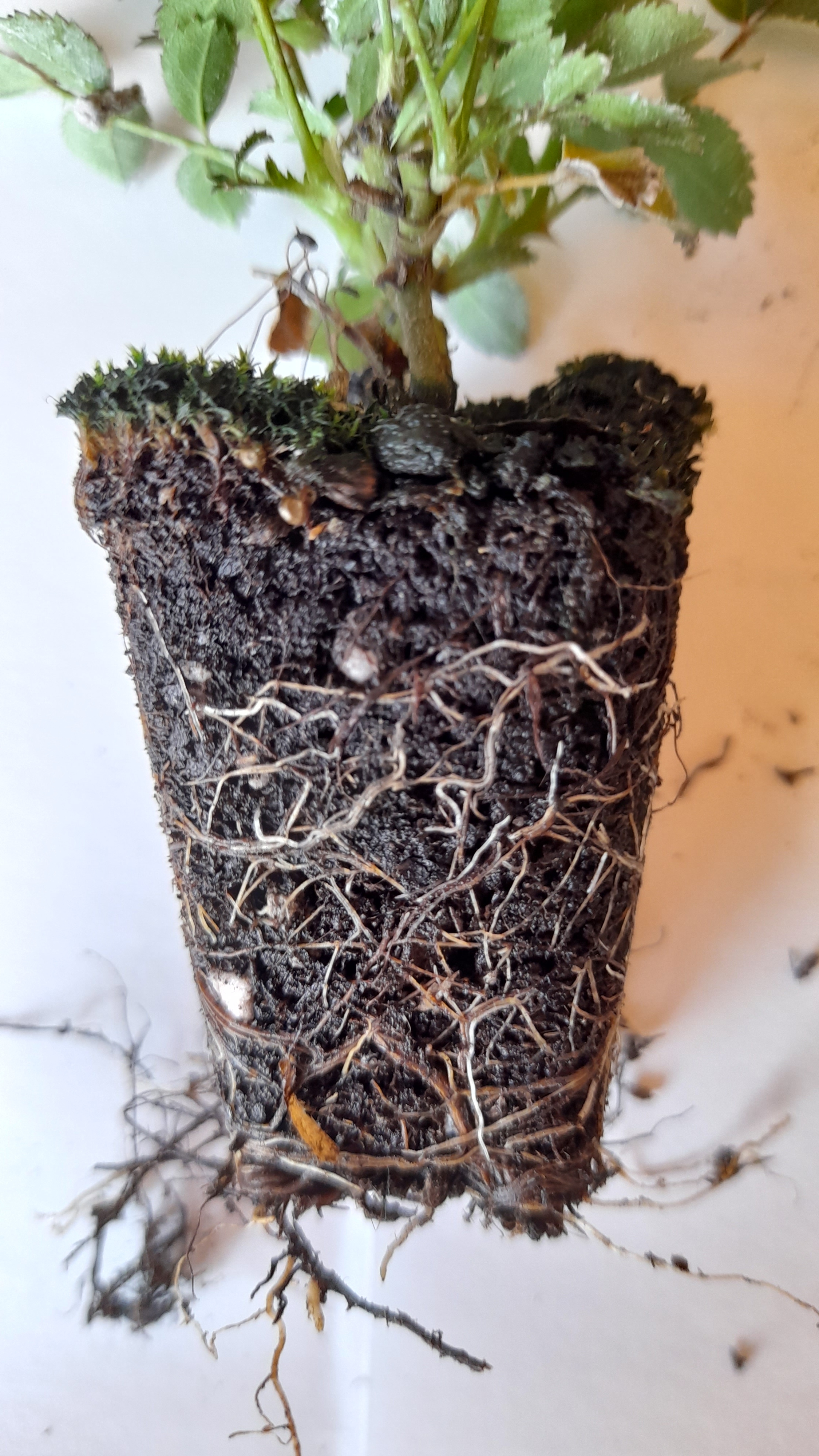
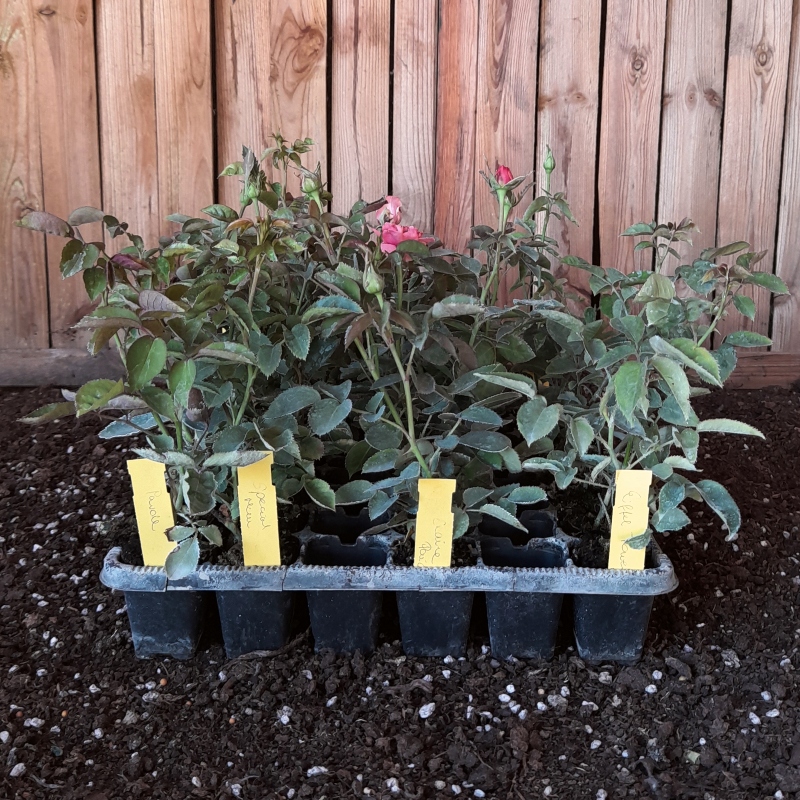
ROUNDELAY – dark‑red bedding grandiflora rose – pharmaROSA® NEONATAL rooted cutting
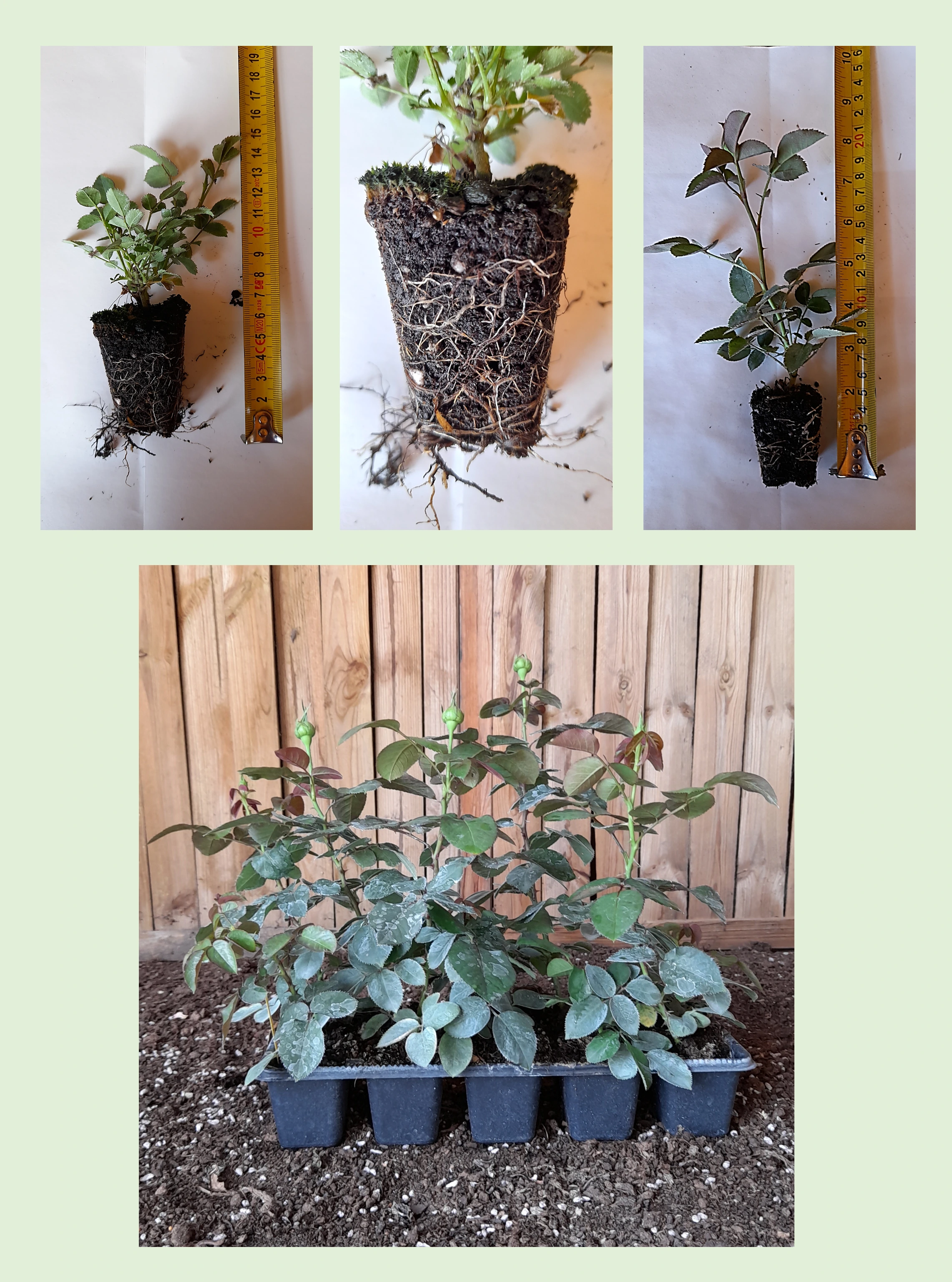
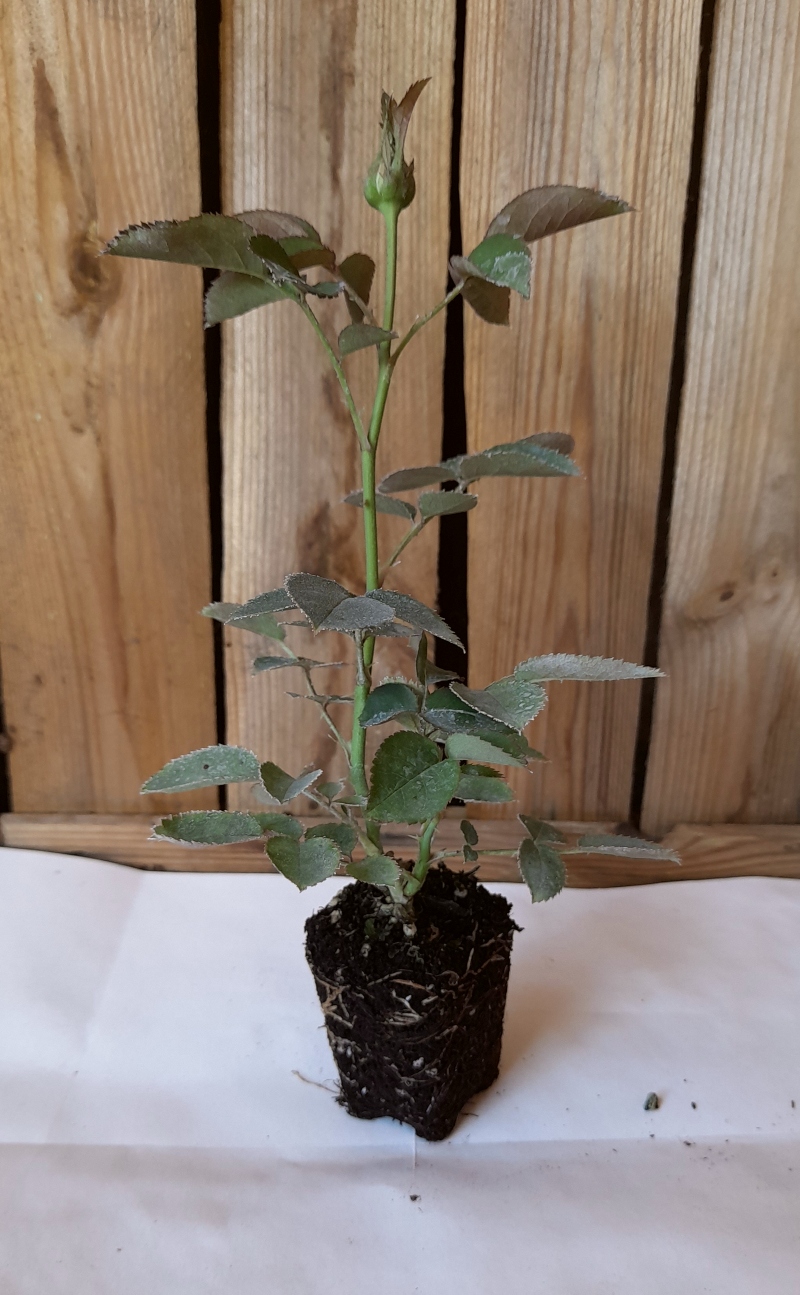
As a Grandiflora bedding cultivar with high-centred, cut-rose type blooms, Roundelay offers professional producers a reliable own-root base for container production and park or bedding schemes where deep, velvety colour and strong, long-lasting fragrance are core selling points. Its upright, bushy habit and moderate height make it efficient for 2–3 L workflows and onward shifting into 40–50 litre landscape containers or specimen units, matching retail and reseller expectations for a standard finished product with dependable garden performance in public and private projects. Own-root propagation supports homogeneous stands, predictable crop timing and low replacement over time, valuable where regionally variable British conditions demand material that copes with winter and wind in Scotland and North England. Remontant flowering, with an abundant second flush, underpins season-long bench appeal, while the pharmaROSA® NEONATAL 3–6‑month, tray-rooted format eases storage, internal logistics and batch planning for networked nursery and wholesale systems looking to stabilise capacity and scheduling across multiple sites over a three-year roots–shoots–ornamental-value development arc scheduling.
Usage options
Finished-product ideas
- Dark-red bedding line – 2–3 L standard containers focused on dense bedding and park use, leveraging uniform bushy habit and rich, stable colour – for garden centres and landscape-oriented retail ranges.
- Fragrant exhibition series – selected plants in 5–7.5 L pots from own-root NEONATAL starters, highlighting high-centred form and strong, lasting scent – for specialist retailers and cut-flower exhibitors.
- Historic award-winner feature – premium 40–50 litre specimens emphasising Geneva and RNRS recognition and reliable garden performance – for show gardens, heritage projects and institutional buyers.
- Park and boulevard stock – bulk-grown 2–3 L units designed for onward planting into beds and avenues, using uniform own-root structure and remontant flowering – for public-realm and municipal contractors.
- Collection-grade own-root block – NEONATAL-derived plants maintained in propagation beds for long-term varietal conservation and future stock – for nurseries curating thematic or gene-bank style rose collections.
Technical cultivar profile
| Name and registration |
Grandiflora bed rose marketed as Roundelay Bedding rose Swim; ARS exhibition name Roundelay; unregistered cultivar, used in bedding, park and cut-flower roles in professional production. |
| Origin and breeding |
Bred by Herbert C. Swim at Armstrong Nurseries, California, from ‘Charlotte Armstrong’ × ‘Floradora’; introduced by Armstrong Nurseries (USA) in 1953; breeding year recorded as 1954. |
| Awards and recognition |
Recognised with Geneva Gold Medal and City of Geneva Prize in 1954, and an RNRS Trial Ground Certificate in 1958, supporting its status as a proven, long-established garden and exhibition cultivar. |
| Growth and structural characteristics |
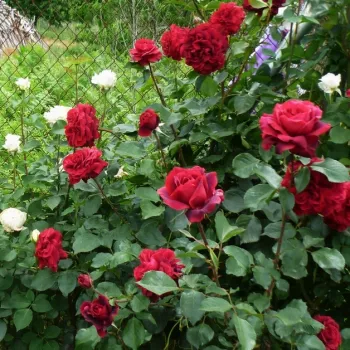
Upright, bushy shrub 85–115 cm high and 75–105 cm wide, with moderately dense, dark green, glossy foliage and moderate prickliness; self-cleaning is partial, so some spent blooms remain. |
| Flower morphology |
Medium-sized, double (26–39 petal) flowers in clusters, with high-centred, pointed-budded form typical of cut-rose types; remontant with an abundant second flush, offering extended flowering interest. |
| Colour data and phenology |
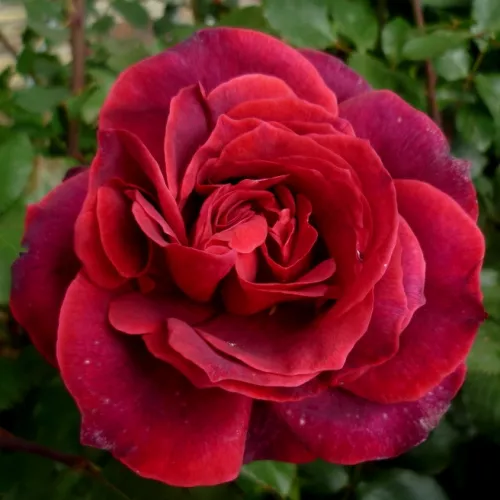
Deep, velvety dark red blooms with subtle burgundy tones; newly opened flowers show intense crimson outer petals, centre with ruby sheen; colour retention is very good, only slightly paler in strong sun. |
| Fragrance and aroma |
Fragrance character description not provided, but documented as a strong, long-lasting scented rose; double, more closed blooms limit pollinator access, indicating primarily ornamental and cut use. |
| Hip characteristics |
Rose-hip production is limited by the double blooms; when present, hips are ellipsoid, 12–18 mm in diameter, coloured red (RHS 44A), and generally secondary to the cultivar’s floral display. |
| Resistance and winter hardiness |
Medium overall disease resistance; medium susceptibility to powdery mildew and rust but very susceptible to black spot, so plant protection is advised; hardy to about −21 to −18 °C, rated RHS H7 and Swedish zone 3. |
| Horticultural recommendations |
Recommended for beds, parks, cut flowers and specimen use; medium maintenance level with occasional plant protection; supplied bush-trained and compact via standard container routes, targeting 2–3 L pots. |
Roundelay combines award-backed dark-red colour, remontant, fragrant blooms and a compact, bushy habit on own roots, giving predictable, regenerating stands that support stable wholesale programmes; please contact us to align volumes and scheduling.