Park shrub rose

21-054-1
21-054-2

Louise Bugnet

Park - shrub rose

- – Georges Charles -Jules Bugnet

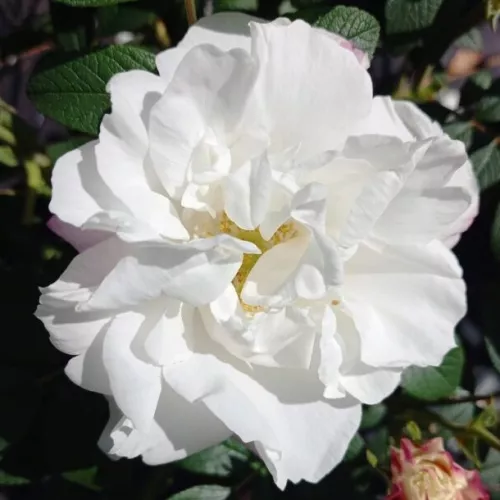
Pure, radiant white petals with a slight greenish tint towards the centre. - park rose - strong, noticeable from afar scented rose - classic, rose-characterised

– Strong, classic rose fragrance.
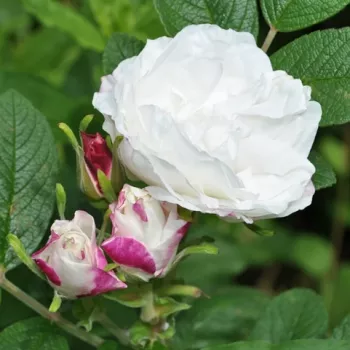
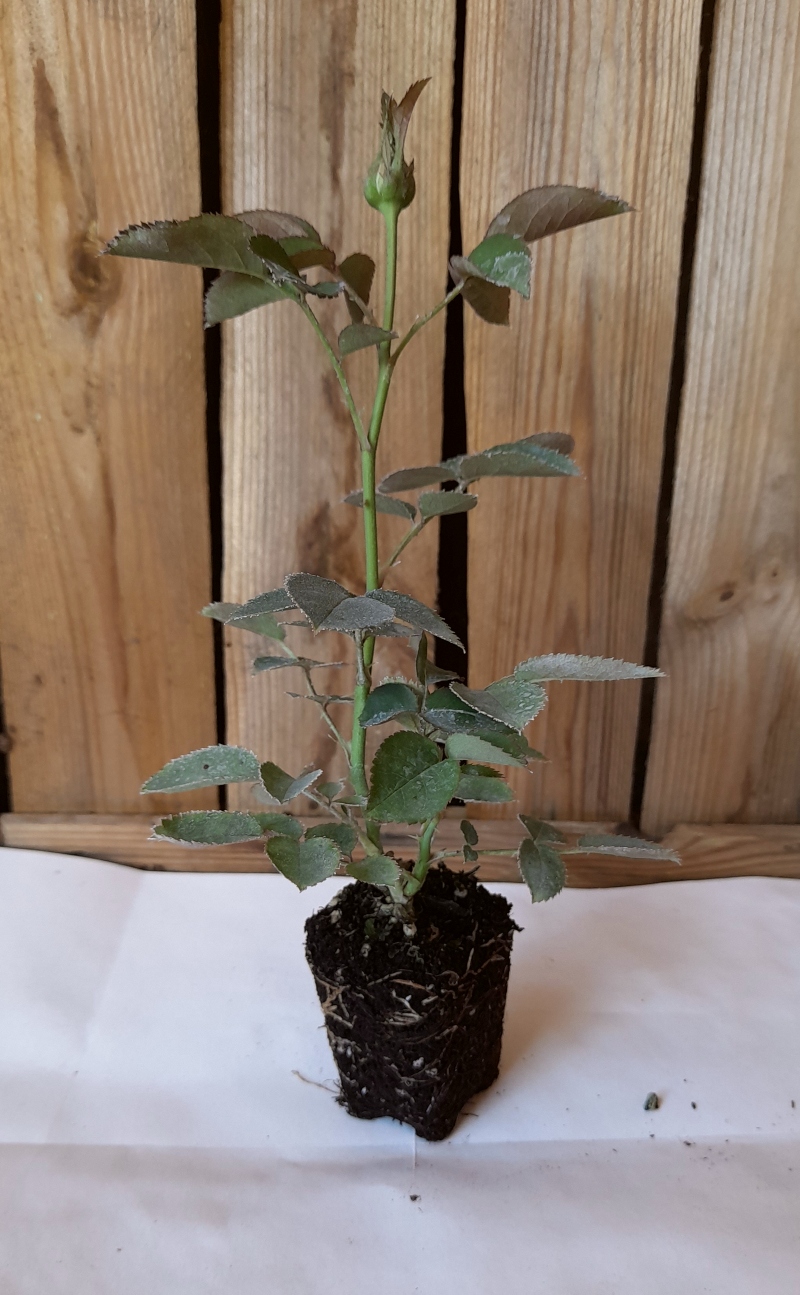
– Pure white blooms with red‑striped buds.
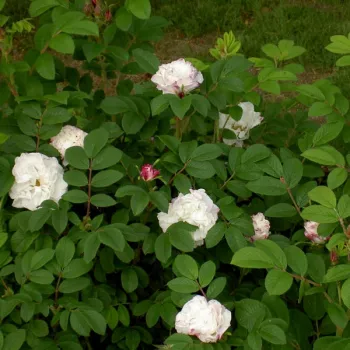
– Upright, compact shrub for versatile planting.
– Good self‑cleaning, minimal deadheading needed.
– Extremely hardy, tolerates very low temperatures.
– Special feature: Awarded Sweden’s Årets Ros 2020 for reliable garden performance in cold climates.
Standard finished product
Louise Bugnet
pharmaROSA® NEONATAL rooted rose cutting
26,95 £
Due to courier service regulations – and the introduction of customs clearance – delivery to Ireland is temporarily suspended.
4 (5861)
facebook   twitter

Louise Bugnet – Hybrid Rugosa park rose propagation material

Hybrid Rugosa hardiness white colour structure hedging containers Louise Bugnet offers nursery-scale reliability as own-root tray-grown material for standard 2–3 L container production and further field planting, with upright, compact growth and dense foliage supporting consistent park and hedge lines. Its exceptional winter tolerance suits exposed northern and inland UK schemes where cold and wind are regular factors, while good heat and moderate drought resilience assists southern sites. As own-root propagation stock, it underpins predictable, renewable stands for thematic and collection plantings in public-realm and municipal projects, with a clear path from young material through nursery beds to finished bush-trained, compact plants. In typical programmes, roots establish in year one, structural framework develops in year two, and full ornamental value is expressed from year three onward, aligning well with UK nursery planning cycles and wholesale scheduling.


Usage options

Target area Reasoning
Cold- and wind-exposed municipal or institutional plantings The very high hardiness (H7, USDA 2b, to around -40 °C) makes Louise Bugnet a secure choice for UK schemes exposed to wind and cold, matching public-realm expectations for durable structure. As rooted own-root cuttings in the standard container route, you can move from 2–3 L production into field or landscape planting with low winter loss risk and stable long-term structure. This supports reliable, long-lived shrub frameworks for thematic rose collections in northern parks and civic projects, where continuity and low replacement rates are critical for public-realm suppliers.
Landscape hedging and boundary schemes Upright, compact habit with 120–180 cm height and 100–150 cm spread lends itself to hedge and boundary uses, enabling clean, repeatable lines in nursery beds and finished landscape units. Bush-trained, compact release form and the standard container product path make it straightforward to bulk-produce coherent 2–3 L hedge modules that pot on or plant out efficiently. Own-root material supports regeneration after pruning or mechanical maintenance, providing durable hedging for park, estate and collection gardens aimed at landscape-focused nurseries.
Curated thematic and collection rose gardens The hybrid Rugosa heritage and named cultivar identity fit well into curated collections, where authenticity and traceability matter. Verified own-root NEONATAL material supports cultivar maintenance and gene-bank style plantings, while the standard 2–3 L container route allows clean display stock for show gardens and educational projects. Strong, classic rose fragrance and distinctive white flowers with bud colour contrast enhance interpretive and thematic value, aligning with collection-led offers for specialist rose growers.
Retail-ready shrub roses in standard containers The combination of compact structure, self-cleaning flowers and strong fragrance creates a retail-viable shrub rose that is simple to present as a “standard finished product”. NEONATAL cuttings give you predictable batch uniformity into 2–3 L containers, supporting consistent bench presentation and straightforward labelling for white park rose ranges. Own-root form underpins long lifespan and stable ornamental performance in private gardens, reinforcing the “reliable garden performance” promise for retail and reseller channels.
White-flowered design lines for parks and urban beds The pure, radiant white flowers, from purple-red striped buds to stable, non-fading white blooms, support colour-themed series for designers and specifiers. Using own-root propagation stock in standard containers gives nurseries flexible timing to build volume for scheduled public contracts, then supply homogeneous white shrub batches. This suits colour-coordinated rose borders, urban green spaces and show-garden style plantings where predictable colour and structure are essential for design-led project suppliers.
Large container specimens for high-visibility sites With 120–180 cm height potential and dense foliage, Louise Bugnet performs well as a structural specimen when up-potted from 2–3 L into 40–50 L or larger containers. Own-root propagation supports robust framework and re-sprouting if pruned hard, important for multi-year use of containers in civic entrances and institutional courtyards. Good heat and moderate drought tolerance assist performance where containers may dry quickly in southern sites, benefitting contract-grower nurseries.
Premium shrub lines built on fragrance value The strong, classic rose fragrance that is noticeable from a distance allows you to differentiate a premium shrub line beyond colour alone. Tray-grown NEONATAL cuttings help form balanced, bush-trained plants in 2–3 L containers, giving retailers a tangible sensory feature to communicate in their own branding. Reliable fragrance expression from own-root plants supports long-term customer satisfaction, bolstering supplier reputation for quality-focused wholesalers.
Rugosa-type shrub frameworks in exposed UK regions Hybrid Rugosa vigour and structural resilience provide robust shrub frameworks for beds and hedges in open, wind-affected locations, echoing Scandinavian-style hardiness expectations. Starting from own-root NEONATAL cuttings, nurseries can build strong, bush-trained stock through the standard 2–3 L path and onward field planting, maintaining homogeneous stands over time. This is particularly relevant for northern and coastal UK projects where winter and wind tolerance must be assured for regional nursery networks.

Finished-product ideas

  • 2–3 L hardy white park rose line – Own-root Louise Bugnet in standard 2–3 L containers, emphasising H7 cold tolerance and reliable white flowering for general retail/reseller “reliable garden performance” ranges – target audience/channel: retail and garden-centre wholesalers.
  • Municipal hedge and boundary modules – Bush-trained, compact plants produced from NEONATAL stock, finished either in 2–3 L or lined-out for hedge schemes, highlighting upright, compact structure and long-term own-root regeneration – target audience/channel: public-realm and municipal contract suppliers.
  • Large-container entrance specimens – Up-potted 40–50 L own-root shrubs with dense foliage and strong fragrance, suitable for civic entrances and institutional courtyards, drawing on vigour, hardiness and heat tolerance – target audience/channel: landscape contractors and project nurseries.
  • Thematic white Rugosa collection set – Curated mix built around Louise Bugnet as a white Hybrid Rugosa element, supplied in uniform 2–3 L containers for thematic and show gardens requiring verified cultivar identity – target audience/channel: specialist collection gardens and estate nurseries.
  • Fragrance-led premium shrub range – Branded line focusing on strong, classic rose fragrance and self-cleaning white flowers, using own-root plants for sustained performance and reduced replacement risk – target audience/channel: higher-end retail and mail-order partners.

Technical cultivar profile
Parameter Data
Name and registration Hybrid Rugosa park rose marketed as Louise Bugnet (Bugnet); current trade name LOUISE BUGNET – white park rose - Bugnet; unregistered variety with American Rose Society exhibition name Louise Bugnet.
Origin and breeding Bred by Georges Charles-Jules Bugnet at Bugnet Plantation, Rich Valley, Alberta, Canada; selection from cross ‘Martha Bugnet’ × ‘Thérèse Bugnet’, introduced around 1960 as a hardy shrub for cold climates.
Awards and recognition Recognised in Sweden as Årets Ros (Rose of the Year) 2020, reflecting its established garden presence and value in cold-climate plantings; no further international competition or lifetime awards documented.
Growth and structural characteristics Upright, compact shrub with dense grey-green, matt foliage (RHS 137A); typical height 120–180 cm with 100–150 cm spread; sparsely thorned shoots and good structural presence for hedges, beds and specimen uses.
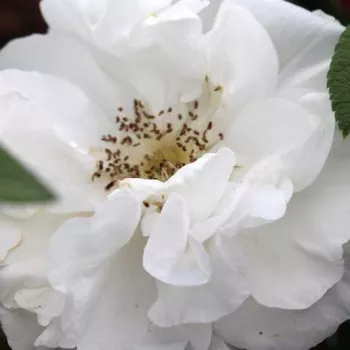
Flower morphology Double, 26–39 petalled flowers in clusters of 3–5 per stem; large blooms around 2.75–3.95 inches, flat to slightly cup-shaped when fully open, with good self-cleaning as most spent flowers drop naturally.
Colour data and phenology Buds white-based with purple-red striping (RHS 79A), opening to pure snow-white (NN155D) petals with slight greenish centre tint; colour holds well with minimal fading to matt white and delicate creamy edging over time.
Fragrance and aroma Strong, classic rose fragrance clearly noticeable from a distance; primarily an ornamental shrub as its double blooms partly conceal stamens and offer limited pollinator access, giving low pollinator-attraction value.
Hip characteristics Rose hips form only sparingly due to the double-flowered structure; where present, spherical bright red hips (RHS 40A) about 20–30 mm diameter provide modest seasonal interest but are not a primary feature.
Resistance and winter hardiness Extremely hardy (H7, USDA 2b, approx. -43 to -40 °C); tolerates heat and moderate drought though prolonged heat can reduce flowering; very susceptible to powdery mildew, black spot and rust, needing regular plant protection.
Horticultural recommendations Suited to flowerbeds, specimen roles, hedges, parks and urban greens; best produced as bush-trained, compact plants in standard containers, with 2–3 L pots recommended and a maintenance-intensive, protection-focused programme.

Louise Bugnet offers extreme hardiness, compact structural growth and strong white-flower appeal on predictable own-root stock, making it a dependable choice for professional shrub rose ranges where long-lived, homogeneous stands matter; we invite you to discuss capacity and scheduling.
Detailed product attributes

Product Identification Data

Product Name: LOUISE BUGNET – white park rose - Bugnet
Product Type: pharmaROSA® NEONATAL - rooted rose cutting
Cultivar Authenticity: Verified:27.05.2025
Item Number: [1119] 21-054 (14.02.2026) pharmarosaneonatal.co.uk

Name and Registration

Meaning of Cultivar Name: The name is a female given name.
Original Trade Name: Louise Bugnet
Current Trade Name: Louise Bugnet Park - shrub rose Bugnet
Rose Group: Hybrid Rugosa
Commercial Type: park rose
Commercial Group: Park - shrub rose
Exhibition Category: shrub rose; landscape/park display
Collection: Park - shrub rose

Origin and Breeding

Registration Year: unregistered variety
Breeder: Georges Charles -Jules Bugnet
Breeding Company / Institution: Bugnet Plantation (Rich Valley, Alberta, Canada)
Breeding Year: Canada, 1960
Parentage: 'Martha Bugnet' × 'Thérèse Bugnet'

Growth and Structural Characteristics

Height: 3.9-5.9ft (120-180 cm)
Spread: 3.3-4.9ft (100-150 cm)
Growth Habit: upright, compact
Foliage: The variety has dense foliage; the leaves have a matt surface and a grey‑green shade (RHS 137A).
Prickliness: sparsely thorned
Self-Cleaning Description: Most spent blooms drop off naturally.
Self-Cleaning Intensity: Self-cleaning: good.

Flower Morphology

Petal Count: 26-39
Flower Fullness: double-flowered
Flower Shape: flat
Flower Size: L (2,75-3,95 in)
Inflorescence Type: clustered, 3-5 flowers/stem
Colour Code: ARS code: WH RHS code: 79A (outer), NN155D (inner)
Repeat Flowering: Remontant; its second flowering is not as abundant.

Colour Data and Phenology

Colour: white
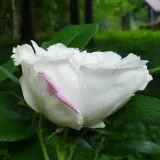
Flower Colour Description: Pure, radiant white petals with a slight greenish tint towards the centre.
Closed Bud: White base with purple-red striping, becoming darker towards the tip.
Newly Opened Flower: Snow-white petals, occasionally with faint mauve spots on their outer surface, completely white on the inner surface, with golden-yellow stamens at the centre.
Full Bloom: Cup-shaped when fully open, uniformly white in colour with a subtle greenish tinge at the base of the innermost petals.
Before Fading: The petals fade to a matt white, with a delicate creamy tint appearing at their edges.
Colour Fading Description: The colour holds well and hardly fades; the reddish buds fade to white as they open.

Fragrance and Aroma

Fragrance Strength: strong, noticeable from afar scented rose
Fragrance Character: classic, rose-characterised
Pollinator Attraction: Its heavily double flower form and reduced accessibility of the stamens make it unattractive to pollinators.
Pollinator-Friendly Rating: Its double flowers partially conceal the stamens, so it attracts pollinators poorly. Pollinator friendliness is limited; primarily an ornamental variety.

Hip Characteristics

Hip Shape: spherical
Hip Colour: bright red (RHS 40A)
Hip Comment: Hips are expected to form sparingly due to the double flowers; occasionally spherical, bright red (RHS 40A) hips 20–30 mm in diameter are formed.

Resistance and Hardiness

Hardiness (°C): -43–-40 °C
Heat and Drought Tolerance Description: Tolerates heat and moderate drought; sustained high temperatures may reduce flowering.

Disease Resistance: very susceptible
  • powdery mildew – very susceptible
  • black spot – very susceptible
  • rust – very susceptible

Horticultural Recommendations

Recommended product path: Standard container
Release form: Bush-trained, compact plant
Recommended use: Maintenance requirement high; the variety is very susceptible to diseases, so regular plant protection is required.
Primary Uses: flowerbed, specimen, hedge, park, urban green space

Comments

Positioning: Standard finished product
Target customer/channel: Retail / reseller
Main value proposition: Reliable garden performance
LOUISE BUGNET – white park rose - Bugnet
Pure, radiant white petals with a slight greenish tint towards the centre. - park rose - strong, noticeable from afar scented rose - classic, rose-characterised
The rose webshop. - white - strong, noticeable from afar scented rose - Louise Bugnet - park rose - (3.9-5.9ft (120-180 cm))
Inflorescence: clustered, 3-5 flowers/stem Height: 3.9-5.9ft (120-180 cm) Flower shape: flat Winter hardiness: - white - - park rose - Flower size: L (2,75-3,95 in) Flower size: L (2,75-3,95 in) - Height: 3.9-5.9ft (120-180 cm) Height: 3.9-5.9ft (120-180 cm) - Flower fullness: double-flowered Louise Bugnet - Roses in the garden | pharmaROSA® Neonatal - standard Georges Charles -Jules Bugnet

We showcase the external appearance of the roses available for online purchase from our webshop.


Which product type is right for you?


PharmaRosa® NEONATAL is the cost‑effective starting point for rose product production.

As a uniform, own‑rooted propagation material, it provides a stable basis for further growing-on and can be integrated flexibly into different finished product production technologies.
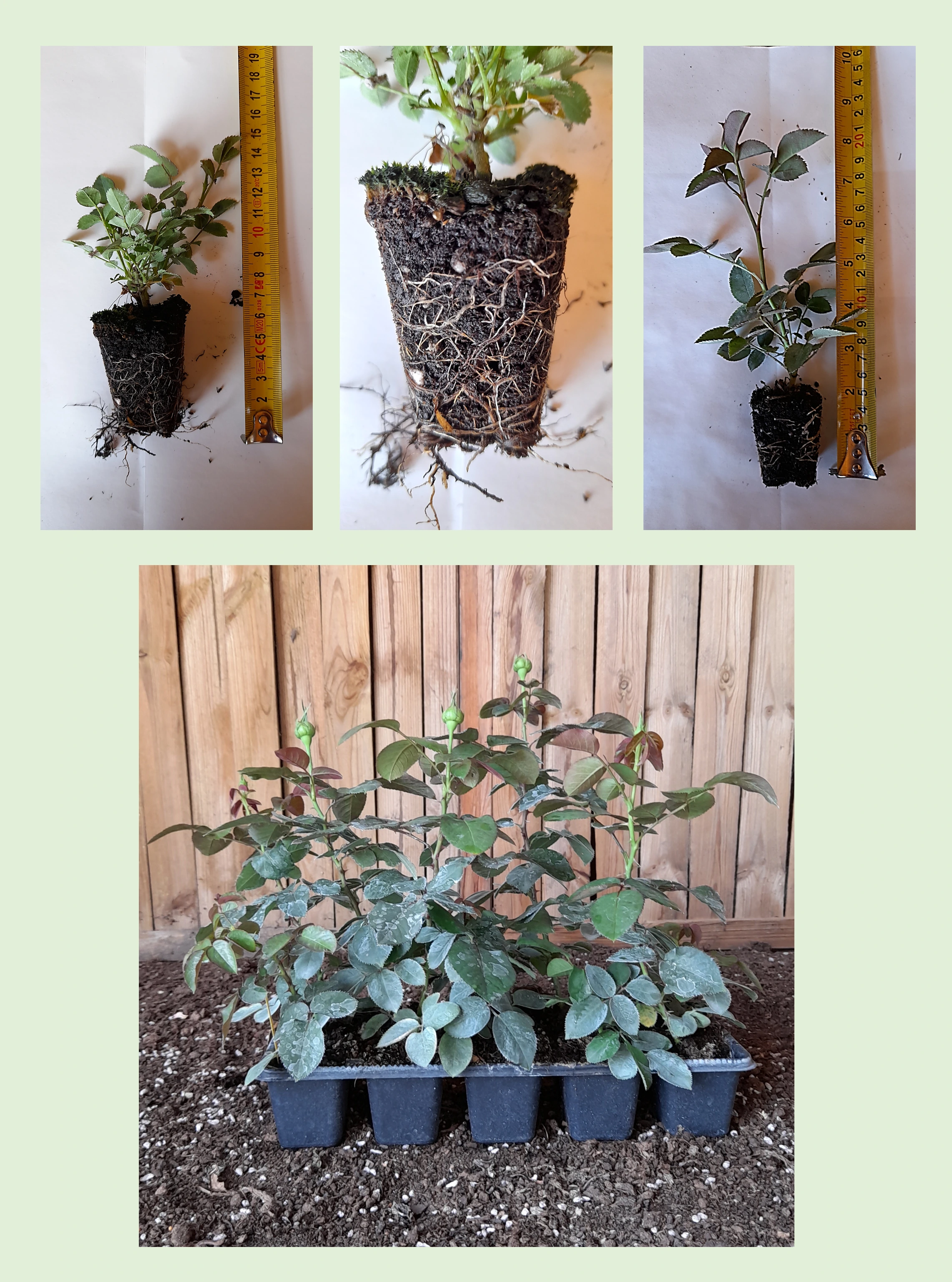
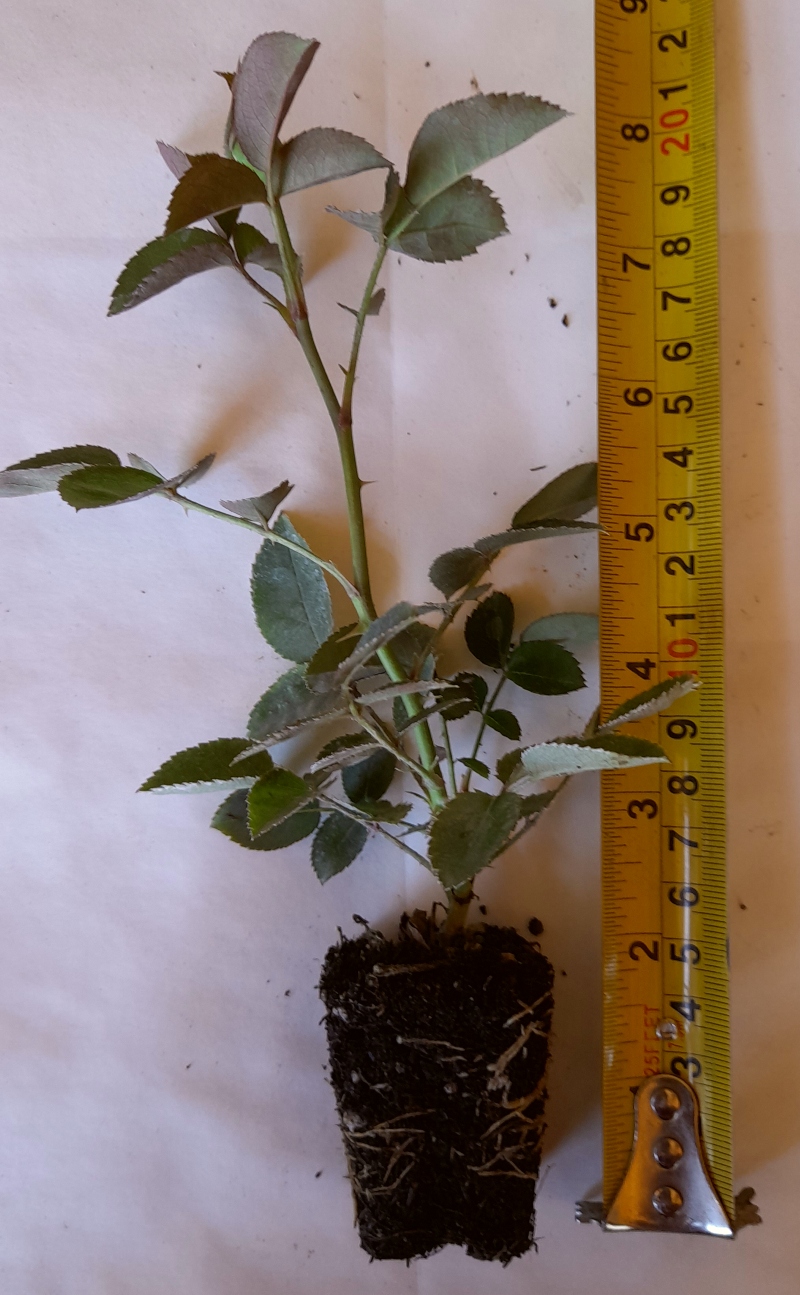
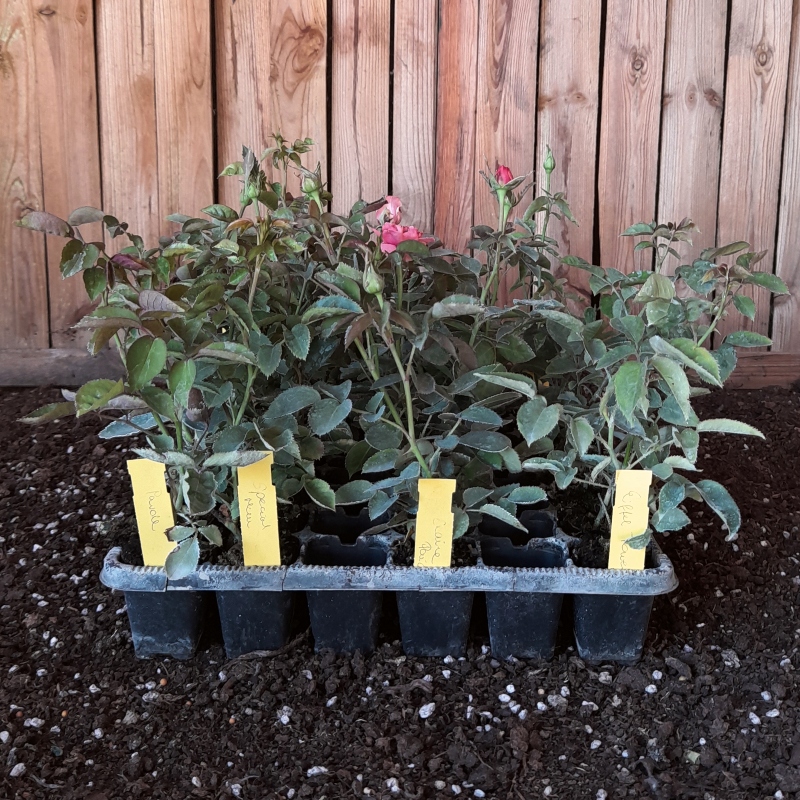
Rooted in trays (rooted), 3–6‑month‑old, own‑rooted rose cutting.

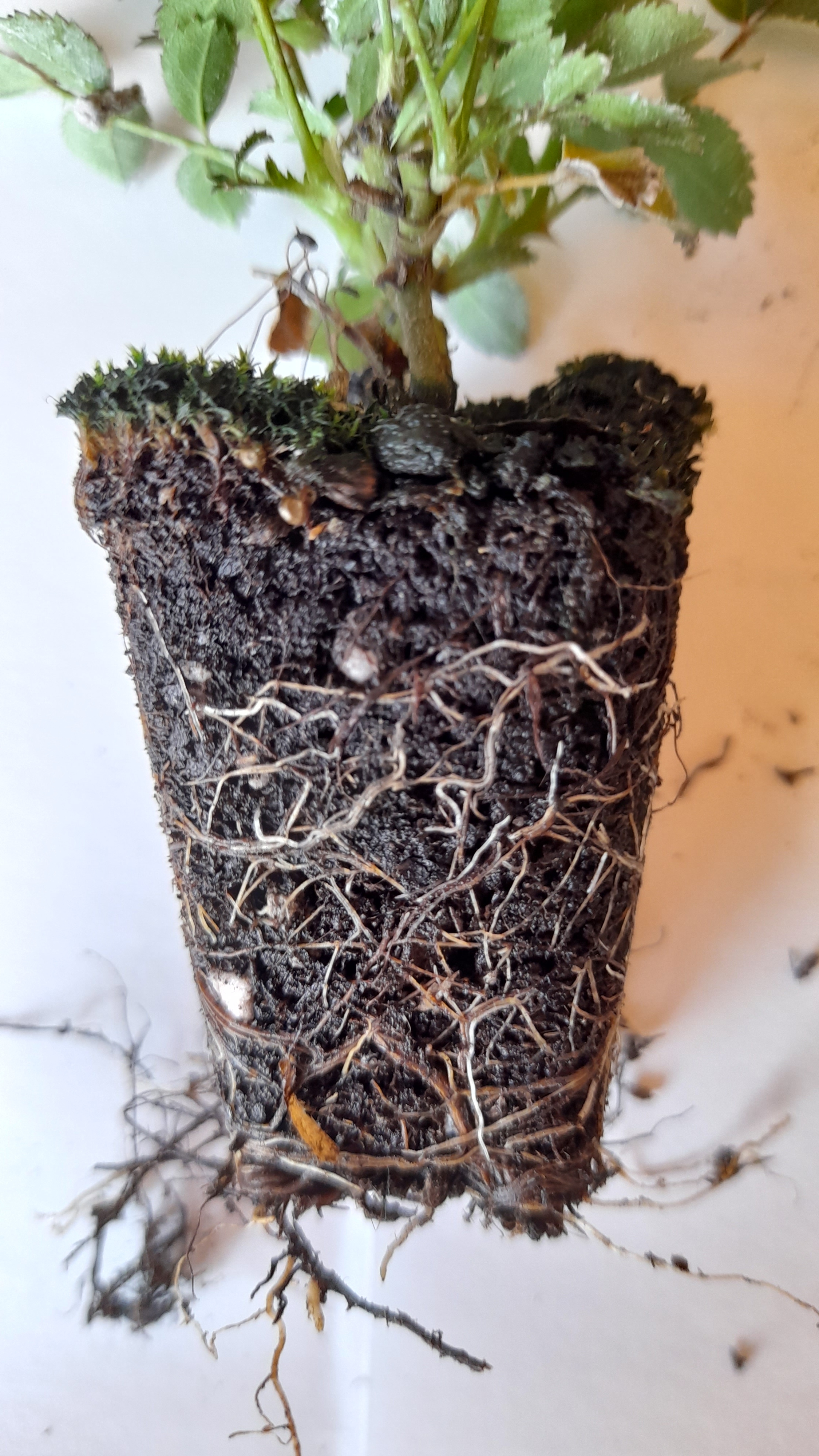
Uniform developmental stage, with a root system that has thoroughly penetrated the plug.
For professional growing‑on.
Tray packaging: 10 pcs/tray.
Quality and varietal identity: production supported by a dedicated identification and traceability logic.
Can be transplanted during frost‑free periods, designed for finished product production.

PharmaRosa® NEONATAL provides a controlled, uniform starting stock for planned growing‑on that can be integrated into your own technology – especially where scheduling and varietal identity are paramount.


PharmaRosa® NEONATAL own-rooted rose propagation material in a plug, with a root system penetrating the plug (semi-finished product / semi-finished rose). PharmaRosa® NEONATAL rose propagation material size: 3–6‑month‑old, own-rooted cutting with a uniform developmental stage. PharmaRosa® NEONATAL rose propagation material root system: plug densely penetrated by well-developed white roots (root system detail). PharmaRosa® NEONATAL tray stock: own-rooted rose propagation material in trays, uniform developmental stage (10 pcs/tray).

Captions (from left to right): Semi-finished product (NEONATAL own-rooted rose propagation material in a plug with a fully developed root system) • Size demonstration (3–6‑month‑old, uniform cutting) • Root system detail (plug penetrated by the root system) • Tray stock (10 pcs/tray, uniform developmental stage)

pharmarosaneonatal.skpharmarosaneonatal.ropharmarosaneonatal.co.ukpharmarosaneonatal.depharmarosaneonatal.sipharmarosaneonatal.czpharmarosaneonatal.atpharmarosaneonatal.frpharmarosaneonatal.plpharmarosaneonatal.itpharmarosaneonatal.espharmarosaneonatal.nlpharmarosaneonatal.ptpharmarosaneonatal.lupharmarosaneonatal.sepharmarosaneonatal.lvpharmarosaneonatal.fipharmarosaneonatal.ltpharmarosaneonatal.eepharmarosaneonatal.hu

Which product type is right for you?

Pages for private customers
Garden roses for the family garden, with minimal care  → ORIGINAL®
Premium garden roses – instant impact, a truly showpiece garden  → EXTRA®
Pages for professionals and private customers
Roses for public spaces – large areas, sustainable maintenance  → NATURAL®
Roses for projects – hedge and row planting, fast implementation  → RAPID®
For professional partners only
Production – propagation material for garden roses, wholesale  → NEONATAL®

Company details

PharmaRosa Ltd.
Company registration number: 01-09-717479
VAT number: 13075314-2-43
Plant health registration no.: HU130721
Bank account (IBAN):
HU85117631891388688400000000
BIC (SWIFT): OTPVHUHB
Bank name: OTP Bank Nyrt.