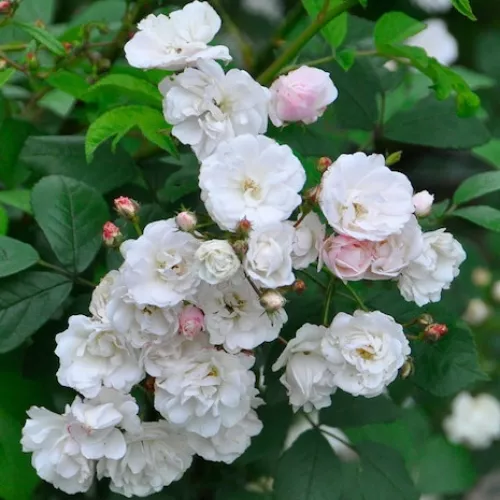
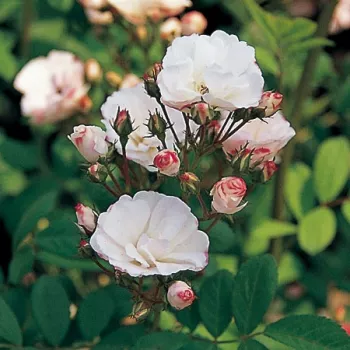
GUNSEI – white rambler climbing rose – Kikuchi
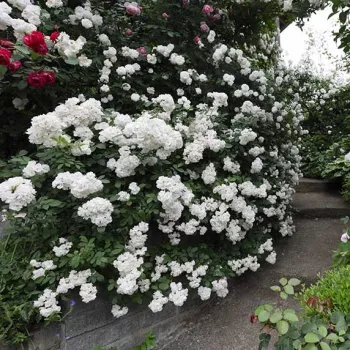
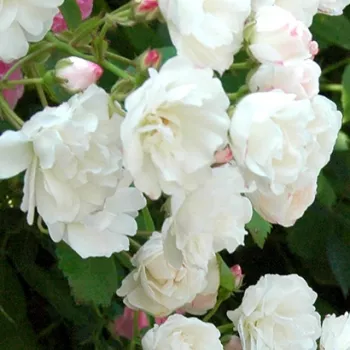
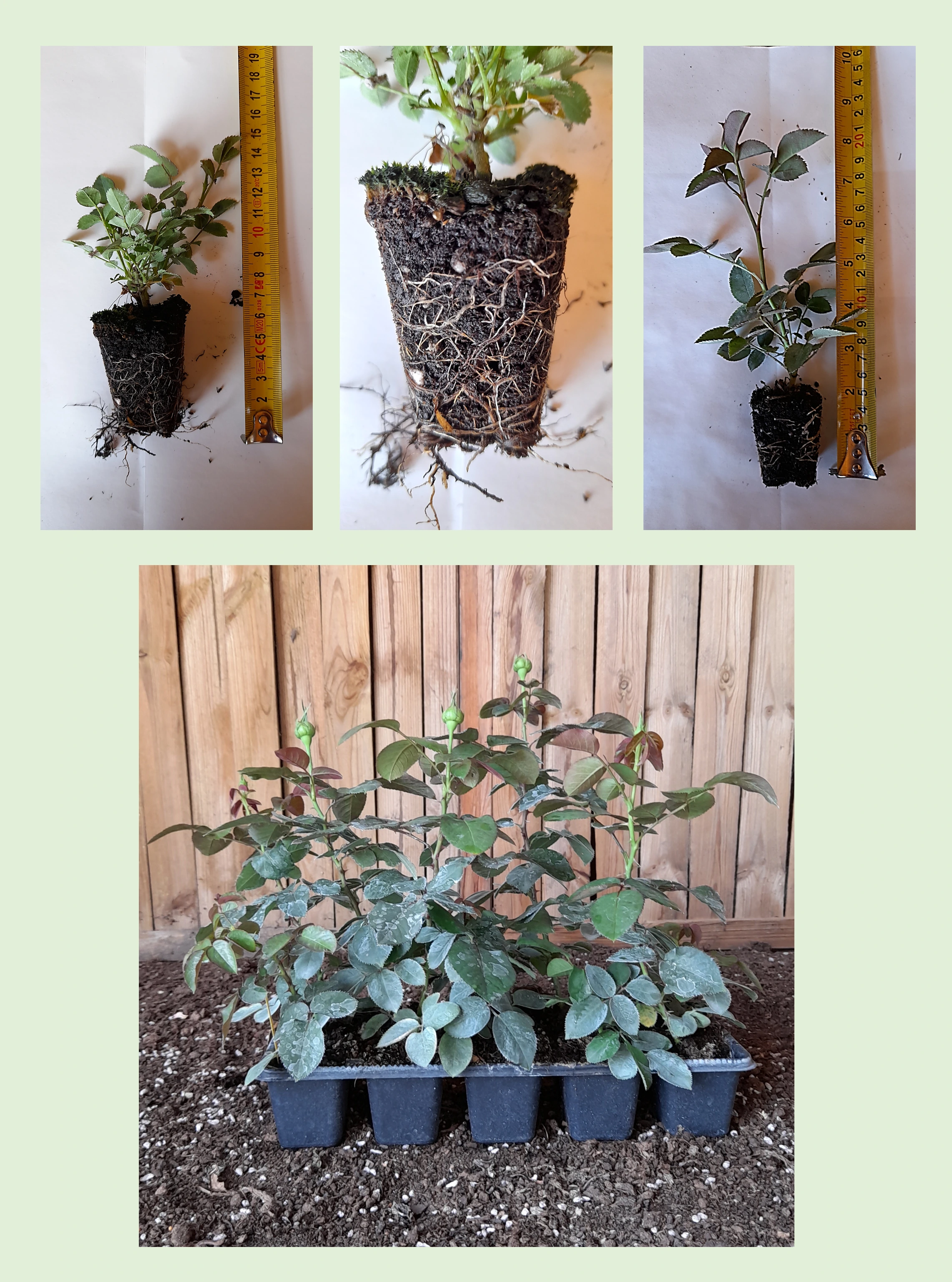
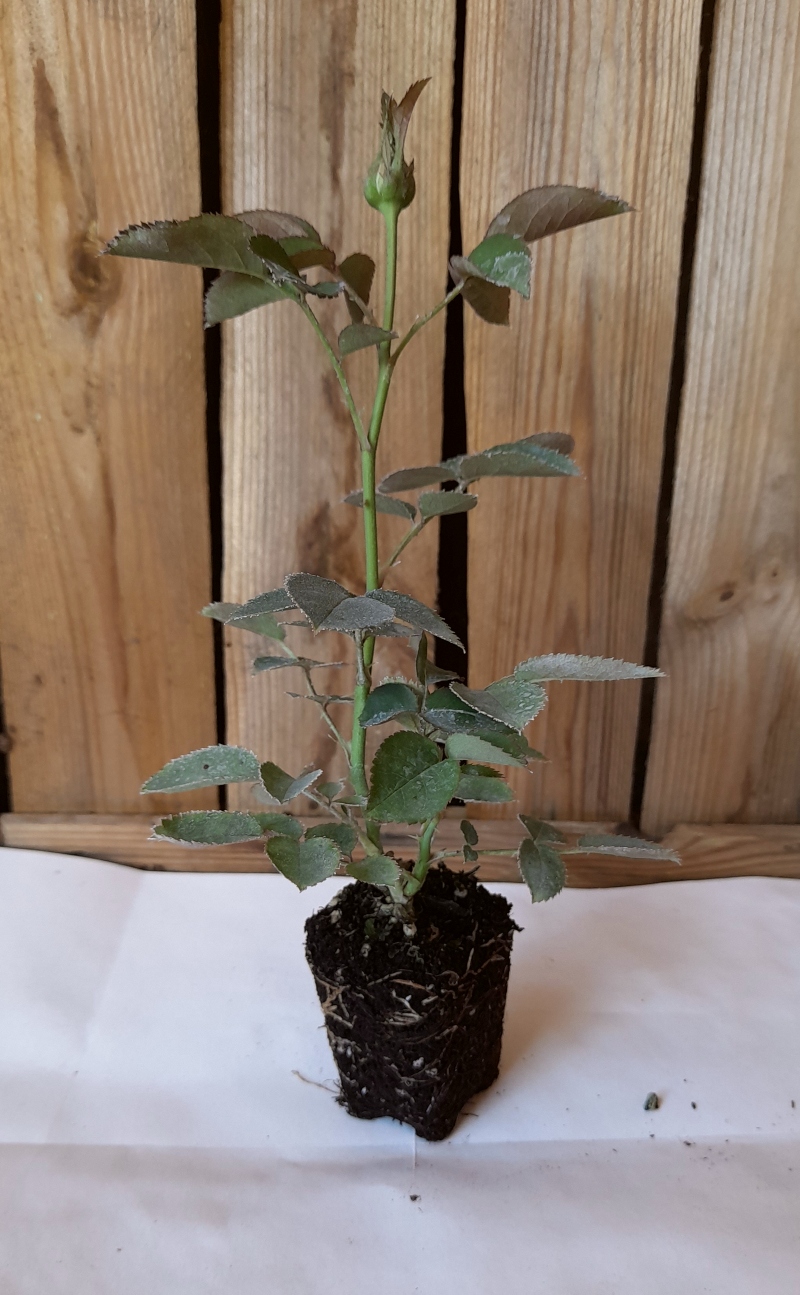
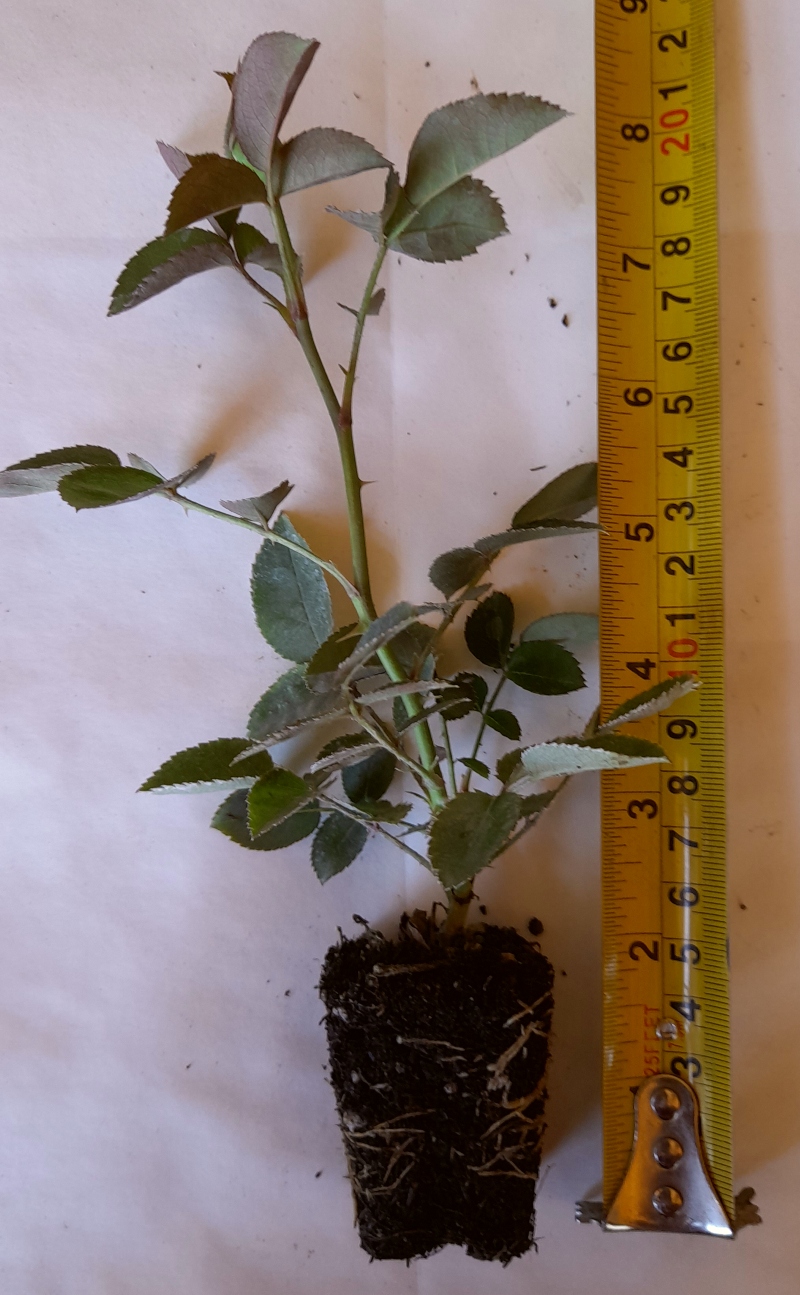
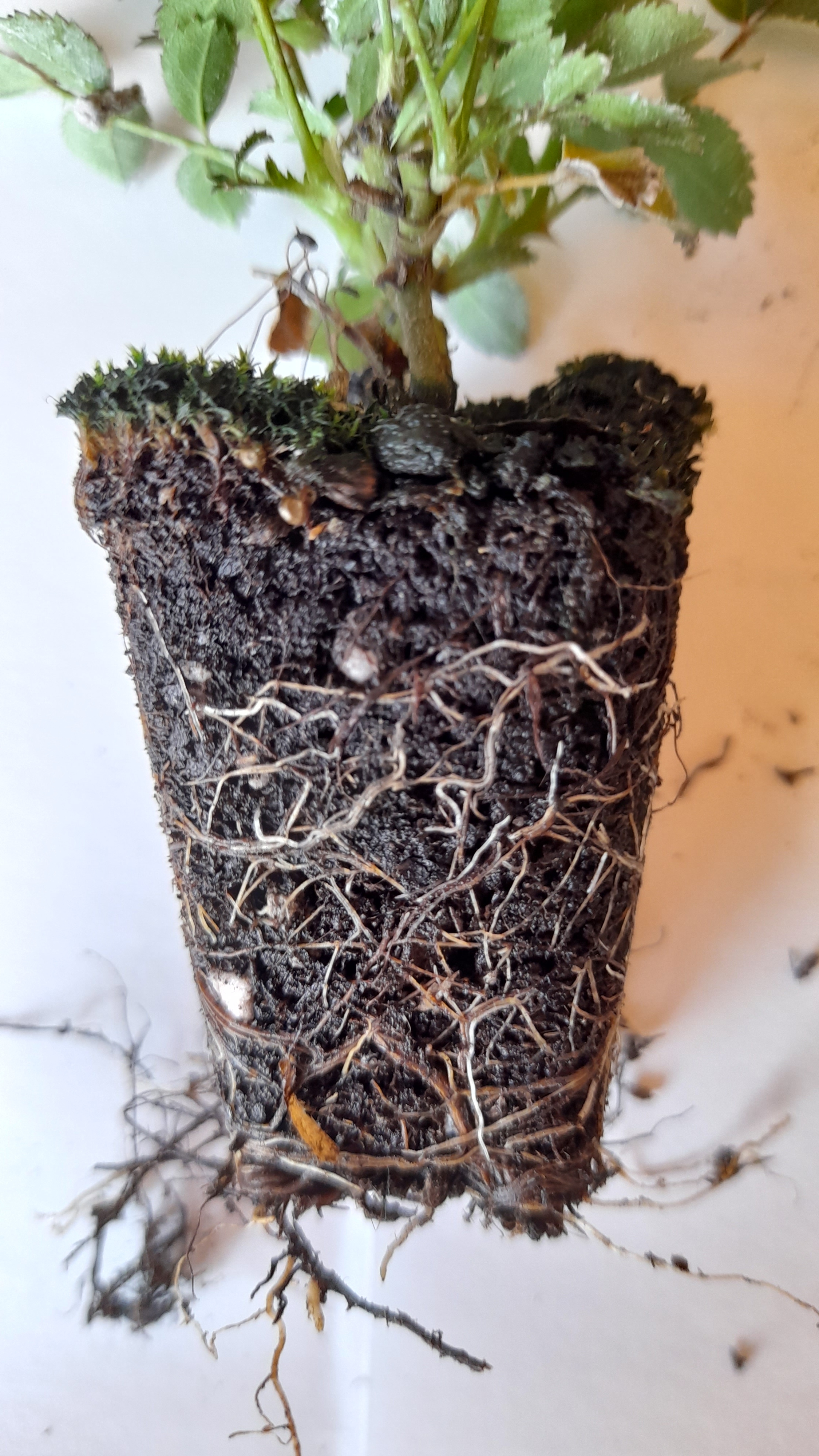
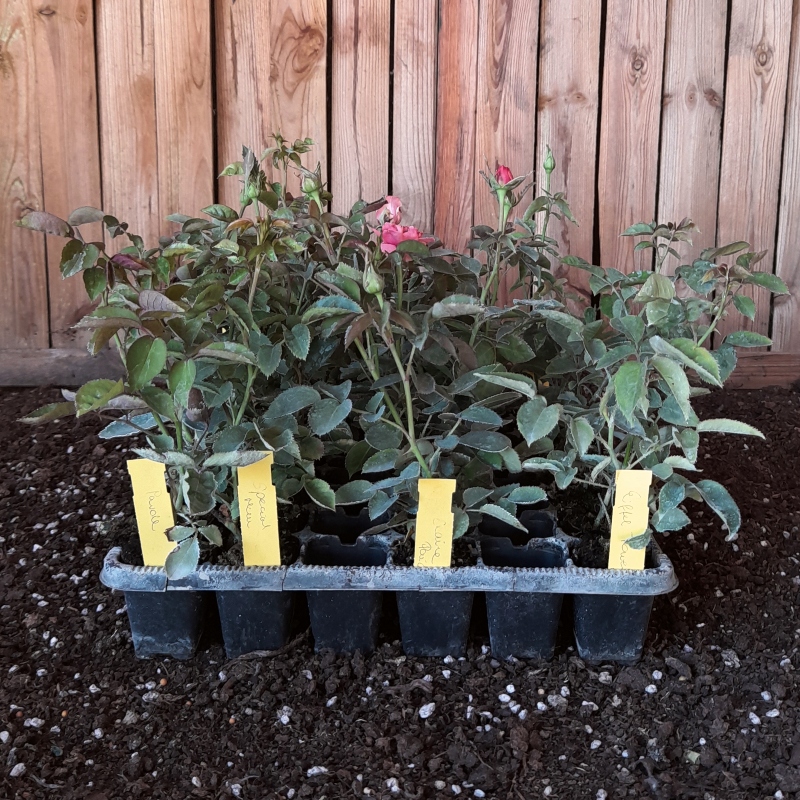
Vertical structures in public and private projects benefit from GUNSEI’s distinctive, space-defining habit, giving nurseries a reliable rambling climber for pergolas, arches and tall fences where volume plantings are planned. As a tray-rooted pharmaROSA® NEONATAL own-root cutting, it offers a predictable base for trained climber production, with 3–5 main canes established during grow-on in 5–7 L containers and onward into 40–50 litre or larger feature units. The translucent white flower clusters with mild fragrance and partial pollinator value support thematic and collection gardens focused on display and curation. Own-root structure supports long-term stability, regeneration and reduced replacement in nursery beds, especially valuable where integrated supply chains serve public-realm schemes that must cope well with colder, exposed winters and strong winds typical of parts of Scotland and northern England. Despite its higher plant protection needs, the cultivar’s vigorous climbing habit, moderate self-cleaning and decorative hips make it a convincing option for specialised vertical features. Planned as a professional propagation base, it aligns with collection-building programmes where identity and traceable authenticity over many years are essential, following a practical development arc from root establishment in year one, structural cane build-up in year two and full ornamental expression from year three onwards.
Usage options
Finished-product ideas
- Trained pergola climber 40–50 L – Pre-trained on pergola sections with 3–5 main canes, finished in 40–50 litre containers to deliver an immediate vertical garden feature based on its vigorous climbing habit and translucent white cluster display – target: retail / reseller premium ranges.
- 5–7 L trellis-ready climber – Own-root NEONATAL plants grown on in 5–7 L pots, staked and loosely trained for simple transfer onto garden trellises, leveraging manageable spread and moderate self-cleaning for easy sell-through – target: garden centre and nursery-branded collections.
- Entrance arch pair set – Matched pair of trained climbers prepared for arch frames, focusing on height potential and distinctive space-defining habit, positioned as an exclusive vertical feature set – target: design-led retailers and project-oriented resellers.
- Collection-label rambler line – Curated branding around origin, name meaning and translucent white flowers, supplied as trained climbers in 5–7 L containers for thematic rose collections where identity and continuity matter – target: specialist nurseries and rose collections.
- Pollinator-considerate wall climber – Marketed as a mildly scented, partially pollinator-friendly wall climber with seasonal hips, offered as a trained climber finished product to complement vertical garden feature assortments – target: independent garden centres and project specifiers.
Technical cultivar profile
| Parameter |
Data |
| Name and registration |
Hybrid Multiflora rambler, commercial climbing rose type; current trade name GUNSEI – white rambler climbing rose – Kikuchi; American Rose Society exhibition name Gunsei; collection: Climbing rose. |
| Origin and breeding |
Natural seedling selection of Rosa multiflora, bred by Kikuchi Rikichi in Japan and introduced in 1986; breeding institution and initial distributor not provided; registration year data not provided. |
| Awards and recognition |
Not provided; no competition, show, collector or lifetime awards are listed for this cultivar in the available data, so external recognition history remains unrecorded for professional evaluation. |
| Growth and structural characteristics |
Climbing growth habit reaching approximately 200–350 cm in height with 80–150 cm spread; moderately dense, bright green, slightly glossy foliage; sparsely thorned canes; moderate self-cleaning with petal fall followed by cluster hip formation. |
| Flower morphology |
Small cupped flowers in clusters, semi-double with around 13–25 petals; remontant flowering with a less abundant second flush; self-cleaning rated moderate; flower size in the S class, approximately 0.5–1.5 inches in diameter on cluster heads. |
| Colour data and phenology |
Buds delicately carmine-pink at the tip, fading through pale pink at petal bases to pure white; ARS W, RHS NN155D outer and NN155C inner; flowers become creamy white before paling quickly in strong sun, with occasional yellowish-brown petal edge discolouration. |
| Fragrance and aroma |
Mild, delicately sweet fragrance typical of subtly scented roses; semi-double flowers moderately attract pollinators, but reduced stamen accessibility limits nectar and pollen access; not indicated for soap or cosmetic use in the available data. |
| Hip characteristics |
Produces moderately abundant, small red ellipsoidal hips, approximately 6–9 mm in diameter; hips develop on spent flower clusters, contributing an additional ornamental phase and seasonal interest where deadheading is not prioritised. |
| Resistance and winter hardiness |
Hardy to approximately −26 to −23 °C, RHS H7, Swedish zone 4, USDA zone 5b; disease sensitivity noted with very susceptible reactions to powdery mildew and black spot, moderate rust susceptibility; regular monitoring and protection are essential. |
| Horticultural recommendations |
Recommended for pergolas, arches, trellises, obelisks, tall fences and walls; best supplied as a staked, trained climber with 3–5 main canes, grown in 5–7 L containers; maintenance requirement high due to poor disease resistance and need for frequent plant health checks. |
GUNSEI offers vigorous climbing structure, translucent clustered white blooms and own-root longevity that support predictable, regenerative vertical rose stands for professional programmes; we would welcome a discussion to align on propagation capacity and scheduling.