Bedding rose

20-438-1
20-438-2

Ingrid Stenzig

Bedding rose

- – Hassefras Bros.

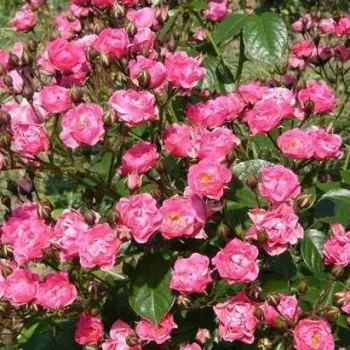
Full, silky-sheen deep pink shade with a slightly warm tone. - polyantha bedding rose - very weak, barely perceptible scented rose - slightly sweet character

– Compact, bushy habit for neat, low borders.
– Abundant clustered blooms for strong colour impact.
– Attractive deep pink flowers with silky sheen.
– Good winter hardiness to RHS rating H7.
– Semi-double flowers moderately attract pollinators.
Special feature: Excellent for uniform, fast ground coverage in mass plantings.
Project (landscape architecture / mass use)
Ingrid Stenzig
pharmaROSA® NEONATAL rooted rose cutting
27,05 £
Due to courier service regulations – and the introduction of customs clearance – delivery to Ireland is temporarily suspended.
4 (6274)
facebook   twitter

Ingrid Stenzig – pink polyantha bedding rose propagation material (pharmaROSA® NEONATAL)

Uniformity and coverage are central to Ingrid Stenzig as a compact polyantha bedding rose for nursery and project growers who need predictable, own-root tray material for reliable mass planting work. Its bushy habit, dense foliage and clustered, semi-double pink pompon blooms support density in flowerbeds, edging and park schemes where fast, repeat-flowering ground coverage is a commercial priority. NEONATAL tray-rooted cuttings integrate smoothly into 1.5–2 L container programmes, feeding into uniform, dense, bush-trained finished plants for project mass planting and landscape-spec ranges. The moderate maintenance profile and self-cleaning behaviour help keep quality stable in larger batches while aligning with systems serving public and institutional spaces in Scottish and northern sites where winter and wind tolerance are valued. Own-root production offers regeneration and long lifespan, supporting homogeneous stands, low replacement and predictable capacity as plantings build from strong Year 1 roots through Year 2 structural shoots into full ornamental effect by Year 3 reliability, remontant, compact, clustered, durable.


Usage options

Target area Reasoning
Mass project bedding and park schemes The cultivar’s ability to achieve fast visual coverage with uniform, dense, bush-trained plants aligns directly with project mass planting routes and 1.5–2 L containers, delivering coherent carpets in flowerbeds and parks. In own-root form, stands regenerate well and keep ornamental value steadier over time, reducing replacement rates and clarifying capacity planning for landscape contractor and project-serving wholesaler.
Edging and path-side runs The naturally compact, 30–45 cm bushy habit and 35–50 cm spread lend themselves to edging where consistent plant height and form simplify maintenance. NEONATAL propagation plugs are easy to batch into uniform edging lines via a 1.5–2 L pot cycle, then supplied as dense, bush-trained finished plants. Own-root durability supports long-lived edging in institutional schemes for landscape contractor and project-serving wholesaler.
Colour-focused bedding blocks Clusters of small, ball-shaped pink blooms, opening from dark buds to deep pink and then softening to pale, slightly silvery tones, create an even colour field across beds. This visual uniformity supports project mass planting briefs where colour continuity is specified. Tray-rooted own-root material helps you scale predictable colour blocks efficiently for landscape contractor and project-serving wholesaler.
Repeat-flowering seasonal displays Remontant flowering, with a second flush also abundant, allows professional growers to supply schemes needing season-long colour from compact, bush-trained units. NEONATAL cuttings slot into short, predictable production windows in 1.5–2 L containers, supporting cyclical project schedules and replacement waves. Own-root resilience aids re-sprouting after pruning in public plantings for landscape contractor and project-serving wholesaler.
Container-based project supply The dense foliage, moderate prickliness and neat height range make Ingrid Stenzig well-suited to project containers where robustness and tidy habit matter more than flower size. Starting from NEONATAL trays, you can standardise a 1.5–2 L route and, where required, step a proportion into 40–50 litre containers for feature positions. Own-root stability helps maintain quality in rotation for landscape contractor and project-serving wholesaler.
Public-realm and municipal plantings Moderate disease and drought tolerance, combined with bushy growth and self-cleaning at a medium level, support park and municipal plantings where maintenance input is controlled but not minimal. As own-root, stands cope better with pruning and occasional stress, supporting long-term beds and edging. This is particularly relevant where reliable winter and wind tolerance are required for landscape contractor and project-serving wholesaler.
Pollinator-aware decorative beds Semi-double flowers with 13–25 petals offer moderate pollinator interest while keeping a strong ornamental bedding effect. This suits schemes where biodiversity is considered but high visual coverage is still central. NEONATAL material underpins reproducible, bush-trained finished plants that deliver both colour and partial ecological value for landscape contractor and project-serving wholesaler.
Cultivar collections and pink-themed rose displays The clear deep pink to pale pink progression with silky sheen and the defined polyantha bedding character make this cultivar a useful component in thematic collections and dedicated rose gardens. Own-root NEONATAL propagation ensures cultivar authenticity and long-term stand sustainability for collection beds run through 1.5–2 L nursery cycles for landscape contractor and project-serving wholesaler.

Finished-product ideas

  • Uniform project bedding line – Own-root NEONATAL material finished to dense, bush-trained 1.5–2 L plants for high-volume, fast-coverage polyantha bedding blocks in parks and estates – landscape contractor / project wholesaler.
  • Edging and border series – Compact, bushy plants selected for height and spread uniformity, supplied in 1.5–2 L pots to create continuous edging lines with moderate maintenance needs – municipal and institutional buyers.
  • Pink polyantha colour mass – Remontant, clustered deep pink blooms used to build mono-colour bedding schemes, offered as a standardised project SKU with predictable repeat flowering – landscape architects via wholesalers.
  • Container project feature units – Own-root plants stepped from NEONATAL trays to 1.5–2 L and then into 40–50 litre containers for robust, compact project containers retaining dense foliage and steady flowering – public-realm framework contracts.
  • Thematic rose-collection blocks – Verified Ingrid Stenzig plants grown on from NEONATAL cuttings into uniform 1.5–2 L stock for pink-themed and polyantha-focused collection beds in show and demonstration gardens – specialist nurseries and garden trusts.

Technical cultivar profile
Parameter Data
Name and registration Current trade name Ingrid Stenzig, a polyantha bedding rose in the bed rose commercial group; unregistered as a formal cultivar but accepted by the American Rose Society under the exhibition name Ingrid Stenzig.
Origin and breeding Sport of ‘Orange Triumph’, bred by Hassefras Bros. in the Netherlands and introduced in 1951; first distributed commercially by Bobbink & Atkins in the United States, retaining its polyantha bedding character.
Growth and structural characteristics Bushy, compact plants 30–45 cm high and 35–50 cm wide, with dense, dark green glossy foliage and moderate prickliness; medium self-cleaning, some spent blooms dropping while others need light manual removal.
Flower morphology Semi-double, 13–25 petalled, small flowers (0.5–1.5 in) carried in clusters; blooms essentially ball to pompon-shaped, supporting a fine-textured bedding effect and regular, repeat-flowering throughout the season.
Colour data and phenology Closed buds dark velvety pink with maroon tones; newly opened blooms vivid pink, slightly paler at the edges; full bloom deep pink with paler centre; fades to pale, slightly silvery pink, ARS DP, RHS 55B outer, 55C inner.
Fragrance and aroma Very weak fragrance with a slightly sweet character; scent is barely perceptible in most conditions, so the cultivar is chosen primarily for visual bedding performance rather than olfactory impact in plantings.
Hip characteristics Produces spherical red hips in moderate quantities, typically 4–6 mm in diameter; hips add minor late-season interest but are not the primary focus in bedding or project-based applications.
Resistance and winter hardiness Hardy to approximately -21 to -18 °C (RHS H7, Swedish zone 3, USDA 6b); moderate resistance to powdery mildew, black spot and rust; moderate heat and drought tolerance provided watering during prolonged dry spells.
Horticultural recommendations Well-suited to flowerbeds, edging, parks and containers; maintenance needs are moderate with occasional pest and disease control; recommended for uniform, dense bush-trained finished plants on a project mass planting route.

Ingrid Stenzig offers compact, uniform, remontant colour on durable own-root plants, giving predictable, long-lived project bedding stands that regenerate well over time; we would be pleased to discuss capacity and scheduling for your programmes.


Detailed product attributes

Product Identification Data

Product Name: INGRID STENZIG – pink bedding polyantha rose - Hassefras
Product Type: pharmaROSA® NEONATAL - rooted rose cutting
Cultivar Authenticity: Verified:27.08.2025
Item Number: [11] 20-438 (14.02.2026) pharmarosaneonatal.co.uk

Name and Registration

Meaning of Cultivar Name: The name is a female forename.
Cultivar Synonym: Pink Triumph
Original Trade Name: Ingrid Stenzig
Current Trade Name: Ingrid Stenzig Bedding rose Hassefras
Rose Group: Polyantha
Commercial Type: polyantha bedding rose
Commercial Group: Bed rose
Exhibition Category: polyantha (bush rose)
Collection: Bedding rose

Origin and Breeding

Initial Distributor: Bobbink & Atkins (United States)
Registration Year: unregistered cultivar
Breeder: Hassefras Bros.
Breeding Company / Institution: Hassefras Bros. (Netherlands)
Breeding Year: Netherlands, 1951
Parentage: Sport of 'Orange Triumph'

Growth and Structural Characteristics

Height: 1-1.5ft (30-45 cm)
Spread: 1.1-1.6ft (35-50 cm)
Growth Habit: bushy
Foliage: The variety has dense foliage. The leaves have a glossy surface and a dark green hue.
Prickliness: moderately thorny
Self-Cleaning Description: Some of the spent blooms fall off naturally, while others require some additional cleaning.
Self-Cleaning Intensity: Self-cleaning: medium

Flower Morphology

Petal Count: 13-25
Flower Fullness: semi-double
Flower Shape: ball, pompon
Flower Size: S (0,5-1,5 in)
Inflorescence Type: clustered
Colour Code: ARS code: DP RHS code: 55B (outer), 55C (inner)
Repeat Flowering: Remontant; its second flowering is also abundant.

Colour Data and Phenology

Colour: pink
Flower Colour Description: Full, silky-sheen deep pink shade with a slightly warm tone.
Closed Bud: Dark, velvety pink, outer petals slightly maroon-tinged.
Newly Opened Flower: Vivid pink, slightly paler at the edges.

Full Bloom: Uniform deep pink, its centre slightly paler.
Before Fading: Fades to a pale pink with a subtle silvery hue.
Colour Fading Description: As it opens, the deep pink gradually lightens to a pale pink, acquiring a slight silvery hue before the bloom fades.

Fragrance and Aroma

Fragrance Strength: very weak, barely perceptible scented rose
Fragrance Character: slightly sweet character
Pollinator Attraction: Semi-double, 13–25-petalled flowers moderately attract pollinators; however, the reduced accessibility of the stamens in this flower form somewhat limits their attractiveness.
Pollinator-Friendly Rating: Semi-double, 13–25-petalled flowers moderately attract pollinators, so partially pollinator-friendly.

Hip Characteristics

Hip Shape: spherical
Hip Colour: red
Hip Comment: Rose hips produced in moderate quantities, 4–6 mm in diameter, spherical and red.

Resistance and Hardiness

Hardiness (°C): -21–-18 °C
Heat and Drought Tolerance Description: Flowers reliably in warm conditions; requires watering during prolonged dry spells.
Disease Resistance: moderate
  • powdery mildew – moderate
  • black spot – moderate
  • rust – moderate

Horticultural Recommendations

Recommended product path: Project mass planting
Release form: Uniform, dense, bush-trained finished product
Recommended use: Maintenance requirement moderate; occasionally requires pest and disease control.
Primary Uses: flowerbed, edging, park, container, standard (tree form)

Comments

Positioning: Project (landscape architecture / mass use)
Target customer/channel: Landscape contractor, project-serving wholesaler / maintenance
Main value proposition: Fast coverage – uniformity
INGRID STENZIG – pink bedding polyantha rose - Hassefras
Full, silky-sheen deep pink shade with a slightly warm tone. - polyantha bedding rose - very weak, barely perceptible scented rose - slightly sweet character
Online rose purchase - pink - very weak, barely perceptible scented rose - Ingrid Stenzig - polyantha bedding rose - (1-1.5ft (30-45 cm))
Inflorescence: clustered Height: 1-1.5ft (30-45 cm) Flower shape: ball, pompon Winter hardiness: 6b pink - Bobbink & Atkins (United States) polyantha bedding rose - Flower size: S (0,5-1,5 in) Flower size: S (0,5-1,5 in) - Height: 1-1.5ft (30-45 cm) Height: 1-1.5ft (30-45 cm) - Flower fullness: semi-double Ingrid Stenzig - Roses in the garden | pharmaROSA® Neonatal - standard Hassefras Bros.

We showcase the external appearance of the roses available for online purchase from our webshop.


Which product type is right for you?


PharmaRosa® NEONATAL is the cost‑effective starting point for rose product production.

As a uniform, own‑rooted propagation material, it provides a stable basis for further growing-on and can be integrated flexibly into different finished product production technologies.
Rooted in trays (rooted), 3–6‑month‑old, own‑rooted rose cutting.
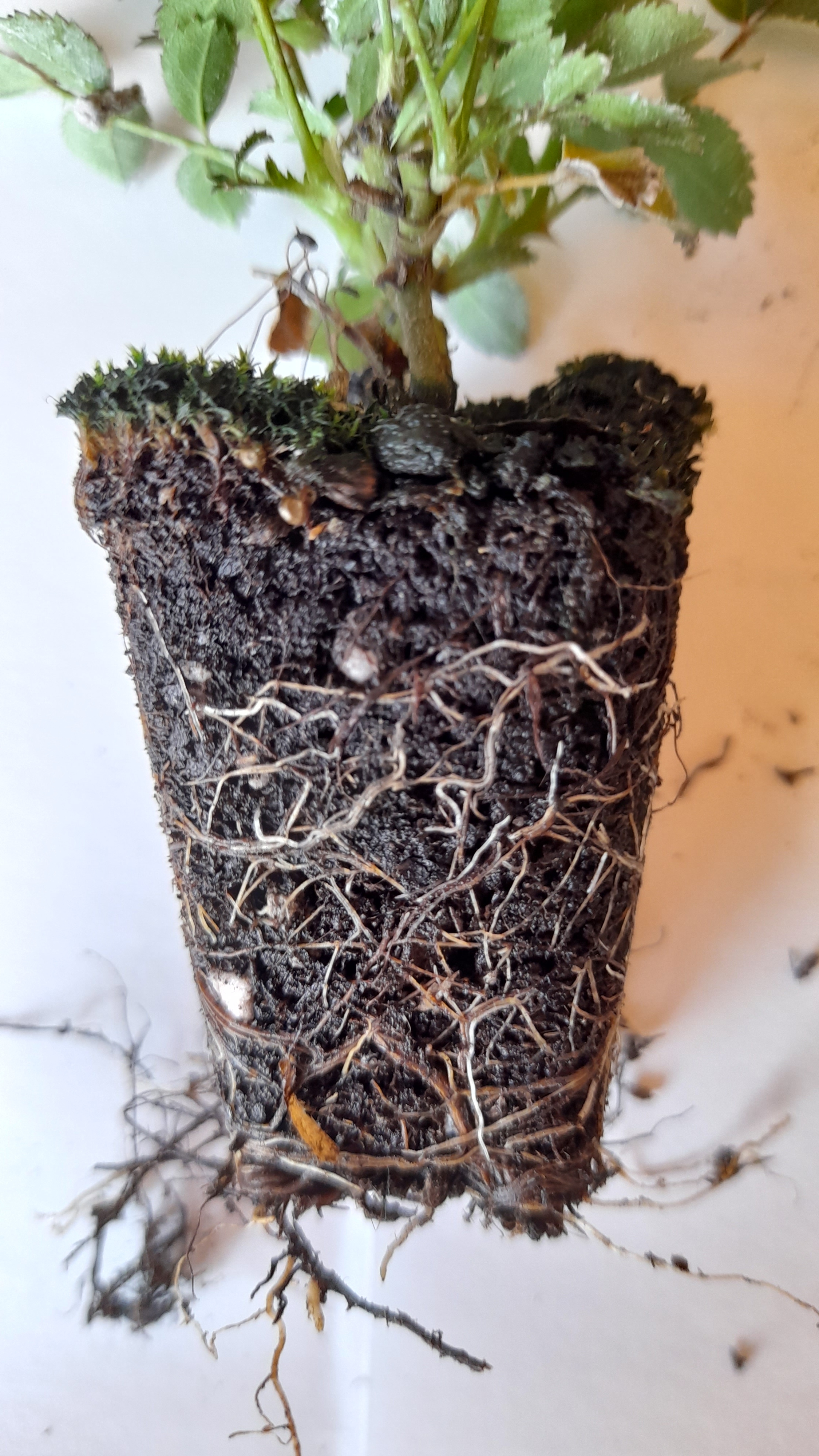
Uniform developmental stage, with a root system that has thoroughly penetrated the plug.
For professional growing‑on.
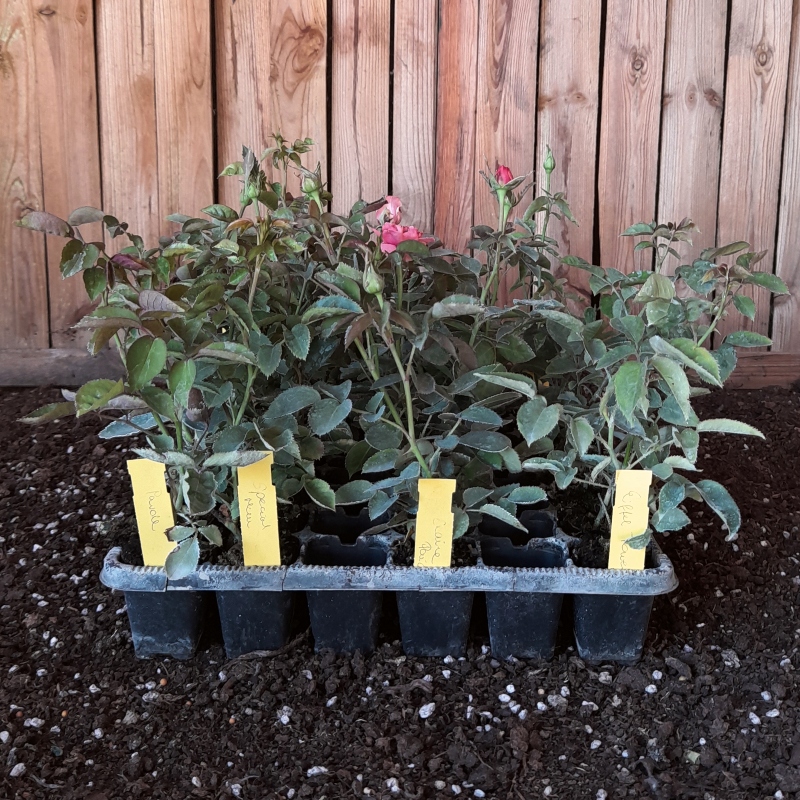
Tray packaging: 10 pcs/tray.
Quality and varietal identity: production supported by a dedicated identification and traceability logic.
Can be transplanted during frost‑free periods, designed for finished product production.

PharmaRosa® NEONATAL provides a controlled, uniform starting stock for planned growing‑on that can be integrated into your own technology – especially where scheduling and varietal identity are paramount.


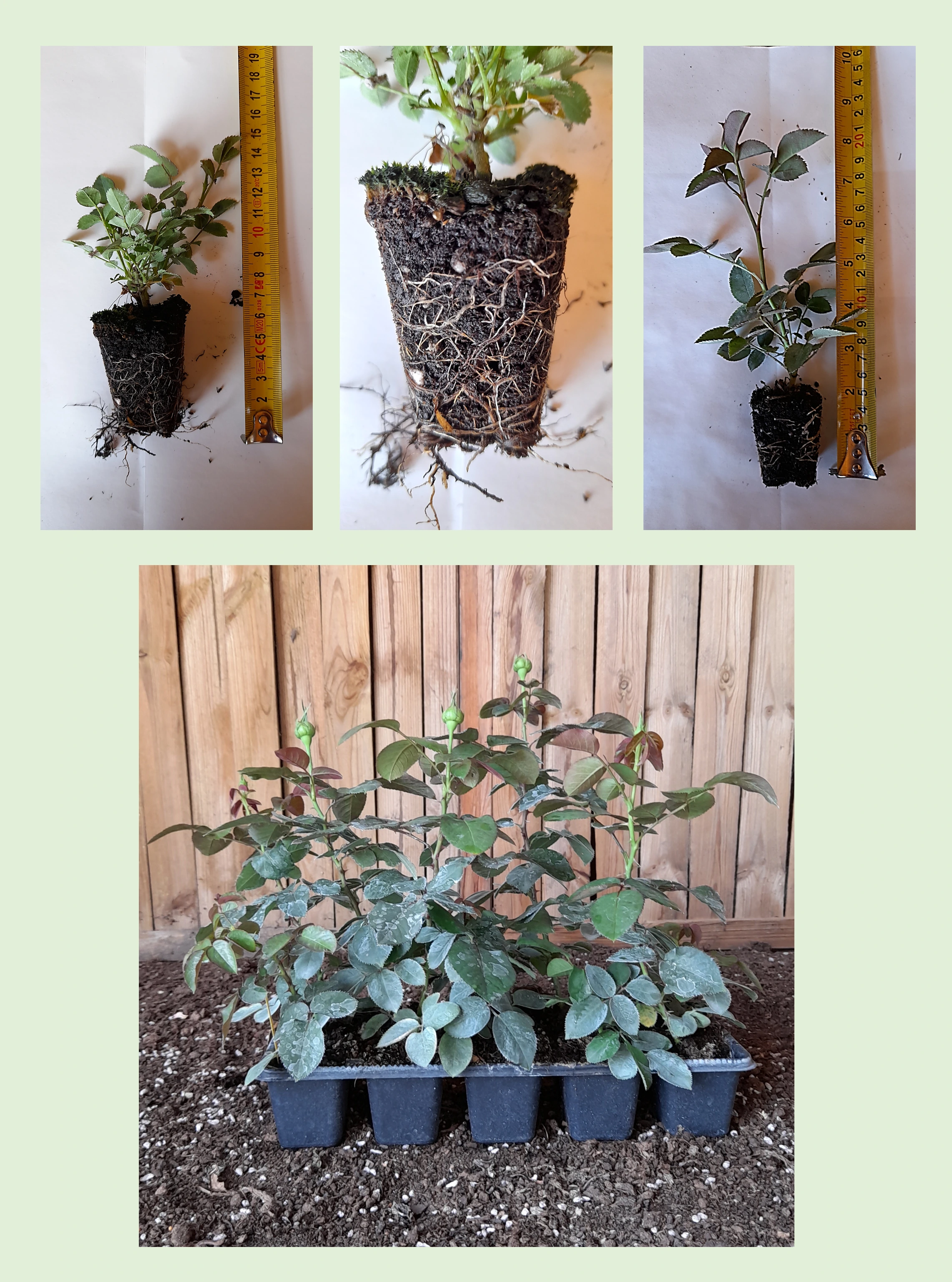
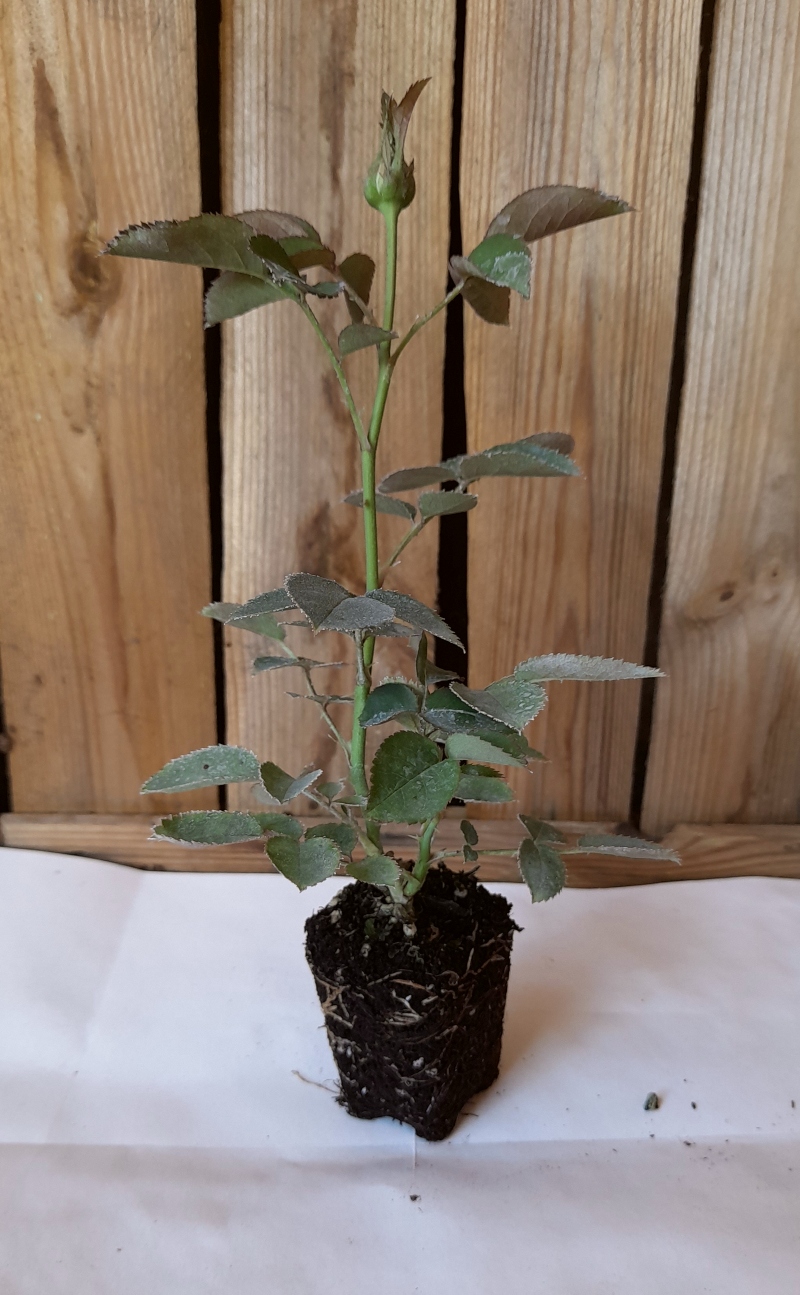
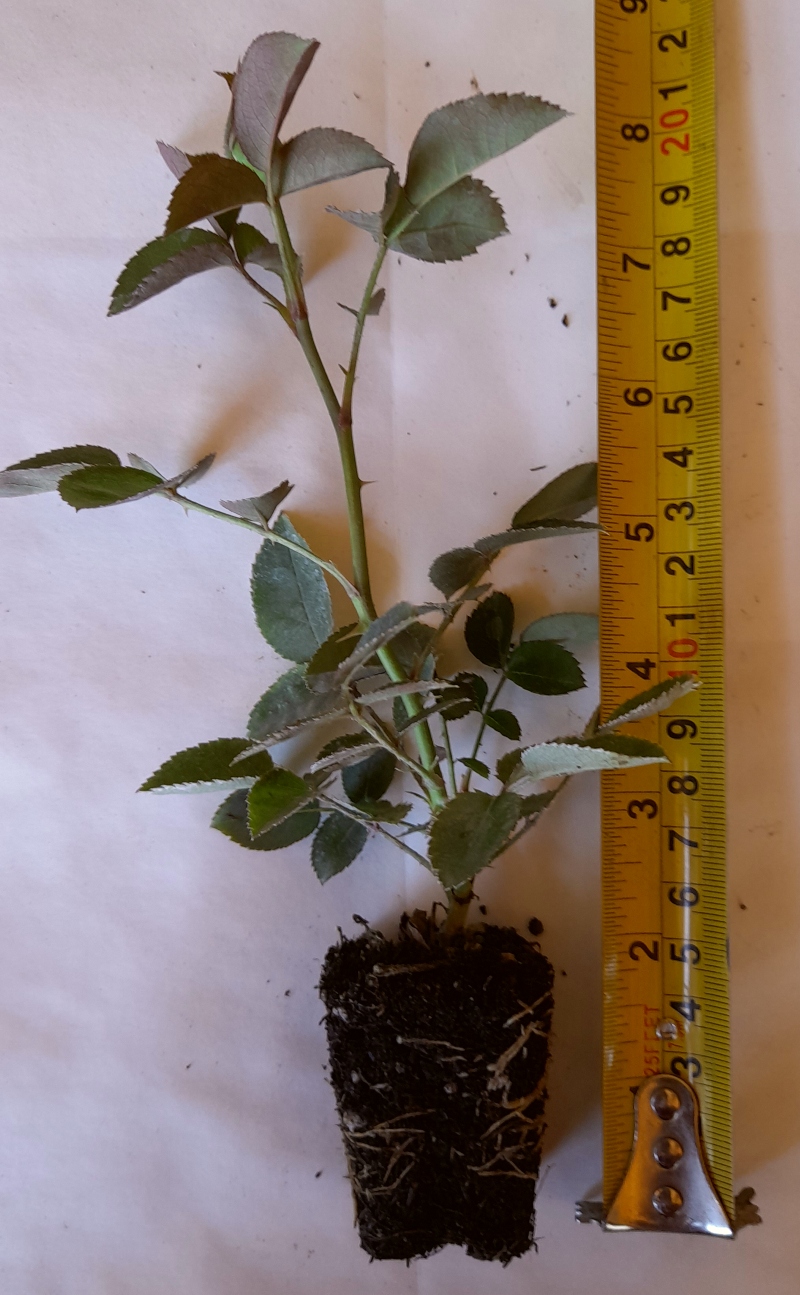
PharmaRosa® NEONATAL own-rooted rose propagation material in a plug, with a root system penetrating the plug (semi-finished product / semi-finished rose). PharmaRosa® NEONATAL rose propagation material size: 3–6‑month‑old, own-rooted cutting with a uniform developmental stage. PharmaRosa® NEONATAL rose propagation material root system: plug densely penetrated by well-developed white roots (root system detail). PharmaRosa® NEONATAL tray stock: own-rooted rose propagation material in trays, uniform developmental stage (10 pcs/tray).

Captions (from left to right): Semi-finished product (NEONATAL own-rooted rose propagation material in a plug with a fully developed root system) • Size demonstration (3–6‑month‑old, uniform cutting) • Root system detail (plug penetrated by the root system) • Tray stock (10 pcs/tray, uniform developmental stage)

pharmarosaneonatal.hupharmarosaneonatal.co.ukpharmarosaneonatal.ropharmarosaneonatal.skpharmarosaneonatal.depharmarosaneonatal.sipharmarosaneonatal.czpharmarosaneonatal.atpharmarosaneonatal.frpharmarosaneonatal.itpharmarosaneonatal.plpharmarosaneonatal.espharmarosaneonatal.nlpharmarosaneonatal.lupharmarosaneonatal.ptpharmarosaneonatal.lvpharmarosaneonatal.sepharmarosaneonatal.fipharmarosaneonatal.ltpharmarosaneonatal.ee

Which product type is right for you?

Pages for private customers
Garden roses for the family garden, with minimal care  → ORIGINAL®
Premium garden roses – instant impact, a truly showpiece garden  → EXTRA®
Pages for professionals and private customers
Roses for public spaces – large areas, sustainable maintenance  → NATURAL®
Roses for projects – hedge and row planting, fast implementation  → RAPID®
For professional partners only
Production – propagation material for garden roses, wholesale  → NEONATAL®

Company details

PharmaRosa Ltd.
Company registration number: 01-09-717479
VAT number: 13075314-2-43
Plant health registration no.: HU130721
Bank account (IBAN):
HU85117631891388688400000000
BIC (SWIFT): OTPVHUHB
Bank name: OTP Bank Nyrt.