Botanical rose

21-475-1
21-475-2

Rosa pomifera

Botanical rose

- – -

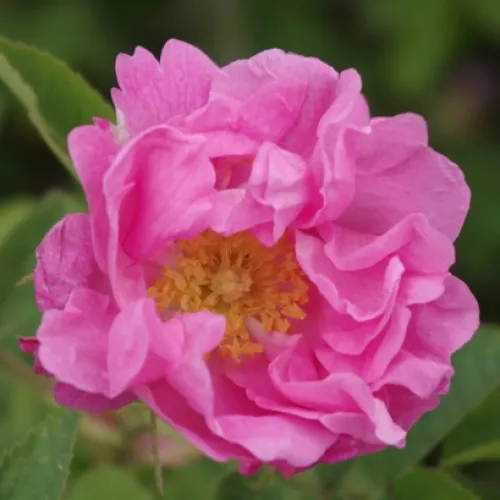
Simple, five-petalled flowers in deep or clear pink shades, with yellow stamens, creating a classic wild‑rose pink effect. - Landscape shrub rose. - Lightly scented, restrained fragrance. - Apple‑fruity, slightly wild. - landscape shrub rose - mild, restr

– Dense, bushy shrub for fast ground coverage.
– Soft pink, single flowers with golden stamens.
– Mild apple‑fruity fragrance, pleasantly natural.
– Excellent disease resistance, reliably healthy growth.
– Highly attractive to bees and other pollinators.
– Special feature: Large, ornamental, edible hips for jams and teas.
Project (landscape architecture / mass use)
Rosa pomifera
pharmaROSA® NEONATAL rooted rose cutting
28,23 £
Due to courier service regulations – and the introduction of customs clearance – delivery to Ireland is temporarily suspended.
4.5 (6598)
facebook   twitter

ROSA POMIFERA – pink landscape shrub rose

Botanical Rosa pomifera offers uniform, bushy own-root structure for dense, thorny hedging and landscape shrub use, with a project-focused landscape profile that supports fast, even coverage from 1.5–2 L production. Its pollinator-friendly, single pink flowers with open centres and mild, apple-fruity fragrance align well with thematic and collection gardens, while hips provide additional seasonal interest for orchard-style, food-forest and rose-hip harvesting projects. As an own-root NEONATAL tray-raised cutting it supports predictable, large-scale project supply, with a practical development arc where roots establish in year one, framework builds in year two and full ornamental effect is expressed by year three under nursery conditions. With documented disease resistance and medium drought tolerance it suits professional UK schemes where summers are getting warmer and drier yet winters remain cold and exposed in northern regions, giving you a reliable, sustainable resource for long-lived, low-replacement landscape and public-realm planting.


Usage options

Target area Reasoning
Project mass planting for fast, uniform coverage Dense, bushy structure and verified uniformity support the stated “fast coverage – uniformity” value in mass shrub and hedge lines. Using NEONATAL own-root propagation into 1.5–2 L pots, then batch-releasing as a uniform, bush-trained finished product, simplifies scheduling for project mass planting where landscape contractors and project-serving wholesalers require predictable volumes and consistent presentation for public-realm schemes. Landscape contractor / project-serving wholesaler
Natural, thorny hedging in public and semi-wild schemes Moderately thorny, upright bushes form effective, natural barrier hedges with a tidy, structured habit that is straightforward to train as a dense, bush-formed product. Growing on NEONATAL material into 1.5–2 L, then planting in rows for project mass planting creates coherent, low-maintenance hedges for parks and perimeter zoning, matching positioning in landscape architecture and mass-use contexts where robustness and long-term stand stability are key. Landscape contractor / estate manager
Pollinator-focused thematic and collection rose gardens Single, open flowers and explicit “bee plant” designation make this cultivar a strong choice for pollinator-focused thematic gardens and curated rose collections. NEONATAL own-root material allows nurseries to build reliable stock blocks and 1.5–2 L ranges for show gardens and specialist schemes, releasing uniform, bush-trained plants into projects where pollinator value, clear botanical identity and long lifespan underpin the offer to thematic rose gardens and collection-based public planting. Public-realm and show-garden supplier
Rose-hip and food-forest / orchard-style planting Large, edible, vitamin C–rich hips with notable ornamental value support orchard, food-forest and hip-harvest concepts as part of wider landscape planting. Propagating own-root NEONATAL cuttings into 1.5–2 L units for project mass planting allows integrators to assemble uniform hip-production blocks and multi-row hedges, aligning with landscape architecture positioning where multi-season interest and productive features are specified in institutional and educational landscapes. Integrator / orchard and food-forest project planner
Low-input public landscapes with high disease resistance Documented resistance to powdery mildew, black spot and rust reduces plant protection requirements in large, dispersed plantings, supporting lower maintenance loads and fewer replacements over time. NEONATAL own-root starting material grown on to uniform, bush-trained 1.5–2 L plants provides resilient stands whose regenerative capacity and long lifespan support landscape architecture / mass-use positioning in municipal parks, housing schemes and infrastructure corridors. Municipal and housing-sector landscape supplier
Climate-resilient shrub beds and borders Medium drought and heat tolerance, together with cold-hardiness down to USDA 4a, makes this cultivar reliable for mixed shrub beds and borders exposed to both colder winters and warmer, drier summers in the UK. NEONATAL own-root material supports stable, renewable stock for 1.5–2 L project production where growers need predictable hardiness performance; this is particularly useful for sites that combine wind exposure with periods of summer dryness in northern and western landscapes. Regional nursery network / climate-resilient project supplier
Wildflower, bird and butterfly gardens with structure Its dense foliage, single flowers and abundant hips collectively support insects and birds while still providing a clearly defined shrub framework within wildflower-style plantings. Growing NEONATAL plants into uniform, bush-trained 1.5–2 L stock enables nurseries to supply structured “wild” components for project mass planting, fitting the project positioning where biodiversity and habitat value are combined with reliable, legible shrub form in public and institutional schemes. Biodiversity-focused landscape contractor
Long-term collection and maintenance plantings As a botanical rose with own-root, non-grafted propagation, this cultivar is well suited to collection plantings, conservation and long-term maintenance stands where identity and renewability matter. Using NEONATAL material for 1.5–2 L propagation beds and project blocks offers a predictable, homogeneous base, supporting landscape architecture and mass-use positioning in gene-bank style, educational and thematic gardens across the UK, even where winters are cold and exposed in northern regions. Botanic garden / institutional collection manager

Finished-product ideas

  • Project hedge line 2 L – uniform, bush-trained 1.5–2 L plants for fast-establishing, moderately thorny hedges in public and residential boundaries, built from own-root NEONATAL stock for long-term stand stability – landscape contractor / project wholesaler
  • Pollinator strip collection – 1.5–2 L shrubs in themed “bee and butterfly” assortments, leveraging single, open flowers and botanical identity for show gardens and municipal pollinator corridors – public-realm and thematic-garden supplier
  • Hip-harvest hedge unit – 2 L plants specified for food-forest edges and productive hedges, highlighting large, edible hips and robust shrub structure for orchard-style landscape projects – orchard, agroforestry and educational-site planner
  • Disease-resilient park shrub – own-root 1.5–2 L landscape units focused on disease resistance and drought tolerance for low-input park and streetscape planting, easing maintenance budgets – municipal and infrastructure landscape supplier
  • Botanical rose collection block – NEONATAL-based 1.5–2 L range curated for botanical and species rose displays, emphasising stable own-root identity and long service life in thematic and educational rose gardens – botanic garden and collection manager

Technical cultivar profile
Parameter Data
Name and registration Rosa pomifera is marketed as a botanical, pink landscape shrub rose; an unregistered species-type cultivar with no listed registered name, supplied here as verified, own-root propagation material for professional production.
Origin and breeding Historical species-type shrub rose of unknown breeding origin, introduced to commerce in 1897 by George Brunning of St. Kilda Nurseries, Australia; parentage and breeder data are not provided in current references.
Awards and recognition Listed in the RHS Plants for Pollinators garden plants list (2025) and included in the Green Cities for a Sustainable Europe Swedish selection as a drought-tolerant, insect-friendly rose for sustainable urban and landscape use.
Growth and structural characteristics Bushy, upright shrub with dense, matte foliage ranging from bluish-green to grey-green and moderate prickliness; supplied as own-root NEONATAL cuttings for onward production into uniform, bush-trained finished plants. Height and spread data not provided.
Flower morphology Medium-sized, single, five-petalled flowers, typically 4–5 cm across, produced singly on short, glandular-hairy stalks from carmine-red buds; non-remontant, flowering once per season, with no data on self-cleaning behaviour or precise flower shape form.
Colour data and phenology Simple deep to clear pink flowers (ARS mp, RHS 65C outer, 65D inner) with yellow stamens creating a classic wild-rose effect; colour holds well, later dulling slightly as stamens shift from golden-yellow to ochre-yellow and brown, without noted stripes or spots.
Fragrance and aroma Light, restrained fragrance described as apple-fruity with a slightly wild-rose character; flowers are single and open, combining modest scent with high ecological value due to exposed stamens and accessible nectar for pollinating insects and other invertebrates.
Hip characteristics Produces spherical, red hips around 15–30 mm in diameter, noted for ornamental impact and high vitamin C content; hips are edible and can be harvested for jam or tea, adding a productive dimension to landscape and food-forest style plantings.
Resistance and winter hardiness Rated resistant to powdery mildew, black spot and rust, supporting low-input management; hardy approximately to -20 to -15 °C (RHS H6, Swedish zone 3, USDA 4a), with medium heat and drought tolerance where irrigation is mainly needed only in extreme drought.
Horticultural recommendations Indicated for natural hedging, mixed shrub borders, park and landscape planting, wildflower and pollinator gardens, and orchard or food-forest rose-hip production; medium maintenance, with regular monitoring, pruning and plant protection advised as for most roses.

Rosa pomifera offers disease-resistant, pollinator-friendly, hip-producing shrubs on a predictable own-root base, supporting durable, uniform stands for large-scale landscape use; please contact us to align on volumes, timing and long-term project supply.
Detailed product attributes

Product Identification Data

Product Name: ROSA POMIFERA – pink landscape shrub rose
Product Type: pharmaROSA® NEONATAL - rooted rose cutting
Cultivar Authenticity: Verified:23.10.2025
Cultivar Quality Rating: premium bronze
Item Number: [1468] 21-475 (14.02.2026) pharmarosaneonatal.co.uk

Name and Registration

Meaning of Cultivar Name: "Pomifera" is Latin for "apple-bearing" and refers to its large, apple-like fruit.
Cultivar Synonym: Rosa villosa; R. villosa; Rosa villosa L.; Rosa pomifera; Apple Rose; Apfel-Rose; Shaggy Rose; Rosier velu; Pomifère
Current Trade Name: Rosa pomifera Botanical rose -
Rose Group: Shrub
Commercial Type: landscape shrub rose
Commercial Group: Botanical rose
Exhibition Category: shrub rose, species rose
Collection: Botanical rose

Origin and Breeding

Initial Distributor: George Brunning – St. Kilda Nurseries (Australia)
Registration Year: unregistered cultivar
Breeder: -
Breeding Company / Institution: unknown / no data
Parentage: unknown

Awards and Honours

Horticultural Ratings and Recommendations: RHS Plants for Pollinators – garden plants list (Royal Horticultural Society, United Kingdom) (2025); recommended species in the Green Cities for a Sustainable Europe selection Rosor är torktåliga och insektsvänliga as a drought-tolerant, insect-friendly

Growth and Structural Characteristics

Height: #VALUE!
Spread: #VALUE!
Growth Habit: bushy, upright (growth habit)
Foliage: The variety's foliage is dense. Its leaves have a matte surface and range in colour from bluish‑green to grey‑green.
Prickliness: moderately thorny
Self-Cleaning Description: No data on self-cleaning.
Self-Cleaning Intensity: No data available on self-cleaning strength.

Flower Morphology

Petal Count: 5–12
Flower Fullness: single-flowered
Flower Shape: no data available
Flower Size: M (1,5-2,75 in)
Inflorescence Type: solitary
Colour Code: ARS code: mp RHS code: 65C (outer), 65D (inner)
Repeat Flowering: Not remontant; flowers once.

Colour Data and Phenology

Colour: pink
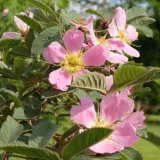
Flower Colour Description: Simple, five-petalled flowers in deep or clear pink shades, with yellow stamens, creating a classic wild‑rose pink effect. - Landscape shrub rose. - Lightly scented, restrained fragrance. - Apple‑fruity, slightly wild.
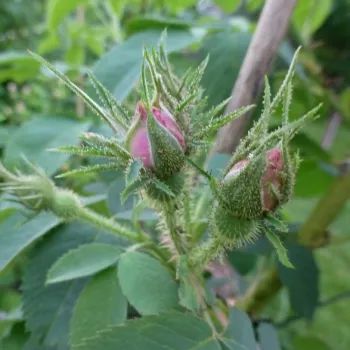
Closed Bud: The flowers develop from dark carmine-red buds borne on a short, glandular-hairy peduncle and hip rudiment, the buds being surrounded by blue-green leaves that are hairy on both sides.
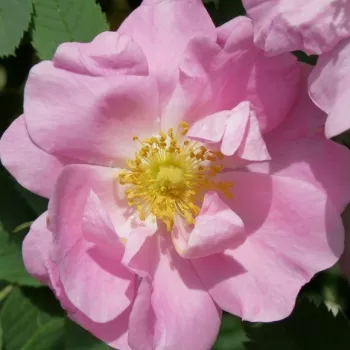
Newly Opened Flower: Fragrant carmine-red buds open to reveal single, pure or soft pink petals in one whorl, with bright yellow stamens exposed in the centre, giving a pronounced pink–yellow contrast.
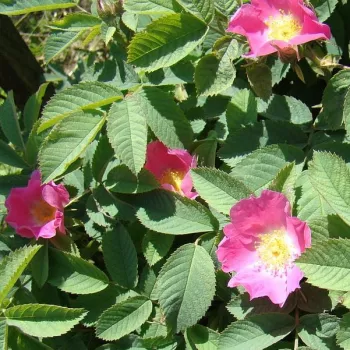
Full Bloom: The single, five-petalled flowers are approximately 4–5 cm in diameter, uniformly clear–soft pink in shade, with a striking golden‑yellow ring of stamens at the centre; the literature does not mention stripes or spots.
Before Fading: The pink tone dulls, the stamens turn ochre-yellow and then brown.
Colour Fading Description: It retains the depth of its pink colour, with the sheen becoming slightly subdued.

Fragrance and Aroma

Fragrance Strength: mild, restrained-scented rose
Fragrance Character: apple-fruity, slightly wild-rose scented
Pollinator Attraction: Single, five-petalled, 4–5 cm open flowers with easily accessible stamens attract pollinators effectively, so this variety is particularly pollinator-friendly.

Pollinator-Friendly Rating: Specifically pollinator-friendly variety, as its single, open flowers and 'bee plant' designation make it particularly suitable for feeding bees and other pollinators.

Hip Characteristics

Hip Shape: spherical
Hip Colour: red
Hip Comment: Its large, vitamin C–rich, edible rose hips are of particular ornamental value and can also be harvested for jam and tea.

Resistance and Hardiness

Hardiness (°C): -20–-15 °C
Heat and Drought Tolerance Description: Tolerates summer heat and prolonged dry periods well; irrigation is generally only necessary during extreme, sustained drought.
Disease Resistance: resistant
  • powdery mildew – resistant
  • black spot – resistant
  • rust – resistant

Horticultural Recommendations

Recommended product path: Project mass planting
Release form: Uniform, dense, bush-trained finished product
Recommended use: Maintenance requirement medium; hardy, generally not particularly demanding garden rose, but — like most roses — it can be susceptible to powdery mildew, black spot, cane diseases and various pests, so regular monitoring, pruning and plant protection when
Primary Uses: natural, thorny hedging, mixed shrub beds and borders, park rose / landscape planting, wildflower, bird and butterfly garden, orchard or food-forest for rose-hip production

Comments

Positioning: Project (landscape architecture / mass use)
Target customer/channel: Landscape contractor, project-serving wholesaler / maintenance
Main value proposition: Fast coverage – uniformity
ROSA POMIFERA – pink landscape shrub rose
Simple, five-petalled flowers in deep or clear pink shades, with yellow stamens, creating a classic wild‑rose pink effect. - Landscape shrub rose. - Lightly scented, restrained fragrance. - Apple‑fruity, slightly wild. - landscape shrub rose - mild, restr
#VALUE!
Inflorescence: solitary Height: #VALUE! Flower shape: no data available Winter hardiness: 4b pink - George Brunning – St. Kilda Nurseries (Australia) landscape shrub rose - Flower size: M (1,5-2,75 in) Flower size: M (1,5-2,75 in) - Height: #VALUE! Height: #VALUE! - Flower fullness: single-flowered Rosa pomifera - Roses in the garden | pharmaROSA® Neonatal - premium bronze -

We showcase the external appearance of the roses available for online purchase from our webshop.


Which product type is right for you?


PharmaRosa® NEONATAL is the cost‑effective starting point for rose product production.

As a uniform, own‑rooted propagation material, it provides a stable basis for further growing-on and can be integrated flexibly into different finished product production technologies.
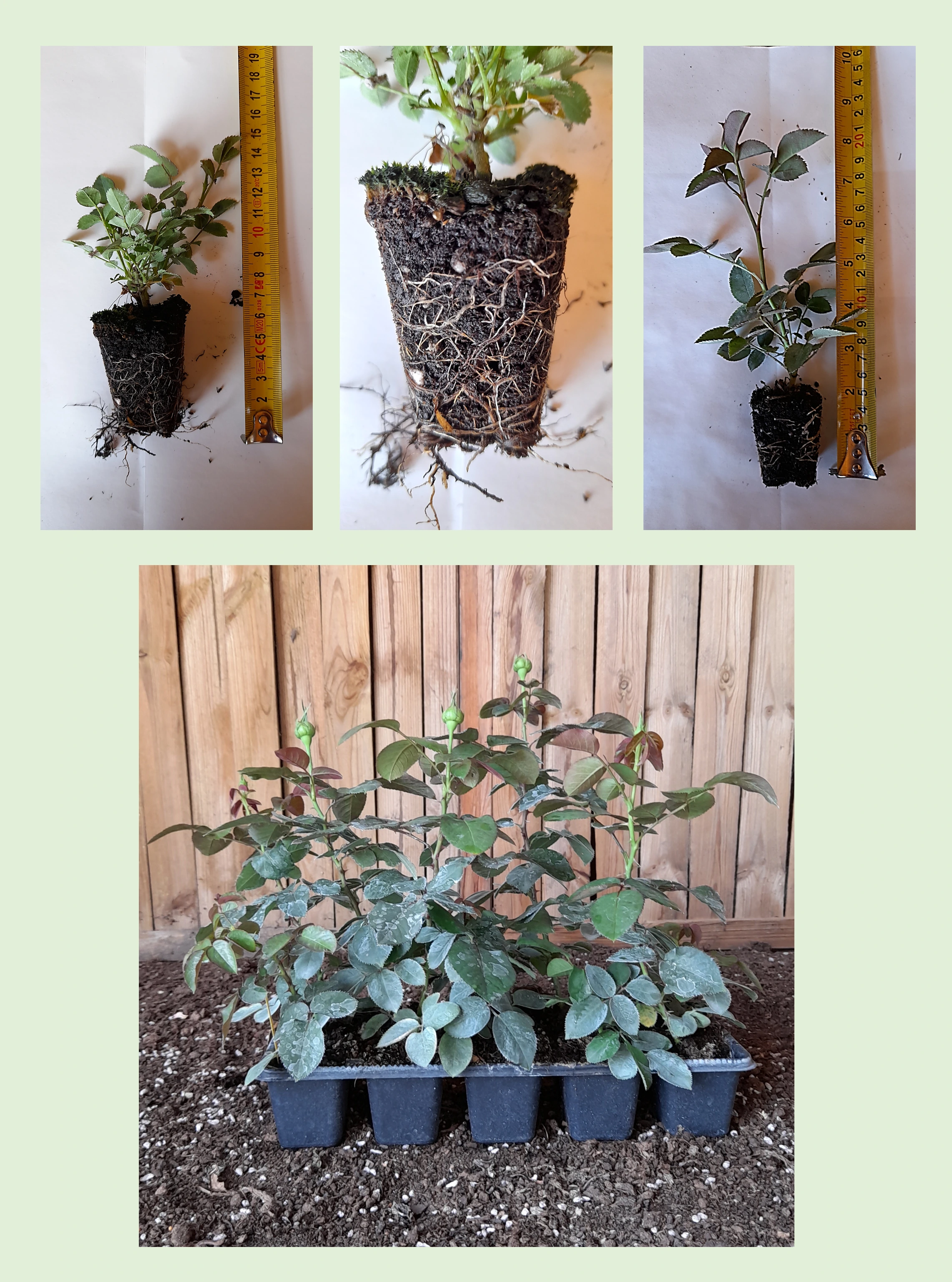
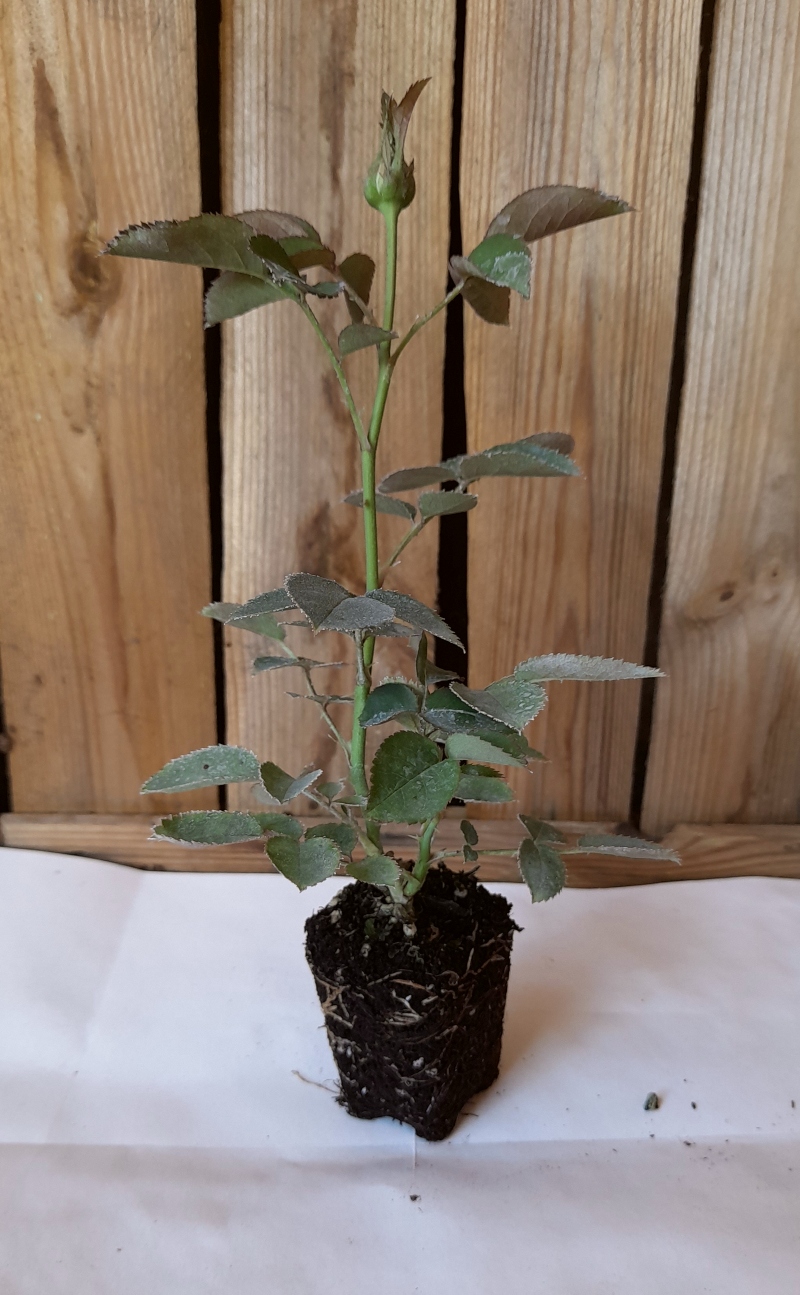
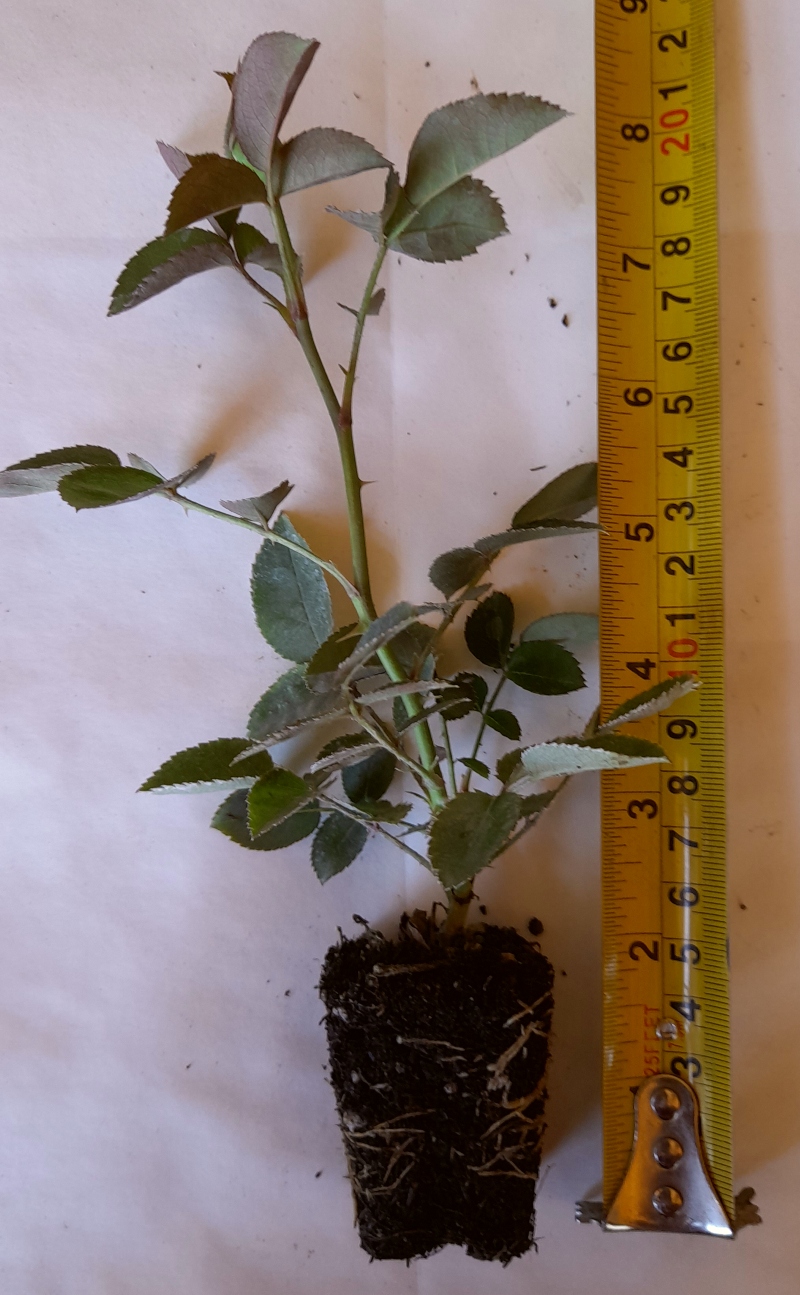
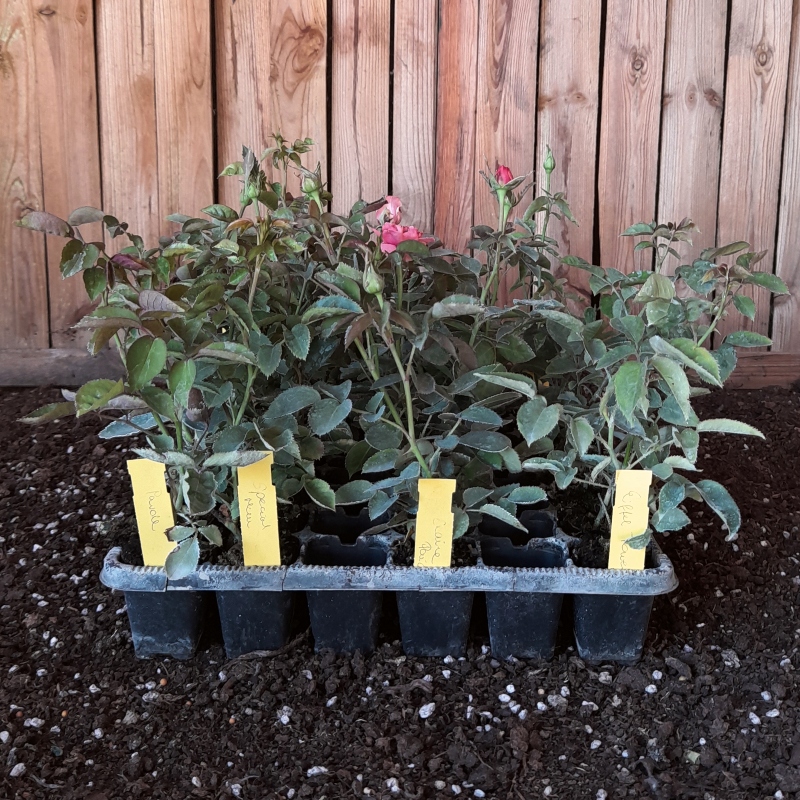
Rooted in trays (rooted), 3–6‑month‑old, own‑rooted rose cutting.
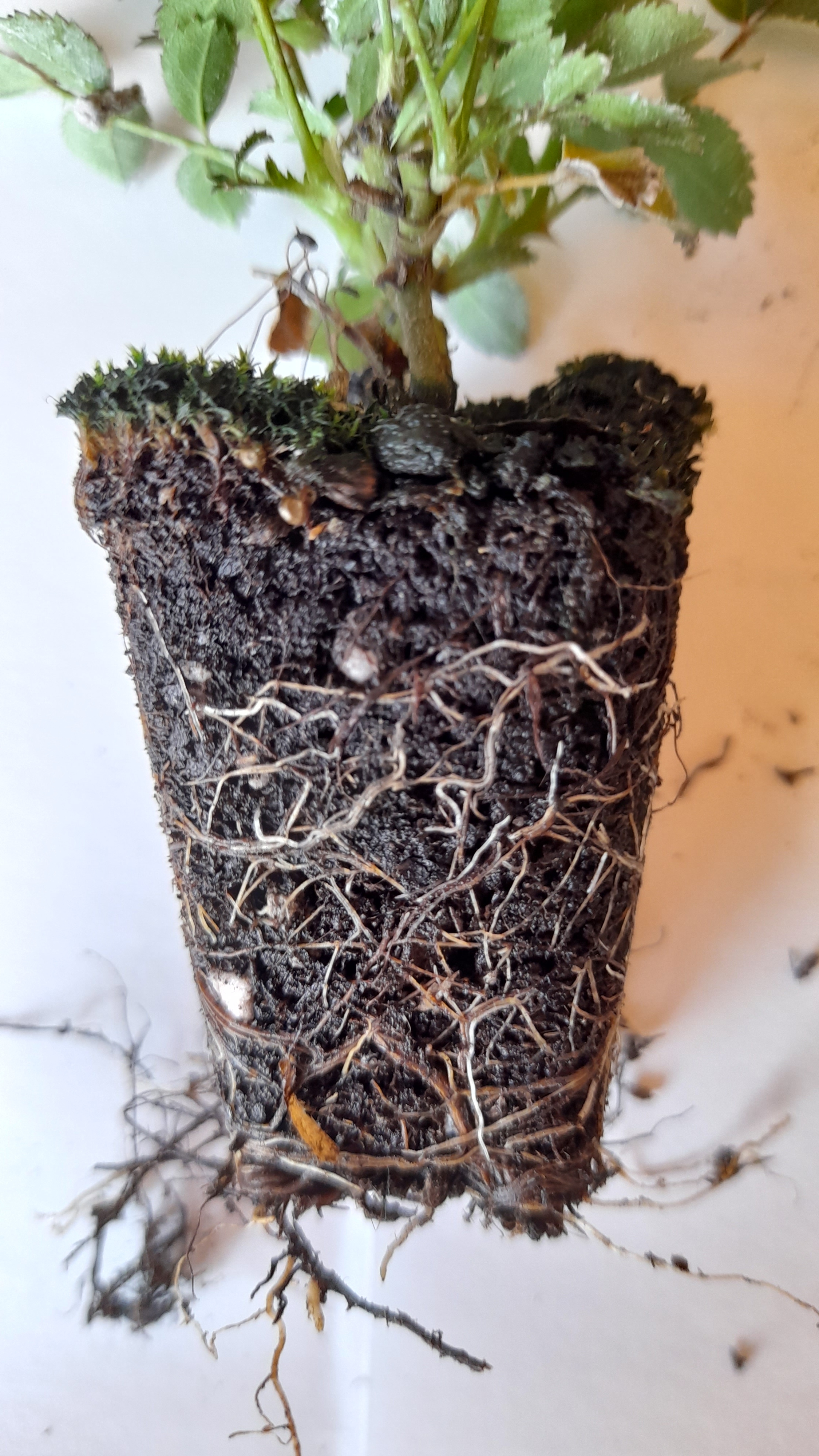
Uniform developmental stage, with a root system that has thoroughly penetrated the plug.
For professional growing‑on.
Tray packaging: 10 pcs/tray.
Quality and varietal identity: production supported by a dedicated identification and traceability logic.
Can be transplanted during frost‑free periods, designed for finished product production.

PharmaRosa® NEONATAL provides a controlled, uniform starting stock for planned growing‑on that can be integrated into your own technology – especially where scheduling and varietal identity are paramount.


PharmaRosa® NEONATAL own-rooted rose propagation material in a plug, with a root system penetrating the plug (semi-finished product / semi-finished rose). PharmaRosa® NEONATAL rose propagation material size: 3–6‑month‑old, own-rooted cutting with a uniform developmental stage. PharmaRosa® NEONATAL rose propagation material root system: plug densely penetrated by well-developed white roots (root system detail). PharmaRosa® NEONATAL tray stock: own-rooted rose propagation material in trays, uniform developmental stage (10 pcs/tray).

Captions (from left to right): Semi-finished product (NEONATAL own-rooted rose propagation material in a plug with a fully developed root system) • Size demonstration (3–6‑month‑old, uniform cutting) • Root system detail (plug penetrated by the root system) • Tray stock (10 pcs/tray, uniform developmental stage)

pharmarosaneonatal.atpharmarosaneonatal.co.ukpharmarosaneonatal.hupharmarosaneonatal.czpharmarosaneonatal.depharmarosaneonatal.ropharmarosaneonatal.sipharmarosaneonatal.skpharmarosaneonatal.itpharmarosaneonatal.frpharmarosaneonatal.nlpharmarosaneonatal.plpharmarosaneonatal.lupharmarosaneonatal.ptpharmarosaneonatal.espharmarosaneonatal.ltpharmarosaneonatal.sepharmarosaneonatal.lvpharmarosaneonatal.eepharmarosaneonatal.fi

Which product type is right for you?

Pages for private customers
Garden roses for the family garden, with minimal care  → ORIGINAL®
Premium garden roses – instant impact, a truly showpiece garden  → EXTRA®
Pages for professionals and private customers
Roses for public spaces – large areas, sustainable maintenance  → NATURAL®
Roses for projects – hedge and row planting, fast implementation  → RAPID®
For professional partners only
Production – propagation material for garden roses, wholesale  → NEONATAL®

Company details

PharmaRosa Ltd.
Company registration number: 01-09-717479
VAT number: 13075314-2-43
Plant health registration no.: HU130721
Bank account (IBAN):
HU85117631891388688400000000
BIC (SWIFT): OTPVHUHB
Bank name: OTP Bank Nyrt.