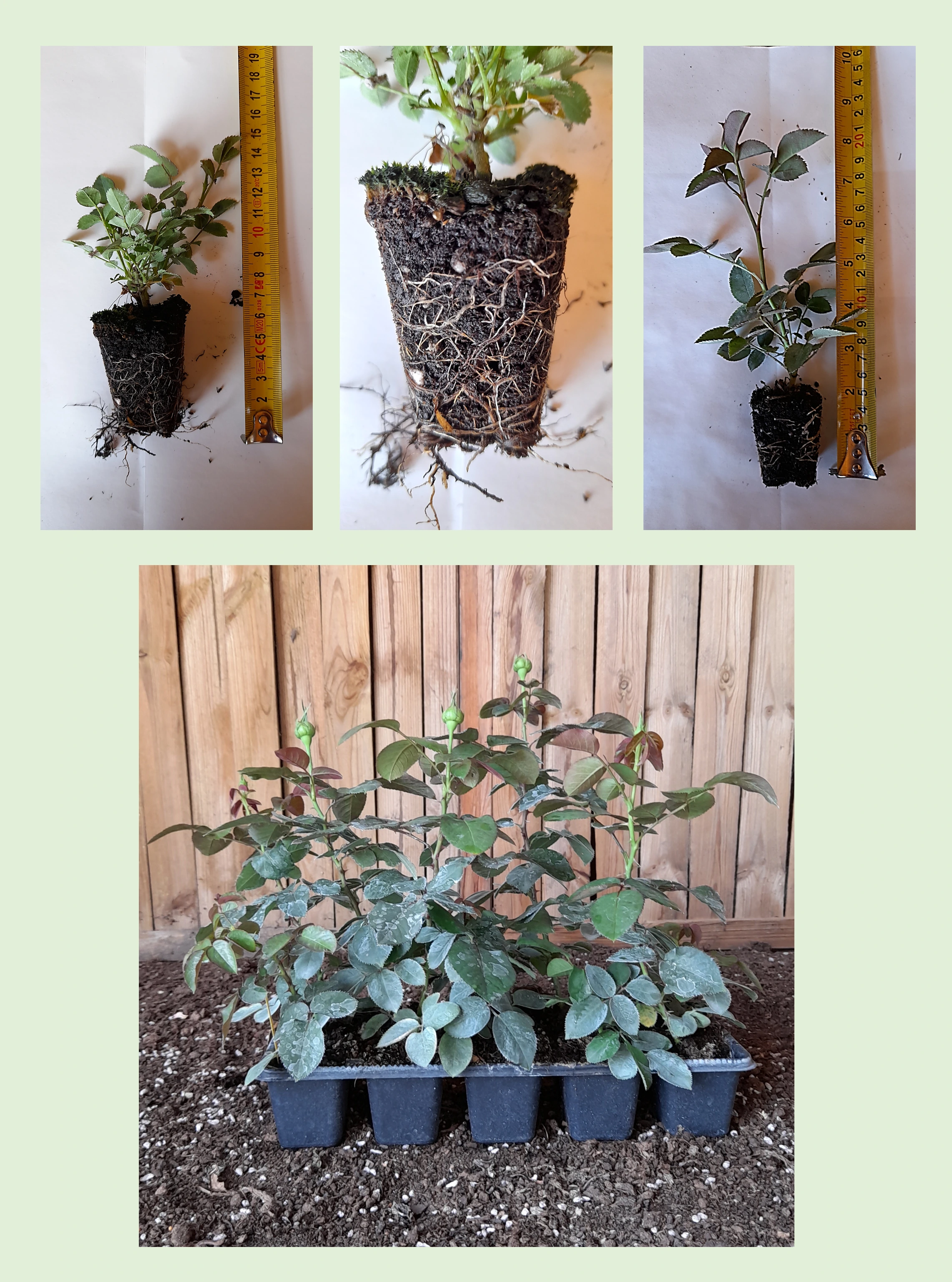
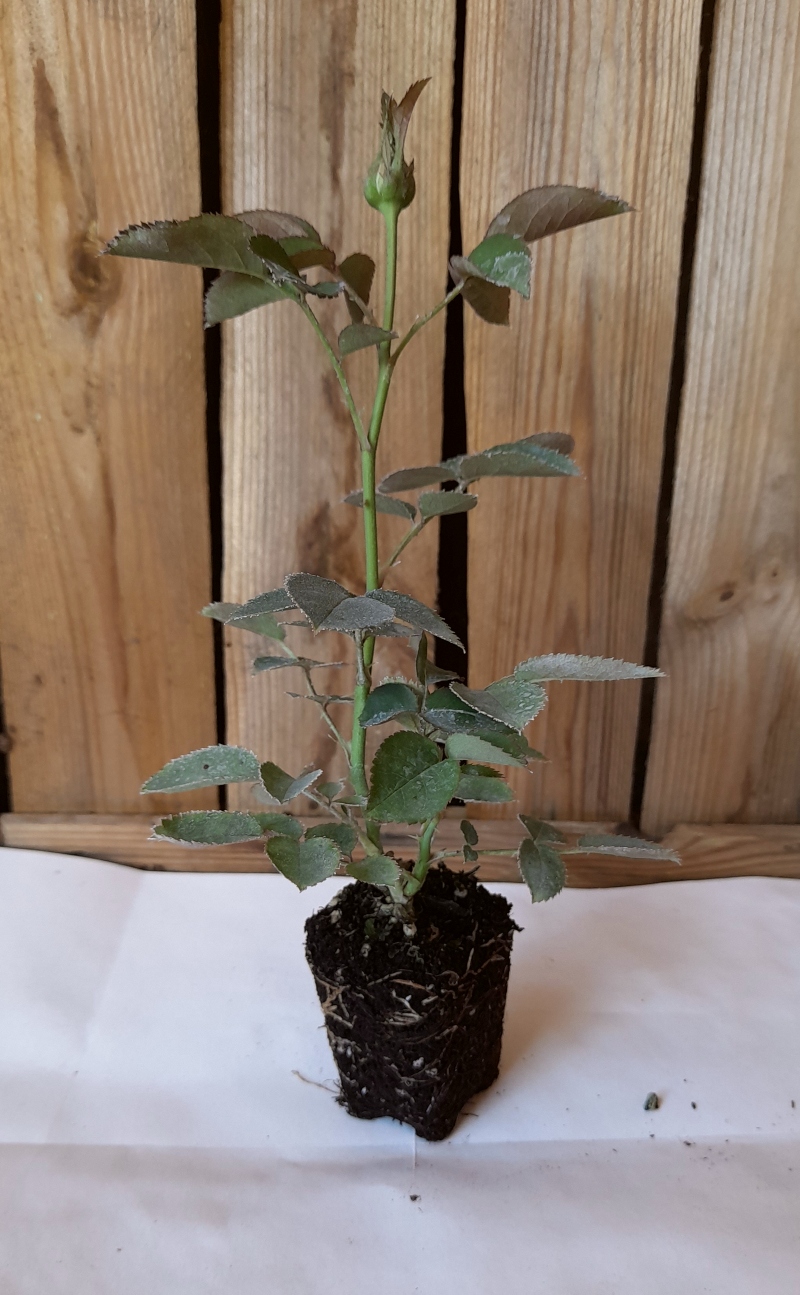
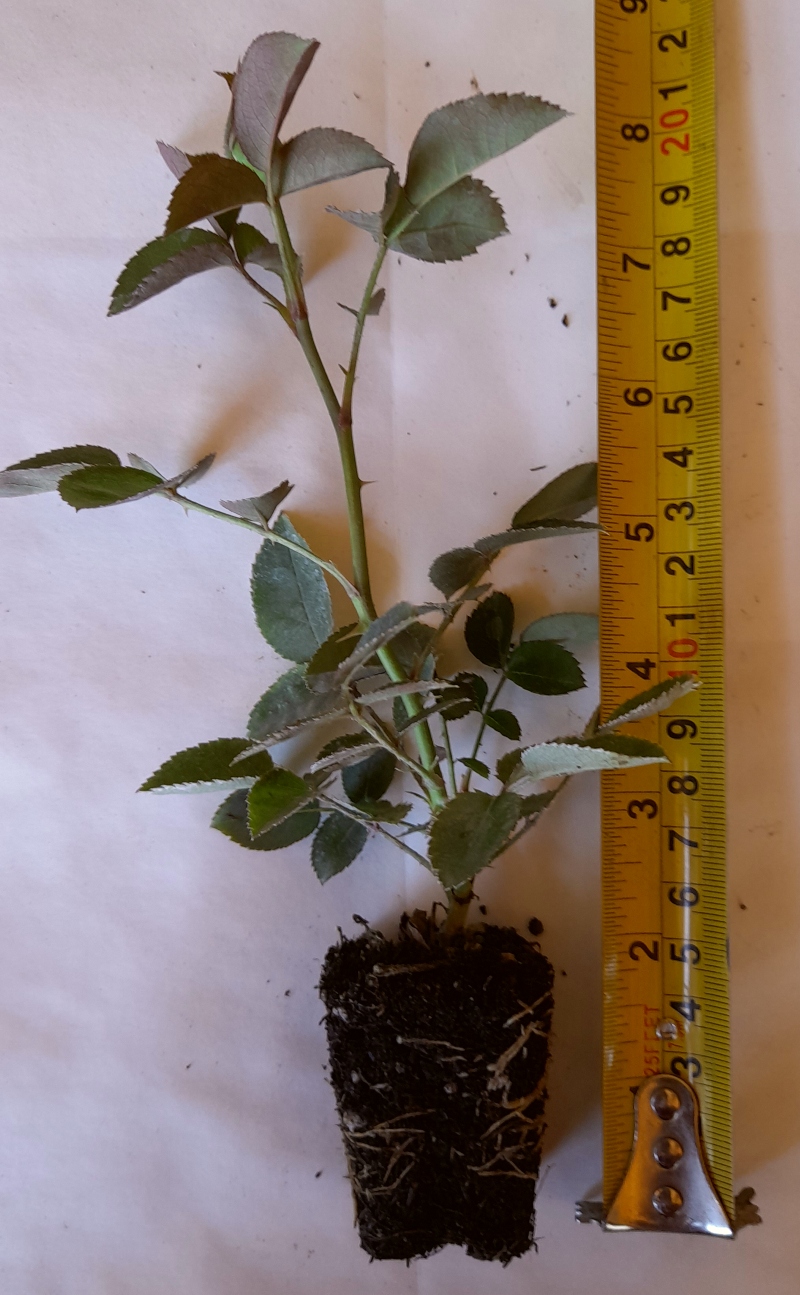
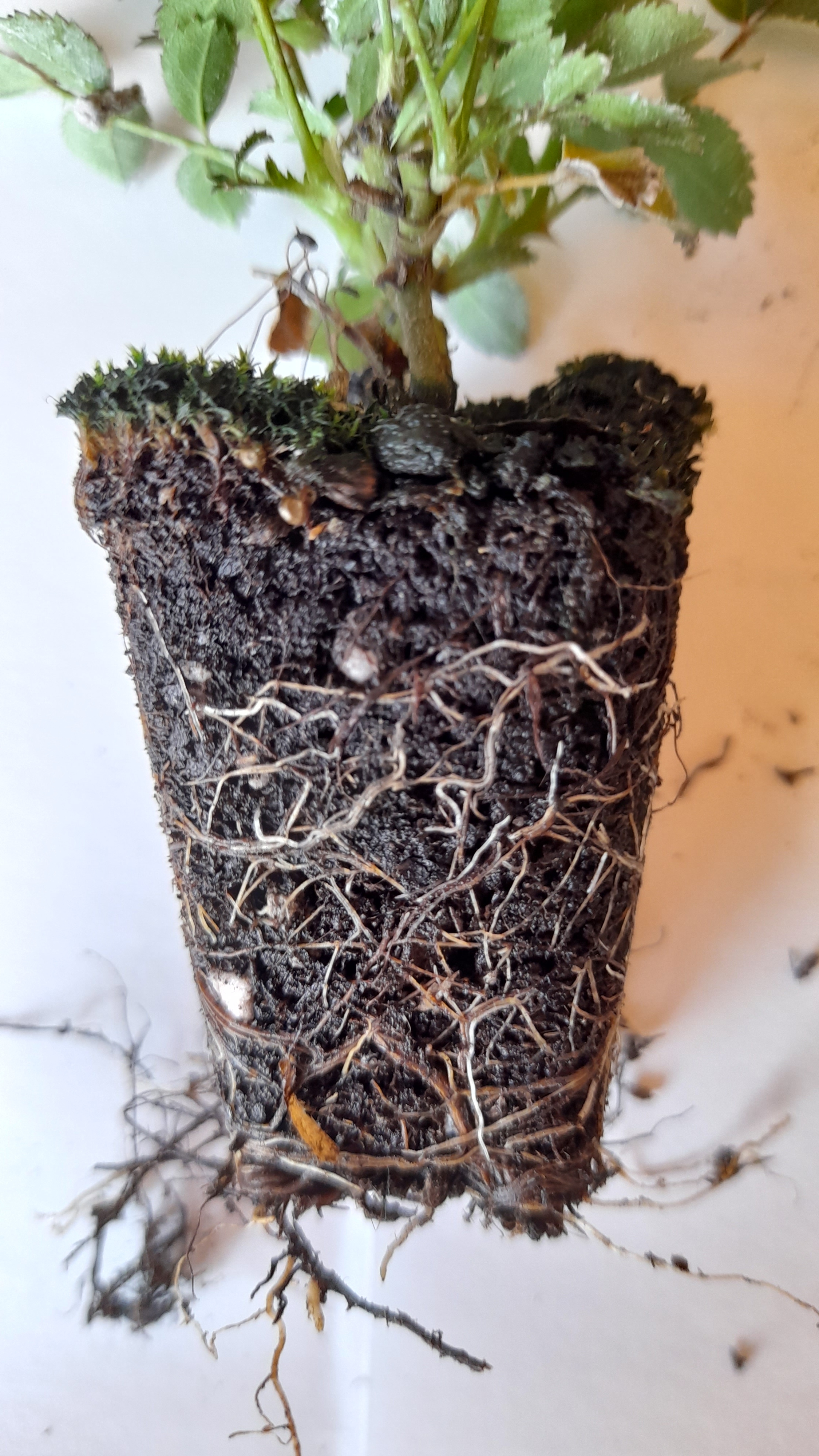
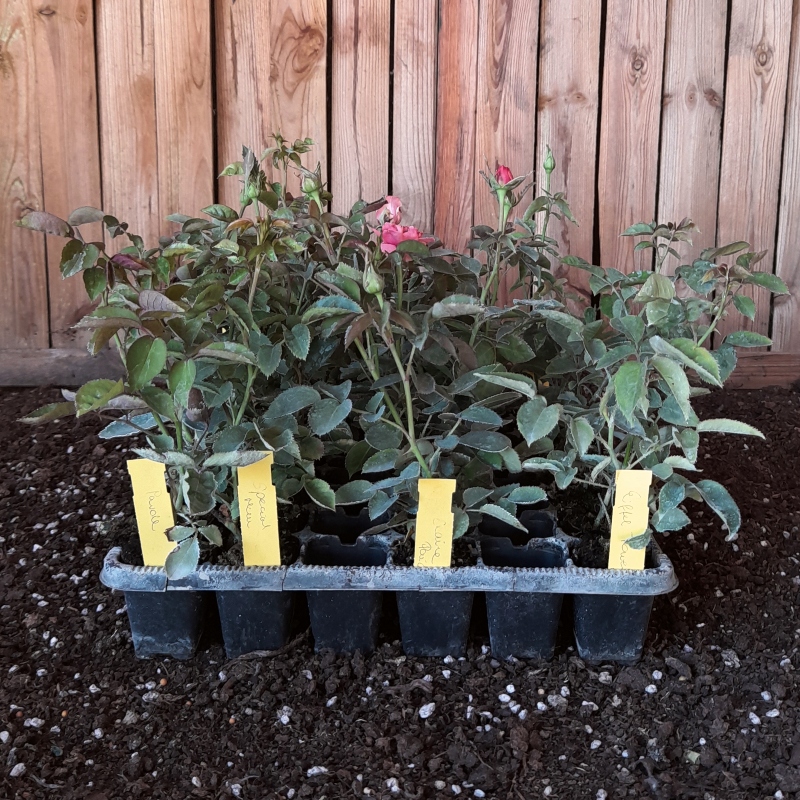
Pink Knock Out® – pharmaROSA® NEONATAL rooted cutting
Reliable own-root propagation of Pink Knock Out® provides a compact, bushy shrub with dense foliage, ideal for efficient 2–3 L container production and scalable bed-rose programmes. The cultivar’s very good heat and drought tolerance, together with H7 frost hardiness, supports dependable nursery output for UK regions where winters and wind can be challenging. Consistently resistant foliage and good self-cleaning reduce grooming and chemical inputs, while repeat flowering ensures strong visual value in standard finished-product lines for retail and reseller channels. Own-root material gives a predictable development arc, with roots consolidating in year one, structural shoots in year two and full ornamental expression in year three, enabling you to plan capacity and release windows with confidence across thematic and collection projects.
Usage options
Finished-product ideas
- 2–3 L Retail Bed Rose Line – Compact, bushy plants in standard 2–3 L containers, emphasising low maintenance and disease resistance as a reliable garden performance bed rose line – Retail / reseller
- Park and Shrub Group Modules – Batch-produced shrub groups from own-root 2–3 L stock, leveraging heat/drought tolerance and vigorous habit for municipal and park bedding schemes – Public-realm suppliers
- Low-Input Landscape Hedge Units – Clipped hedge starters in 3 L pots using self-cleaning, disease-resistant plants to minimise aftercare for commercial and institutional landscapes – Landscape contractors
- Thematic Pink Collection Feature – Branded pink floribunda element within collection benches, using repeat flowering and stable colour to anchor thematic or show-garden assortments – Thematic gardens
- Premium Durable Bed-Rose Range – Own-root, robust 2–3 L units marketed on frost hardiness and long-term stand stability as a premium dependable choice within wider bed-rose programmes – Nursery / wholesale
Technical cultivar profile
| Parameter |
Data |
| Name and registration |
Floribunda/shrub cultivar RADtkopink, traded as Pink Knock Out®, Pink Double Knock Out® and related KNOCK OUT® names; registered 2008 under US Plant Patent PP18 507. |
| Origin and breeding |
Natural sport of ‘Double Knock Out®’, bred in the United States in 2005 by William J. Radler and introduced after 2008 by The Conard-Pyle Company / Star Roses. |
| Awards and recognition |
not provided |
| Growth and structural characteristics |
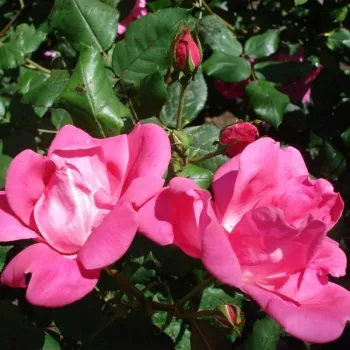
Bushy, compact shrub reaching 100–140 cm in height and spread, with dense, slightly glossy dark green foliage (RHS 137A) and moderate prickles, suited to bed, edging and hedge roles. |
| Flower morphology |
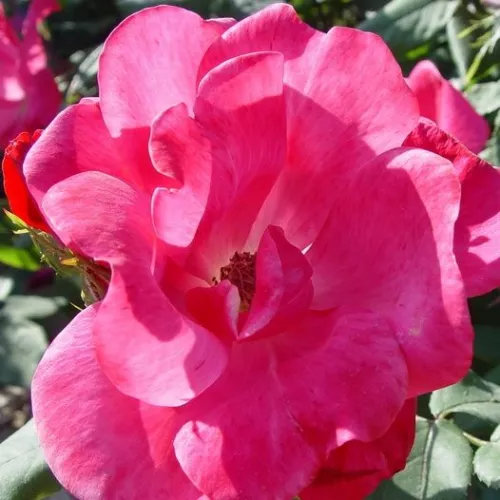
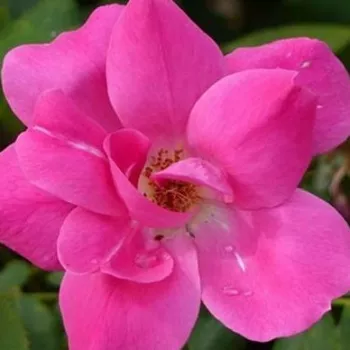
Semi-double, medium-sized blooms (approx. 1.5–2.75 in) with 13–25 petals, cup to flat-opening form, produced in clusters and repeating well with an abundant second flowering cycle. |
| Colour data and phenology |
Vibrant warm medium pink (ARS MP; RHS 55C outer, 55B inner), buds deep pink, opening to mid-pink then fading to pastel with slightly creamy inner petals while retaining good overall colour stability. |
| Fragrance and aroma |
Very faint rosy fragrance with a subtle character; semi-double flowers partially cover the stamens, making the cultivar only partially attractive to pollinating insects in mixed plantings. |
| Hip characteristics |
Hip set expected to be limited because of double flowers; where present, small spherical red hips of approximately 8–11 mm diameter contribute modestly to late-season interest. |
| Resistance and winter hardiness |
Rated resistant to powdery mildew, black spot and rust, with H7 hardiness (approx. –26 to –23 °C, USDA 5b, Swedish Zon 4), supporting robust outdoor production and landscape use in cold regions. |
| Horticultural recommendations |
Suited to flower beds, edging, clipped hedges, shrub groups and parks; low maintenance with minimal pruning and feeding; recommended as bush-trained compact plants in standard 2–3 L containers. |
Pink Knock Out® as pharmaROSA® NEONATAL own-root material combines bushy, low-input performance with proven disease and climate resilience, giving long-lived, predictable stands; we invite you to discuss scheduling and volumes to match your programmes.