Climbing rose

21-406-1
21-406-2

Rose-Marie Viaud

Climbing rose

- – M. Igoult

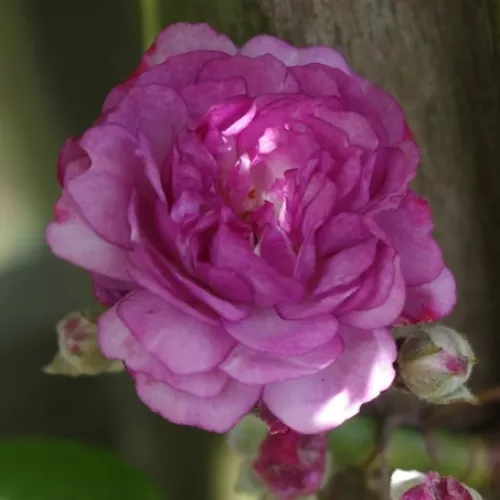
The overall effect is a cool-toned, muted violet–lilac shade that lightens as the flower ages. - rambler, climbing rose - very weak, barely noticeable scented rose - scent description not available

– Romantic violet–lilac blooms in big clusters
– Strong rambler for arches, pergolas and walls
– Impressive height creates a vertical focal point
– Barely prickly canes for easier training
– Hardy to RHS H7 for cold climates
– Special feature: Historic 1924 rambler, certified in the Longwood Gardens 10-year Rose Trial.
Exclusive, space-defining – specialty
Rose-Marie Viaud
pharmaROSA® NEONATAL rooted rose cutting
28,30 £
Due to courier service regulations – and the introduction of customs clearance – delivery to Ireland is temporarily suspended.
4 (5843)
facebook   twitter

ROSE-MARIE VIAUD – lilac rambler climbing rose - Igoult

Historic own-root pharmaROSA® NEONATAL material of Rose-Marie Viaud offers a distinctive lilac-violet rambler for pergolas, fences and walls where vertical structure matters and space-defining features are required. As a climbing cultivar with 3–5 trained main canes, it is well suited to nursery propagation beds and container grow-on into a 5–7 L trained climber finished product, with further potential for large 40–50 litre presentation in high-profile park and collection settings. The once-flowering, cluster-borne, semi-double blooms create a thematic highlight in dedicated rose gardens and curated collections, particularly where an exclusive, speciality rambler look supports retailer and reseller differentiation. Own-root production secures long lifespan, reliable regeneration and homogeneous stands, reducing replacement in long-term municipal and institutional plantings while aligning with sustainability-driven procurement. From rooted tray cutting to finished climber, planning for roots in year one, framework shoots in year two and full ornamental value in year three enables predictable scheduling and stock rotation. The mid-green, slightly glossy foliage and barely prickly growth habit combine to create a visually refined yet easily handled plant for staff, while the cultivar’s certified performance in long-term trials adds credibility for wholesale partners. In broader UK supply, its hardiness supports northern and inland projects, with performance matching nursery networks that must serve sites where winter and wind exposure demand resilient, reliable structures.


Usage options

Target area Reasoning
Pergola and arch production for show and collection gardens The strong climbing habit and height range of 360–550 cm allow reliable coverage of pergolas and arches when trained from 3–5 main canes, matching the trained climber finished product route in 5–7 L then up-potting to larger feature containers if required. As a once-flowering, semi-double rambler with muted violet–lilac colour, it provides a seasonal highlight suited to exclusive, space-defining thematic rose gardens and collections, aligning with retail and reseller partners seeking distinctive vertical garden features for premium nursery networks.
Wall-trained climber for curated vertical ranges The combination of moderate spread (150–220 cm) and tall, climbing habit makes this cultivar suitable for wall-training where a defined, upright framework is needed; own-root material ensures long-term regeneration and reduced replacement on permanent walls. Using staked, pre-trained NEONATAL cuttings simplifies integration into nursery workflows, with predictable development from year-one roots to year-two framework, enabling structured scheduling for trained climber finished products. Its exclusive, niche character supports differentiated vertical garden lines within retail / reseller channels targeting collectors and design-led buyers for specialist garden centres.
Park and public-realm pergola structures Hardiness to approximately -21 – -18 °C (RHS H7) and Swedish Zone 3 makes it suitable for many UK park environments, particularly where robust, long-lived vertical structures are required and own-root stands can be maintained over decades. While disease management needs to be planned due to sensitivity, professional maintenance teams in public parks can integrate regular plant protection into their programmes, using 5–7 L trained climbers as a base and moving selected specimens into 40–50 litre planters for key entrances or focal pergolas. This supports vertical garden features and distinctive habits demanded by public-realm suppliers serving municipal and institutional projects in urban park portfolios.
Solitary specimen in large containers for retail displays The barely prickly canes and moderately dense, slightly glossy foliage make it practical for handling and staging as a solitary specimen, particularly in 40–50 litre containers where the height and lilac bloom effect can be fully expressed in front-of-house retail displays. NEONATAL own-root material ensures stable structure and the possibility of rejuvenation pruning without graft compatibility concerns, supporting repeated merchandising cycles over several seasons from an initial propagation batch. Its exclusive, space-defining positioning fits retailer and reseller concepts where individual statement climbers enhance vertical garden feature tables for branded retail ranges.
Historic and thematic rose garden collections Originating in France in 1924 from ‘Veilchenblau’ seed, this cultivar brings historic authenticity and a clear breeding story, valuable for curated collections and thematic gardens that emphasise heritage rambler lines. Own-root propagation provides secure cultivar identity and long-term stability, important for collection plantings and gene-bank style stands in nurseries or public gardens; tray-rooted NEONATAL cuttings can be batch-planted to establish homogeneous blocks before selecting top plants for 5–7 L trained climber product. This supports thematic rose gardens and collection projects where vertical structures and distinctive lilac hues underpin specialist retail and reseller narratives for heritage-focused outlets.
Integrator and network supply for pergola modules Tray-grown, uniform NEONATAL cuttings allow integrator systems and nursery networks to plan high-volume propagation of a single, recognisable lilac rambler across multiple sites, with consistent quality at the staked, pre-trained stage. The clear product path—rooted cutting to 5–7 L trained climber and, where needed, up-scaling to large containers—supports modular pergola and fence solutions offered under private labels or network-wide ranges. Its role as a vertical garden feature with a distinctive habit dovetails with wholesale-scale supply programmes serving retail / reseller partners who need coherent, repeatable SKUs for multi-site contractors.
Fence-line screens in private-label rose ranges The medium spread and tall climbing capacity lend themselves to linear fence-line screens, where nurseries can present Rose-Marie Viaud as an exclusive lilac rambler module within private-label rose assortments. Own-root stands tolerate repeated production pruning and cropping, supporting predictable annual capacity from mother blocks, while uniform NEONATAL lots simplify timing of 5–7 L finished climber availability. This aligns with vertical garden feature positioning, giving retailers and resellers a recognisable, space-defining climber for colour-themed fence collections in private-label programmes.
Specialist collector and connoisseur segments The once-flowering, non-remontant habit, subtle fragrance and complex colour progression from dark violet-purple buds to pastel lilac-grey appeal to knowledgeable collectors rather than mass-market consumers, suiting focused, small-batch production. Nurseries can leverage own-root NEONATAL material to maintain a compact but high-quality stock base, pruning and renewing plants without graft issues, and releasing limited 5–7 L trained climbers into specialist channels on a pre-order basis. In this way, it supports exclusive, space-defining thematic rose garden collections offered by retailers and resellers catering to collector clientele.

Finished-product ideas

  • Historic pergola climber 7 L – Own-root, staked and pre-trained 5–7 L climbers for pergolas highlighting the historic 1924 origin and lilac rambler character, positioned as an exclusive vertical garden feature – retail / reseller premium lines.
  • Collector’s rambler in 40 L – Up-sized solitary specimen in 40–50 litre containers showcasing height, muted violet–lilac clusters and barely prickly canes, derived from NEONATAL stock for long-term regeneration – specialist rose retailers and mail-order.
  • Park pergola module – Uniform batches from tray-rooted cuttings grown on to 5–7 L trained climbers, offered as modular park pergola units where own-root longevity supports reduced replacement – public-realm and municipal project suppliers.
  • Private-label fence series – Branded fence-line climber within a private-label rose range, using consistent 5–7 L trained plants from NEONATAL propagation for reliable vertical structure and distinctive lilac colour – integrators and multi-site retail networks.
  • Thematic collection duo-pack – Curated pairings of Rose-Marie Viaud with complementary climbers, supplied as matched 5–7 L trained units leveraging its heritage rambler story and exclusive positioning – show gardens and high-end garden centres.

Technical cultivar profile
Parameter Data
Name and registration Current trade name: Rose-Marie Viaud – Climbing rose – Igoult; American Rose Society exhibition name: Rose-Marie Viaud; unregistered cultivar; collection and commercial group classified as climbing rose, rambler, polyantha type.
Origin and breeding Bred by M. Igoult in France, 1924, from an open-pollinated seedling of ‘Veilchenblau’; initially distributed by Hazlewood Bros. Pty. Ltd. (Australia, 1926); breeding company data not provided; own-root NEONATAL material supports authentic lineage.
Awards and recognition Certified cultivar in the Longwood Gardens 10-year Rose Trial, confirming long-term performance under trial management; regarded as a recognised collectors’ rambler for specialist use, supporting confident inclusion in professional ranges.
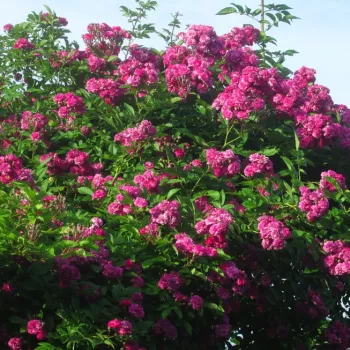
Growth and structural characteristics Climbing habit with height around 360–550 cm and spread 150–220 cm; moderately dense, mid-green, slightly glossy foliage on barely prickly canes; medium self-cleaning so some spent blooms need removal during maintenance in production and landscape.
Flower morphology Semi-double blooms with 13–25 petals, small flower size (0.5–1.5 in), cup-shaped, carried in clusters; non-remontant once-flowering habit giving a concentrated, decorative flush, especially suited to seasonal focal display applications and collection gardens.
Colour data and phenology Overall a cool, muted violet–lilac effect; buds dark violet-purple, opening crimson-purple with greyish-mauve tones; full bloom even purple with paler edges; finally pastel lilac-grey; ARS colour code M, RHS 79A outer and 76C inner petals.
Fragrance and aroma Fragrance strength is very weak, barely noticeable, with no detailed scent description available; semi-double form and limited pollen access reduce pollinator value, so it is primarily selected for ornamental vertical impact rather than sensory features.
Hip characteristics Produces sparse red, egg-shaped hips approximately 6–9 mm in diameter; hips are minor in ornamental effect and not a primary selection criterion, but can contribute occasional seasonal interest on established framework plants in low-maintenance settings.
Resistance and winter hardiness Winter hardiness to about -21 – -18 °C (RHS H7), USDA Zone 6b, Swedish Zone 3; moderate tolerance to heat and drought with reduced performance in prolonged hot or dry conditions; disease resistance medium to powdery mildew and black spot, very sensitive to rust.
Horticultural recommendations Best used as pergola, fence, wall or solitary park specimen; high maintenance requirement with regular plant protection planning; recommended as staked, trained climber finished product in 5–7 L, derived from own-root NEONATAL cuttings for long-term framework stability.

ROSE-MARIE VIAUD – lilac rambler climbing rose - Igoult offers a distinctive lilac rambler effect, long-lived own-root framework and manageable, barely prickly growth, supporting predictable, regenerating vertical structures; please contact us to discuss volumes and scheduling.

Detailed product attributes

Product Identification Data

Product Name: ROSE-MARIE VIAUD – lilac rambler climbing rose - Igoult
Product Type: pharmaROSA® NEONATAL - rooted rose cutting
Cultivar Authenticity: Verified:18.04.2025
Cultivar Quality Rating: premium bronze
Item Number: [1399] 21-406 (14.02.2026) pharmarosaneonatal.co.uk

Name and Registration

Meaning of Cultivar Name: The name was given in honour of Rose‑Marie Viaud, daughter of nurseryman Georges Bruant and wife of Jean Viaud‑Bruant.
Cultivar Synonym: Rosemary Viaud
Original Trade Name: Rose-Marie Viaud
Current Trade Name: Rose-Marie Viaud Climbing rose Igoult
Rose Group: Rambler, Polyantha
Commercial Type: rambler, climbing rose
Commercial Group: Climbing rose
Exhibition Category: climbing rose
Collection: Climbing rose

Origin and Breeding

Initial Distributor: Hazlewood Bros. Pty. Ltd. (Australia, 1926)
Introduction Year: 1924 (France)
Registration Year: unregistered cultivar
Breeder: M. Igoult
Breeding Company / Institution: unknown / no data
Breeding Year: France, 1924
Parentage: 'Veilchenblau' open-pollinated seedling

Awards and Honours

Horticultural Ratings and Recommendations: Longwood Gardens 10-year Rose Trial – certified cultivar
Competition and Show Awards: Longwood Gardens 10-year rose trial – certified variety

Growth and Structural Characteristics

Height: 11.8-18ft (360-550 cm)
Spread: 4.9-7.2ft (150-220 cm)
Growth Habit: climbing
Foliage: The variety's foliage is moderately dense, with leaves that have a slightly glossy surface and a mid‑green shade.
Prickliness: barely prickly
Self-Cleaning Description: Some of the spent blooms remain on the plant and require subsequent cleaning.

Self-Cleaning Intensity: medium self-cleaning

Flower Morphology

Petal Count: 13-25
Flower Fullness: semi-double
Flower Shape: cup-shaped
Flower Size: S (0,5-1,5 in)
Inflorescence Type: cluster-flowered
Colour Code: ARS code: M RHS code: 79A (outer), 76C (inner)
Repeat Flowering: Non-remontant; flowers once.

Colour Data and Phenology

Colour: purple
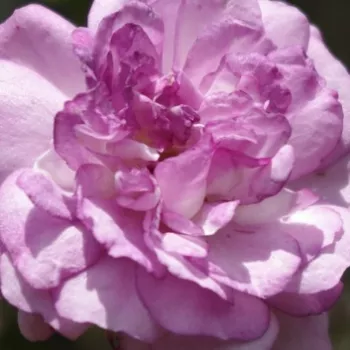
Flower Colour Description: The overall effect is a cool-toned, muted violet–lilac shade that lightens as the flower ages.
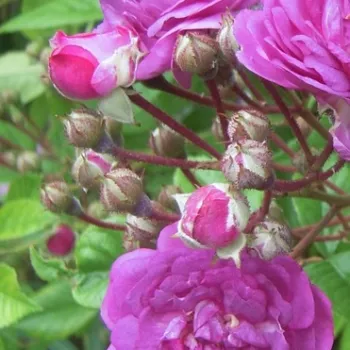
Closed Bud: Dark violet‑purple surface with a subtle bluish tinge.
Newly Opened Flower: Full, intense crimson‑purple exterior, slightly lighter inside with greyish‑mauve tones.
Full Bloom: Uniform purple, with the outer petal edges becoming paler.
Before Fading: Pastel lilac-grey tone, in places with a faint mauve tinge.
Colour Fading Description: As the bloom opens, the dark violet–purplish hue gradually fades to an even purple and then, just before the flower dies back, to a pastel lilac–grey.

Fragrance and Aroma

Fragrance Strength: very weak, barely noticeable scented rose
Fragrance Character: scent description not available
Pollinator Attraction: Semi-double (13–25 petals) — the semi-double flower form reduces access to the stamens, so the blooms provide limited attraction to pollinators.
Pollinator-Friendly Rating: Its semi-double flowers attract pollinators only to a limited extent, so it is primarily an ornamental variety.

Hip Characteristics

Hip Shape: egg shaped
Hip Colour: red
Hip Comment: Rose hip formation is expected to be sparse; red, egg-shaped hips 6–9 mm in diameter.

Resistance and Hardiness

Hardiness (°C): -21–-18 °C
Heat and Drought Tolerance Description: Performance declines in hot conditions; it does not tolerate prolonged drought.
Disease Resistance: sensitive
  • powdery mildew – medium
  • black spot – medium
  • rust – very sensitive

Horticultural Recommendations

Recommended product path: Trained climber finished product
Release form: Staked, trained (3–5 main canes)
Recommended use: Maintenance requirement high; requires regular plant protection due to poor disease resistance.
Primary Uses: pergola, fence, wall, solitary specimen, park

Comments

Positioning: Exclusive, space-defining – specialty
Target customer/channel: Retail / reseller
Main value proposition: Vertical garden feature, distinctive habit
ROSE-MARIE VIAUD – lilac rambler climbing rose - Igoult
The overall effect is a cool-toned, muted violet–lilac shade that lightens as the flower ages. - rambler, climbing rose - very weak, barely noticeable scented rose - scent description not available
Rose Shopping Online - purple - very weak, barely noticeable scented rose - Rose-Marie Viaud - rambler, climbing rose - (11.8-18ft (360-550 cm))
Inflorescence: cluster-flowered Height: 11.8-18ft (360-550 cm) Flower shape: cup-shaped Winter hardiness: 5b purple - Hazlewood Bros. Pty. Ltd. (Australia, 1926) rambler, climbing rose - Flower size: S (0,5-1,5 in) Flower size: S (0,5-1,5 in) - Height: 11.8-18ft (360-550 cm) Height: 11.8-18ft (360-550 cm) - Flower fullness: semi-double Rose-Marie Viaud - Roses in the garden | pharmaROSA® Neonatal - premium bronze M. Igoult

We showcase the external appearance of the roses available for online purchase from our webshop.


Which product type is right for you?


PharmaRosa® NEONATAL is the cost‑effective starting point for rose product production.

As a uniform, own‑rooted propagation material, it provides a stable basis for further growing-on and can be integrated flexibly into different finished product production technologies.
Rooted in trays (rooted), 3–6‑month‑old, own‑rooted rose cutting.

Uniform developmental stage, with a root system that has thoroughly penetrated the plug.
For professional growing‑on.
Tray packaging: 10 pcs/tray.
Quality and varietal identity: production supported by a dedicated identification and traceability logic.
Can be transplanted during frost‑free periods, designed for finished product production.

PharmaRosa® NEONATAL provides a controlled, uniform starting stock for planned growing‑on that can be integrated into your own technology – especially where scheduling and varietal identity are paramount.


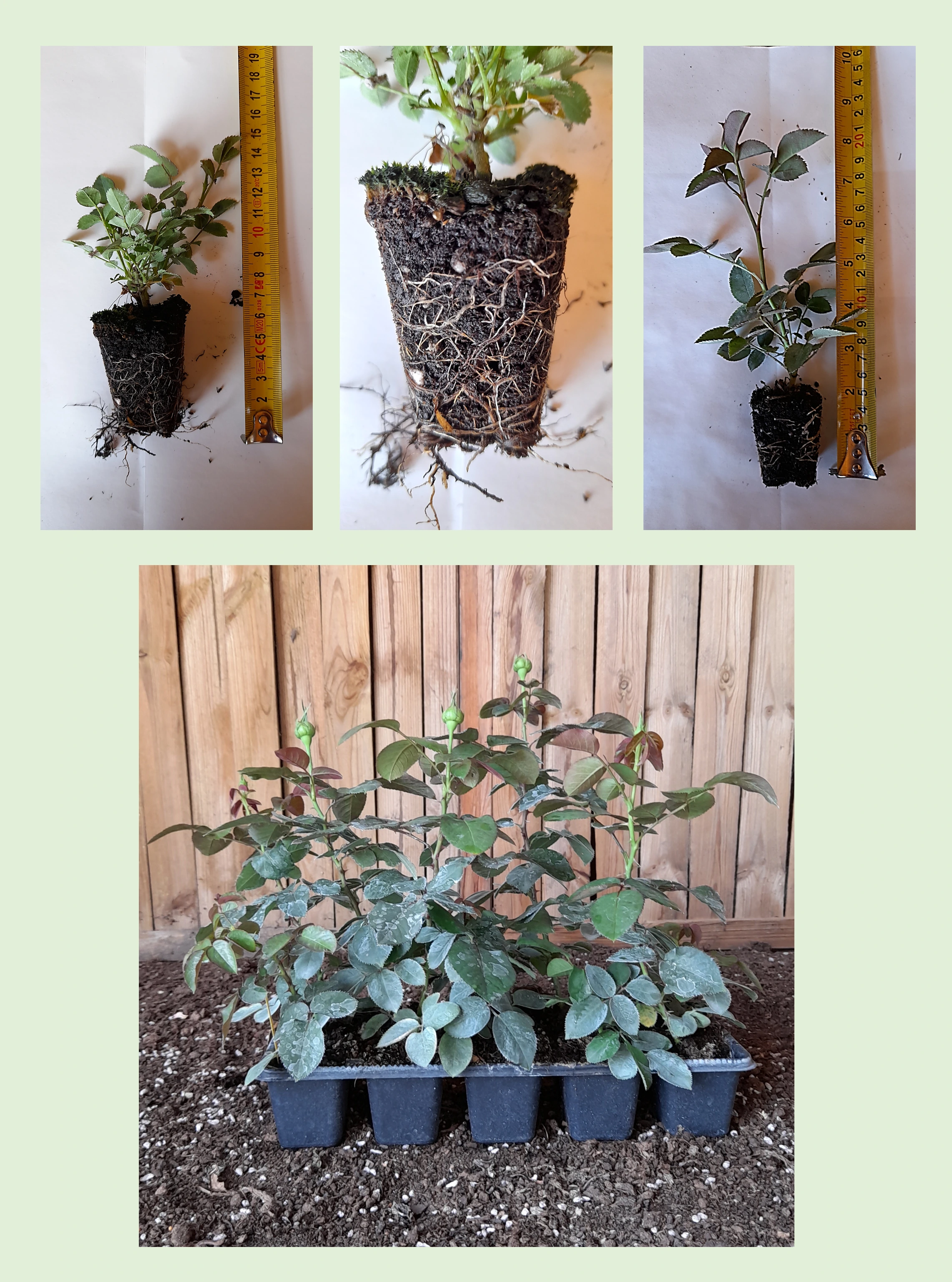
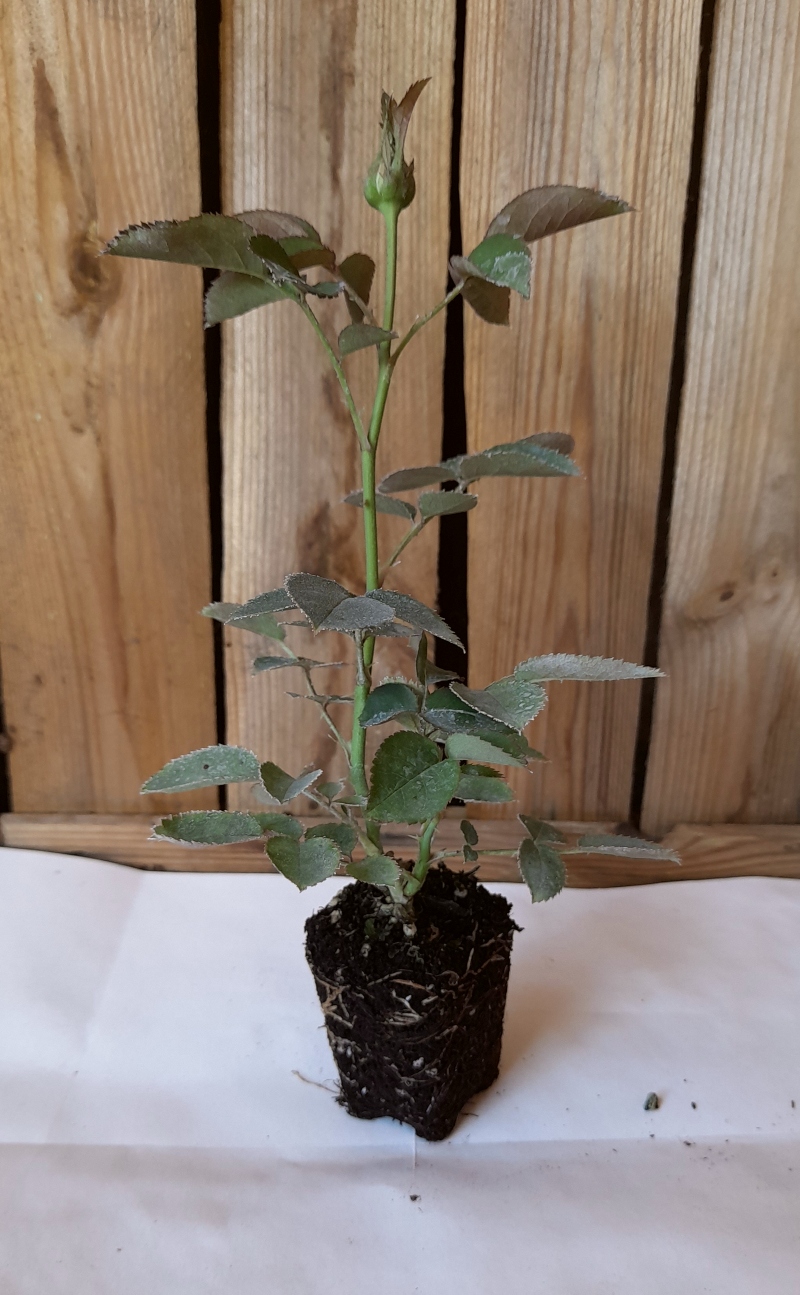
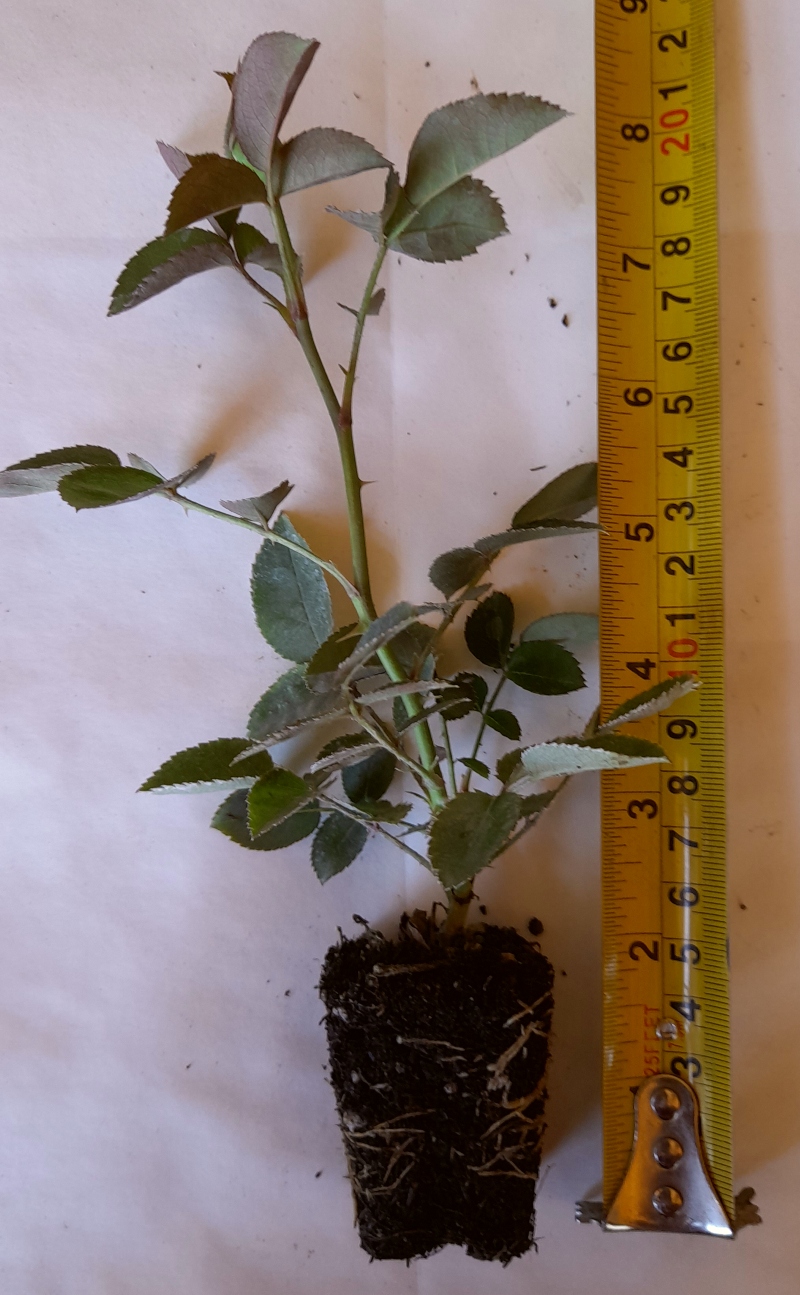
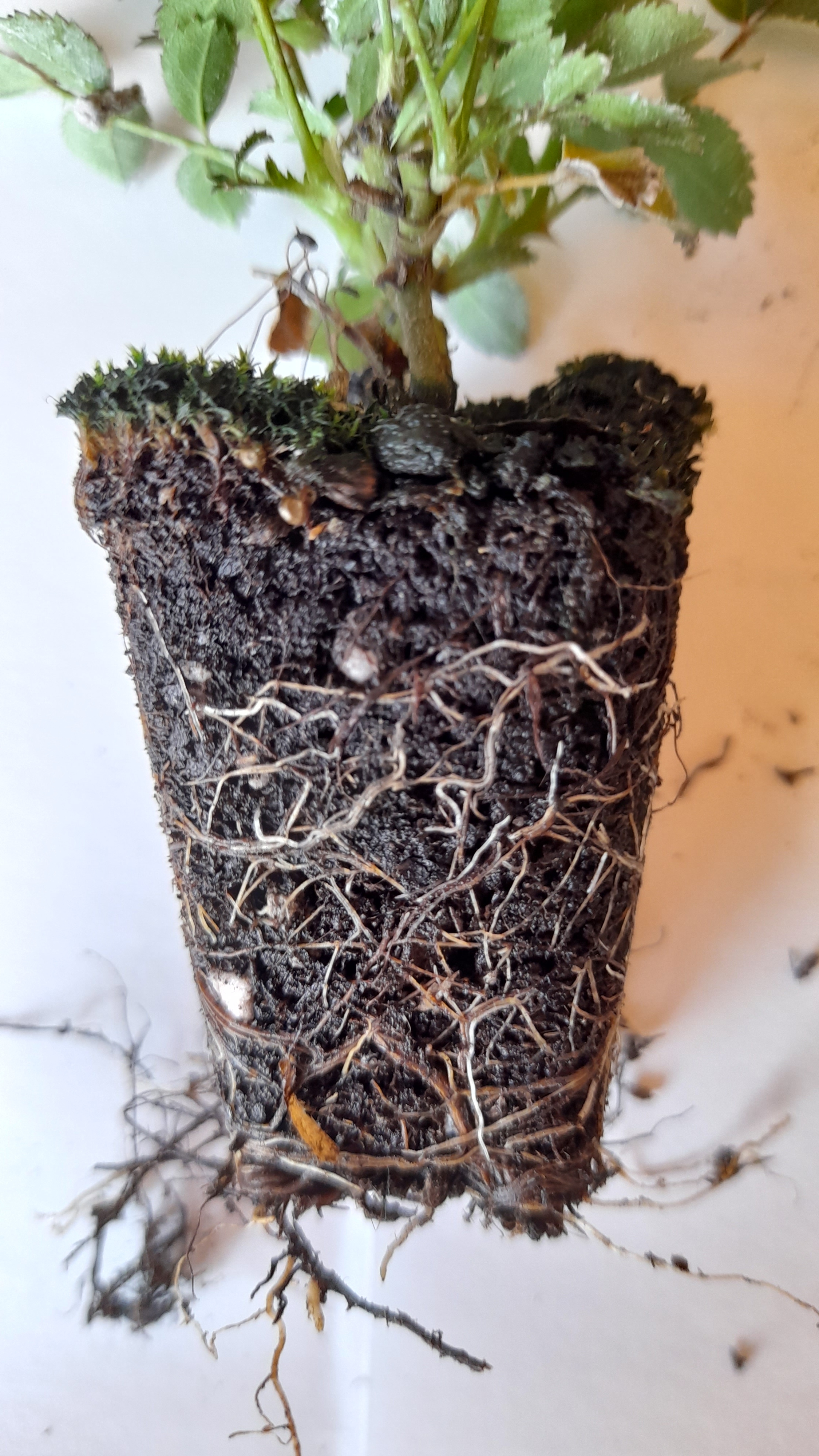
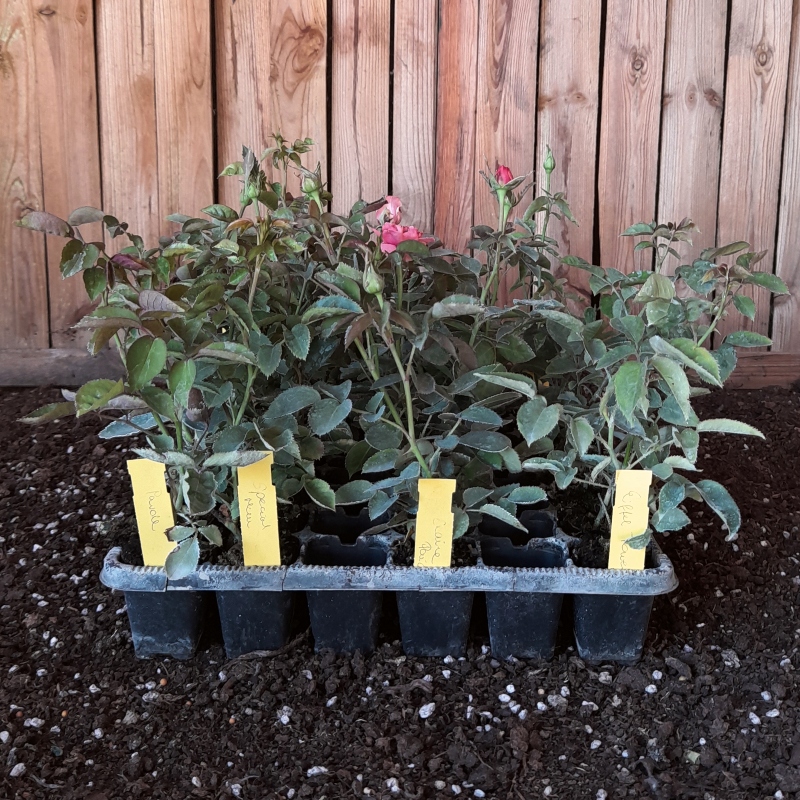
PharmaRosa® NEONATAL own-rooted rose propagation material in a plug, with a root system penetrating the plug (semi-finished product / semi-finished rose). PharmaRosa® NEONATAL rose propagation material size: 3–6‑month‑old, own-rooted cutting with a uniform developmental stage. PharmaRosa® NEONATAL rose propagation material root system: plug densely penetrated by well-developed white roots (root system detail). PharmaRosa® NEONATAL tray stock: own-rooted rose propagation material in trays, uniform developmental stage (10 pcs/tray).

Captions (from left to right): Semi-finished product (NEONATAL own-rooted rose propagation material in a plug with a fully developed root system) • Size demonstration (3–6‑month‑old, uniform cutting) • Root system detail (plug penetrated by the root system) • Tray stock (10 pcs/tray, uniform developmental stage)

pharmarosaneonatal.atpharmarosaneonatal.co.ukpharmarosaneonatal.hupharmarosaneonatal.czpharmarosaneonatal.depharmarosaneonatal.ropharmarosaneonatal.sipharmarosaneonatal.skpharmarosaneonatal.itpharmarosaneonatal.frpharmarosaneonatal.nlpharmarosaneonatal.plpharmarosaneonatal.lupharmarosaneonatal.ptpharmarosaneonatal.espharmarosaneonatal.ltpharmarosaneonatal.sepharmarosaneonatal.lvpharmarosaneonatal.eepharmarosaneonatal.fi

Which product type is right for you?

Pages for private customers
Garden roses for the family garden, with minimal care  → ORIGINAL®
Premium garden roses – instant impact, a truly showpiece garden  → EXTRA®
Pages for professionals and private customers
Roses for public spaces – large areas, sustainable maintenance  → NATURAL®
Roses for projects – hedge and row planting, fast implementation  → RAPID®
For professional partners only
Production – propagation material for garden roses, wholesale  → NEONATAL®

Company details

PharmaRosa Ltd.
Company registration number: 01-09-717479
VAT number: 13075314-2-43
Plant health registration no.: HU130721
Bank account (IBAN):
HU85117631891388688400000000
BIC (SWIFT): OTPVHUHB
Bank name: OTP Bank Nyrt.