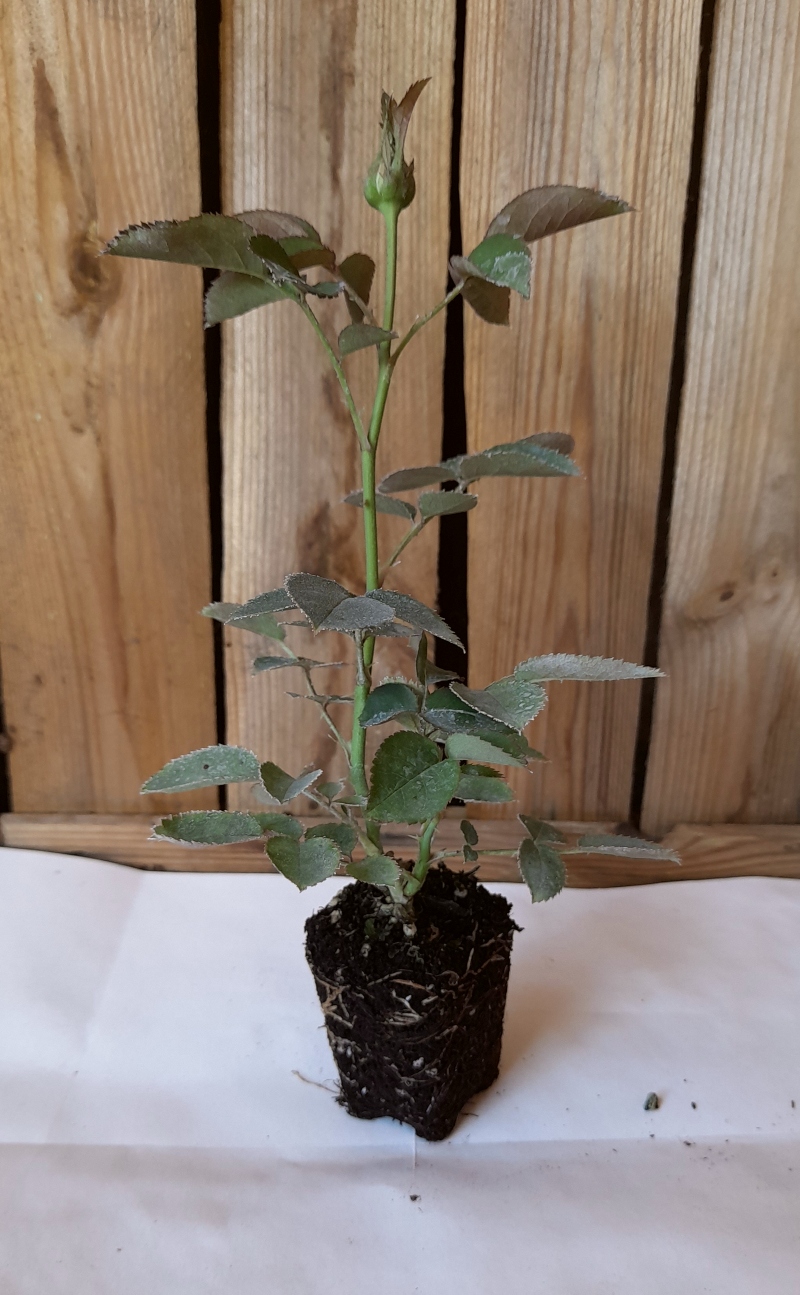
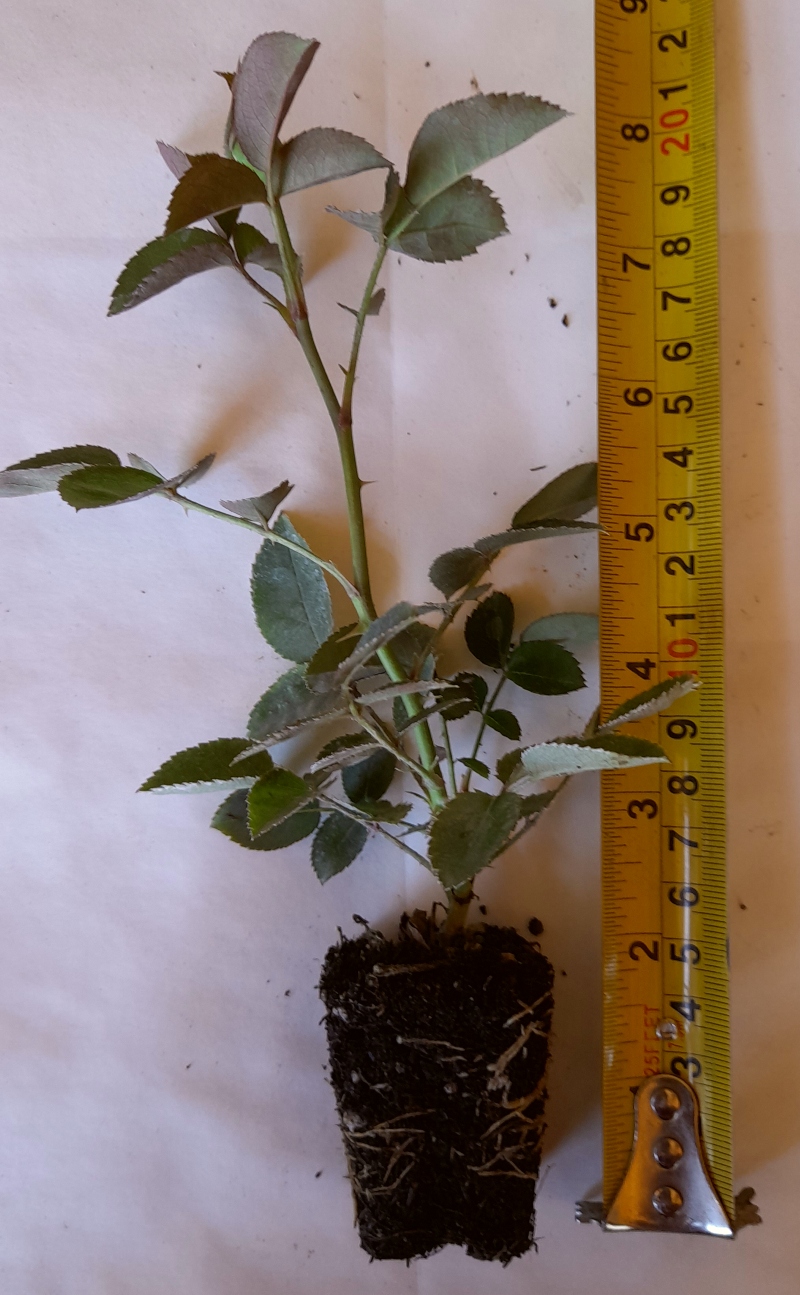
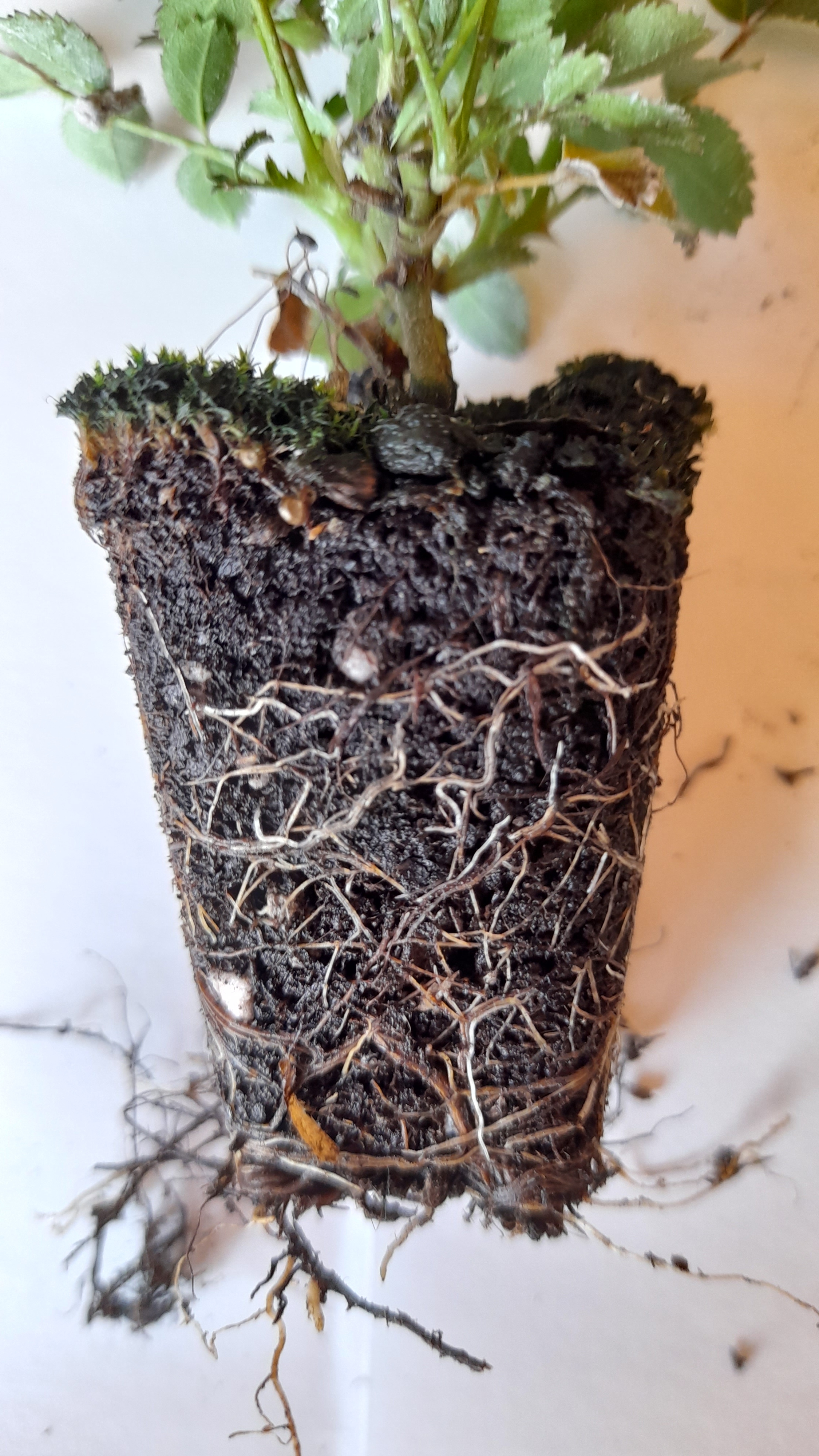
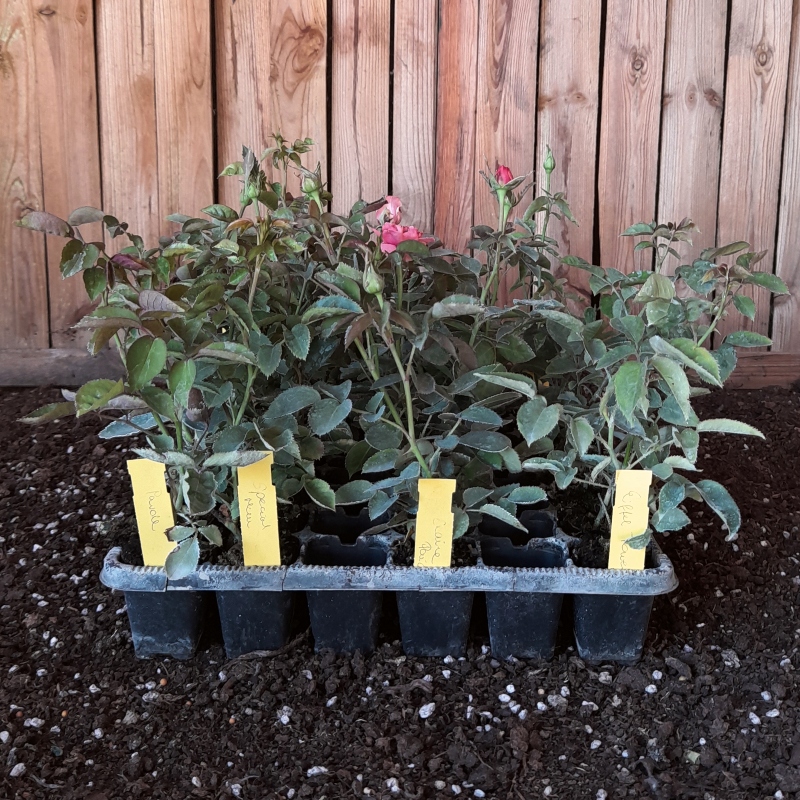
Rotilia® RigoRosen® KORvillade – pharmaROSA® NEONATAL rooted cutting
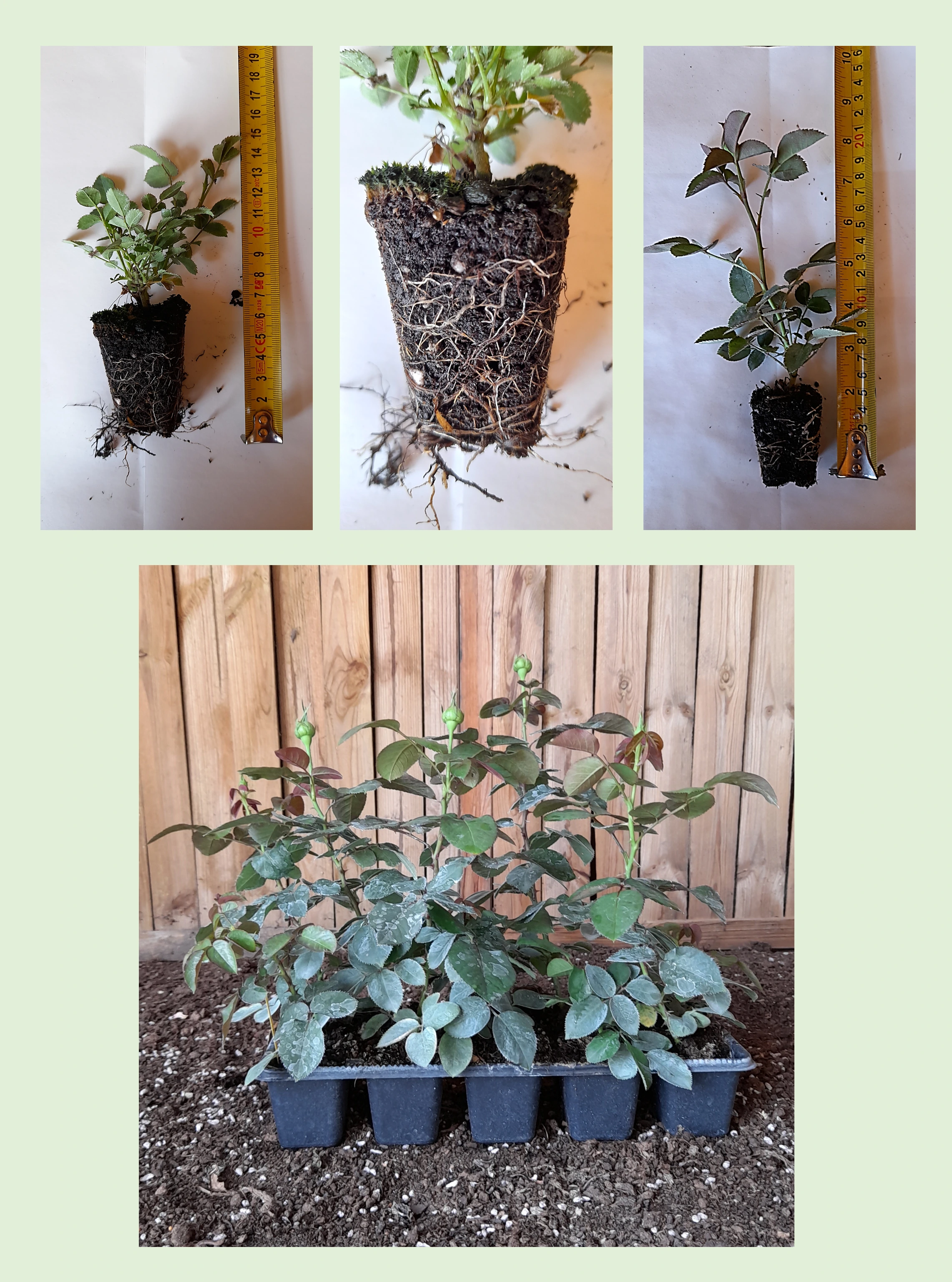
Reliable propagation performance, compact architecture and floribunda flowering make Rotilia® a practical choice for nursery container lines and bed-rose ranges where low-intervention, disease-tolerant material is required. The own-root NEONATAL format delivers tray-grown young plants at a uniform stage, easy to schedule into 2–3 L standard containers for retail/reseller channels focused on dependable garden performance. Its ADR and Gold Standard background underlines robust disease resistance and winter hardiness, supporting homogeneous stands with reduced replacement in public-realm and park settings that face humid, fungal-pressure conditions typical of western UK projects. The upright, bushy habit and self-cleaning clusters translate into visually tidy, renewable plantings suited to thematic rose gardens and collection beds; roots consolidate in year one, structural shoots build in year two, and by year three the cultivar expresses its full ornamental potential in finished stock.
Usage options
Finished-product ideas
- Rotilia® 2–3 L bedding line – Own-root, bush-trained plants in standard 2–3 L containers for dense, compact bedding and edging schemes built on high disease resistance and low maintenance – retail and reseller programmes
- Municipal carmine-red mass planting unit – Volume-oriented batches from NEONATAL material for parks and urban green spaces, leveraging heat tolerance and robust foliage to stabilise large beds with minimal intervention – public-realm suppliers
- Thematic floribunda collection block – Uniform own-root stock for cultivar-maintenance plots and curated rose collections, using its award-backed reliability and floribunda architecture as a reference planting – specialist rose gardens and nurseries
- Pollinator-aware urban rose mix – Semi-double, cluster-flowered plants combined with other partial pollinator-supporting cultivars in standard containers, emphasising durable, tidy, low-input beds – institutional and housing-association tenders
- Large-container display anchors – Selected plants stepped from 2–3 L into 40–50 L pots to highlight saturated carmine-red colour and compact habit in show beds and entrance displays – garden centres and demonstration sites
Technical cultivar profile
| Parameter |
Data |
| Name and registration |
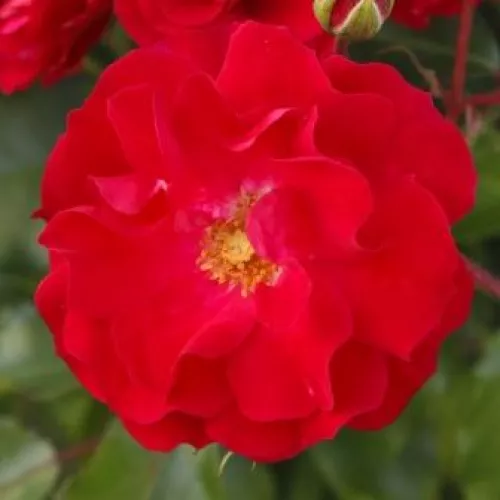
Floribunda bed rose registered as KORvillade, marketed as Rotilia® RigoRosen®; ARS exhibition name Rotilia®, commercial type flowerbed floribunda, exhibition floribunda shrub rose category. |
| Origin and breeding |
Bred in Germany in 1992 by Wilhelm Kordes III., W. Kordes’ Söhne; introduced after 2006 with ARS registration in 2006, representing modern Kordes floribunda breeding lines. |
| Awards and recognition |
Widely decorated: Dublin, Kortrijk and Geneva Gold Medals (2001), several Silver Medals, Den Haag Gold Rose (2003), plus ADR certification (2002) and Gold Standard distinction (2008). |
| Growth and structural characteristics |
Upright, compact, bushy habit, 60–85 cm tall and 40–60 cm spread; dense, dark green glossy foliage (RHS NN137A), moderately thorny, forming cohesive bedding and edging structures. |
| Flower morphology |
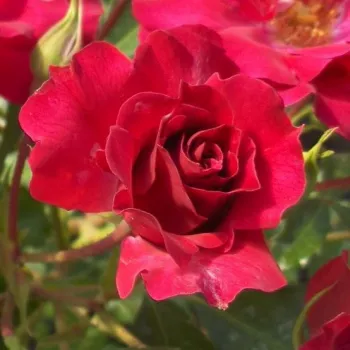
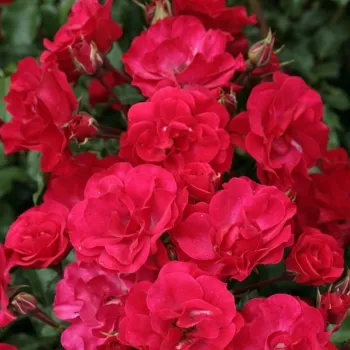
Semi-double, flat, medium-sized flowers (1.5–2.75 in) with 9–16 petals in cluster-flowered inflorescences; remontant, with abundant second flowering, and good self-cleaning of spent blooms. |
| Colour data and phenology |
Carmine-red blooms, ARS code mr, RHS 53B outer and 53C inner; fiery red when opening, lightening to raspberry red with slight silvery edges, overall retaining colour reasonably well in sun. |
| Fragrance and aroma |
Very faint, briefly perceptible fragrance with a wild rose character; semi-double form with partially accessible stamens offers some attraction for bees and other pollinating insects. |
| Hip characteristics |
Produces moderate numbers of spherical hips, 7–10 mm in diameter, coloured scarlet-red (RHS 46A), adding discreet seasonal interest without overwhelming the compact plant habit. |
| Resistance and winter hardiness |
Rated resistant to powdery mildew, black spot and rust; hardy to approximately -21 to -18 °C, RHS H7, Swedish zone 3, USDA 6b, with good heat and moderate drought tolerance. |
| Horticultural recommendations |
Suited to flower beds, parks, urban green and groundcover edging; bush-trained, compact plants for standard container production, low maintenance, minimal interventions, own-root NEONATAL propagation base. |
Rotilia® RigoRosen® KORvillade as own-root pharmaROSA® NEONATAL material combines compact, self-cleaning, disease-resistant performance with proven awards and predictable, regenerating stands, making it a sound choice to discuss capacity and scheduling around your rose ranges.