Climbing rose

21-452-1
21-452-2

William Baffin

Climbing rose

- – Felicitas Svejda

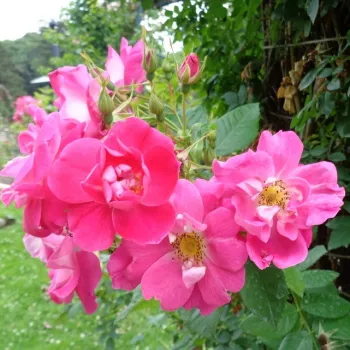
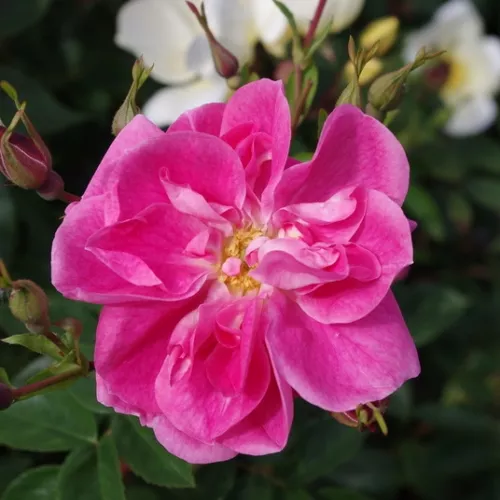
Vibrant deep pink with a purplish tinge, slightly lighter at the base of the petals. - climber, climbing rose - very weak, barely perceptible scented rose - delicate, rose-like character

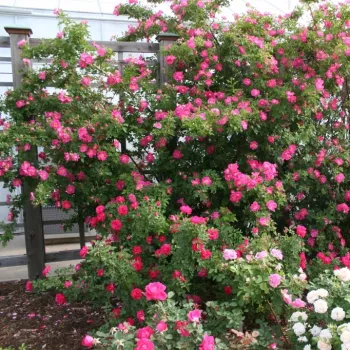
– Vigorous Climbing rose for fences and pergolas
– Abundant clusters of deep pink flowers
– Reliable repeat flowering with strong second flush
– Hardy to -37 °C, suitable for cold climates
– Recognised with Earth-Kind North designation
– Special feature: Forms tomato‑orange hips, adding autumn interest.
Exclusive, space-defining – specialty
William Baffin
pharmaROSA® NEONATAL rooted rose cutting
28,12 £
Due to courier service regulations – and the introduction of customs clearance – delivery to Ireland is temporarily suspended.
4.5 (6633)
facebook   twitter

WILLIAM BAFFIN – deep pink climbing-rambler rose - Svejda

This climber’s vigorous growth and allocated hardiness profile make it a dependable NEONATAL starting point for nurseries looking to build long-term, own-root vertical ranges at volume. The dense foliage and medium maintenance resistance demands support consistent quality in trained, staked propagation beds, while the remontant flowering habit with a strong second flush underpins season-long ornamental value for pergola and fence programmes. Colour stability in deep-pink clusters enables predictable, showy park and collection features, and the moderately prolific hips extend the display for thematic rose gardens in climates where winter cold and wind are regular constraints. Within a planned Year 1 roots, Year 2 shoots, Year 3 full ornamental value schedule, you can position William Baffin confidently as an exclusive, space-defining specialty climber for trained 5–7 L finished stock.


Usage options

Target area Reasoning
Pergola and arch climber production The vigorous structural growth gives reliable height and spread for building a strong framework over pergolas and arches within the recommended trained climber finished product route. NEONATAL own-root material establishes quickly in 5–7 L pots, then scales to 40–50 litre or in-ground projects, supporting predictable scheduling for exclusive, space-defining vertical features for retail / reseller
Cold-climate park and public-realm schemes The very high hardiness rating (H7, to around -37 °C) makes this cultivar suitable where winter damage is a key production risk, aligning well with nursery networks servicing northern parks and exposed sites. Using own-root NEONATAL stock for trained, staked climbers reduces replacement and simplifies cultivar maintenance in long-term schemes aimed at vertical garden feature planting for retail / reseller
Fence-line and boundary screening lines Dense, glossy foliage allows nurseries to offer visually solid fence-cover solutions with good ornamental foliage even between flowering peaks. Training 3–5 main canes in 5–7 L containers gives a clear product architecture for fence applications, and own-root continuity supports repeatable series for exclusive, space-defining boundary concepts for retail / reseller
Medium-maintenance thematic rose collections Medium maintenance requirement and occasional plant protection needs are manageable for professional operators running collection beds and thematic displays. NEONATAL tray-rooted cuttings provide identity-secure own-root material for collection blocks, while the trained climber route in 5–7 L improves handling and labelling of distinctive vertical garden feature units for retail / reseller
Season-extended vertical colour programmes Remontant flowering with a plentiful second flush supports programmes that require colour beyond the main early summer peak. In production, this allows more flexible release windows from trained 5–7 L stock through to larger landscape units, particularly valuable in regions where humidity and fungal pressure are common but manageable in professional systems focusing on vertical garden feature lines for retail / reseller
Showy colour-focused climber ranges The vibrant deep pink with good colour retention and controlled fading gives a consistent, recognisable look that is easy to market across labels and catalogues. Cluster-flowered, flat blooms read well at distance on pergolas and fences, allowing nurseries to present uniform benches of trained climbers as an exclusive, space-defining colour statement for retail / reseller
Pollinator-conscious vertical plantings Semi-double flowers with 13–25 petals offer moderate pollinator attraction, which can be a useful talking point where biodiversity-sensitive specifications are requested, without compromising the primary ornamental effect. Tray-rooted own-root material scaled into 5–7 L trained units fits procurement for public and private schemes that still prioritise a vertical garden feature focus for retail / reseller
Autumn-interest and hip-feature schemes Moderately prolific, small ovoid tomato-orange hips add an extra season of interest, supporting value in longer selling seasons and in collection plantings where hips are part of the specification. Own-root climbers regenerate well after cropping and pruning, so production blocks remain productive and uniform for years while supplying exclusive, space-defining hip-accented climbers for retail / reseller

Finished-product ideas

  • Trained 5–7 L pergola climber – NEONATAL own-root plants with 3–5 canes pre-trained in 5–7 L offer a ready-to-install pergola unit, leveraging vigorous growth and dense foliage as an exclusive vertical feature – target: retail / reseller garden centres.
  • Cold-climate signature climber – Position William Baffin as a hardy H7 flagship for northern schemes, supplied as a staked trained climber that exploits its structural vigour and winter tolerance – target: nurseries serving municipal and public-realm contracts.
  • Fence and screen series – Produce uniform fence-line units with dense, glossy foliage and cluster-flowered pink blooms, standardised in 5–7 L containers for easy bench presentation – target: multi-site retailers needing repeatable vertical ranges.
  • Collection-garden feature line – Use identity-verified NEONATAL stock to build thematic rose collections where remontant flowering and tomato-orange hips extend the viewing season – target: show gardens, estates and specialist rose collections.
  • Large-specification landscape climber – Grow on NEONATAL plants from 5–7 L to 40–50 litre specimens for instant-impact pergola and arch installations, capitalising on growth strength and own-root durability – target: landscape contractors and integrator systems.

Technical cultivar profile
Parameter Data
Name and registration Climbing rose from the William Baffin group, ARS exhibition name William Baffin, commercial type climber; current trade name William Baffin Climbing rose Svejda; collection classification: Climbing rose.
Origin and breeding Hybrid Kordesii climber from Agriculture and Agri-Food Canada, Central Experimental Farm, Ottawa; parentage ‘Kordesii’ × (‘Red Dawn’ × ‘Suzanne’); bred by Felicitas Svejda, bred 1974, introduced and registered 1983.
Awards and recognition Holds Earth-Kind North certification from Texas A&M University (2007) and multiple ARS Classic Shrub Rose awards from 1999–2001 at several American rose shows, confirming proven field performance.
Growth and structural characteristics Climbing growth habit with dense, dark green glossy foliage; height around 240–400 cm, spread about 140–240 cm; densely thorned canes; self-cleaning is good, with most spent flowers dropping cleanly from the clusters.
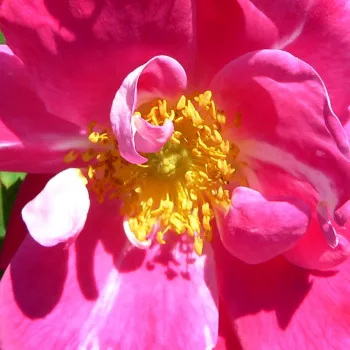
Flower morphology Semi-double blooms with approximately 13–25 petals in medium-sized, flat flowers, roughly 1.5–2.75 inches; cluster-flowering inflorescences; remontant with a plentiful second flush, helping maintain display across the main season.
Colour data and phenology Deep pink with purplish tinge, slightly lighter at petal base; ARS code DP, RHS 57A–57B; newly opened flowers bright fuchsia, buds deep carmine; good colour retention, lightening slightly in strong sun and remaining richer in cooler conditions.
Fragrance and aroma Fragrance is very weak, barely perceptible, with a delicate rose-like character when detectable; the cultivar’s value lies primarily in visual and structural effect rather than scent performance in planting schemes.
Hip characteristics Forms moderately prolific, small rose hips, approximately 6–11 mm, ovoid in shape and tomato-orange in colour, giving additional seasonal interest in late summer and autumn without significantly burdening maintenance.
Resistance and winter hardiness Hardy to about -37 to -34 °C, RHS rating H7, Swedish zone 6, USDA zone 3b; disease profile medium overall with powdery mildew medium, rust medium, but black spot resistant; tolerates heat reasonably with watering in prolonged droughts.
Horticultural recommendations Suitable for parks, solitary specimens, pergolas and fences; medium maintenance, with occasional plant protection; recommended as a staked, trained climber with 3–5 main canes from 5–7 L pots, aiming at an exclusive, space-defining vertical feature role.

William Baffin Climbing rose Svejda offers vigorous growth, high hardiness and dense foliage on predictable, regenerative own-root stock, making it a solid candidate for aligning capacity and scheduling for trained climber programmes.

Detailed product attributes

Product Identification Data

Product Name: WILLIAM BAFFIN – deep pink climbing-rambler rose - Svejda
Product Type: pharmaROSA® NEONATAL - rooted rose cutting
Cultivar Authenticity: Verified:14.03.2025
Cultivar Quality Rating: premium bronze
Item Number: [1445] 21-452 (14.02.2026) pharmarosaneonatal.co.uk

Name and Registration

Meaning of Cultivar Name: The name refers to the English explorer William Baffin, who was the first European to describe Baffin Bay, which is named after him.
Original Trade Name: William Baffin
Current Trade Name: William Baffin Climbing rose Svejda
Rose Group: Climber, Hybrid Kordesii
Commercial Type: climber, climbing rose
Commercial Group: Climbing rose
Collection: Climbing rose

Origin and Breeding

Breeder: Felicitas Svejda
Breeding Company / Institution: Agriculture and Agri-Food Canada; Central Experimental Farm (Ottawa)
Breeding Year: Canada, 1974
Parentage: ‘Kordesii’ × (‘Red Dawn’ × ‘Suzanne’)

Awards and Honours

Horticultural Ratings and Recommendations: Earth-Kind North designation (Texas A&M University, 2007)
Competition and Show Awards: Earth-Kind North certification (Texas A&M University, 2007); ARS Classic Shrub Rose awards (1999, 2000, 2001 at several American rose shows)

Growth and Structural Characteristics

Height: 7.9-13.1ft (240-400 cm)
Spread: 4.6-7.9ft (140-240 cm)
Growth Habit: climbing
Foliage: The variety has dense foliage. The leaves are glossy and dark green in colour.
Prickliness: densely thorned
Self-Cleaning Description: Most spent flowers largely fall off naturally, leaving the clusters clean.
Self-Cleaning Intensity: Self-cleaning: good.

Flower Morphology

Petal Count: 13-25
Flower Fullness: semi-double
Flower Shape: flat
Flower Size: M (1,5-2,75 in)
Inflorescence Type: cluster-flowered
Colour Code: ARS code: DP RHS code: 57A, 57B
Repeat Flowering: Remontant, with a plentiful second flush of flowers.

Colour Data and Phenology

Colour: deep-pink
Flower Colour Description: Vibrant deep pink with a purplish tinge, slightly lighter at the base of the petals.
Closed Bud: Deep carmine pink with darker crimson tones at the tips.
Newly Opened Flower: Bright fuchsia with a slightly paler pink transition towards the centre.
Full Bloom: Uniform deep strawberry pink, fading to a soft pink towards the petal base.
Before Fading: The edges of the petals fade to a pale pink, while the centre remains a slightly darker tone.
Colour Fading Description: In strong sunlight it lightens slightly, while in cool weather it remains more vivid.

Fragrance and Aroma

Fragrance Strength: very weak, barely perceptible scented rose
Fragrance Character: delicate, rose-like character
Pollinator Attraction: Semi-double flowers with 13–25 petals moderately attract pollinators because the semi‑double form partially conceals the stamens, reducing their accessibility and thus the flower’s attractiveness.
Pollinator-Friendly Rating: Due to its semi-double flowers it is considered partially pollinator-friendly.

Hip Characteristics

Hip Shape: ovoid
Hip Colour: tomato-orange
Hip Comment: Moderately prolific, 6–11 mm in diameter, ovoid, tomato‑orange rose hip.

Resistance and Hardiness

Hardiness (°C): -37–-34 °C
Heat and Drought Tolerance Description: Tolerates heat reasonably well and requires watering during prolonged dry periods.
Disease Resistance: medium
  • powdery mildew – medium
  • black spot – resistant
  • rust – medium

Horticultural Recommendations

Recommended product path: Trained climber finished product
Release form: Staked, trained (3–5 main canes)
Recommended use: Maintenance requirement medium; occasionally requires plant protection.
Primary Uses: park, solitary specimen, pergola, fence

Comments

Positioning: Exclusive, space-defining – specialty
Target customer/channel: Retail / reseller
Main value proposition: Vertical garden feature, distinctive habit
WILLIAM BAFFIN – deep pink climbing-rambler rose - Svejda
Vibrant deep pink with a purplish tinge, slightly lighter at the base of the petals. - climber, climbing rose - very weak, barely perceptible scented rose - delicate, rose-like character
Rose Shopping Online - deep-pink - very weak, barely perceptible scented rose - William Baffin - climber, climbing rose - (7.9-13.1ft (240-400 cm))
Inflorescence: cluster-flowered Height: 7.9-13.1ft (240-400 cm) Flower shape: flat Winter hardiness: 6b deep-pink - - climber, climbing rose - Flower size: M (1,5-2,75 in) Flower size: M (1,5-2,75 in) - Height: 7.9-13.1ft (240-400 cm) Height: 7.9-13.1ft (240-400 cm) - Flower fullness: semi-double William Baffin - Roses in the garden | pharmaROSA® Neonatal - premium bronze Felicitas Svejda

We showcase the external appearance of the roses available for online purchase from our webshop.


Which product type is right for you?


PharmaRosa® NEONATAL is the cost‑effective starting point for rose product production.

As a uniform, own‑rooted propagation material, it provides a stable basis for further growing-on and can be integrated flexibly into different finished product production technologies.

Rooted in trays (rooted), 3–6‑month‑old, own‑rooted rose cutting.
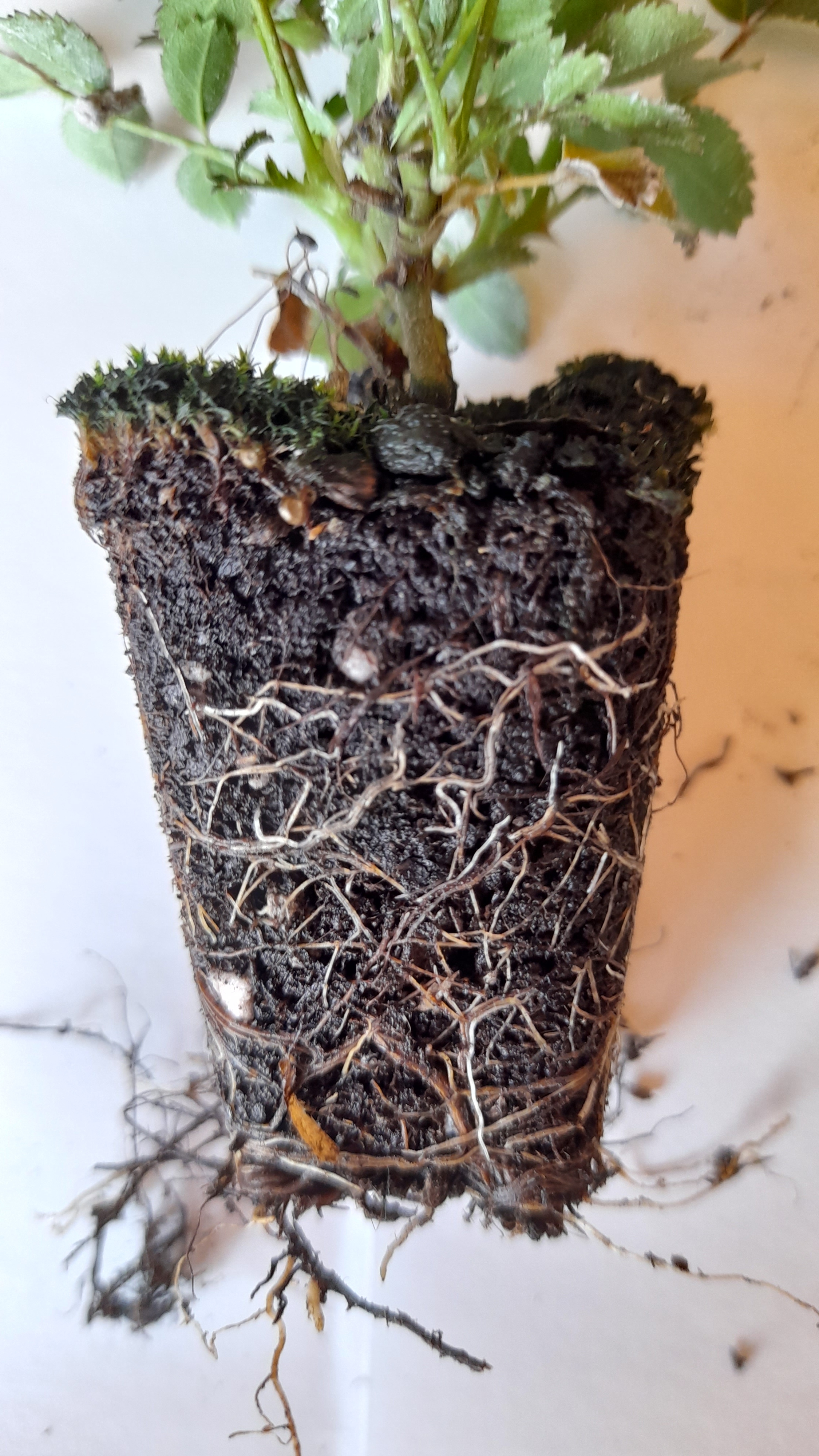
Uniform developmental stage, with a root system that has thoroughly penetrated the plug.
For professional growing‑on.
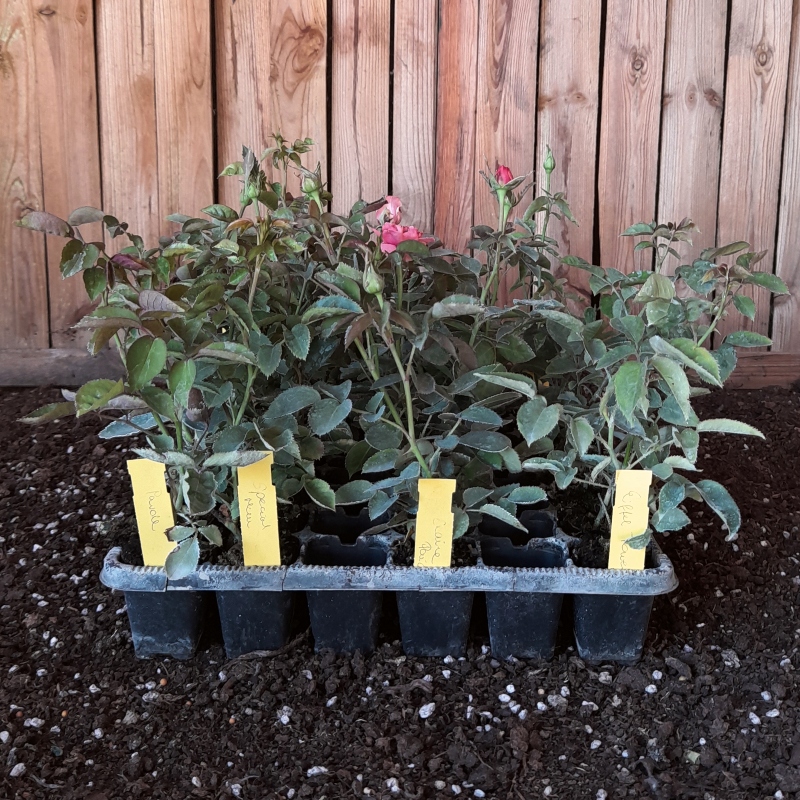
Tray packaging: 10 pcs/tray.
Quality and varietal identity: production supported by a dedicated identification and traceability logic.
Can be transplanted during frost‑free periods, designed for finished product production.

PharmaRosa® NEONATAL provides a controlled, uniform starting stock for planned growing‑on that can be integrated into your own technology – especially where scheduling and varietal identity are paramount.


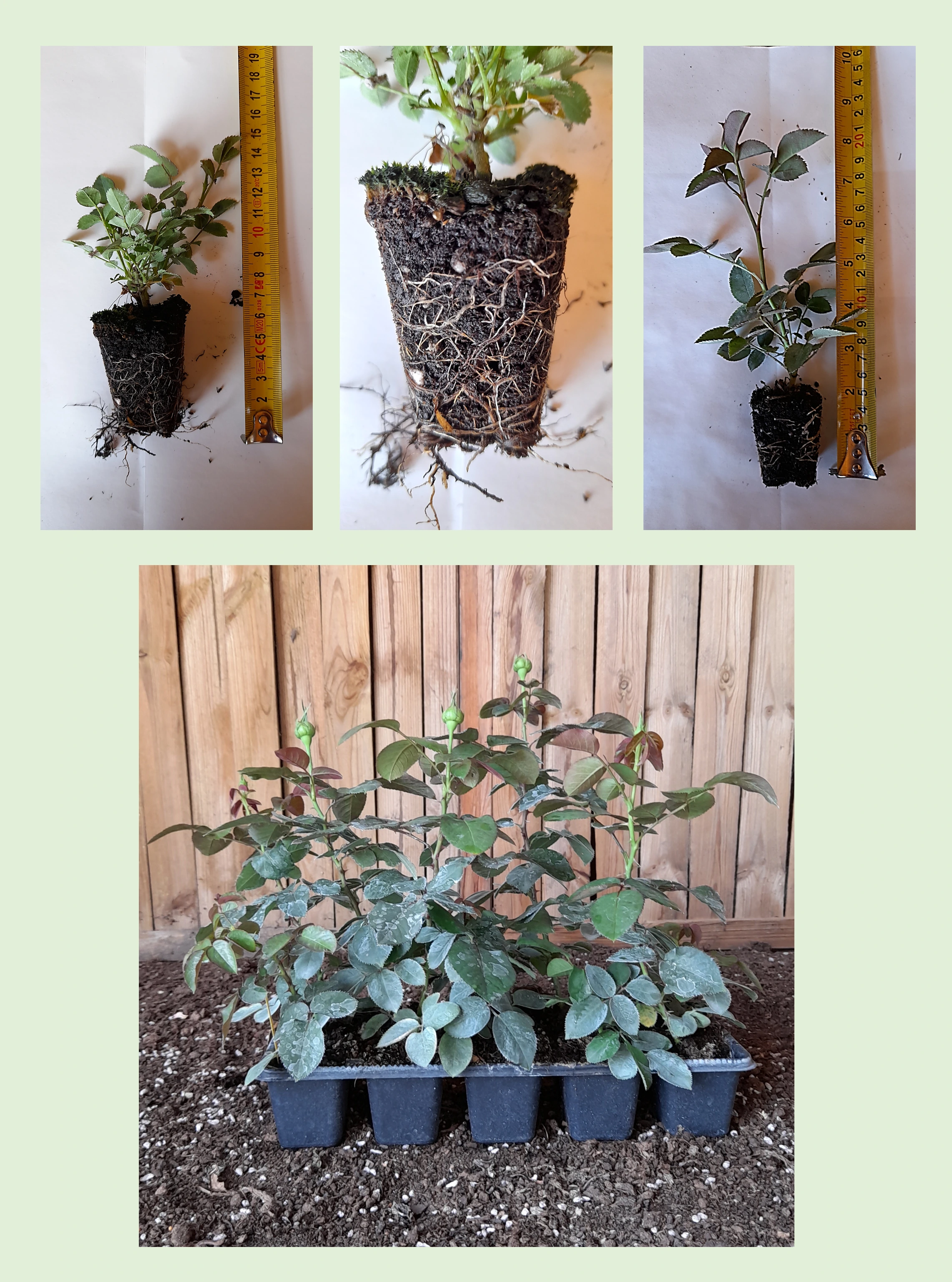
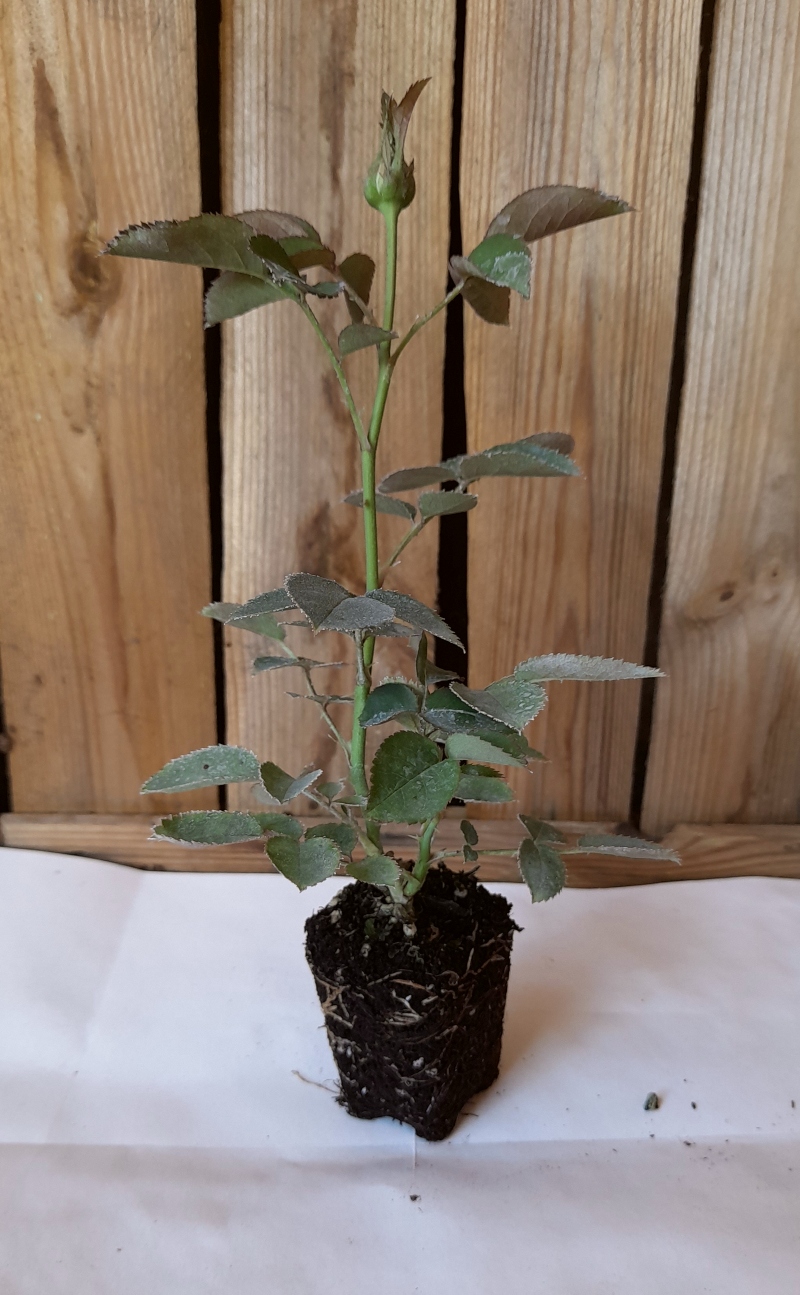
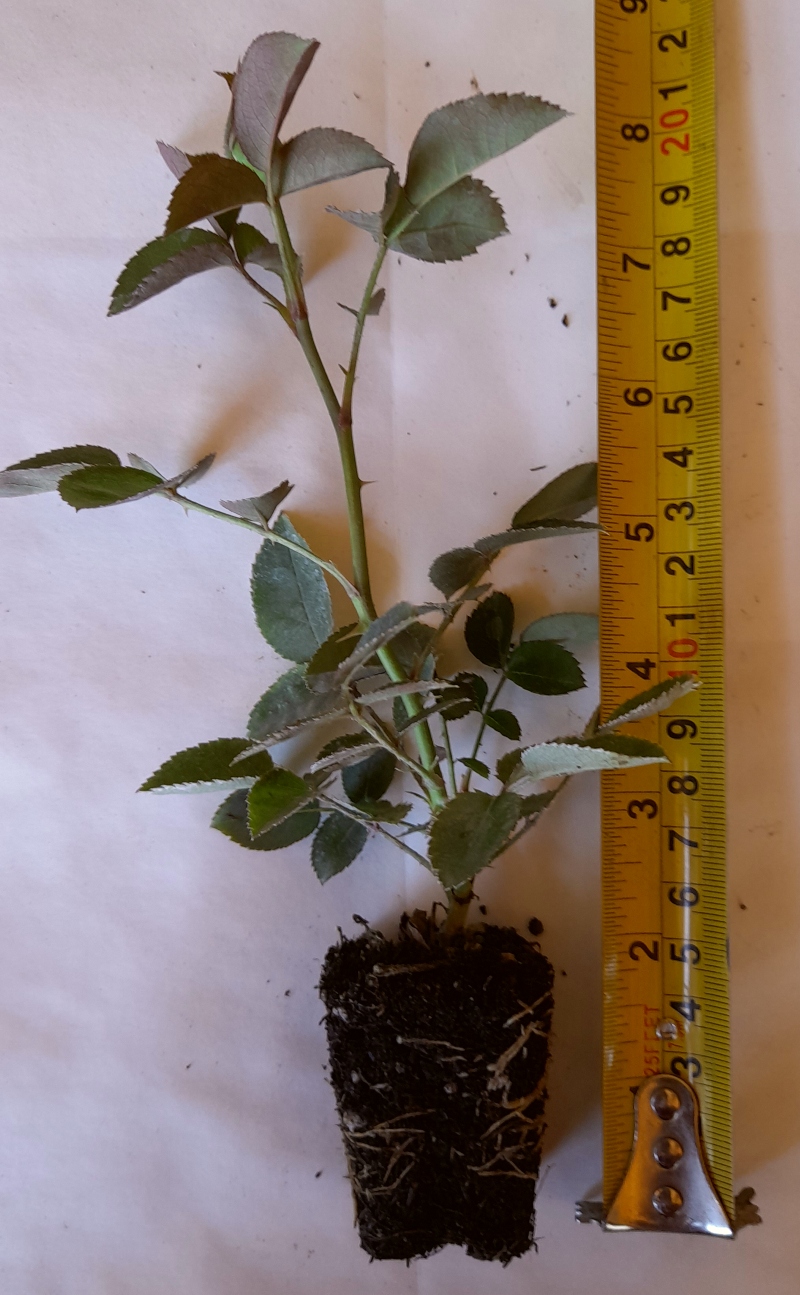
PharmaRosa® NEONATAL own-rooted rose propagation material in a plug, with a root system penetrating the plug (semi-finished product / semi-finished rose). PharmaRosa® NEONATAL rose propagation material size: 3–6‑month‑old, own-rooted cutting with a uniform developmental stage. PharmaRosa® NEONATAL rose propagation material root system: plug densely penetrated by well-developed white roots (root system detail). PharmaRosa® NEONATAL tray stock: own-rooted rose propagation material in trays, uniform developmental stage (10 pcs/tray).

Captions (from left to right): Semi-finished product (NEONATAL own-rooted rose propagation material in a plug with a fully developed root system) • Size demonstration (3–6‑month‑old, uniform cutting) • Root system detail (plug penetrated by the root system) • Tray stock (10 pcs/tray, uniform developmental stage)

pharmarosaneonatal.atpharmarosaneonatal.co.ukpharmarosaneonatal.hupharmarosaneonatal.czpharmarosaneonatal.depharmarosaneonatal.ropharmarosaneonatal.sipharmarosaneonatal.skpharmarosaneonatal.itpharmarosaneonatal.frpharmarosaneonatal.nlpharmarosaneonatal.plpharmarosaneonatal.lupharmarosaneonatal.ptpharmarosaneonatal.espharmarosaneonatal.ltpharmarosaneonatal.sepharmarosaneonatal.lvpharmarosaneonatal.eepharmarosaneonatal.fi

Which product type is right for you?

Pages for private customers
Garden roses for the family garden, with minimal care  → ORIGINAL®
Premium garden roses – instant impact, a truly showpiece garden  → EXTRA®
Pages for professionals and private customers
Roses for public spaces – large areas, sustainable maintenance  → NATURAL®
Roses for projects – hedge and row planting, fast implementation  → RAPID®
For professional partners only
Production – propagation material for garden roses, wholesale  → NEONATAL®

Company details

PharmaRosa Ltd.
Company registration number: 01-09-717479
VAT number: 13075314-2-43
Plant health registration no.: HU130721
Bank account (IBAN):
HU85117631891388688400000000
BIC (SWIFT): OTPVHUHB
Bank name: OTP Bank Nyrt.