Park shrub rose

21-410-1
21-410-2

Annelies

Park - shrub rose

LENplero – Louis Lens

Delicate powder-pink base colour that fades to almost white as the flower fully opens. - park rose - very weak, discreetly scented rose - delicate, elegant character

– Compact, upright shrub for versatile planting
– Remontant, blooms repeatedly all season
– Very double, rosette blooms in soft powder pink
– Reliable park rose with moderate disease tolerance
– Decorative orange-red hips add autumn interest
– Special feature: Winner of Rome silver medal 2000, valued for dependable garden performance.
Standard finished product
Annelies
pharmaROSA® NEONATAL rooted rose cutting
28,30 £
Due to courier service regulations – and the introduction of customs clearance – delivery to Ireland is temporarily suspended.
4 (5896)
facebook   twitter

Annelies – pale pink park rose – pharmaROSA® NEONATAL rooted cutting

Professional own-root propagation of Annelies supports predictable nursery production where a compact, upright habit and medium maintenance needs suit streamlined shrub rose lines and standard container scheduling. The remontant, abundantly repeating flowering in small rosette clusters provides reliable pale-pink colour value for specimen, hedge and mass-planting concepts in thematic rose collections. With moderate disease tolerance at H7 hardiness, it fits UK portfolios aiming to cover cooler, wind-exposed regions in a stable, long-term way for public and private schemes. The moderate-sized spherical autumn hips add discreet seasonality for projects that value subtle ornamental change. As an own-root, tray-grown cutting at 3–6 months, it is straightforward to integrate into standard container routes, moving from Year 1 root establishment through Year 2 shoot structure to full ornamental expression by Year 3 under professional management. This supports wholesale partners needing consistent starting material for retail/reseller-facing, reliable garden performance offers.


Usage options

Target area Reasoning
Standard container shrub production (2–3 L) Annelies fits the recommended standard container route with a 2–3 litre target pot, where its compact, upright shrub structure produces a balanced, bush-trained finished plant for benches and multi-site dispatch. Own-root NEONATAL cuttings give a uniform starting stage, helping nurseries plan homogeneous batches with predictable capacity. Aligning crop timing with its reliable remontant flowering supports a steady supply of sale-ready shrubs for retail/reseller programmes built around reliable garden performance for the standard finished product segment. Professional nursery and garden centre supply
Hedge and mass-planting lines The 120–170 cm height and 60–100 cm spread make Annelies suitable for clipped or informally maintained hedges and mass plantings, using the same 2–3 litre route as a base size before landscape planting or further growing on. Own-root material provides long-lived, regenerating hedge stands with lower replacement demand, which is practical for institutional plantings and large contracts. Medium maintenance needs with only occasional pest and disease control dovetail with public-realm specifications focused on reliable garden performance at controllable input levels. Landscape and public-realm contractors
Specimen shrub for thematic rose collections The pale powder-pink rosette blooms and Hybrid Musk background make Annelies a useful specimen for dedicated rose collections and show gardens, where consistent form and identity are important. NEONATAL own-root cuttings support cultivar-true maintenance stands and collection beds that can be renewed or divided over time without graft compatibility concerns. The remontant, abundant second flush allows curators to present an extended display season that underpins a “reliable garden performance” promise for collection-focused retail and visitor-facing sites. Specialist rose collections and display gardens
Small climbing and pillar training Where a small climbing or pillar effect is desired, the moderate height and upright habit of Annelies can be trained onto low structures after an initial 2–3 litre container phase. Own-root plants tolerate such training loads well, regenerating from the base if older canes are renewed, which suits longer-term installations. This flexibility allows nurseries to create alternative finished SKUs from the same propagation base, extending shrub ranges into simple vertical solutions that still meet the retail channel’s demand for dependable, repeat-flowering roses. Value-added shrub and pillar rose ranges
Cut-flower side lines from shrub blocks Although primarily a park shrub rose, the very double, cluster-flowered rosettes can provide small-scale cut stems from stock or mother blocks, supporting local florist or farm-shop links. Using NEONATAL plants for stock beds ensures stable long-term productivity as own-root bushes can be pruned harder to refresh flowering wood. Remontant flowering under standard container-based establishment gives a predictable framework for summer and early autumn stem availability, in line with a usage promise based on reliable ornamental performance rather than specialist cut-rose grades. Local florist and farm-gate suppliers
Medium-maintenance public planting schemes Moderate disease resistance and medium care needs position Annelies for schemes where regular but not intensive maintenance is available, such as housing developments, campus landscapes or private estates. Own-root longevity and the ability to regenerate from basal shoots support robust, low-replacement shrub lines over time. Its performance remains reliable provided soil moisture is maintained in warm spells, fitting project briefs that combine ornamental value with realistic upkeep for retail/reseller-supplied roses destined for public or semi-public landscapes. Estate and facilities management planting
Autumn-interest shrub rose plantings The moderate crop of small, spherical orange-red hips adds a secondary ornamental phase after the pale-pink flowering has eased, extending seasonal interest in mixed shrub borders and themed rose areas. Managed from a standard 2–3 litre base, plants can be grown on into larger landscape pots if required, with own-root structure supporting long-term hip production without decline. This subtle seasonality complements the core promise of reliable garden performance, particularly for retail projects emphasising multi-season value from relatively simple maintenance regimes. Mixed ornamental shrub assortments
Larger container feature shrubs (40–50 L) Where a more mature, ready-structured plant is required, Annelies can be grown on from NEONATAL cuttings through standard containers into 40–50 litre feature shrubs for entrances, terraces or showcase beds. Own-root stock responds well to progressive potting, building a durable framework that tolerates pruning cycles while maintaining flowering reliability. This route allows nurseries to offer higher-value feature pieces that still align with a standard finished product positioning and a retail message centred on dependable, repeat-flowering shrub performance. Premium container and project-based sales

Finished-product ideas

  • 2–3 L park shrub line – Upright, compact shrubs from NEONATAL cuttings finished in 2–3 litre standard containers, showcasing remontant pale-pink rosette flowering as a reliable garden performance core line – retail and reseller networks.
  • Hedging and mass-planting batch – Uniform own-root plants batch-produced for hedge and mass plantings, leveraging stable structure, medium maintenance needs and moderate disease tolerance – public-realm and landscape contract suppliers.
  • Thematic collection specimen – Clearly labelled Annelies specimens grown on for show gardens and curated rose collections, highlighting Hybrid Musk heritage, remontant bloom and autumn hips – specialist nurseries and rose collections.
  • Small climber on support – Bush-trained plants shifted from 2–3 litre pots into larger containers with simple supports, using upright growth to create compact climbing or pillar effects – value-added garden centre feature SKUs.
  • 40–50 L feature shrub – Own-root shrubs stepped up into 40–50 litre containers for entrances and terraces, capitalising on structural stability, repeat flowering and seasonal hip interest – premium independent garden centres and project sales.

Technical cultivar profile
Parameter Data
Name and registration Shrub, Hybrid Musk park rose marketed as Annelies, with registered cultivar name LENplero and ARS exhibition name Annelies; collection and commercial grouping as Park – shrub rose for professional use.
Origin and breeding Bred by Louis Lens in Belgium and introduced by Lens Roses Nursery in 2000; parentage not provided; registered the same year under the code LENplero for international shrub rose trade.
Awards and recognition Received a silver medal in Rome in 2000, giving additional credibility for assortment building where proven, recognised shrub cultivars can support sales discussions and assortment differentiation.
Growth and structural characteristics Upright, compact shrub reaching about 120–170 cm in height and 60–100 cm in spread, with moderately dense, slightly glossy light-green foliage and moderate prickliness for structured park and garden use.
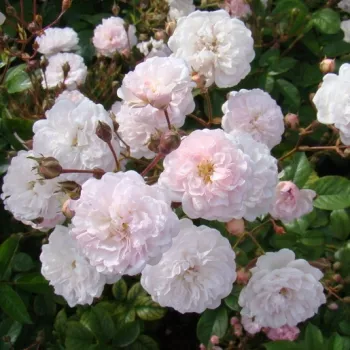
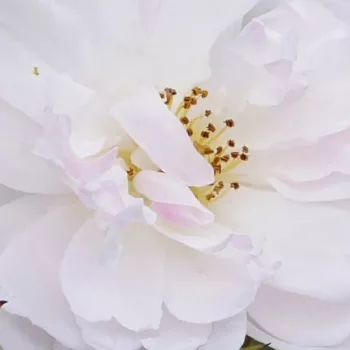
Flower morphology Very double, small rosette flowers with more than 40 petals, produced in large clusters; the cultivar is remontant with a second flowering that is also abundant, providing extended ornamental value.
Colour data and phenology Pale powder-pink flowers, ARS code lp, RHS 65C outer and 155D inner; blooms open powder pink, lighten towards white with a pearlescent sheen, and fade more quickly in strong sun while retaining a delicate effect.
Fragrance and aroma Very weak, discreet fragrance with a delicate, elegant character; primarily selected for visual ornamental display rather than strong scent, with only limited value where fragrance is the main specification driver.
Hip characteristics Produces a moderate crop of small spherical orange-red hips, around 6–10 mm in diameter, adding a secondary autumn ornamental phase that can be used in mixed shrub plantings and seasonal display concepts.
Resistance and winter hardiness Rated to approximately −21 to −18 °C, RHS H7 and Swedish zone 3; disease resistance is moderate to powdery mildew, black spot and rust, requiring occasional but not intensive health management under production and landscape use.
Horticultural recommendations Recommended as a specimen, hedge, mass-planting and small climbing rose, plus side use for cut flowers; moderate maintenance with occasional pest and disease control and avoidance of prolonged soil dryness during warm periods.

Annelies as pharmaROSA® NEONATAL own-root cutting offers compact, upright shrub structure, remontant pale-pink flowering and durable, regenerating stands that support predictable long-term production; we would welcome a discussion on volumes and scheduling.
Detailed product attributes

Product Identification Data

Product Name: ANNELIES – pale pink park rose - Lens
Product Type: pharmaROSA® NEONATAL - rooted rose cutting
Cultivar Authenticity: Verified:09.11.2025
Cultivar Quality Rating: premium bronze
Item Number: [1403] 21-410 (14.02.2026) pharmarosaneonatal.co.uk

Name and Registration

Meaning of Cultivar Name: The name is a female given name.
Current Trade Name: Annelies Park - shrub rose LENplero
Rose Group: Shrub, Hybrid Musk
Commercial Type: park rose
Commercial Group: Park - shrub rose
Exhibition Category: shrub rose
Collection: Park - shrub rose

Origin and Breeding

Initial Distributor: Lens Roses Nursery (Belgium)
Registration Year: 2000 (LENplero)
Breeder: Louis Lens
Breeding Company / Institution: Lens Roses (Belgium)
Breeding Year: Belgium, 2000
Parentage: unknown

Growth and Structural Characteristics

Height: 3.9-5.6ft (120-170 cm)
Spread: 2-3.3ft (60-100 cm)
Growth Habit: upright, compact
Foliage: The cultivar has moderately dense foliage, with leaves that have a slightly glossy surface and a light green hue.
Prickliness: moderately thorny
Self-Cleaning Description: No data available on self-cleaning.

Self-Cleaning Intensity: No data on self-cleaning strength.

Flower Morphology

Flower Fullness: very double-flowered
Flower Shape: rosette
Flower Size: S (0,5-1,5 in)
Inflorescence Type: cluster-flowered, large
Colour Code: ARS code: lp RHS code: 65C (outer), 155D (inner)
Repeat Flowering: It is remontant; its second flowering is also abundant.

Colour Data and Phenology

Colour: pale-pink
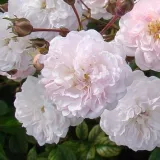
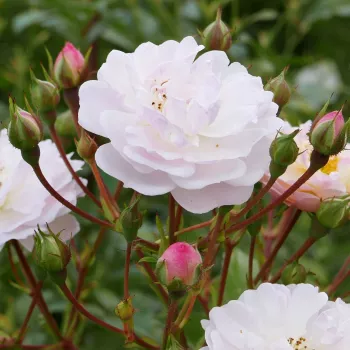
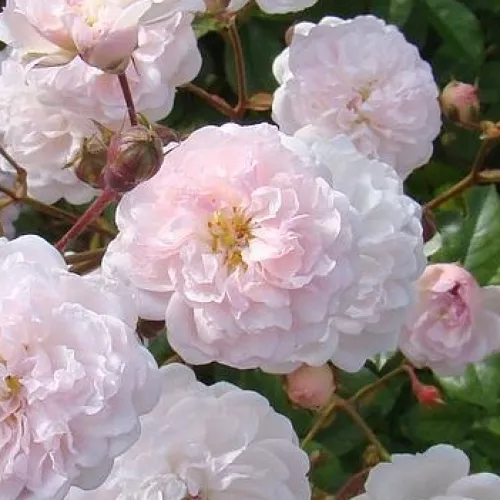
Flower Colour Description: Delicate powder-pink base colour that fades to almost white as the flower fully opens.
Closed Bud: Milky pale pink with a delicate powder‑pink flush at the tip.
Newly Opened Flower: Powder pink on the outer petals, with a slightly more intense pastel pink tone on the inner petals.
Full Bloom: Evenly pale pink, blending almost to white, with a pearlescent sheen at the petal edges.
Before Fading: Cream-white base colour with a barely noticeable pink flush at the petal edges.
Colour Fading Description: Lightens from pink to white; in strong sunlight it fades more quickly.

Fragrance and Aroma

Fragrance Strength: very weak, discreetly scented rose
Fragrance Character: delicate, elegant character
Pollinator Attraction: Semi-double, open blooms with readily accessible stamens attract bees.
Pollinator-Friendly Rating: A heavily double‑flowered variety which, although it attracts bees, has limited access to the stamens and is therefore mainly ornamental; pollinator‑friendly: limited

Hip Characteristics

Hip Shape: spherical
Hip Colour: orange-red
Hip Comment: Produces a moderate crop of spherical, orange‑red rose hips in autumn, 6–10 mm in diameter.

Resistance and Hardiness

Hardiness (°C): -21–-18 °C
Heat and Drought Tolerance Description: Blooms in warm conditions, but the soil must not dry out; during prolonged drought flowering is reduced.
Disease Resistance: moderate
  • powdery mildew – moderate
  • black spot – moderate
  • rust – moderate

Horticultural Recommendations

Recommended product path: Standard container
Release form: Bush-trained, compact plant
Recommended use: Maintenance requirement medium; occasionally requires pest and disease control.
Primary Uses: specimen, hedge, mass planting, small climbing rose, cut flower

Comments

Positioning: Standard finished product
Target customer/channel: Retail / reseller
Main value proposition: Reliable garden performance
ANNELIES – pale pink park rose - Lens
Delicate powder-pink base colour that fades to almost white as the flower fully opens. - park rose - very weak, discreetly scented rose - delicate, elegant character
Online rose order - pale-pink - very weak, discreetly scented rose - Annelies - park rose - (3.9-5.6ft (120-170 cm))
Inflorescence: cluster-flowered, large Height: 3.9-5.6ft (120-170 cm) Flower shape: rosette Winter hardiness: 7b pale-pink - Lens Roses Nursery (Belgium) park rose - Flower size: S (0,5-1,5 in) Flower size: S (0,5-1,5 in) - Height: 3.9-5.6ft (120-170 cm) Height: 3.9-5.6ft (120-170 cm) - Flower fullness: very double-flowered Annelies - Roses in the garden | pharmaROSA® Neonatal - premium bronze Louis Lens

We showcase the external appearance of the roses available for online purchase from our webshop.


Which product type is right for you?


PharmaRosa® NEONATAL is the cost‑effective starting point for rose product production.

As a uniform, own‑rooted propagation material, it provides a stable basis for further growing-on and can be integrated flexibly into different finished product production technologies.
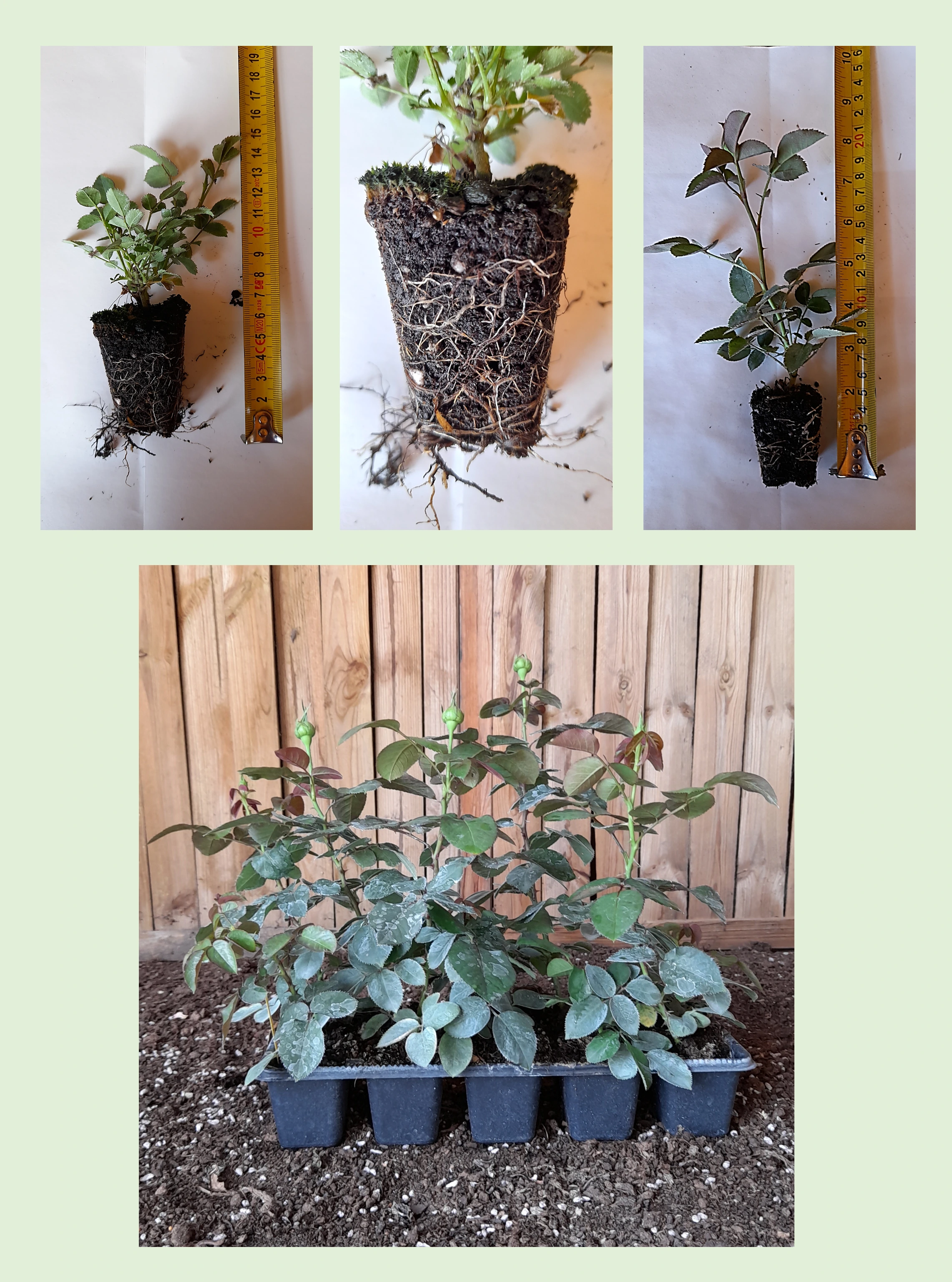
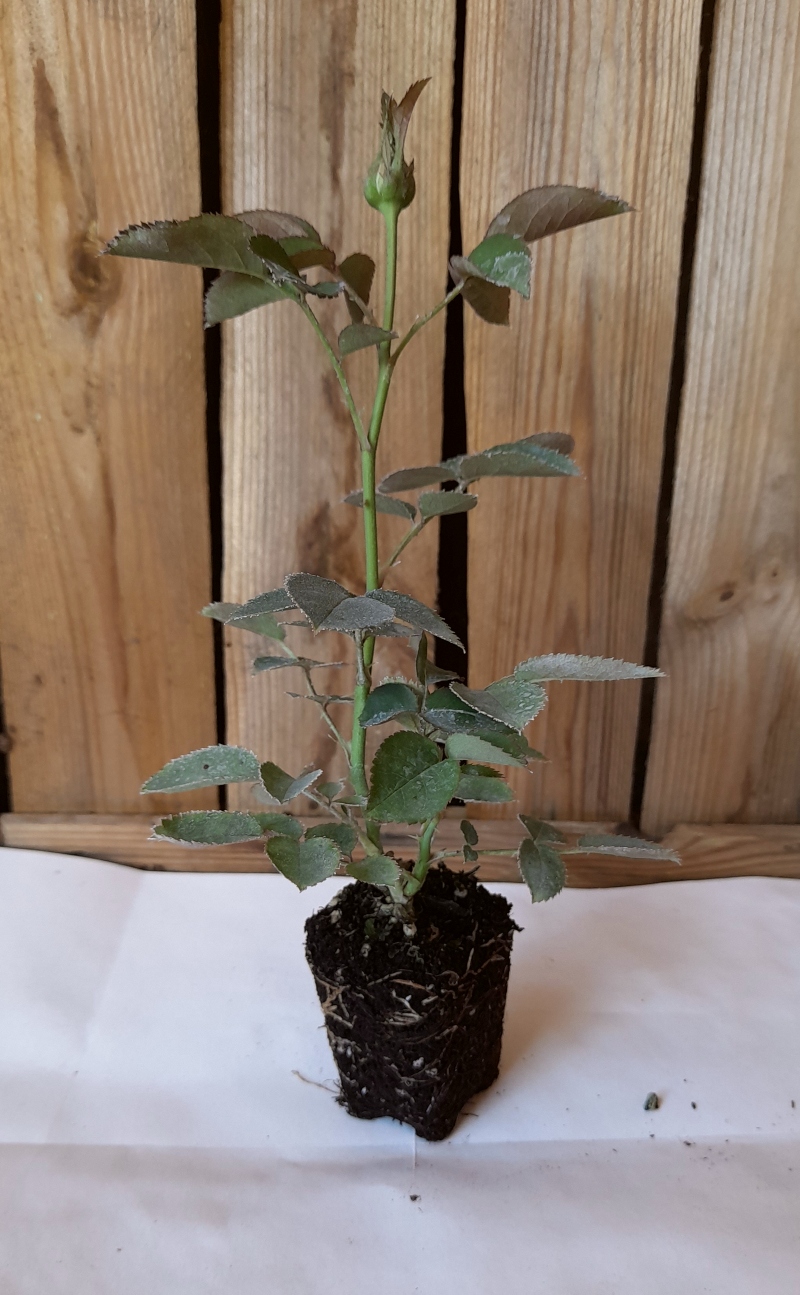
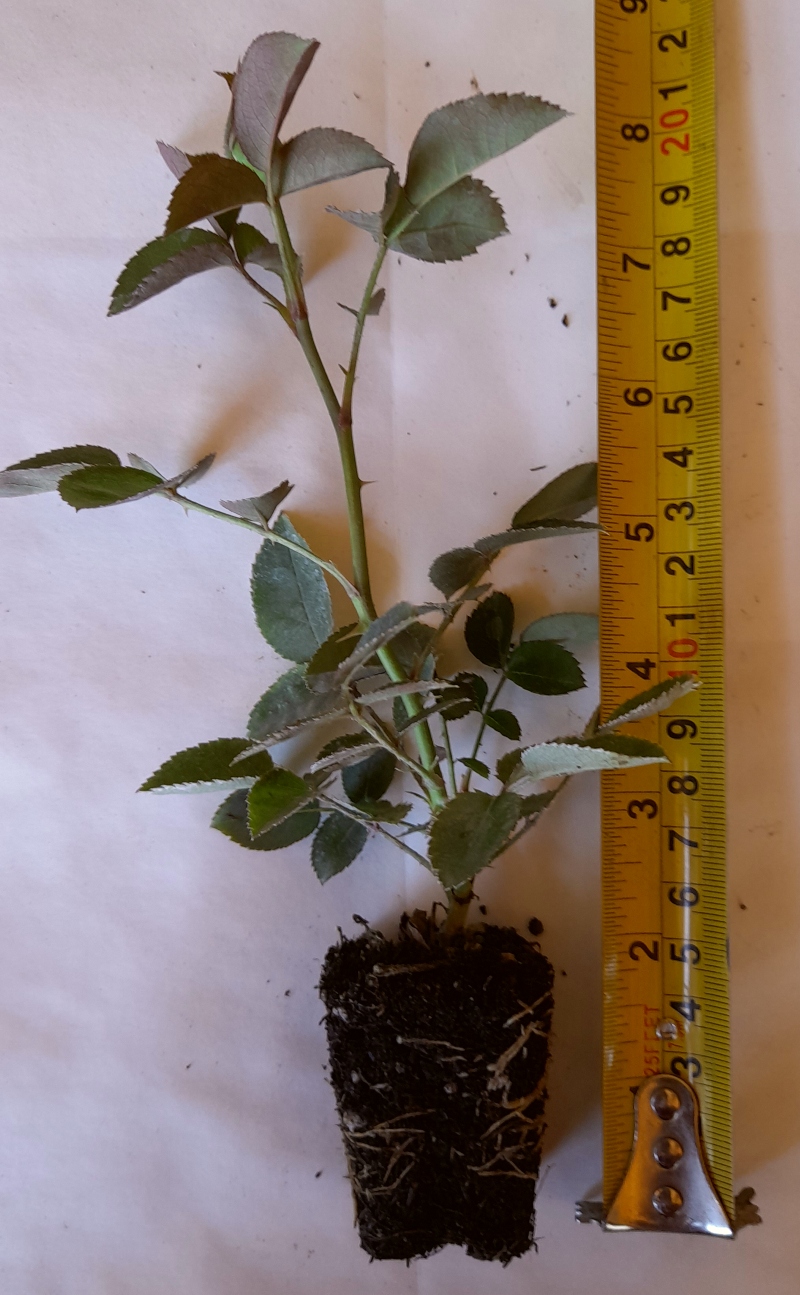
Rooted in trays (rooted), 3–6‑month‑old, own‑rooted rose cutting.

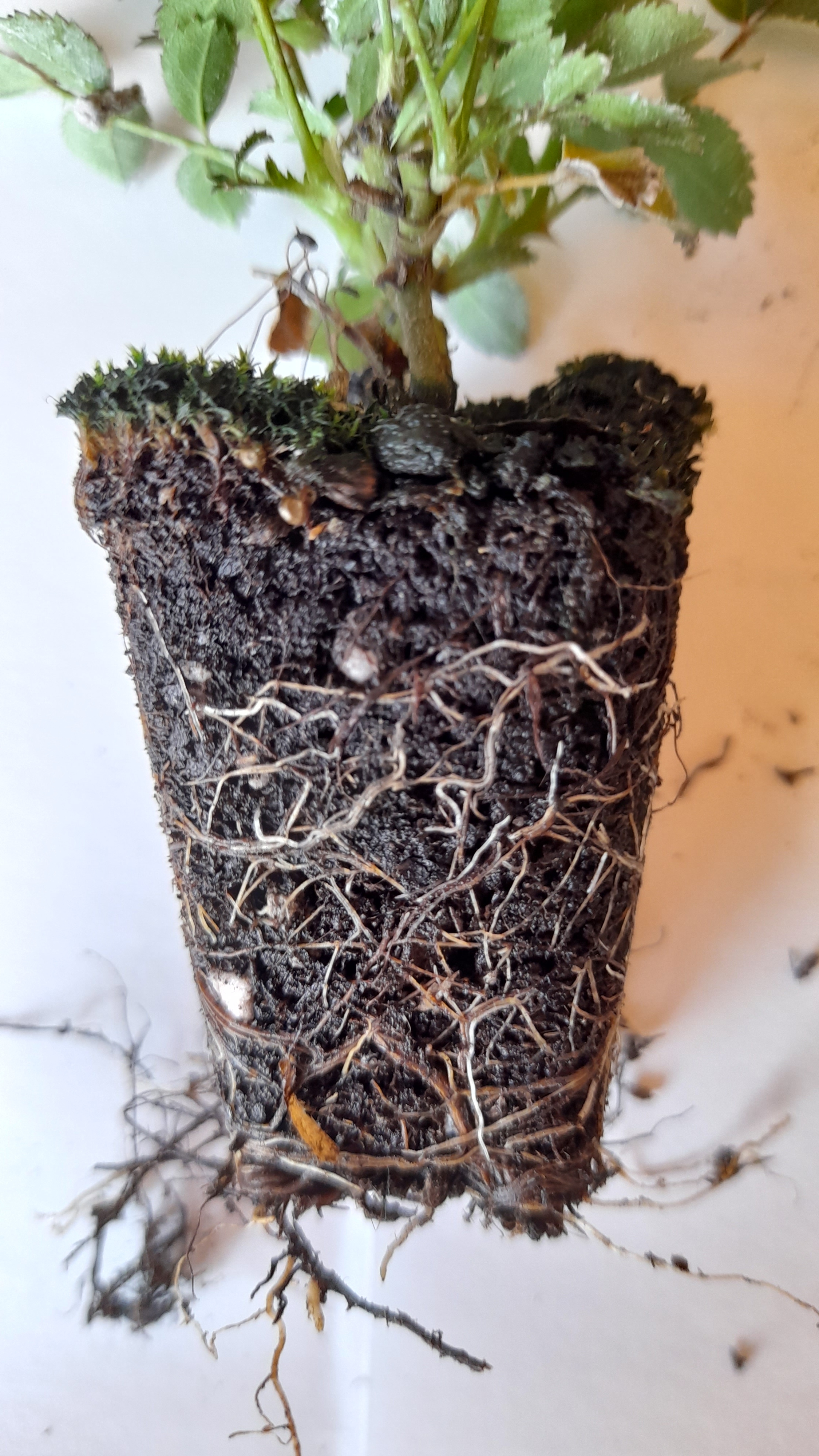
Uniform developmental stage, with a root system that has thoroughly penetrated the plug.
For professional growing‑on.
Tray packaging: 10 pcs/tray.
Quality and varietal identity: production supported by a dedicated identification and traceability logic.
Can be transplanted during frost‑free periods, designed for finished product production.

PharmaRosa® NEONATAL provides a controlled, uniform starting stock for planned growing‑on that can be integrated into your own technology – especially where scheduling and varietal identity are paramount.


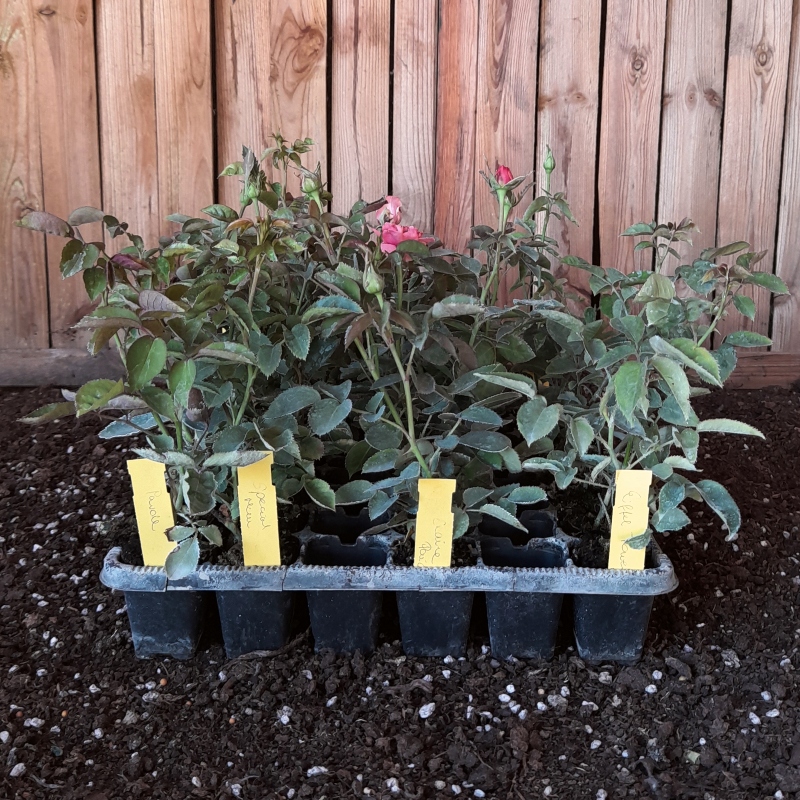
PharmaRosa® NEONATAL own-rooted rose propagation material in a plug, with a root system penetrating the plug (semi-finished product / semi-finished rose). PharmaRosa® NEONATAL rose propagation material size: 3–6‑month‑old, own-rooted cutting with a uniform developmental stage. PharmaRosa® NEONATAL rose propagation material root system: plug densely penetrated by well-developed white roots (root system detail). PharmaRosa® NEONATAL tray stock: own-rooted rose propagation material in trays, uniform developmental stage (10 pcs/tray).

Captions (from left to right): Semi-finished product (NEONATAL own-rooted rose propagation material in a plug with a fully developed root system) • Size demonstration (3–6‑month‑old, uniform cutting) • Root system detail (plug penetrated by the root system) • Tray stock (10 pcs/tray, uniform developmental stage)

pharmarosaneonatal.atpharmarosaneonatal.co.ukpharmarosaneonatal.hupharmarosaneonatal.czpharmarosaneonatal.depharmarosaneonatal.ropharmarosaneonatal.sipharmarosaneonatal.skpharmarosaneonatal.itpharmarosaneonatal.frpharmarosaneonatal.nlpharmarosaneonatal.plpharmarosaneonatal.lupharmarosaneonatal.ptpharmarosaneonatal.espharmarosaneonatal.ltpharmarosaneonatal.sepharmarosaneonatal.lvpharmarosaneonatal.eepharmarosaneonatal.fi

Which product type is right for you?

Pages for private customers
Garden roses for the family garden, with minimal care  → ORIGINAL®
Premium garden roses – instant impact, a truly showpiece garden  → EXTRA®
Pages for professionals and private customers
Roses for public spaces – large areas, sustainable maintenance  → NATURAL®
Roses for projects – hedge and row planting, fast implementation  → RAPID®
For professional partners only
Production – propagation material for garden roses, wholesale  → NEONATAL®

Company details

PharmaRosa Ltd.
Company registration number: 01-09-717479
VAT number: 13075314-2-43
Plant health registration no.: HU130721
Bank account (IBAN):
HU85117631891388688400000000
BIC (SWIFT): OTPVHUHB
Bank name: OTP Bank Nyrt.