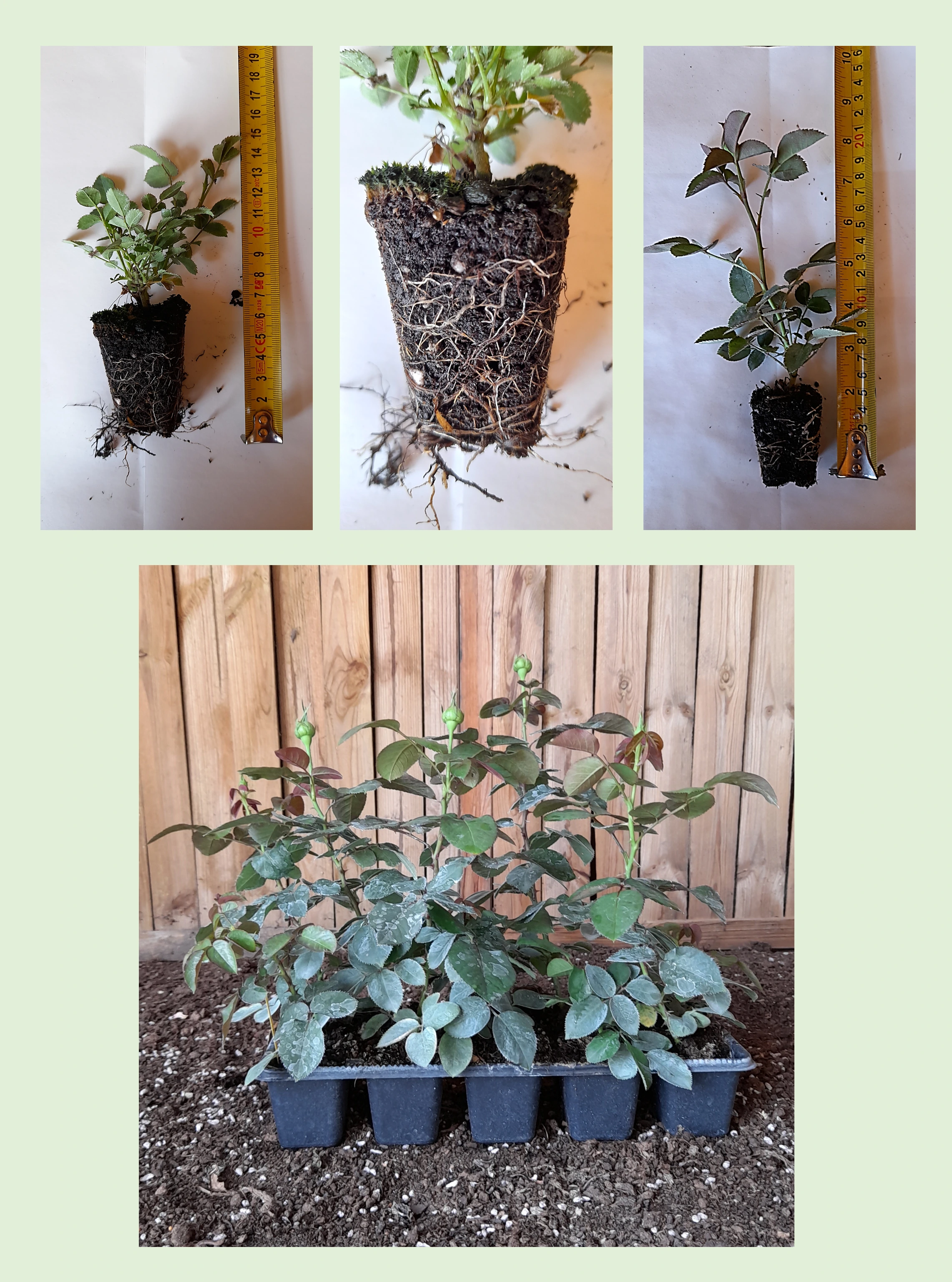
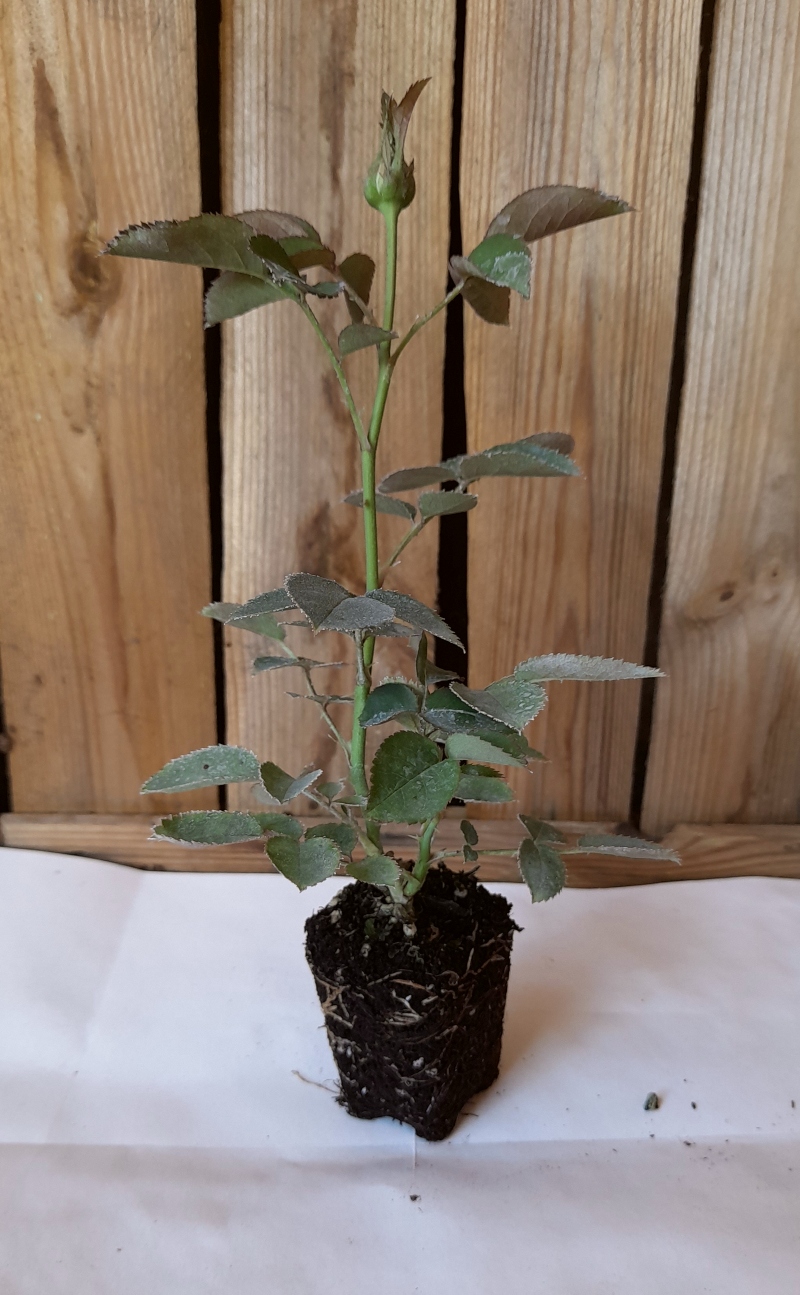
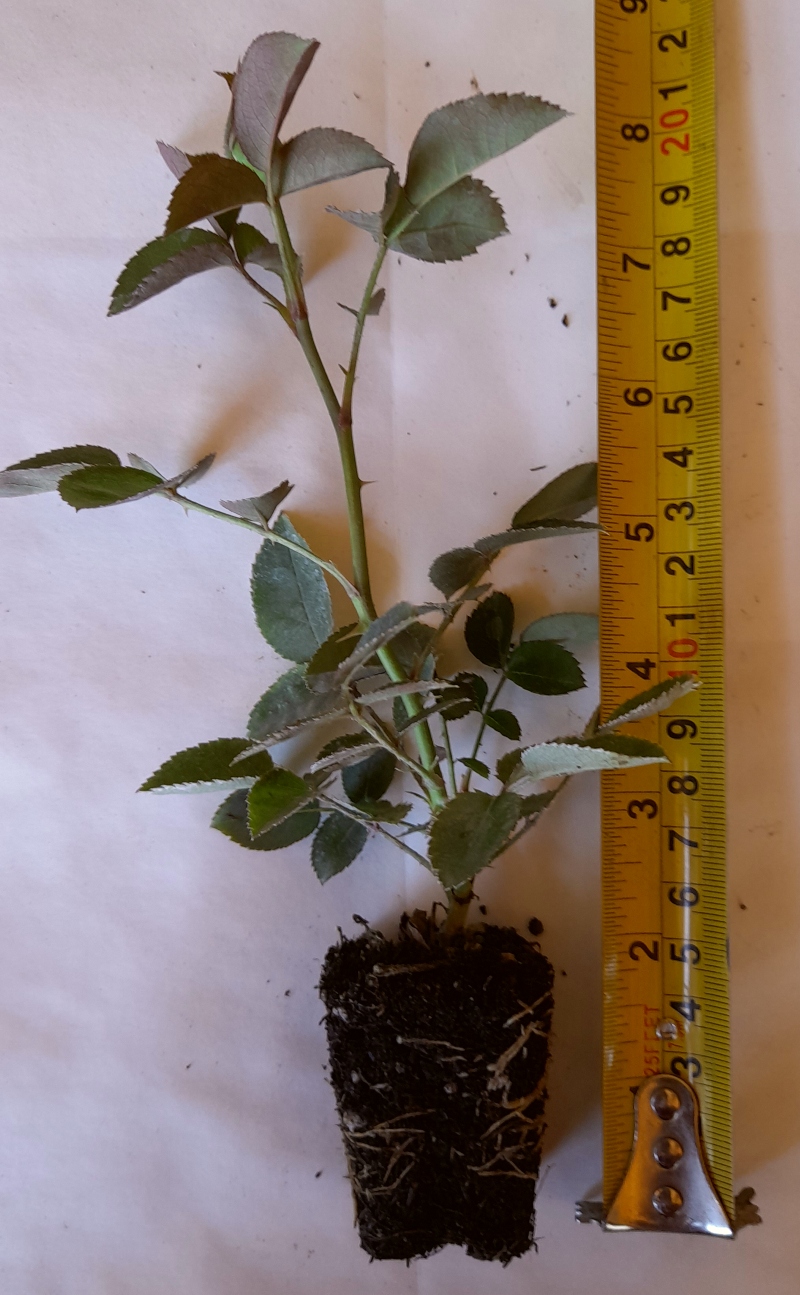
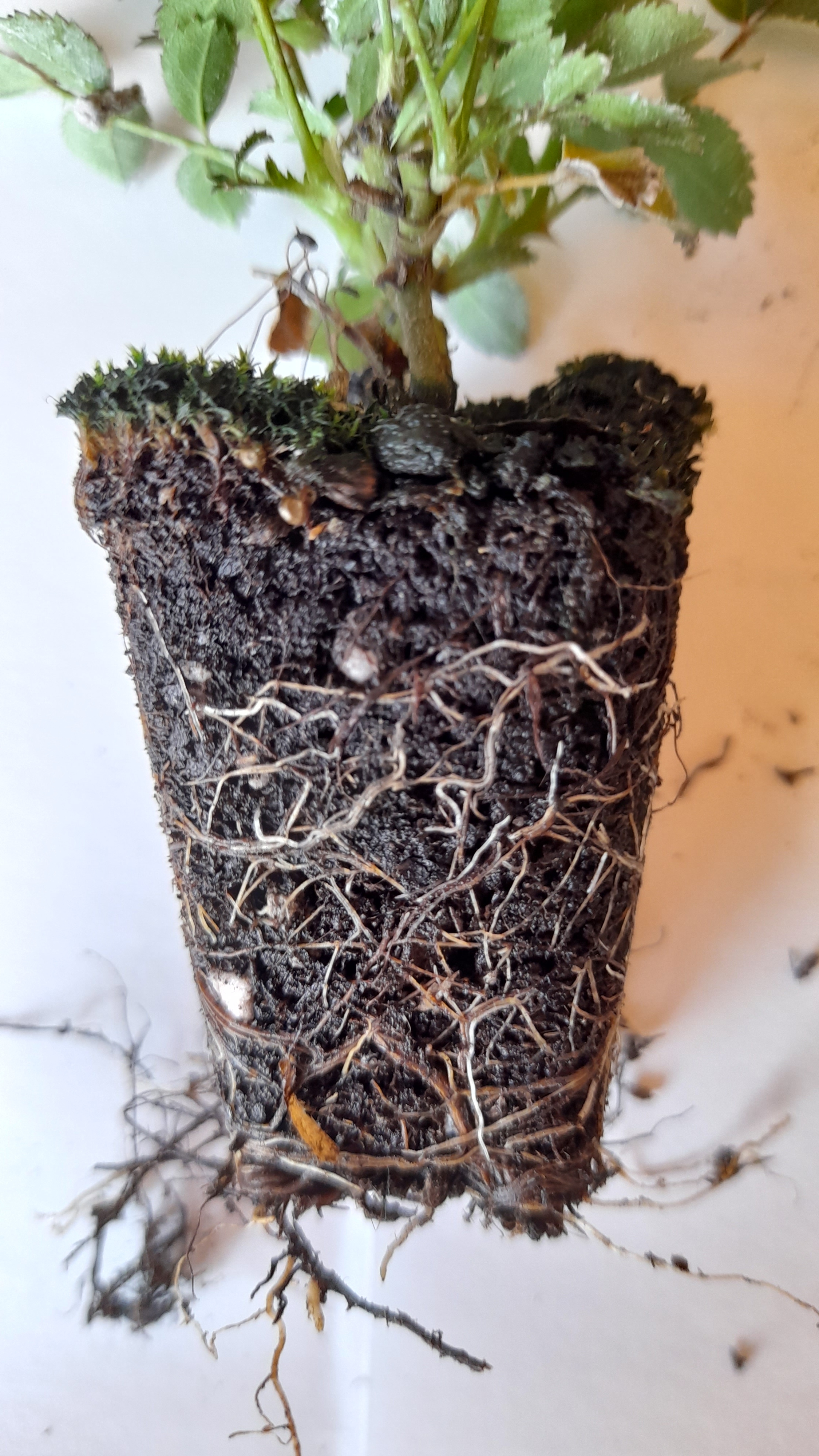
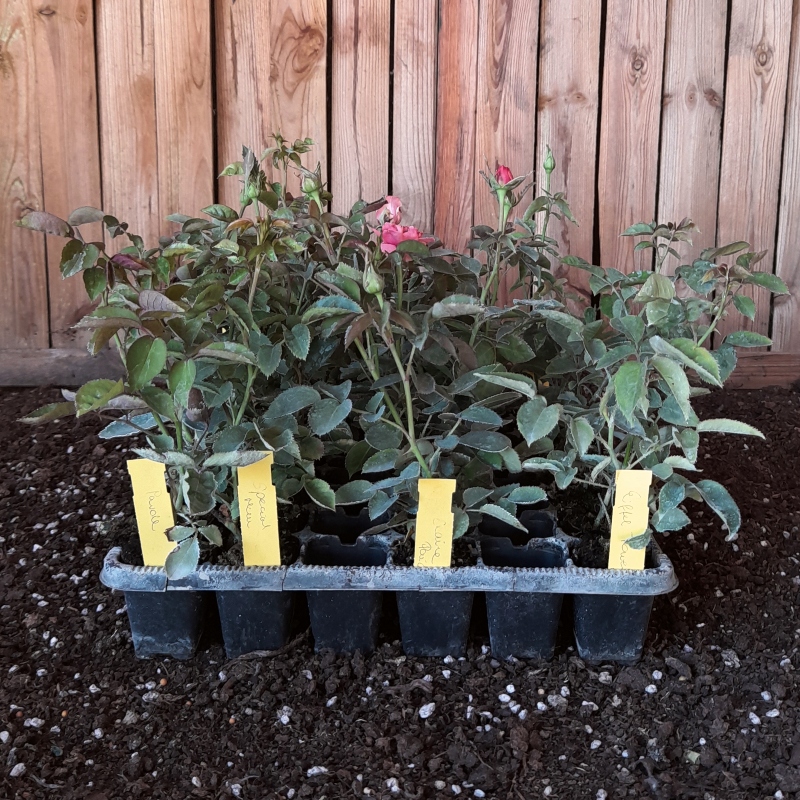
Aprikola® RigoRosen® KORorbe – pharmaROSA® NEONATAL rooted cutting
Aprikola offers compact, upright growth with dense, glossy foliage, ideal for efficient nursery benching and high-density bed rose production in 2–3 L containers as a standard finished product. Its remontant, cluster-flowering habit supports strong flowering continuity and reliable garden performance for retail and reseller ranges focused on robust bed and border use. Own-root propagation provides a renewable production base with homogeneous stands, low replacement and predictable capacity over the crop cycle, aligning well with UK nursery networks and public‑realm suppliers where stable assortments matter. In professional terms, year one focuses on root mass, year two on structural shoot framework, and year three on full ornamental value and crop maturity. The variety’s ADR-rated reliability and moderate disease resistance help keep maintenance within manageable limits in parks, borders and urban plantings, while good heat and drought tolerance suits schemes exposed to warmer, drier spells, complementing sites where winter and wind tolerance is needed in Scottish and northern English plantings. Self-cleaning clusters enhance bed presentation between maintenance rounds, and the spherical orange-red hips add seasonal interest potential in municipal and thematic rose gardens.
Usage options
Finished-product ideas
- 2–3 L bedding floribunda line – Own-root, compact plants in 2–3 L pots with dense foliage and reliable remontant flowering, positioned as a standard bed rose for continuous colour – retail garden centres and DIY chains.
- Municipal bed and park contract pack – Batch-produced 2–3 L units selected for self-cleaning clusters, ADR-rated reliability and good heat/drought tolerance, ready for fast planting into public beds – local authorities and landscape contractors.
- Urban border mix component – Standard 2–3 L plants used as a structural, upright floribunda element in mixed urban borders where moderate maintenance and robust garden performance are required – urban greening and housing-association frameworks.
- Thematic peach-orange rose selection – Curated colour-focused SKU within a themed rose range, using own-root plants to secure long-term identity and performance in collection plantings – show gardens, specialist nurseries and estate managers.
- Integrator-ready bed rose SKU – Uniform 2–3 L finished plants planned for chain-wide listings, leveraging own-root predictability and standard finished product specification for streamlined logistics – national wholesalers and integrator systems.
Technical cultivar profile
| Parameter |
Data |
| Name and registration |
Floribunda bedding rose marketed as Aprikola® RigoRosen® (registered as KORorbe), with ARS exhibition name Aprikola®; fanciful name references the characteristic apricot-toned flower colour. |
| Origin and breeding |
Bred by W. Kordes & Sons, Sparrieshoop, Germany, from Bernstein-Rose® × unknown seedling; bred before 1999 and introduced in 2000 via W. Kordes’ Söhne as initial distributor. |
| Awards and recognition |
Holds ADR certification from 2001, indicating performance assessed under central European trial conditions; this supports confidence when positioning it as a reliable, broadly adaptable bedding floribunda. |
| Growth and structural characteristics |
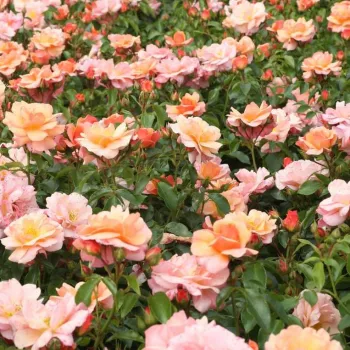
Compact, upright shrub reaching 60–85 cm in height and 50–70 cm spread, with dense mid-green, glossy foliage and moderate prickliness; forms a coherent, well-filled bedding canopy under standard production. |
| Flower morphology |
Semi-double, cup-shaped, flat-opening medium blooms (approx. 1.5–2.75 in) with 13–25 petals, produced in clusters; remontant and capable of a plentiful second flowering wave under appropriate management. |
| Colour data and phenology |
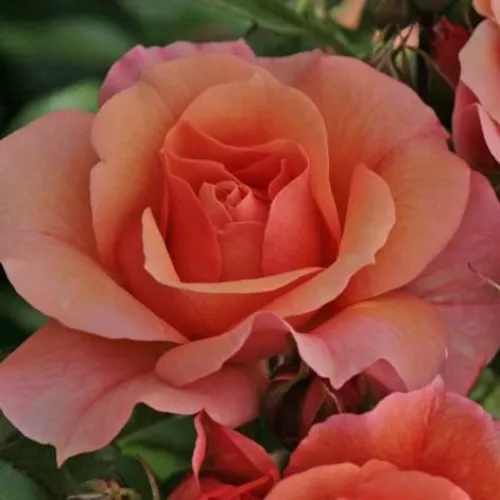
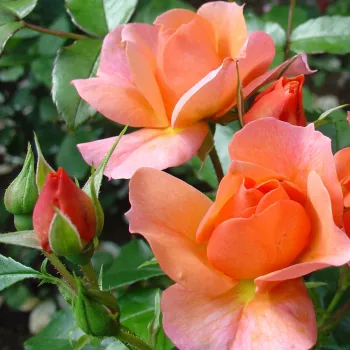
Peach-orange flowers (ARS OB, RHS 24A outer/24C inner) with warm, uniform tone and rosy tint; colour lightens in strong sun, shifting through apricot pink with creamy-yellow centre to softer pinkish shades. |
| Fragrance and aroma |
Fragrance is mild with a fresh, fruity character; scent is noticeable at close range but not dominant, supporting mass plantings where colour impact and bedding effect are prioritised over strong perfume. |
| Hip characteristics |
Produces moderate quantities of spherical orange-red hips, 7–10 mm in diameter; hips offer additional seasonal interest in beds and borders where fruits are left for autumn effect and potential wildlife value. |
| Resistance and winter hardiness |
Hardy to approximately −26 to −23 °C (RHS H7, Swedish zone 4, USDA 5b); heat and moderate drought tolerant with irrigation in prolonged dry spells; disease resistance moderate to powdery mildew and black spot, resistant to rust. |
| Horticultural recommendations |
Best in well-ventilated sites; in humid enclosed courtyards plan for pest and disease programmes; moderate maintenance needs; supplied bush-trained compact, suited to standard 2–3 L container production for beds, parks and borders. |
Aprikola® RigoRosen® KORorbe combines compact, reliable flowering performance with ADR-backed robustness and own-root predictability for long-lived, uniform stands, making it a sound candidate for aligning capacity and scheduling in your next production plan.