Historical Rose

20-594-1
20-594-2

Belle de Crécy

Historic rose

- – Pierre Jean Louis Roëser

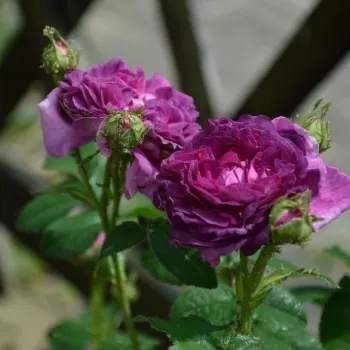
Deep dark crimson-pink shade that gradually fades to mauve and greyish-lilac. - historic, gallica rose - strong, long-lasting scented rose - full, old-rose character, classic rose aroma

– Strong, long‑lasting old‑rose fragrance.
– Rich mauve‑lilac blooms with silvery tones.
– Compact, upright shrub for beds or hedges.
– Historically significant Gallica from 1829 France.
– Very double, rosette flowers with vintage charm.
– Special feature: Colour ages from crimson‑pink to mystical greyish‑mauve.
Selection / specialty
Belle de Crécy
pharmaROSA® NEONATAL rooted rose cutting
30,77 £
Due to courier service regulations – and the introduction of customs clearance – delivery to Ireland is temporarily suspended.
4 (6233)
facebook   twitter

BELLE DE CRÉCY – mauve-lilac historic Gallica rose – pharmaROSA® NEONATAL rooted cutting

Historic gallica shrub BELLE DE CRÉCY offers strong identity value for thematic collections, combining verified-origin authenticity with a premium-gold cultivation rating that supports high-credibility collector ranges. As a once-flowering, very-double rosette type with intense old-rose fragrance, it is best positioned as a specialist, story-rich SKU rather than a volume landscape workhorse, aligning naturally with premium container, 5–7 L, bush-trained production with discreet support. Its upright, slightly arching, moderately suckering structure allows reliable shaping for hedge, specimen or park planting, while own-root trays give stable, renewable stocks for nurseries focused on long-term cultivar maintenance. Despite poor disease resistance and high maintenance requirements, professional plant protection regimes can secure the strong, mauve-lilac colour display and historical value collectors expect. H7 hardiness down to -32–-29 °C provides confidence for northern and more exposed UK planting, supporting projects in colder, wind-affected regions where robust winter survival is a key specification. As own-root material, stands regenerate from below-ground buds, extending planting longevity, stabilising ornamental value over time and underpinning predictable, low-replacement production for specialist rose networks. Development typically follows a roots-first dynamic—root establishment in year one, stronger structural shoot framework in year two and full historic-flower ornamental impact from year three under professional management.


Usage options

Target area Reasoning
Historic and thematic rose collections BELLE DE CRÉCY’s documented 19th-century origin and clear link to Roëser make it a strong anchor cultivar for historic, Gallica-centred ranges where provenance and story drive value. Own-root NEONATAL cuttings give nurseries a renewable base for maintaining identity-true stock over many cycles, important when serving specialist retail and collector channels. Premium container production in 5–7 L, bush-trained with discreet support, allows you to present the cultivar at a stage where its characterful, once-flowering rosette blooms and fragrance justify a higher unit price and careful placement in thematic rose gardens and collection beds. This is particularly relevant for curated installations in colder, wind-exposed regions where dependable winter hardiness is part of the technical specification for public and institutional rose collections, supporting nursery/wholesale historic-range partners.
Premium scented shrub for specialist retailers The strong, long-lasting, classic old-rose fragrance offers a clear differentiation point in the shrub rose category, suited to premium, story-led sales rather than mass landscaping. Producing BELLE DE CRÉCY as a 5–7 L premium container, in bush form with discreet support, allows you to sell plants at a stage where customers can experience scent and flower character in-season, supporting premium pricing. Own-root NEONATAL material underpins predictable structure and regrowth after pruning, important for retailers who need uniform, fragrant presentation each year without graft variation. This positions the cultivar as a high-appeal, once-flowering feature shrub for collectors and fragrance-focused buyers in specialist garden centres and rose-focused mail-order offers, ideal for fragrance-led specialist retailers.
Feature shrubs for rose parks and heritage plantings The combination of upright, slightly arching growth, 75–125 cm height and spread, and moderately dense, grey-green foliage makes BELLE DE CRÉCY suitable as a mid-height feature shrub in rose parks, heritage gardens and traditional mixed rose borders. Own-root production provides long lifespan and regeneration from basal shoots, which is valuable where plantings are expected to remain in place for many years with minimal replacement, even under periodic renovation pruning. Growing on from NEONATAL trays into premium 5–7 L containers allows public-realm suppliers to deliver robust, bush-trained units that establish quickly and fill their allocated space reliably, giving predictable layout results for designers and managers. This suits public and institutional rose gardens seeking historic structure and stability for heritage-park project suppliers.
Low, informal historic hedges The suckering habit and medium height enable use in informal, low hedges where a traditional, somewhat loose line is acceptable or preferred. In a professional production context, own-root NEONATAL plants provide genetically uniform, clonal lines that can be scaled into series of 5–7 L premium hedge units, with the bush-trained plus discreet support format helping to standardise shape at dispatch. The once-flowering, mauve-lilac display becomes a seasonal highlight, while the strong old-rose scent enhances experiential value along paths or garden edges in show gardens and private collections. Although disease management is more demanding, professional plant protection strategies in nursery and at project level can maintain foliage quality sufficiently to support collectors’ expectations, adding a distinctive element to specialist hedge-range producers.
Specimen plants for collectors and connoisseurs BELLE DE CRÉCY’s rich mauve-lilac to greyish-lilac colour transformation, with possible green eye and silvery reverses, makes it a connoisseur plant where individual shrub character matters more than repeat bloom. Propagating as own-root NEONATAL material enables nurseries to maintain limited but high-value stocks with stable traits, ideal for inclusion in boutique catalogues and collectors’ lists. A premium 5–7 L container, bush-trained with discreet support, offers a convenient format for immediate planting as a stand-alone specimen in themed gardens or historic collections. While self-cleaning is poor and disease resistance modest, collectors are generally prepared for higher maintenance when informed, so positioning the plant transparently supports long-term satisfaction and repeat purchasing for collector-focused nurseries.
Curated historic Gallica assortment for private-label ranges As a recognised historic Gallica with a defined French origin story, BELLE DE CRÉCY can help anchor a curated private-label segment built around classic European shrub roses. Using pharmaROSA NEONATAL own-root cuttings as the propagation base allows integrators and larger nurseries to build consistent, renewal-capable stock blocks, helping to secure future supply for branded ranges. Jointly specified grow-on—premium 5–7 L containers, bush format, higher-maintenance care notes—offers retailers a coherent story across the range while respecting the cultivar’s once-flowering, high-fragrance profile. This facilitates stable, long-term listings and supports reputation-building for partners wanting depth in historic rose offerings for integrated retail supply chains.
Educational and reference plantings in show gardens The clear historic background, distinct flower form and strong fragrance make BELLE DE CRÉCY a good reference plant in educational or demonstration plantings where visitors can compare old roses and modern types. Own-root NEONATAL plants ensure that the reference material remains true to type over decades, with regeneration from basal shoots helping to sustain plantings even when periodic renovation or environmental stress occurs. Growing into 5–7 L premium containers gives show-garden managers flexibility to reconfigure beds or replace individual plants without disrupting overall layout, while the bush-trained, discreetly supported form maintains visual clarity for interpretation. This is valuable for institutions and gardens that curate permanent or rotating rose collections for educational show-garden operators.
Specialist hedge and park supply for colder regions The combination of USDA 4b, H7 rating and tolerance of -32–-29 °C makes BELLE DE CRÉCY well suited for colder parts of the UK and comparable climates, where winter survival is a key tender specification. For suppliers serving such regions, own-root NEONATAL propagation provides a resilient base: if top growth is damaged by severe cold, plants can regenerate from their own roots without graft loss, stabilising long-term planting performance. Producing 5–7 L premium containers, bush-trained with discreet support, positions the cultivar as a specialist item for parks, heritage hedges and collector gardens rather than a general landscape filler, aligning with a selection/specialty strategy. This supports reliable specification choices for cold-region municipal and park suppliers.

Finished-product ideas

  • Premium Historic Collector Pot – 5–7 L bush-trained container highlighting the cultivar’s historic origin, fragrance and mauve-lilac colour shift, suited to limited-run specialty listings – target: collector-focused nurseries and specialist retailers
  • Fragrant Heritage Hedge Module – series of uniform own-root bushes for informal low hedges, offered in 5–7 L premium containers with clear high-maintenance guidance – target: heritage-park project suppliers and landscape-focused nurseries
  • Show-Garden Reference Unit – labelled, bush-trained specimens from own-root stock for educational and reference beds in rose collections – target: institutional show-garden operators and public-realm suppliers
  • Private-Label Gallica Feature – curated inclusion of BELLE DE CRÉCY in branded historic rose ranges, delivered as premium 5–7 L containers emphasising provenance and scent – target: integrated retail supply chains and garden-centre groups
  • Cold-Region Heritage Pack – assortment of hardy historic shrubs including BELLE DE CRÉCY, supplied as own-root premium containers for reliable establishment in colder zones – target: regional wholesalers and municipal park contractors

Technical cultivar profile
Parameter Data
Name and registration Current trade name BELLE DE CRÉCY, historic Gallica rose within the Historical rose group, exhibition category shrub rose; unregistered cultivar without a listed registered denomination.
Origin and breeding Historic French cultivar attributed to Pierre Jean Louis Roëser, breeding year recorded as 1836 with introduction cited from 1829; detailed parentage and initial distributor data are not provided.
Awards and recognition No awards, competition results, collector recommendations or formal horticultural ratings are documented for this cultivar; external recognition data not provided beyond internal premium grading.
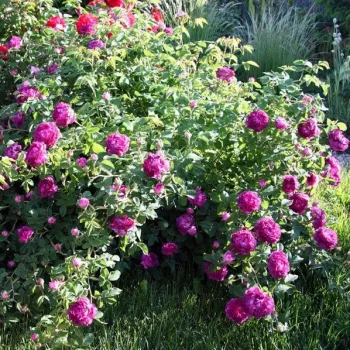
Growth and structural characteristics Medium shrub reaching about 75–125 cm in height and spread, upright to slightly arching and suckering, with moderately dense, matte grey-green to blue-green foliage and relatively sparse prickles on shoots.
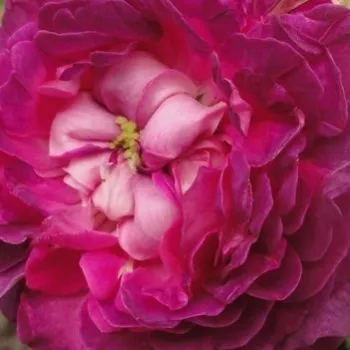
Flower morphology Medium-sized, very double, rosette-shaped blooms with more than 40 petals, formed mainly in corymbose clusters; once-flowering without remontancy, and generally poor self-cleaning so spent blooms often remain.
Colour data and phenology Colour evolves from vivid pink-purple buds to pale pink-lilac with silvery edges, then deep crimson-pink turning mauve and finally greyish-lilac; outer petals RHS 60A, inner 75C, with overall colour retention assessed as poor.
Fragrance and aroma Strong, long-lasting perfume with a full old-rose character, presenting a classic rose aroma; breeding emphasis is ornamental rather than pollinator support, with dense petals largely concealing the stamens.
Hip characteristics Hip set is generally sparse due to the dense double flowers; where formed, hips are small, spherical and orange-red, about 11–18 mm in diameter, and mainly of minor ornamental rather than production significance.
Resistance and winter hardiness Hardy to around -32 to -29 °C, rated RHS H7 and Swedish zone 5, USDA 4b; disease resistance is sensitive, with moderate susceptibility to powdery mildew and black spot, and very sensitive reaction to rust.
Horticultural recommendations Recommended for flowerbeds, parks, hedges and specimen use in premium, high-maintenance contexts; disease control and deadheading are required, with bush-trained plants, discreet support and 5–7 L premium containers advised.

BELLE DE CRÉCY offers authentic historic character, strong fragrance and hardy, own-root reliability for long-term, low-replacement plantings; please contact us to coordinate propagation volumes and scheduling for your specialist ranges.

Detailed product attributes

Product Identification Data

Product Name: BELLE DE CRÉCY – mauve-lilac historic Gallica rose - Roëser
Product Type: pharmaROSA® NEONATAL - rooted rose cutting
Cultivar Authenticity: Verified:25.08.2025
Cultivar Quality Rating: premium gold
Item Number: [455] 20-594 (14.02.2026) pharmarosaneonatal.co.uk

Name and Registration

Meaning of Cultivar Name: The name "Crécy szépe" refers to the French commune of Crécy-en-Brie.
Cultivar Synonym: Le Météore; Météor; Meteor
Original Trade Name: Belle de Crécy
Current Trade Name: Belle de Crécy Historic rose Roëser
Rose Group: Gallica, Provins, Hybrid China
Commercial Type: historic, gallica rose
Commercial Group: Historical rose
Exhibition Category: shrub rose
Collection: Historic rose

Origin and Breeding

Registration Year: unregistered variety
Breeder: Pierre Jean Louis Roëser
Breeding Company / Institution: unknown / no data
Breeding Year: France, 1836
Parentage: unknown

Growth and Structural Characteristics

Height: 2.5-4.1ft (75-125 cm)
Spread: 2.5-4.1ft (75-125 cm)
Growth Habit: upright, slightly arching, suckering
Foliage: The variety has moderately dense foliage; the leaves have a matte surface and a grey-green colour with a blue-green tint.
Prickliness: sparsely thorned
Self-Cleaning Description: Most spent blooms remain on the plant and require subsequent cleaning.
Self-Cleaning Intensity: Self-cleaning: poor.

Flower Morphology

Flower Fullness: very double-flowered
Flower Shape: rosette
Flower Size: M (1,5-2,75 in)
Inflorescence Type: corymbose
Colour Code: ARS code: m RHS code: 60A (outer), 75C (inner)
Repeat Flowering: Not remontant; blooms once.

Colour Data and Phenology

Colour: mauve-lilac
Flower Colour Description: Deep dark crimson-pink shade that gradually fades to mauve and greyish-lilac.
Closed Bud: Purple-pink, with a delicate lilac veil towards the tip.
Newly Opened Flower: Vivid pink–purple tone with outer petals that have a silky sheen.
Full Bloom: Rich mauve-lilac and pink blend with a silvery reverse, often with a green eye in the centre.
Before Fading: Pale pink–lilac with a slightly silvery edge.
Colour Fading Description: After opening, the cherry red–magenta shade fades to a purplish, then a greyish–mauve tone.

Fragrance and Aroma

Fragrance Strength: strong, long-lasting scented rose
Fragrance Character: full, old-rose character, classic rose aroma
Pollinator Attraction: Its strongly double, rosette-shaped flowers, whose tightly packed petals hide the stamens and limit access, make it unattractive to pollinators.
Pollinator-Friendly Rating: Highly double flowers conceal the stamens; primarily an ornamental variety.

Hip Characteristics

Hip Shape: spherical
Hip Colour: orange-red
Hip Comment: Hip formation is expected to be sparse due to the double flowers; occasionally globular, orange-red hips 11–18 mm in diameter.

Resistance and Hardiness

Hardiness (°C): -32–-29 °C
Heat and Drought Tolerance Description: Moderately heat‑tolerant; requires irrigation during prolonged drought.
Disease Resistance: sensitive
  • powdery mildew – moderate
  • black spot – moderate
  • rust – very sensitive

Horticultural Recommendations

Recommended product path: Premium container, specialty
Release form: Bush-trained + discreet support
Recommended use: Maintenance requirement high; disease resistance poor, regular plant protection required.
Primary Uses: flowerbed, park, hedge, specimen plant

Comments

Positioning: Selection / specialty
Target customer/channel: Retail/collector
Main value proposition: Characterful bloom and historic value
BELLE DE CRÉCY – mauve-lilac historic Gallica rose - Roëser
Deep dark crimson-pink shade that gradually fades to mauve and greyish-lilac. - historic, gallica rose - strong, long-lasting scented rose - full, old-rose character, classic rose aroma
Rose Shopping Online - mauve-lilac - strong, long-lasting scented rose - Belle de Crécy - historic, gallica rose - (2.5-4.1ft (75-125 cm))
Inflorescence: corymbose Height: 2.5-4.1ft (75-125 cm) Flower shape: rosette Winter hardiness: - mauve-lilac - - historic, gallica rose - Flower size: M (1,5-2,75 in) Flower size: M (1,5-2,75 in) - Height: 2.5-4.1ft (75-125 cm) Height: 2.5-4.1ft (75-125 cm) - Flower fullness: very double-flowered Belle de Crécy - Roses in the garden | pharmaROSA® Neonatal - premium gold Pierre Jean Louis Roëser

We showcase the external appearance of the roses available for online purchase from our webshop.


Which product type is right for you?


PharmaRosa® NEONATAL is the cost‑effective starting point for rose product production.

As a uniform, own‑rooted propagation material, it provides a stable basis for further growing-on and can be integrated flexibly into different finished product production technologies.
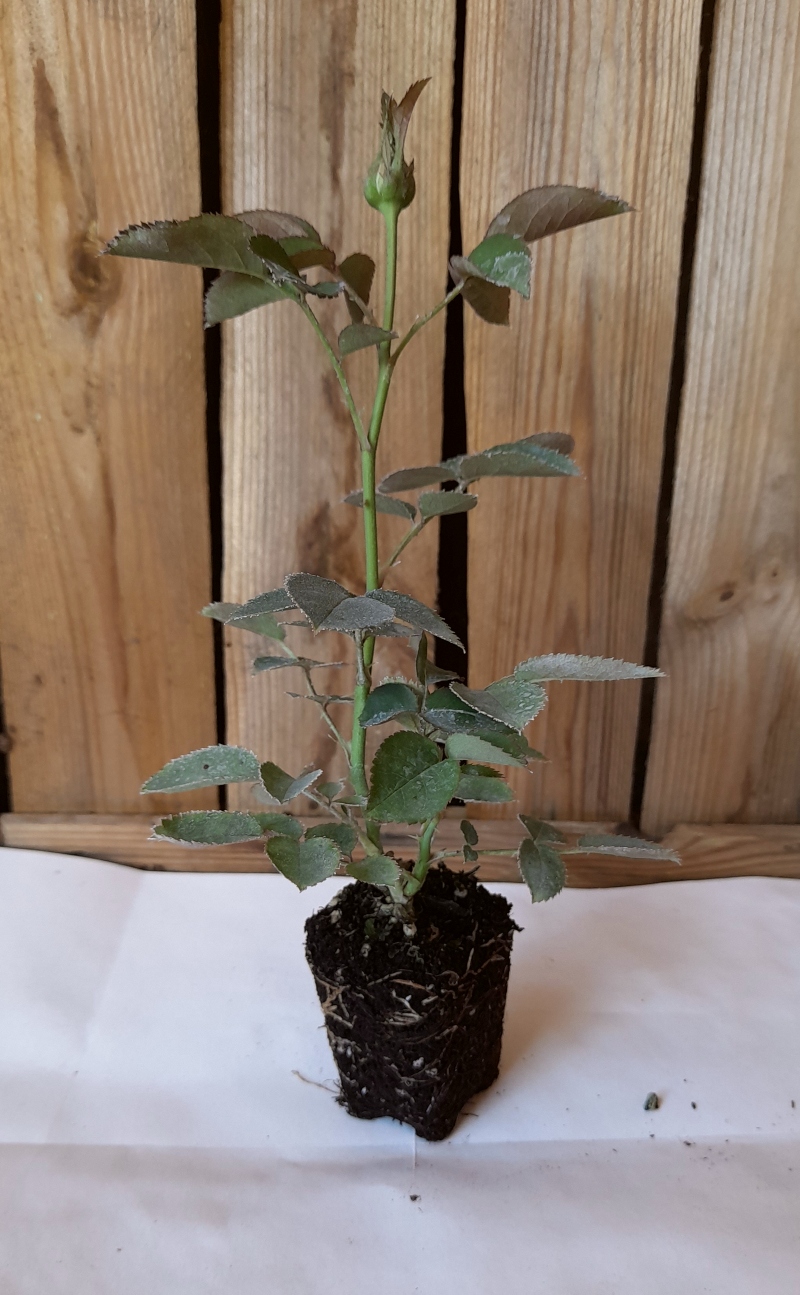
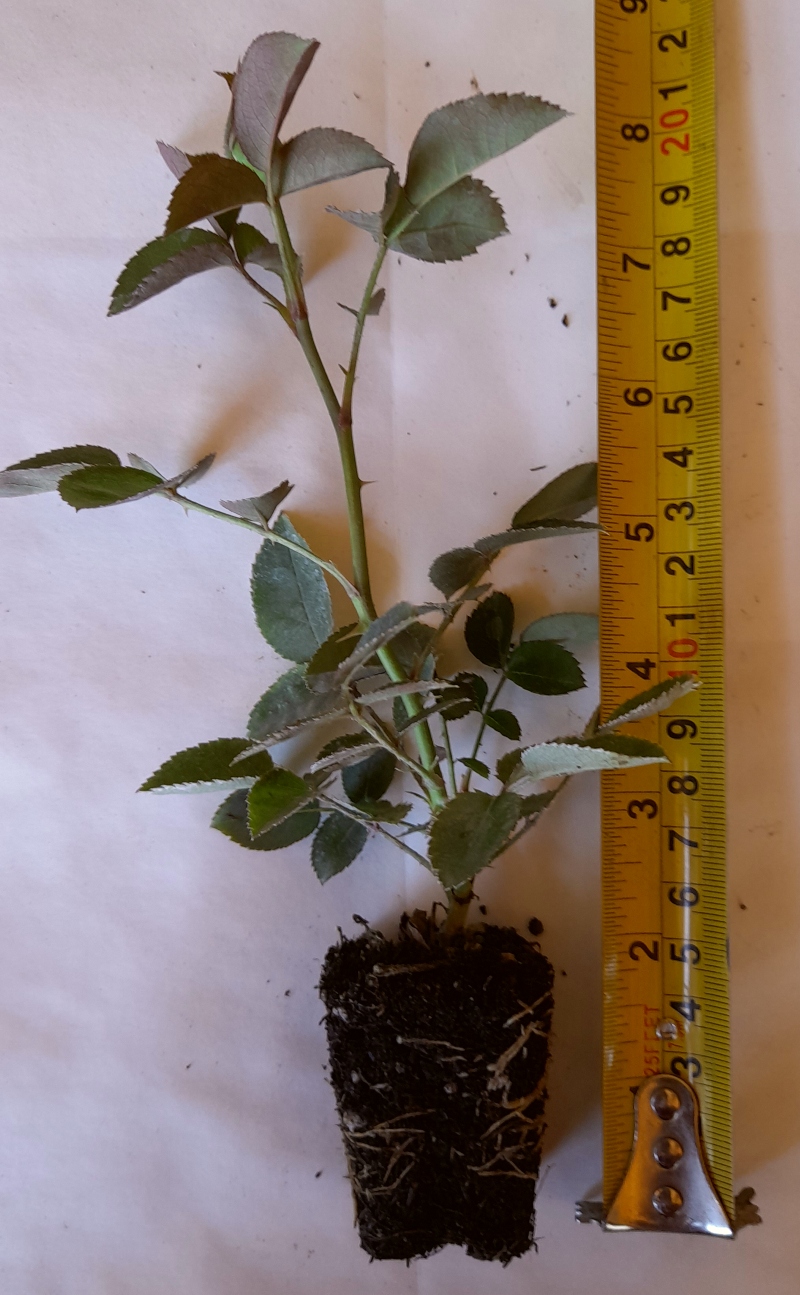
Rooted in trays (rooted), 3–6‑month‑old, own‑rooted rose cutting.
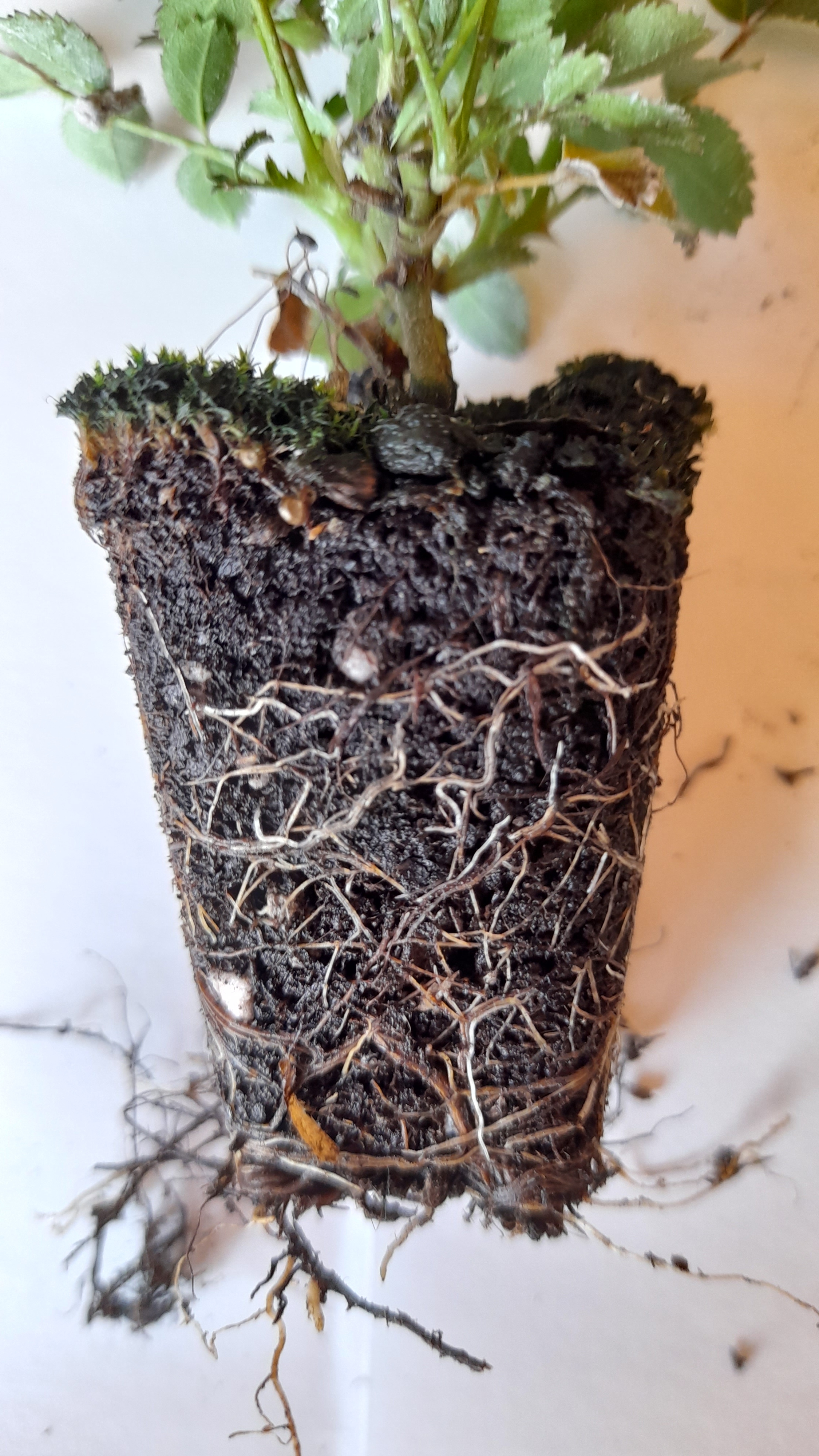
Uniform developmental stage, with a root system that has thoroughly penetrated the plug.
For professional growing‑on.
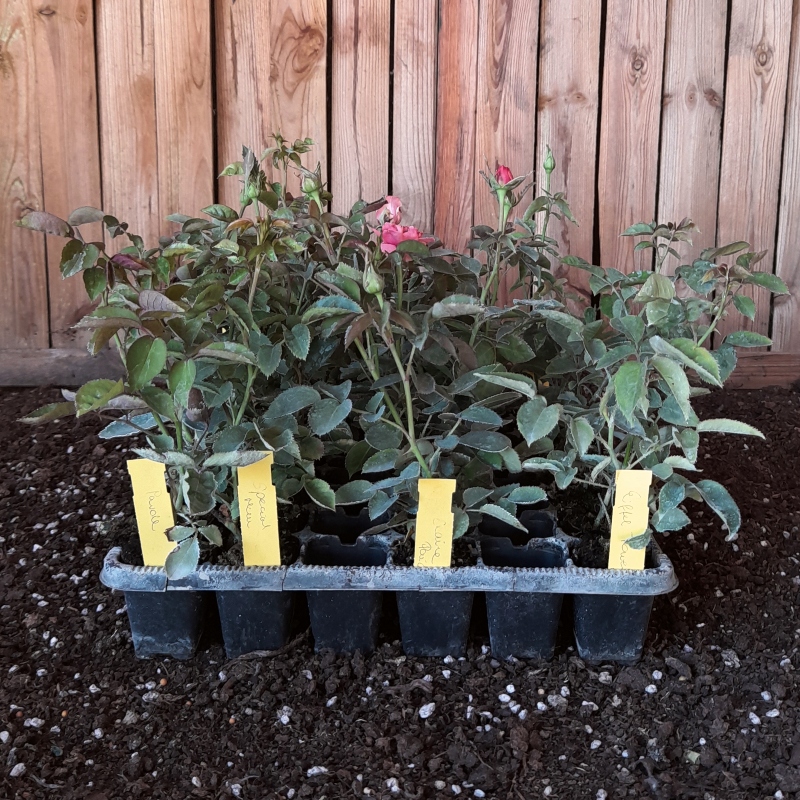
Tray packaging: 10 pcs/tray.
Quality and varietal identity: production supported by a dedicated identification and traceability logic.
Can be transplanted during frost‑free periods, designed for finished product production.

PharmaRosa® NEONATAL provides a controlled, uniform starting stock for planned growing‑on that can be integrated into your own technology – especially where scheduling and varietal identity are paramount.


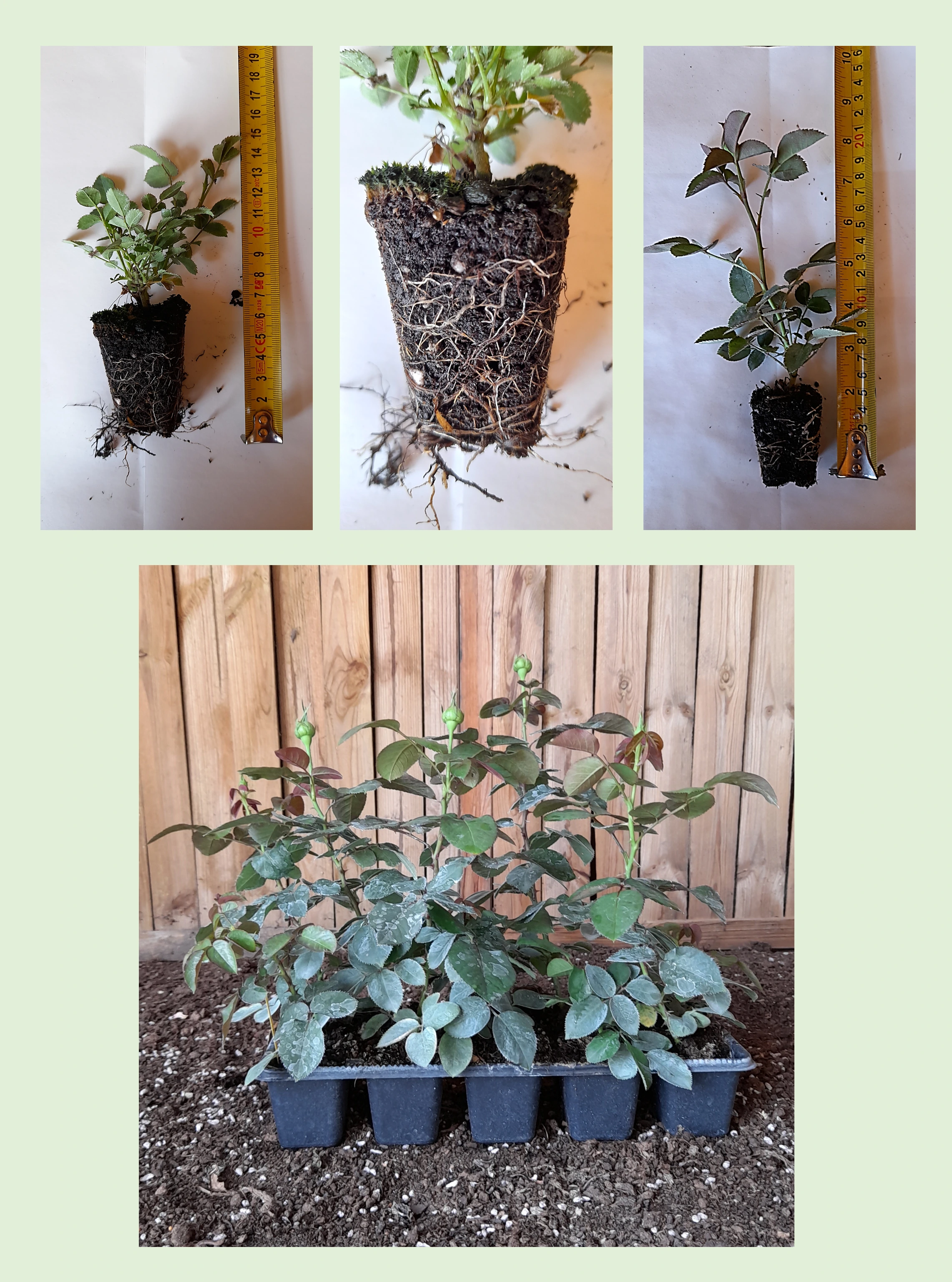
PharmaRosa® NEONATAL own-rooted rose propagation material in a plug, with a root system penetrating the plug (semi-finished product / semi-finished rose). PharmaRosa® NEONATAL rose propagation material size: 3–6‑month‑old, own-rooted cutting with a uniform developmental stage. PharmaRosa® NEONATAL rose propagation material root system: plug densely penetrated by well-developed white roots (root system detail). PharmaRosa® NEONATAL tray stock: own-rooted rose propagation material in trays, uniform developmental stage (10 pcs/tray).

Captions (from left to right): Semi-finished product (NEONATAL own-rooted rose propagation material in a plug with a fully developed root system) • Size demonstration (3–6‑month‑old, uniform cutting) • Root system detail (plug penetrated by the root system) • Tray stock (10 pcs/tray, uniform developmental stage)

pharmarosaneonatal.co.ukpharmarosaneonatal.skpharmarosaneonatal.depharmarosaneonatal.ropharmarosaneonatal.hupharmarosaneonatal.sipharmarosaneonatal.czpharmarosaneonatal.atpharmarosaneonatal.itpharmarosaneonatal.frpharmarosaneonatal.plpharmarosaneonatal.espharmarosaneonatal.nlpharmarosaneonatal.ptpharmarosaneonatal.lupharmarosaneonatal.sepharmarosaneonatal.fipharmarosaneonatal.lvpharmarosaneonatal.ltpharmarosaneonatal.ee

Which product type is right for you?

Pages for private customers
Garden roses for the family garden, with minimal care  → ORIGINAL®
Premium garden roses – instant impact, a truly showpiece garden  → EXTRA®
Pages for professionals and private customers
Roses for public spaces – large areas, sustainable maintenance  → NATURAL®
Roses for projects – hedge and row planting, fast implementation  → RAPID®
For professional partners only
Production – propagation material for garden roses, wholesale  → NEONATAL®

Company details

PharmaRosa Ltd.
Company registration number: 01-09-717479
VAT number: 13075314-2-43
Plant health registration no.: HU130721
Bank account (IBAN):
HU85117631891388688400000000
BIC (SWIFT): OTPVHUHB
Bank name: OTP Bank Nyrt.