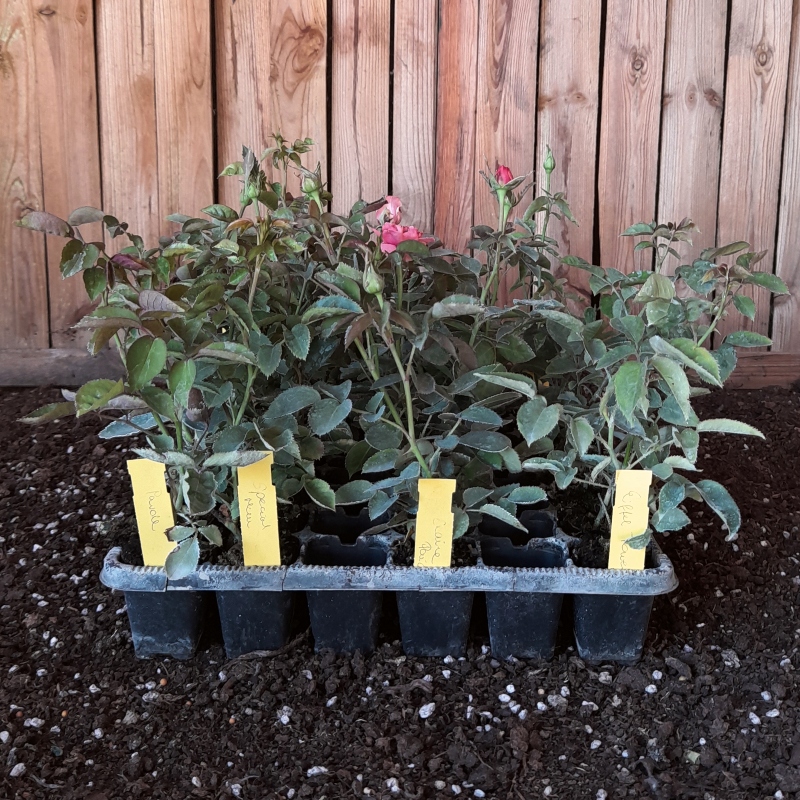
BERKELEY – pink bedding grandiflora rose – rooted cutting for professional production
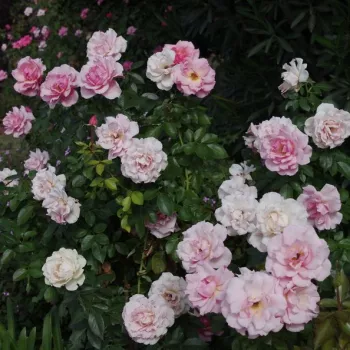
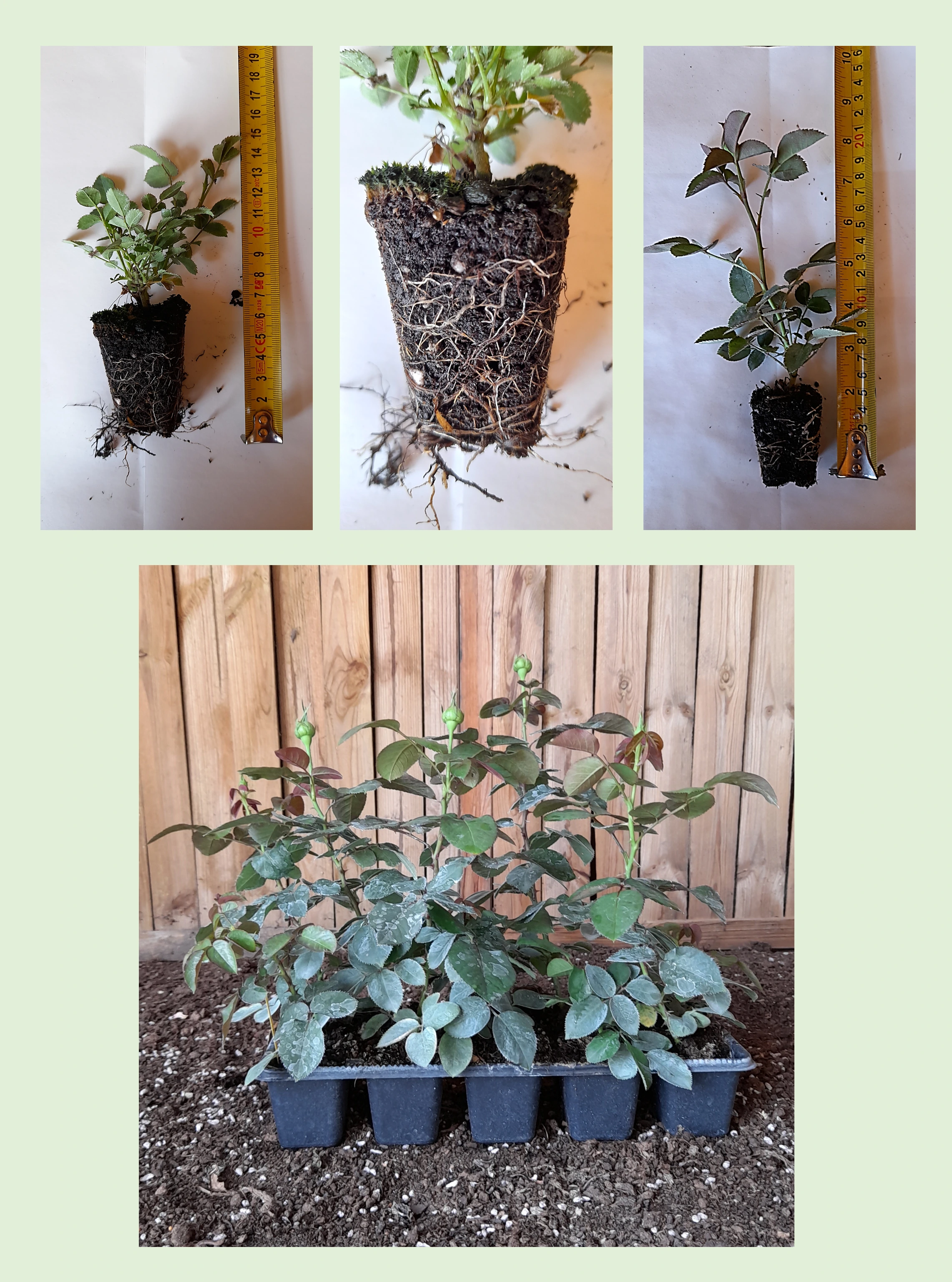
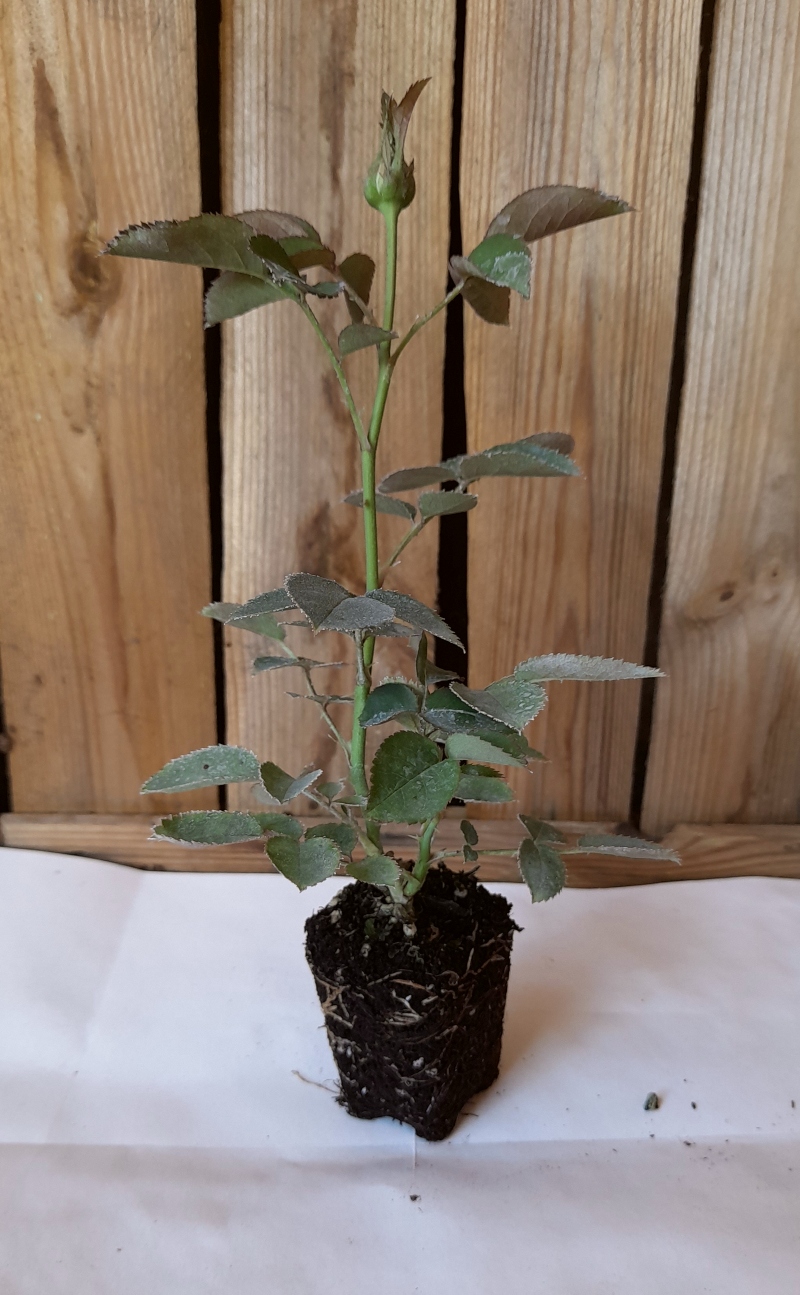
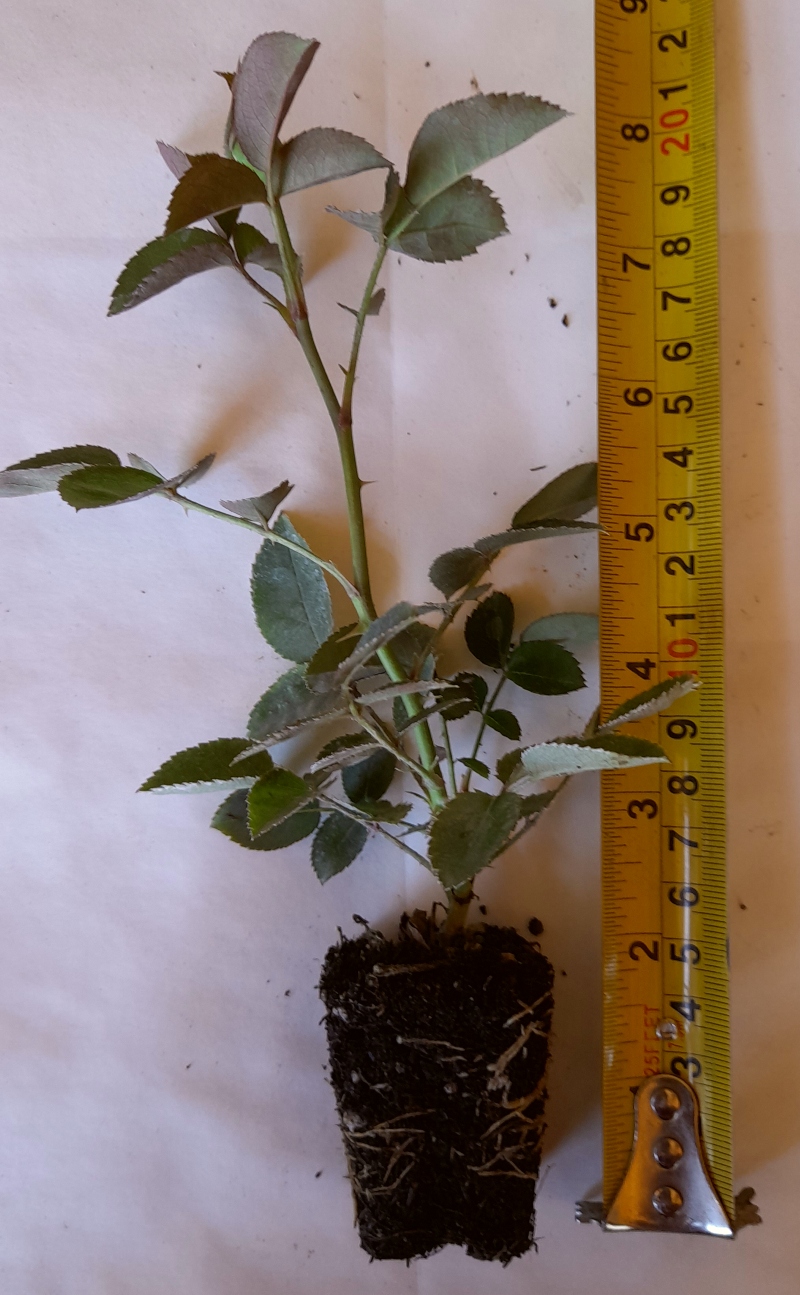
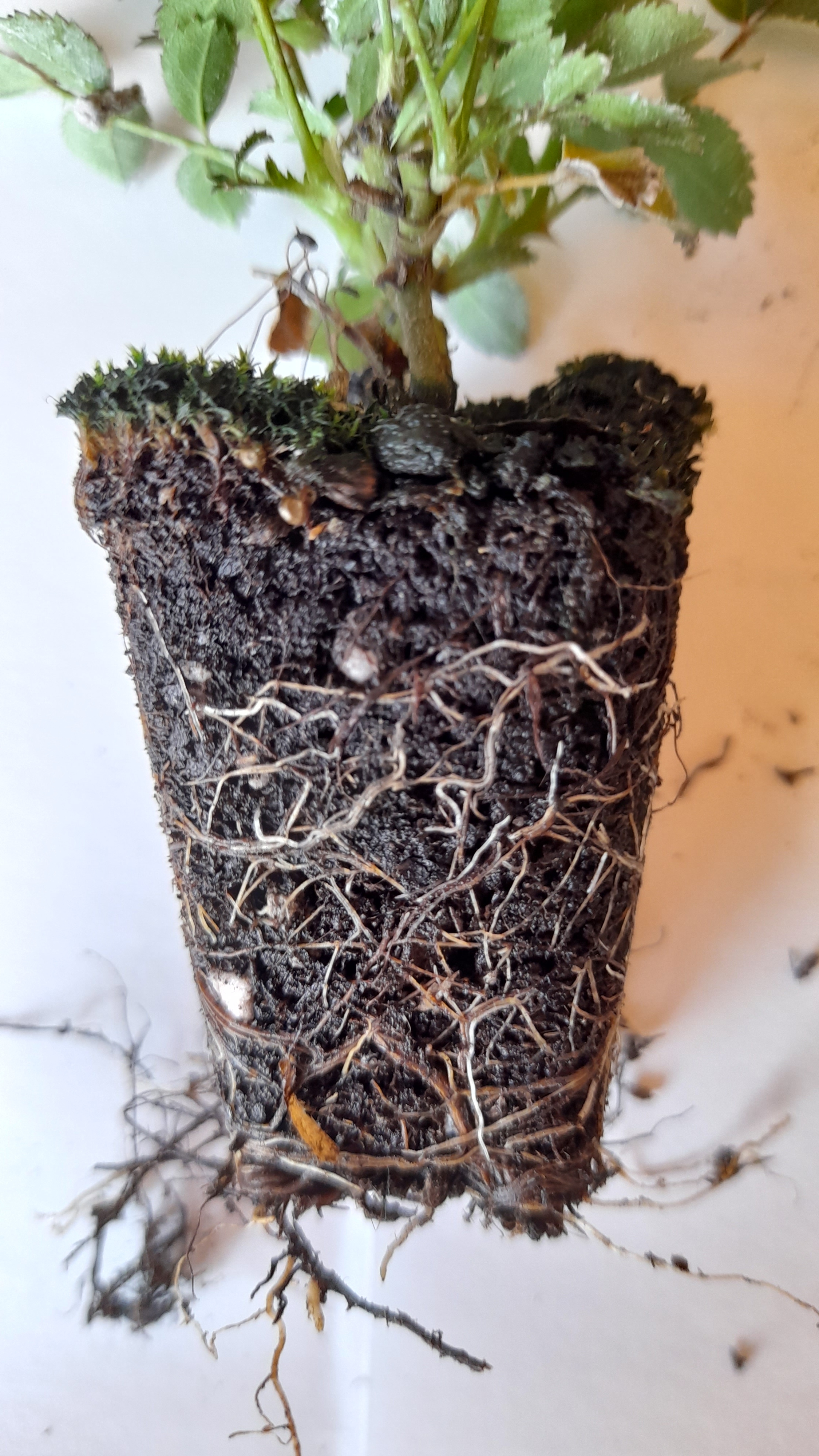
As a pharmaROSA® NEONATAL own-root propagation line, BERKELEY offers vigour, upright structure and dense foliage in a compact, bush-trained form that fits standard container workflows and 2–3 L production. Its warm salmon-pink flower colour, remontant flowering with abundant second flush, and clustered, double blooms support reliable border and park concepts where a consistent, retail-ready appearance is needed. Own-root material supports long-term stability in nursery beds and collection plantings, with predictable renewal of crowns and reduced replacement over time, matching UK nursery networks operating where winter and wind exposure demand robust garden roses. Across a normal production arc—roots establishing in the first year, framework building shoots in the second, and full ornamental value by the third—BERKELEY can underpin a dependable bedding grandiflora SKU in thematic rose garden and collection ranges on a wholesale base.
Usage options
Finished-product ideas
- 2–3 L bedding grandiflora line – Own-root, bush-trained plants in standard 2–3 L pots highlighting upright habit and remontant flowering as a dependable “reliable garden performance” retail SKU – target audience/channel: retail/reseller
- Pink border and park series – Medium-height, dense-foliage plants grouped as a colour-consistent salmon-pink series for borders and parks, drawing on own-root stability and structured growth – target audience/channel: public-realm suppliers
- Grandiflora cut-and-garden concept – Container-grown plants promoted for dual use (garden plus occasional cutting), leveraging medium double blooms and repeat flowering from own-root stock – target audience/channel: garden-centre wholesalers
- Thematic collection block – NEONATAL trays scheduled into nursery propagation beds to maintain a long-term BERKELEY holding with homogeneous stands and predictable renewal – target audience/channel: nurseries and integrators
- Large-specimen display containers – 40–50 litre own-root specimens grown on for three-season development to peak in height, foliage and flowering for shows and feature displays – target audience/channel: show gardens and premium retail staging
Technical cultivar profile
| Parameter |
Data |
| Name and registration |
Grandiflora, shrub rose registered as JACient, traded as BERKELEY and Tournament of Roses, in the bedding rose commercial group with verified cultivar authenticity for professional propagation. |
| Origin and breeding |
Bred by William A. Warriner for Jackson & Perkins Co. from ‘Impatient’ × unknown seedling, introduced in the United States in 1988 after registration in 1987 for grandiflora bedding use. |
| Awards and recognition |
Holds All-America Rose Selections award from 1989, indicating proven ornamental performance in competitive trial conditions, supporting its relevance in traditional and collection-focused rose ranges. |
| Growth and structural characteristics |
Upright habit reaching 130–170 cm high with 75–105 cm spread, dense deep green, slightly glossy foliage and moderate prickliness; weak self-cleaning so spent blooms generally require manual or mechanical removal. |
| Flower morphology |
Medium-sized, double, cup-shaped flowers with 26–39 petals, produced in clusters, repeat-flowering with a distinct and abundant second flush that supports extended seasonal display under professional management. |
| Colour data and phenology |
Warm salmon-pink base with ARS pink blend code; outer petals RHS 55A, inner RHS 55C, showing a soft pink-to-coral gradient with good retention and only light edge fading under strong sun exposure. |
| Fragrance and aroma |
Flowers exhibit a pleasant, soft, mildly expressed fragrance; dense petal count reduces pollen access, so pollinator interest is limited and the cultivar functions primarily as a decorative landscape and container rose. |
| Hip characteristics |
Hip formation is generally low due to double flowers and continuous blooming; where present, spherical orange-red hips of about 6–10 mm diameter may occur sporadically without major ornamental significance. |
| Resistance and winter hardiness |
Hardy to approximately −21 to −18 °C (RHS H7, Swedish zone 3, USDA 6b) but very susceptible to powdery mildew, black spot and rust, requiring high maintenance and regular plant protection in production and use. |
| Horticultural recommendations |
Recommended for borders, containers, parks and cut flower use; supplied as bush-trained compact own-root starting material for standard container routes, with high maintenance needs and planned plant protection regimes. |
BERKELEY offers upright structure, remontant flowering and colour-stable blooms on predictable, regenerative own-root stock, making it a practical bedding grandiflora choice for nurseries wishing to discuss volumes and scheduling calmly and in detail.