Park shrub rose

20-706-1
20-706-2

Cardinal Hume

Park - shrub rose

HARregale – Jack Harkness

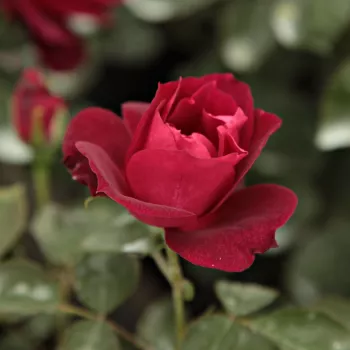
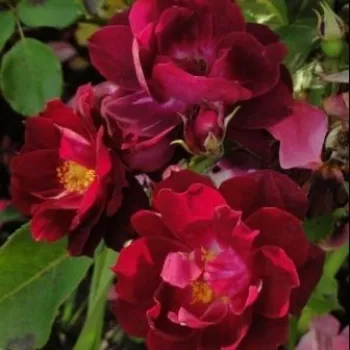
Deep lilac-purple with a subtle reddish tone. - park rose - medium-strength, noticeably fragrant rose - soft, muscat-like character

– Rich lilac-purple blooms with smoky tones.
– Medium, muscat-like fragrance, clearly noticeable.
– Reliable repeat flowering with abundant second flush.
– Very good disease resistance, low maintenance.
– Compact, bushy habit for beds, hedges, parks.
– Special feature: Awarded RNRS Certificate of Merit (1984) for outstanding garden performance.
Standard finished product
Cardinal Hume
pharmaROSA® NEONATAL rooted rose cutting
29,58 £
Due to courier service regulations – and the introduction of customs clearance – delivery to Ireland is temporarily suspended.
5 (6764)
facebook   twitter

Cardinal Hume – park shrub rose for professional own-root production

Reliability and vigour make Cardinal Hume a practical, low-risk choice for own-root nursery production, combining dense, bushy habit with remontant flowering for sustained landscape value. Its medium-sized, double, lilac‑purple clusters support a clear identity in retail shrub ranges, while the compact, slightly spreading framework suits 2–3 L containers as the standard product path. Onward growers benefit from low-maintenance behaviour backed by very good disease resistance, reducing spray interventions in production beds and finished stock. Own-root longevity underpins long-term bed plantings and hedge projects, supporting homogeneous stands with reduced replacement across seasons. The cultivar’s H7 hardiness and dependable performance help service contracts even in cooler, wind‑exposed parts of the UK, effectively addressing harsher northern and Scottish garden conditions. With a clear finished-product positioning as a “standard finished product” for retail and reseller channels, its stable colour presentation and medium muscat-like fragrance offer a dependable, repeatable proposition. For planning purposes, Cardinal Hume fits the typical own‑root development arc, with roots establishing in year one, framework building in year two and full ornamental impact from year three, supporting predictable scheduling for thematic and collection gardens.


Usage options

Target area Reasoning
Wholesale shrub rose ranges in 2–3 L containers Compact, bushy habit with 80–130 cm height and 120–200 cm spread produces well-filled, saleable plants in the recommended standard container route and 2–3 L target pot. Remontant flowering and reliable garden performance suit the standard finished product positioning for retail and reseller ranges.
Low-maintenance park and urban green-space contracts Low maintenance requirement and resistant reaction to major fungal diseases mean fewer interventions in municipal beds and urban schemes, important when servicing large areas. Bush-trained, compact plants are efficient to handle in nursery propagation and batch container production targeting public-realm suppliers.
Hedge and boundary plantings for landscaper clients Bushy, slightly spreading growth and dense, dark-green foliage allow close, continuous hedging runs with good coverage, even from 2–3 L material. Own-root form supports regenerative regrowth if trimmed hard, reinforcing the reliable garden performance promise for landscape contractor programmes.
Thematic and collection rose gardens The distinctive lilac‑purple colour shift from rich crimson through dark mauve‑purple to purplish‑brown provides strong visual identity within collection or thematic rose gardens. Stable shrub structure and standard container route simplify catalogue listing and bench grouping for specialist rose collections.
Flowerbed and mixed-shrub displays Clustered, medium double blooms with repeat flowering deliver sustained ornamental effect in mixed shrub and flowerbed schemes. Moderate self-cleaning limits the deadheading requirement, yet some manual removal keeps stock presentation high and underpins the reliable garden performance message for garden-centre assortments.
Own-root propagation beds for long-term stock Own-root longevity and the ability to regenerate from the base help maintain mother blocks and standing stock with low replacement over multiple seasons. This supports predictable capacity planning when using bush-trained, compact material as a propagation base for nursery network supply.
Cooler-region projects and exposed sites H7 hardiness, USDA 6b and Swedish Zone 3 suitability give confidence for northern and more exposed UK sites where winter and wind can be challenging for less robust shrubs, while standard container production and 2–3 L pots ease distribution into Scotland and North England markets.
Specimen shrubs in larger decorative containers The dense foliage, remontant flowering and medium muscat-like fragrance scale well into 40–50 L decorative containers as focal specimens for high-value projects. Starting from uniform 2–3 L bush-trained plants simplifies up-potting and timing towards the standard finished product for premium retail and project work.

Finished-product ideas

  • 2–3 L park shrub line – Core shrub SKU based on bush-trained, compact plants with remontant flowering and good disease resistance, released as a standard finished product for continuous bench presence – retail / reseller channels.
  • Urban hedge module – Uniform 2–3 L plants grouped and marketed for low-maintenance hedging, leveraging dense foliage, spreading habit and own-root regenerative capacity – public-realm and landscaper supply.
  • Collection-garden feature block – Batches of colour-consistent, lilac‑purple shrubs for thematic and collection plantings, built on reliable garden performance and repeat bloom – specialist garden projects and show gardens.
  • Large patio specimen container – Up‑potted 2–3 L plants finished in 40–50 L containers to express the full bushy framework, remontant flowering and medium muscat-like fragrance – premium retail and design-led projects.
  • Municipal flowerbed shrub unit – Standardised, disease-resistant shrubs ready for bed planting, optimised for low maintenance and stable structure from own-root plants – municipal and institutional procurement programmes.

Technical cultivar profile
Parameter Data
Name and registration Registered as HARregale, marketed as Cardinal Hume Park - shrub rose HARregale, shrub / park rose type; American Rose Society exhibition name Cardinal Hume, shrub category.
Origin and breeding Bred by Jack Harkness, R. Harkness & Co. Ltd. (United Kingdom) from complex shrub and Rosa californica parentage; introduced and registered in 1984 for park and shrub use.
Awards and recognition RNRS Certificate of Merit (1984), providing useful third-party confirmation of garden and display performance for professional users and trade partners.
Growth and structural characteristics Bushy, slightly spreading shrub, 80–130 cm high with 120–200 cm spread, dense dark-green, slightly glossy foliage, moderately thorny stems; bush-trained, compact habit suited to container production.
Flower morphology Medium-sized, double flowers with 26–39 petals, cup-shaped, borne in clusters; remontant, producing an abundant second flush of blooms, with moderate self-cleaning that benefits from some manual deadheading.
Colour data and phenology Deep lilac‑purple tone (RHS 60A outer, 61A inner); opens rich reddish crimson, deepens to dark mauve‑purple, then to dull purplish-brown with silvery-lilac tones; colour holds better in cool conditions than in heat.
Fragrance and aroma Medium-strength fragrance with a soft, muscat-like character, clearly noticeable around the plant yet not overpowering, contributing to the ornamental value of beds, parks and specimen plantings.
Hip characteristics Occasional spherical hips, 8–13 mm diameter, scarlet red; not typically a dominant ornamental feature but may add minor seasonal interest where blooms are not fully deadheaded.
Resistance and winter hardiness Rated H7, hardy to approximately -21 to -18 °C, Swedish Zone 3, USDA 6b; resistant to powdery mildew, black spot and rust, with moderate tolerance of heat and drought given regular watering.
Horticultural recommendations Recommended for flowerbeds, parks, specimen use, hedges and urban green spaces; standard container route with 2–3 L target pots, low maintenance demands and generally minimal plant protection inputs.

Cardinal Hume HARregale offers disease resistance, bushy container-friendly growth and own-root longevity for predictable, durable shrub stands; please contact us to align on propagation volumes and delivery scheduling.

Detailed product attributes

Product Identification Data

Product Name: CARDINAL HUME – lilac-purple park rose - Harkness
Product Type: pharmaROSA® NEONATAL - rooted rose cutting
Cultivar Authenticity: Verified:10.10.2025
Cultivar Quality Rating: premium silver
Item Number: [676] 20-706 (14.02.2026) pharmarosaneonatal.co.uk

Name and Registration

Meaning of Cultivar Name: The name was given in honour of Basil George Hume (1923–1999), Archbishop of Westminster and Cardinal.
Original Trade Name: Cardinal Hume
Current Trade Name: Cardinal Hume Park - shrub rose HARregale
Rose Group: Shrub
Commercial Type: park rose
Commercial Group: Park - shrub rose
Exhibition Category: shrub rose
Collection: Park - shrub rose

Origin and Breeding

Initial Distributor: R. Harkness & Co. Ltd. (United Kingdom)
Breeder: Jack Harkness
Breeding Company / Institution: R. Harkness & Co. Ltd. (United Kingdom)
Breeding Year: United Kingdom, 1984
Parentage: ((Unnamed seedling × (‘Orange Sensation’ × ‘Allgold’)) × Rosa californica) × ‘Frank Naylor’

Growth and Structural Characteristics

Height: 2.6-4.3ft (80-130 cm)
Spread: 3.9-6.6ft (120-200 cm)
Growth Habit: bushy, slightly spreading
Foliage: The variety has dense foliage, with leaves that have a slightly glossy surface and a dark green shade (approx. RHS 147A).
Prickliness: moderately thorny
Self-Cleaning Description: Some of the spent blooms drop off naturally; the remainder should be removed.
Self-Cleaning Intensity: self-cleaning moderate

Flower Morphology

Petal Count: 26-39
Flower Fullness: double-flowered
Flower Shape: cup-shaped
Flower Size: M (1,5-2,75 in)
Inflorescence Type: clustered
Colour Code: ARS code: Mau RHS code: 60A (outer), 61A (inner)
Repeat Flowering: Remontant, with an abundant second flush of flowers.

Colour Data and Phenology

Colour: lilac-purple
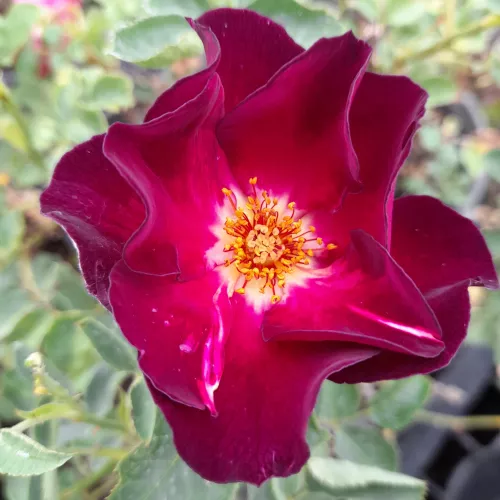
Flower Colour Description: Deep lilac-purple with a subtle reddish tone.
Closed Bud: Deep crimson shade tending towards black.
Newly Opened Flower: Rich reddish crimson, with a subtle purple veil at the petal edges.
Full Bloom: Dark mauve-purple, with a slightly smoky tone towards the centre.
Before Fading: Dull purplish‑brown with silvery‑lilac tones in places.
Colour Fading Description: On opening, the rich reddish‑crimson fades to a dark mauve‑purple and then, before the bloom is spent, to a dull purplish‑brown; it fades faster in warmth and remains deeper in cool conditions.

Fragrance and Aroma

Fragrance Strength: medium-strength, noticeably fragrant rose
Fragrance Character: soft, muscat-like character
Pollinator Attraction: Double (26–39 petals) flowers attract pollinators only to a limited extent, as the double form and reduced accessibility of the stamens limit their appeal.
Pollinator-Friendly Rating: Its fully double flowers make it primarily ornamental; pollinator-friendliness is limited.

Hip Characteristics

Hip Shape: spherical
Hip Colour: scarlet
Hip Comment: Occasionally occurring, 8–13 mm in diameter, spherical, scarlet-red rose hip.

Resistance and Hardiness

Hardiness (°C): -21–-18 °C
Heat and Drought Tolerance Description: Tolerates heat but requires regular watering during prolonged drought.
Disease Resistance: resistant
  • powdery mildew – resistant
  • black spot – resistant
  • rust – resistant

Horticultural Recommendations

Recommended product path: Standard container
Release form: Bush-trained, compact plant
Recommended use: Maintenance requirement low; good disease resistance, generally requires minimal intervention.
Primary Uses: flowerbed, park, specimen, hedge, urban green space

Comments

Positioning: Standard finished product
Target customer/channel: Retail / reseller
Main value proposition: Reliable garden performance
CARDINAL HUME – lilac-purple park rose - Harkness
Deep lilac-purple with a subtle reddish tone. - park rose - medium-strength, noticeably fragrant rose - soft, muscat-like character
The rose webshop. - lilac-purple - medium-strength, noticeably fragrant rose - Cardinal Hume - park rose - (2.6-4.3ft (80-130 cm))
Inflorescence: clustered Height: 2.6-4.3ft (80-130 cm) Flower shape: cup-shaped Winter hardiness: - lilac-purple - R. Harkness & Co. Ltd. (United Kingdom) park rose - Flower size: M (1,5-2,75 in) Flower size: M (1,5-2,75 in) - Height: 2.6-4.3ft (80-130 cm) Height: 2.6-4.3ft (80-130 cm) - Flower fullness: double-flowered Cardinal Hume - Roses in the garden | pharmaROSA® Neonatal - premium silver Jack Harkness

We showcase the external appearance of the roses available for online purchase from our webshop.


Which product type is right for you?


PharmaRosa® NEONATAL is the cost‑effective starting point for rose product production.

As a uniform, own‑rooted propagation material, it provides a stable basis for further growing-on and can be integrated flexibly into different finished product production technologies.
Rooted in trays (rooted), 3–6‑month‑old, own‑rooted rose cutting.

Uniform developmental stage, with a root system that has thoroughly penetrated the plug.
For professional growing‑on.
Tray packaging: 10 pcs/tray.
Quality and varietal identity: production supported by a dedicated identification and traceability logic.
Can be transplanted during frost‑free periods, designed for finished product production.

PharmaRosa® NEONATAL provides a controlled, uniform starting stock for planned growing‑on that can be integrated into your own technology – especially where scheduling and varietal identity are paramount.


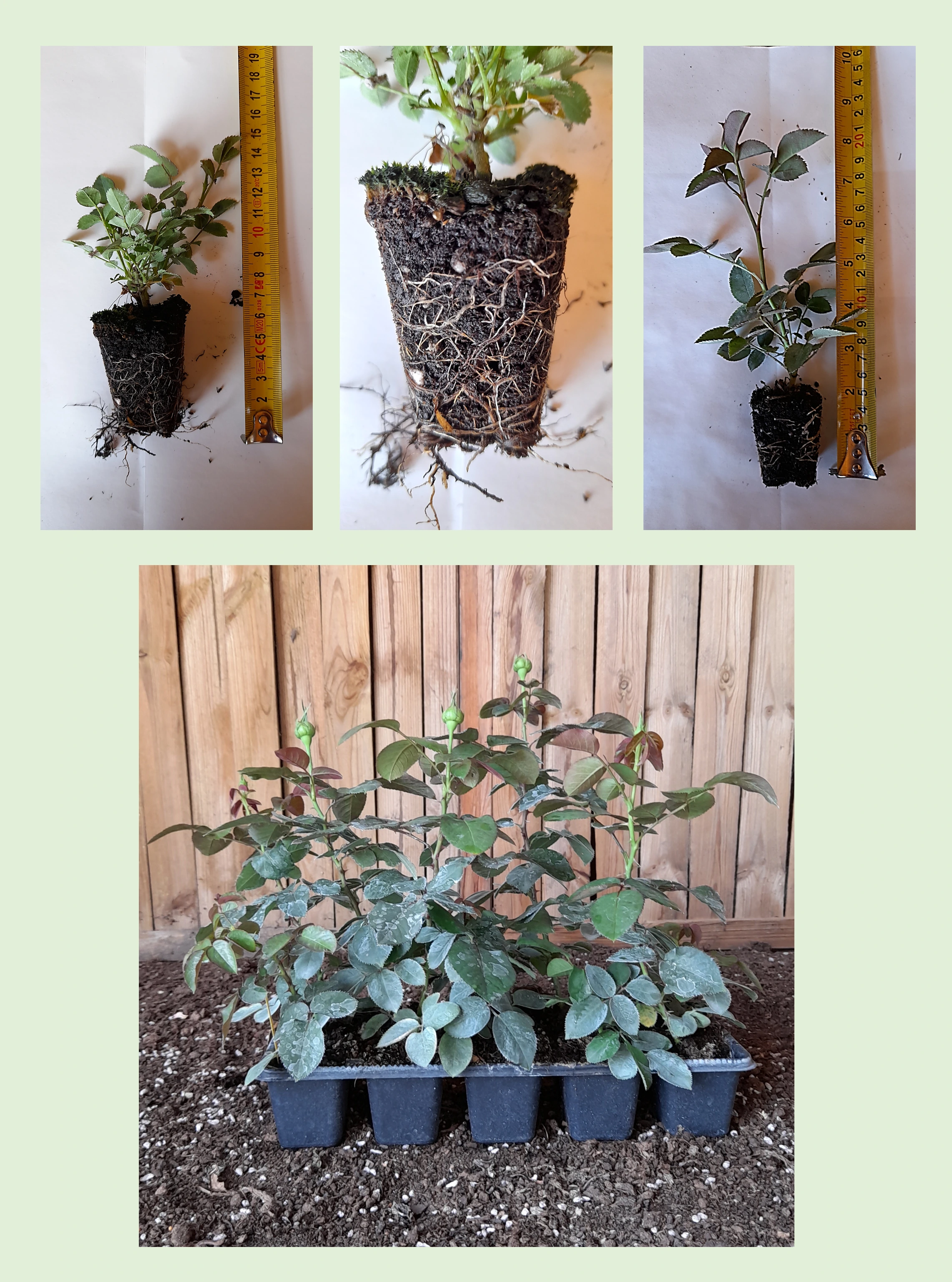
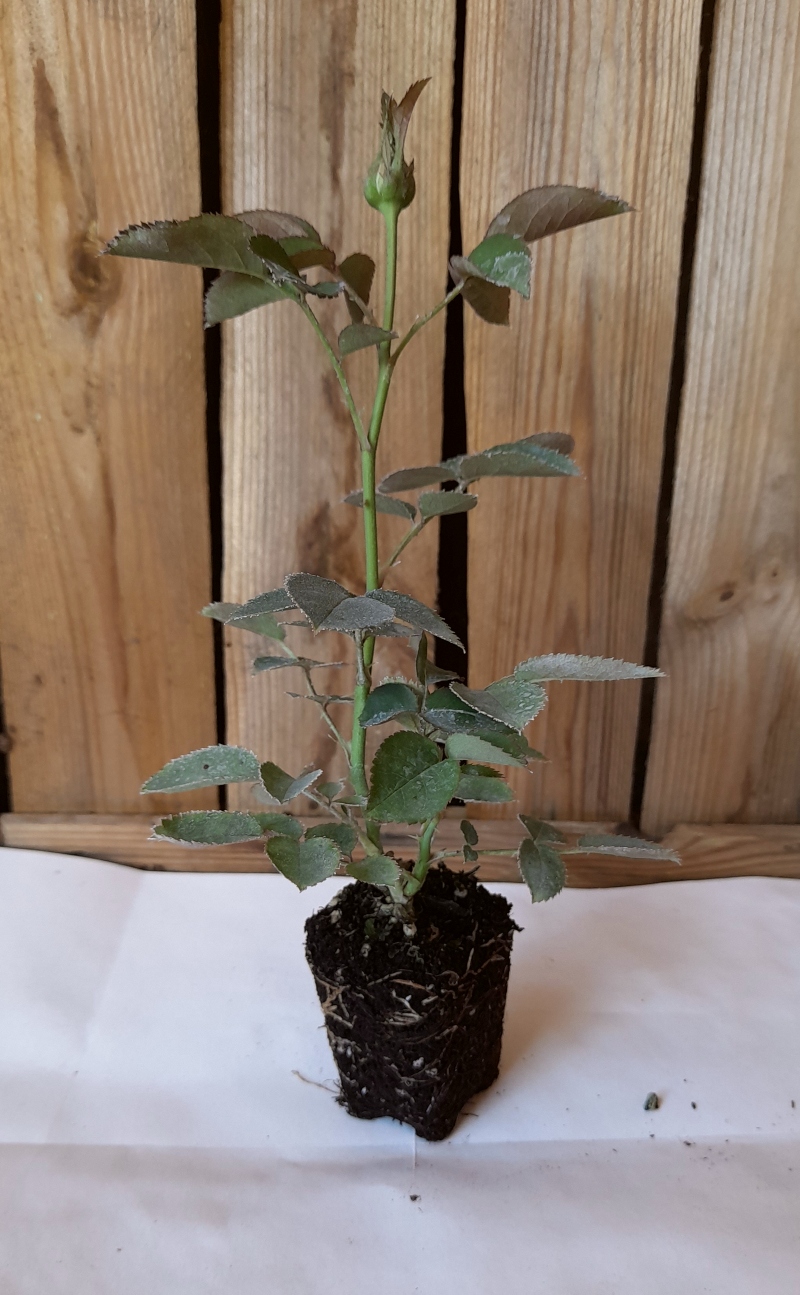
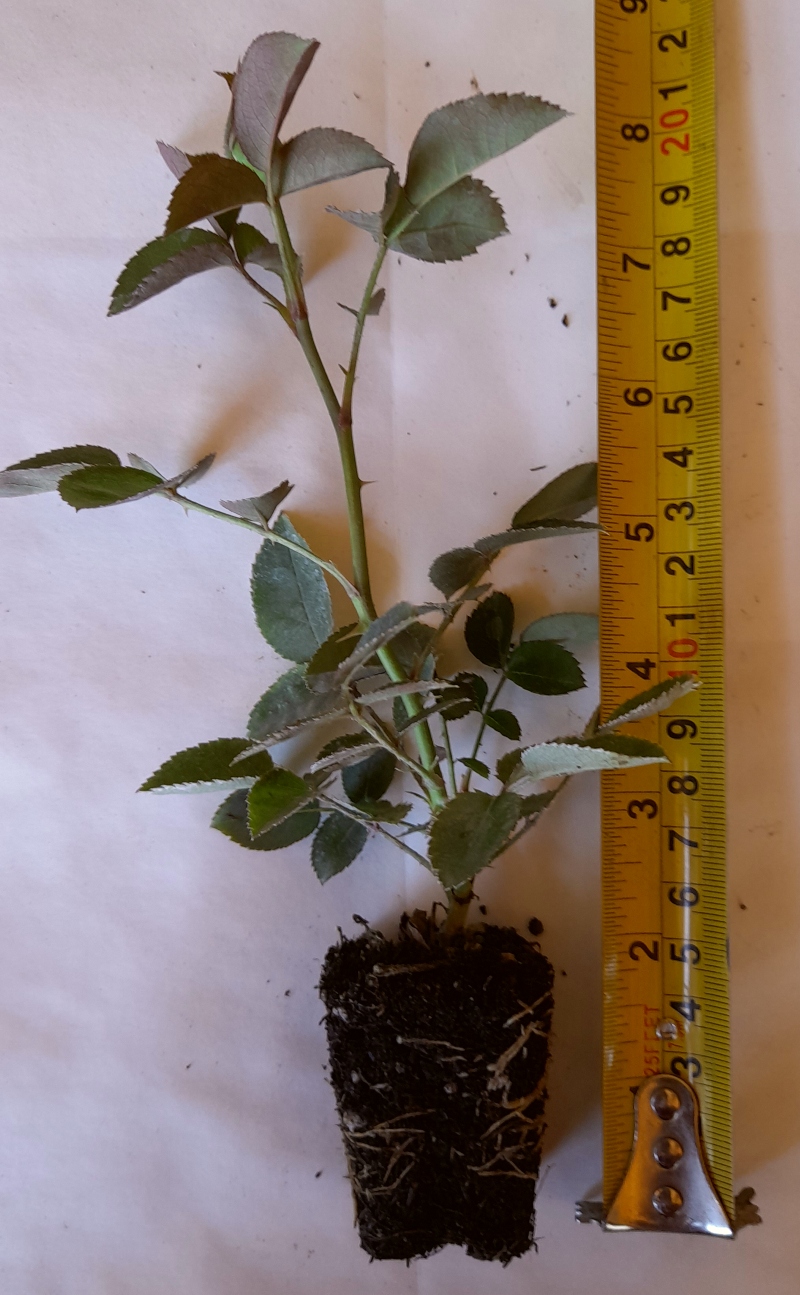
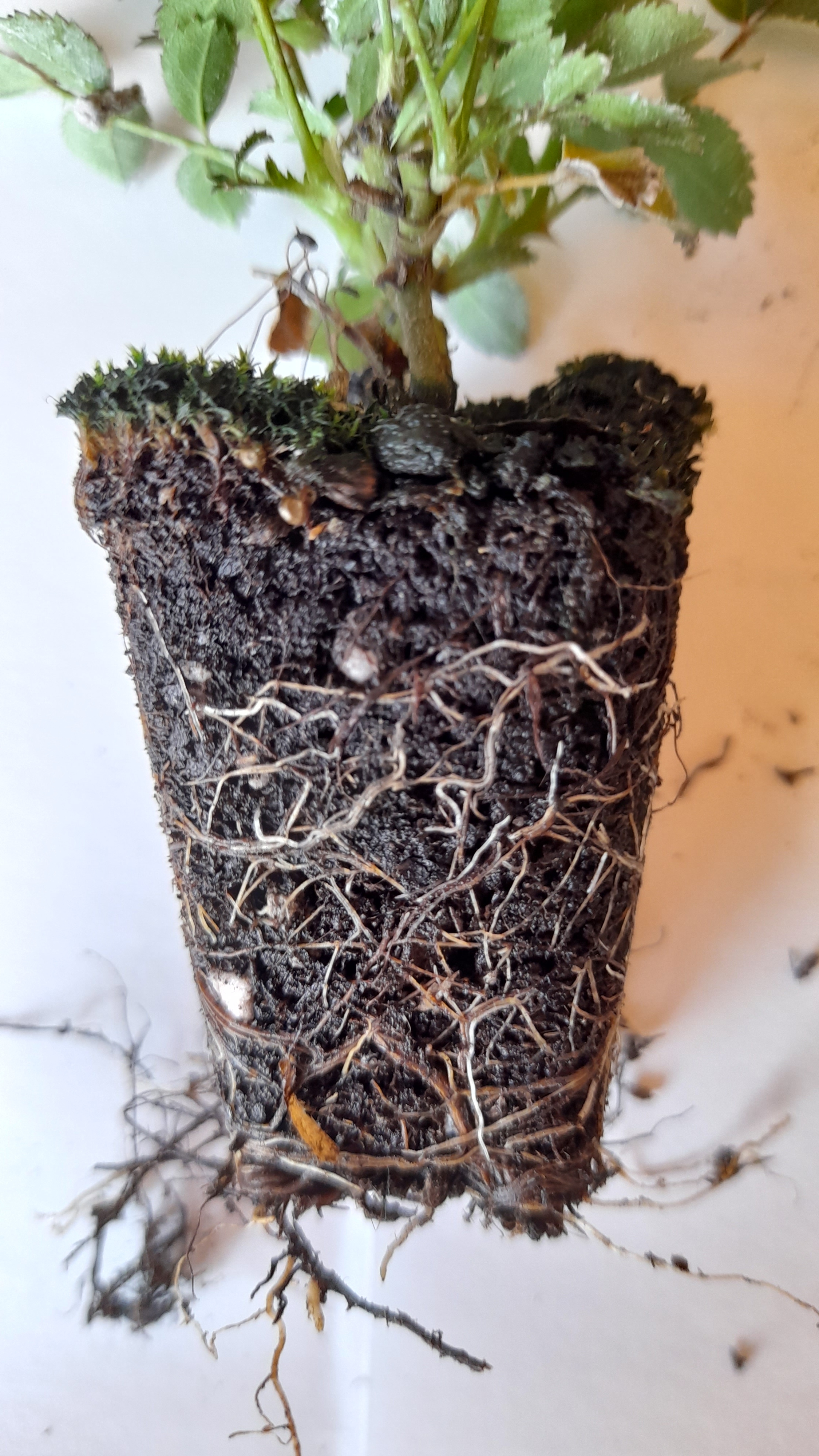
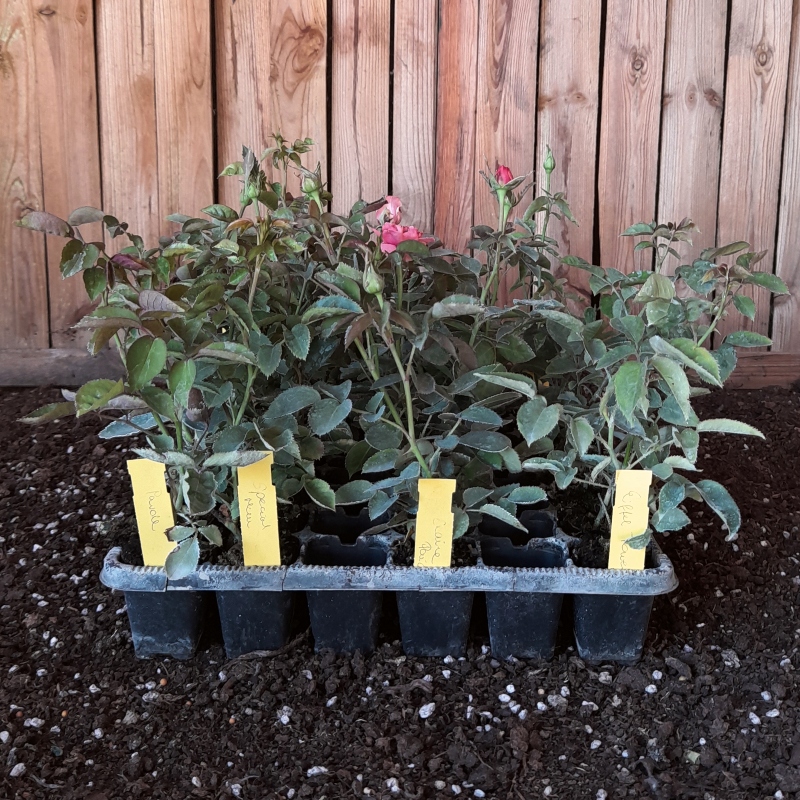
PharmaRosa® NEONATAL own-rooted rose propagation material in a plug, with a root system penetrating the plug (semi-finished product / semi-finished rose). PharmaRosa® NEONATAL rose propagation material size: 3–6‑month‑old, own-rooted cutting with a uniform developmental stage. PharmaRosa® NEONATAL rose propagation material root system: plug densely penetrated by well-developed white roots (root system detail). PharmaRosa® NEONATAL tray stock: own-rooted rose propagation material in trays, uniform developmental stage (10 pcs/tray).

Captions (from left to right): Semi-finished product (NEONATAL own-rooted rose propagation material in a plug with a fully developed root system) • Size demonstration (3–6‑month‑old, uniform cutting) • Root system detail (plug penetrated by the root system) • Tray stock (10 pcs/tray, uniform developmental stage)

pharmarosaneonatal.skpharmarosaneonatal.ropharmarosaneonatal.depharmarosaneonatal.co.ukpharmarosaneonatal.sipharmarosaneonatal.czpharmarosaneonatal.atpharmarosaneonatal.itpharmarosaneonatal.frpharmarosaneonatal.plpharmarosaneonatal.espharmarosaneonatal.nlpharmarosaneonatal.ptpharmarosaneonatal.lupharmarosaneonatal.sepharmarosaneonatal.lvpharmarosaneonatal.fipharmarosaneonatal.ltpharmarosaneonatal.eepharmarosaneonatal.hu

Which product type is right for you?

Pages for private customers
Garden roses for the family garden, with minimal care  → ORIGINAL®
Premium garden roses – instant impact, a truly showpiece garden  → EXTRA®
Pages for professionals and private customers
Roses for public spaces – large areas, sustainable maintenance  → NATURAL®
Roses for projects – hedge and row planting, fast implementation  → RAPID®
For professional partners only
Production – propagation material for garden roses, wholesale  → NEONATAL®

Company details

PharmaRosa Ltd.
Company registration number: 01-09-717479
VAT number: 13075314-2-43
Plant health registration no.: HU130721
Bank account (IBAN):
HU85117631891388688400000000
BIC (SWIFT): OTPVHUHB
Bank name: OTP Bank Nyrt.