Hybrid tea rose

20-020-1
20-020-2

Casanova

Hybrid tea rose

- – Samuel Darragh McGredy IV

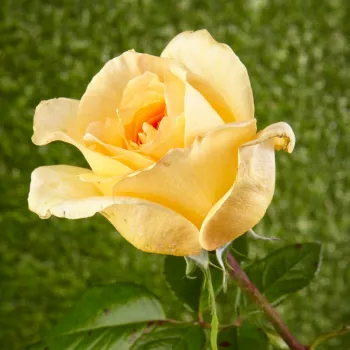
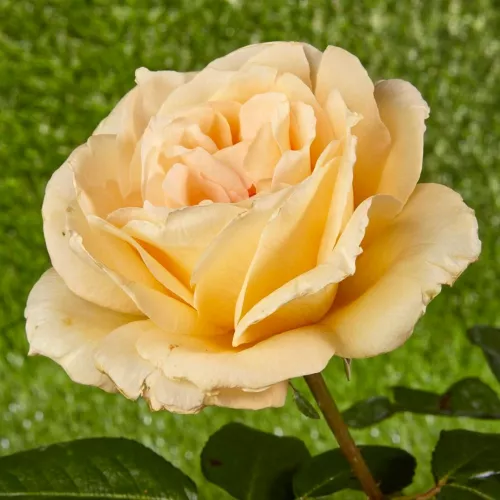
The petal base is straw yellow and lightens to cream yellow towards the outer edges. - hybrid tea rose - medium strength, clearly scented rose - sweet character

– Elegant, high‑centred exhibition blooms.
– Refined pale lemon‑cream yellow colouring.
– Medium, sweet fragrance clearly noticeable.
– Upright, bushy habit for beds and specimens.
– Proven show quality, Geneva Certificate of Merit.
Special feature: Very good resistance to major rose diseases, needing little chemical protection.
Exclusive finished product
Casanova
pharmaROSA® NEONATAL rooted rose cutting
28,34 £
Due to courier service regulations – and the introduction of customs clearance – delivery to Ireland is temporarily suspended.
5 (8477)
facebook   twitter

Casanova – pale yellow hybrid tea rose – McGredy

Exhibition performance, flower quality and form make Casanova a focused option where you need a premium hybrid tea in nursery beds and 5–7 L container production. This own-root material delivers an upright, bush-trained framework with 3–5 strong canes, suited to a premium container route and exclusive finished-product positioning into retail and reseller channels. Onward producers gain a predictable cut-flower and specimen candidate with medium, high-centred, pointed buds and pastel pale-yellow tonality that reads consistently on benches. Disease resistance reduces spraying needs and supports low-intervention regimes typical of UK nursery networks serving thematic rose gardens and collection displays, while its good winter performance offers reliable cropping even in colder, wind-exposed regions of Scotland and Northern England. Own-root propagation supports long-term bed renewal and stable, homogeneous stands where replacement must stay low and capacity remains predictable, following a natural development arc from root establishment in year one, structural build in year two and full ornamental expression from year three. This combination of quality traits allows you to align Casanova confidently with exclusive, high-margin rose offerings in coordinated wholesale programmes.


Usage options

Target area Reasoning
Premium 5–7 L container production for retail benches Casanova’s high-centred, pointed-bud flowers and medium large bloom size translate cleanly into a premium 5–7 L container offer, matching the recommended bush-trained release form with 3–5 framework canes. Disease resistance keeps maintenance requirements low, helping nursery teams maintain bench quality with limited intervention while still meeting exclusive finished-product expectations for appearance and uniformity. This supports a premium container product path positioned as an exclusive, flower-form-led hybrid tea for retail and reseller channels
Cut-flower oriented nursery blocks The solitary, exhibition-type blooms on upright stems provide a clear route into cut-flower and exhibition tea hybrid usage from nursery bed production. Using pharmaROSA NEONATAL own-root material as the propagation base allows you to structure bed layouts for repeated cutting, while the low-maintenance profile keeps crop management straightforward. Positioning Casanova as an exclusive line highlights its refined pale-yellow tonality and sweet, medium fragrance for specialist florist-oriented resellers
Specimen-grade container roses for feature placements Its upright habit, medium-density light green foliage and carefully structured 3–5 cane framework support production of specimen-grade plants in 7 L and, where desired, step-up to 40–50 L containers for feature use. Own-root propagation ensures long lifespan and regeneration capacity after hard pruning, which is important when supplying statement pieces to institutions and high-end private clients. These attributes align with an exclusive finished-product promise focused on flower form and presentation for premium garden-centre assortments
Thematic and collection rose gardens Casanova’s historic breeding (McGredy, 1964) and parentage from ‘Queen Elizabeth’ × ‘Perfecta’ add value in curated collections and thematic plantings where story and lineage matter. Own-root plants provide a stable base for long-term beds in show gardens, with predictable structure and low replacement demand over time. Its recognised exhibition profile fits an exclusive positioning where flower quality, form and cultivar authenticity are central for public and institutional collections
Low-intervention disease-resilient production units Resistance to powdery mildew, black spot and rust suits production systems aiming to minimise chemical inputs and labour on health interventions. In nursery environments this supports large propagation blocks and premium container runs with more predictable quality across crops and seasons. Linking this resilience with the exclusive finished-product angle allows you to present Casanova as a reliable, flower-quality-led option for sustainability-conscious wholesale partners
Cooler-climate outdoor production for UK networks Hardiness to approximately -21 – -18 °C, plus H7 and Swedish Zone 3 ratings, supports field or cool outdoor container production in many UK sites. This gives nursery networks serving northern and wind-exposed locations confidence in overwintering capacity and structural persistence in stock beds. Emphasising its suitability for colder, windier climates underpins assortments where exclusive hybrid teas must still perform reliably for regionally distributed resellers
Premium reblooming colour anchor in rose beds Good rebloom, including abundant second flowering, allows Casanova to act as a stable colour and form anchor in dedicated rose beds grown on from NEONATAL trays into 5–7 L production. The repeat flowering supports consistent bench presence across the retail season and helps maintain visual impact in collection gardens supplied by your nursery. This aligns neatly with an exclusive finished-product message focused on sustained flower quality for high-visibility retail promotions
Managed production where climate control is limited While drought and heat tolerance are poor, this becomes manageable where irrigation and exposure can be controlled, including sheltered nursery beds and structured container layouts. Own-root plants help buffer stress and support regeneration after any weather-related setbacks, keeping long-term stock viability high and replacement needs low. This allows you to integrate Casanova selectively into programmes where exclusive, high-form hybrid teas complement more robust lines for balanced wholesale assortments

Finished-product ideas

  • Premium 5–7 L exhibition hybrid tea – Own-root bush-trained plants with 3–5 canes, finished in 5–7 L pots as a bench-ready exhibition-type hybrid tea, leveraging flower form, pale-yellow colour and disease resistance – retail and high-end garden-centre channels
  • Cut-flower bench selection Casanova – Blocks of uniformly trained plants targeted for home cutting and exhibition use, highlighting solitary, high-centred blooms and reliable rebloom, supplied in branded 7 L containers – specialist florist resellers and destination garden centres
  • Historic McGredy collection feature – Curated line built around Casanova’s McGredy origin and 1960s heritage, using own-root material for long-term thematic and show garden plantings with low replacement needs – public gardens and institutional buyers via wholesalers
  • Disease-resilient pale-yellow focus line – Production emphasising resistance to key foliar diseases, allowing reduced intervention while maintaining premium flower quality in 5–7 L stock – sustainability-focused retail chains and procurement-driven buyers
  • Specimen-grade lemon-cream centrepiece – Selected strong plants stepped up from 5–7 L into 40–50 L containers to create upright, specimen-grade features with high-centred blooms and sweet fragrance – landscape contractors and prestige project suppliers

Technical cultivar profile
Parameter Data
Name and registration Casanova hybrid tea rose, commercial type and group hybrid tea; American Rose Society exhibition name Casanova; unregistered cultivar in formal registration terms.
Origin and breeding Bred by Samuel Darragh McGredy IV, Samuel McGredy & Son, Portadown; cross of ‘Queen Elizabeth’ × ‘Perfecta’; bred in England 1957, introduced 1964 United Kingdom by Fisons Horticulture Ltd.
Awards and recognition Geneva Certificate of Merit at the Geneva Rose Trials in 1963, underpinning its established reputation for flower quality and performance in formal trial conditions.
Growth and structural characteristics Upright bush habit, typically 100–140 cm high and 55–85 cm spread; medium-density light green foliage, sparsely thorned shoots; bush-trained framework with 3–5 strong canes recommended.
Flower morphology Double-flowered hybrid tea with 26–39 petals; high-centred, pointed-budded, solitary blooms in an exhibition-style form; large flower size around 2.75–3.95 inches diameter on upright stems.
Colour data and phenology Pale pastel creamy-yellow blooms; straw-yellow base lightening to cream yellow at petal edges; ARS LY, RHS 12B inner and 11D outer; colour can fade to cream-white in strong sun, reblooms well with abundant second flush.
Fragrance and aroma Medium strength scent with a clearly perceived, sweet fragrance character; ornamental emphasis rather than functional perfumery use, but with a noticeable scent contribution in plantings and cut-flower use.
Hip characteristics Limited hip formation expected due to double blooms; occasionally produces small ovoid orange-red hips around 10–14 mm diameter, without significant impact on production decisions.
Resistance and winter hardiness Rated resistant to powdery mildew, black spot and rust; hardy approximately to -21 – -18 °C (USDA 6b, RHS H7, Swedish Zone 3); poor tolerance of prolonged drought and high heat, needing reliable irrigation and moderate exposure.
Horticultural recommendations Primary uses: flower bed, cut flower and specimen roles; low maintenance requirement with generally little intervention; best routed as premium container production in 5–7 L pots using own-root pharmaROSA NEONATAL propagation material.

Casanova hybrid tea rose offers exhibition-grade flower form, strong disease resistance and reliable rebloom on long-lived own-root plants, providing predictable, low-replacement stands for premium programmes where we can jointly plan capacity and timing.

Detailed product attributes

Product Identification Data

Product Name: CASANOVA – pale yellow hybrid tea rose - McGredy
Product Type: pharmaROSA® NEONATAL - rooted rose cutting
Cultivar Authenticity: Verified:06.07.2025
Cultivar Quality Rating: premium bronze
Item Number: [412] 20-020 (14.02.2026) pharmarosaneonatal.co.uk

Name and Registration

Meaning of Cultivar Name: The name "Casanova" refers to Giacomo Casanova, the notorious Italian adventurer and womaniser, a symbol of seduction.
Current Trade Name: Casanova Hybrid tea rose McGredy
Rose Group: Hybrid Tea
Commercial Type: hybrid tea rose
Commercial Group: Hybrid tea rose
Exhibition Category: cut flower; exhibition tea hybrid
Collection: Hybrid tea rose

Origin and Breeding

Initial Distributor: Fisons Horticulture Ltd. (United Kingdom)
Introduction Year: 1964 (United Kingdom)
Registration Year: unregistered variety
Breeder: Samuel Darragh McGredy IV
Breeding Company / Institution: Samuel McGredy & Son, Nurseries, Portadown (Northern Ireland)
Breeding Year: England, 1957
Parentage: ‘Queen Elizabeth’ × ‘Perfecta’

Awards and Honours

Competition and Show Awards: Geneva Certificate of Merit – Geneva Rose Trials (1963)

Growth and Structural Characteristics

Height: 3.3-4.6ft (100-140 cm)
Spread: 1.8-2.8ft (55-85 cm)
Growth Habit: upright
Foliage: The variety has medium-density foliage. The leaf surface texture cannot be clearly classified and the colour is a light green shade.
Prickliness: sparsely thorned
Self-Cleaning Description: Most faded flowers largely remain on the plant and require subsequent removal.
Self-Cleaning Intensity: self-cleaning is weak

Flower Morphology

Petal Count: 26-39
Flower Fullness: double-flowered
Flower Shape: high-centred, pointed-budded (cut-rose type)
Flower Size: L (2,75-3,95 in)
Inflorescence Type: solitary
Colour Code: ARS code: LY RHS code: 12B (inner), 11D (outer)
Repeat Flowering: Reblooms well; its second flowering is also abundant.

Colour Data and Phenology

Colour: pale-yellow
Flower Colour Description: The petal base is straw yellow and lightens to cream yellow towards the outer edges.
Closed Bud: Warm, vivid straw-yellow surface with a delicate creamy-yellow tip.
Newly Opened Flower: The inner petal centres are a deeper straw yellow, while the outer surfaces are a soft cream shade.
Full Bloom: Uniform, pale lemon-cream yellow effect; the outer petal whorl is slightly paler.
Before Fading: Pastel creamy-yellow tone, with a slight buttery-yellow sheen in the centre.
Colour Fading Description: In strong sunlight the straw-yellow colour fades to cream-white.

Fragrance and Aroma

Fragrance Strength: medium strength, clearly scented rose
Fragrance Character: sweet character
Pollinator Attraction: Its heavily double flower form limits stamen accessibility, making it unattractive to pollinators.
Pollinator-Friendly Rating: Its double blooms partially conceal the stamens; pollinator-friendliness is limited, primarily an ornamental variety.

Hip Characteristics

Hip Shape: ovoid
Hip Colour: orange-red
Hip Comment: Rose hip formation is expected to be limited because of the double blooms; occasionally forming ovoid, orange‑red rose hips 10–14 mm in diameter.

Resistance and Hardiness

Hardiness (°C): -21–-18 °C
Heat and Drought Tolerance Description: According to the descriptions, it holds its blooms poorly in very hot weather and does not tolerate prolonged drought.
Disease Resistance: resistant
  • powdery mildew – resistant
  • black spot – resistant
  • rust – resistant

Horticultural Recommendations

Recommended product path: Premium container
Release form: Bush-trained, with 3–5 strong framework canes
Recommended use: Maintenance requirement low; good disease resistance, generally requires little intervention.
Primary Uses: flower bed, cut flower, specimen

Comments

Positioning: Exclusive finished product
Target customer/channel: Retail / reseller
Main value proposition: Flower quality, form
CASANOVA – pale yellow hybrid tea rose - McGredy
The petal base is straw yellow and lightens to cream yellow towards the outer edges. - hybrid tea rose - medium strength, clearly scented rose - sweet character
Online rose order - pale-yellow - medium strength, clearly scented rose - Casanova - hybrid tea rose - (3.3-4.6ft (100-140 cm))
Inflorescence: solitary Height: 3.3-4.6ft (100-140 cm) Flower shape: high-centred, pointed-budded (cut-rose type) Winter hardiness: - pale-yellow - Fisons Horticulture Ltd. (United Kingdom) hybrid tea rose - Flower size: L (2,75-3,95 in) Flower size: L (2,75-3,95 in) - Height: 3.3-4.6ft (100-140 cm) Height: 3.3-4.6ft (100-140 cm) - Flower fullness: double-flowered Casanova - Roses in the garden | pharmaROSA® Neonatal - premium bronze Samuel Darragh McGredy IV

We showcase the external appearance of the roses available for online purchase from our webshop.


Which product type is right for you?


PharmaRosa® NEONATAL is the cost‑effective starting point for rose product production.

As a uniform, own‑rooted propagation material, it provides a stable basis for further growing-on and can be integrated flexibly into different finished product production technologies.
Rooted in trays (rooted), 3–6‑month‑old, own‑rooted rose cutting.

Uniform developmental stage, with a root system that has thoroughly penetrated the plug.
For professional growing‑on.
Tray packaging: 10 pcs/tray.
Quality and varietal identity: production supported by a dedicated identification and traceability logic.
Can be transplanted during frost‑free periods, designed for finished product production.

PharmaRosa® NEONATAL provides a controlled, uniform starting stock for planned growing‑on that can be integrated into your own technology – especially where scheduling and varietal identity are paramount.


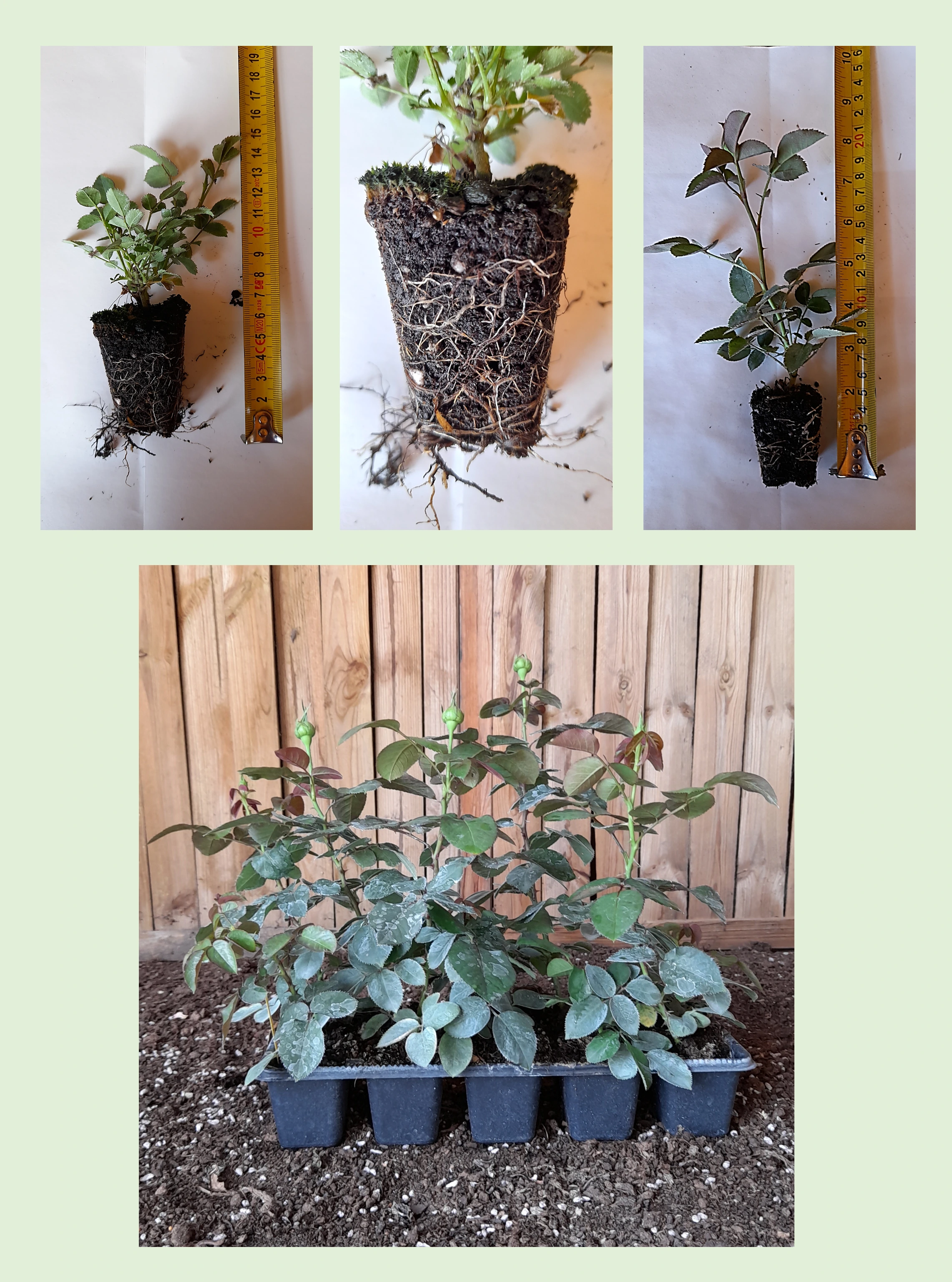
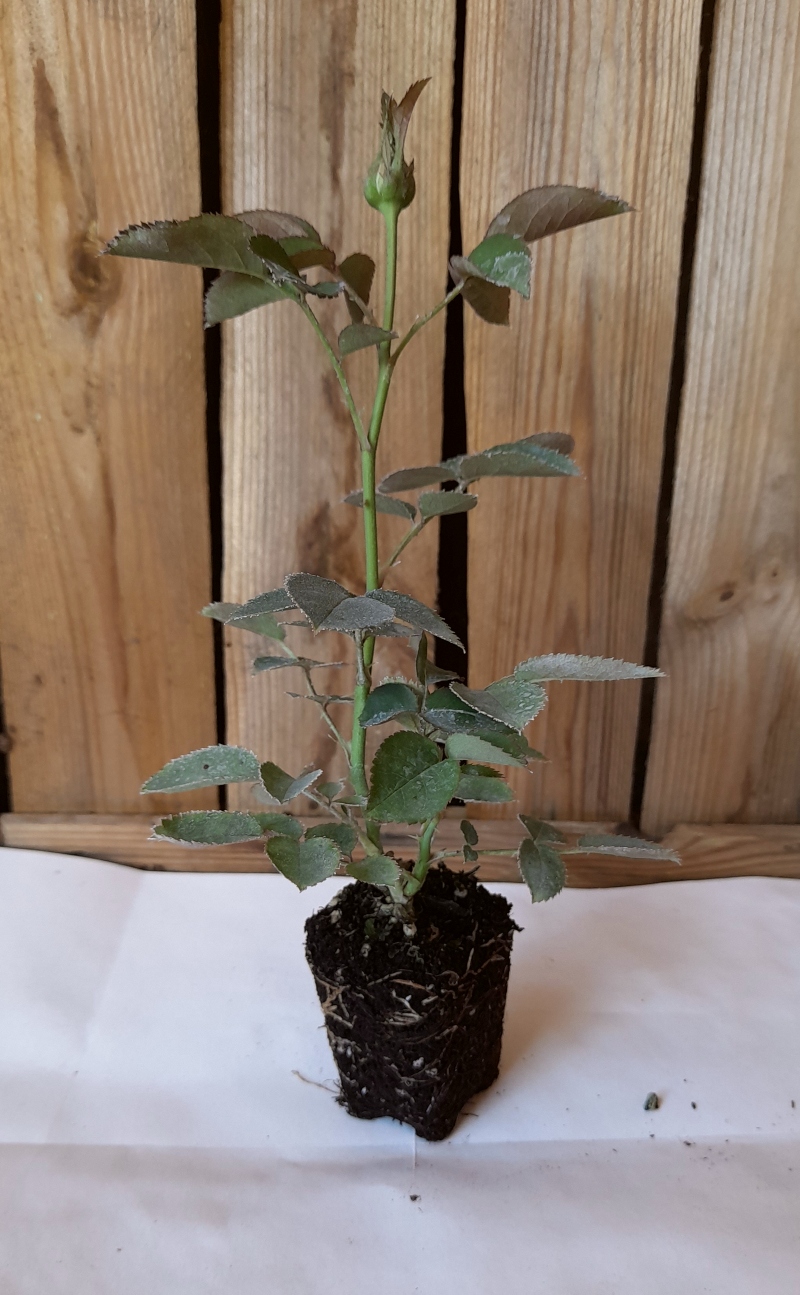
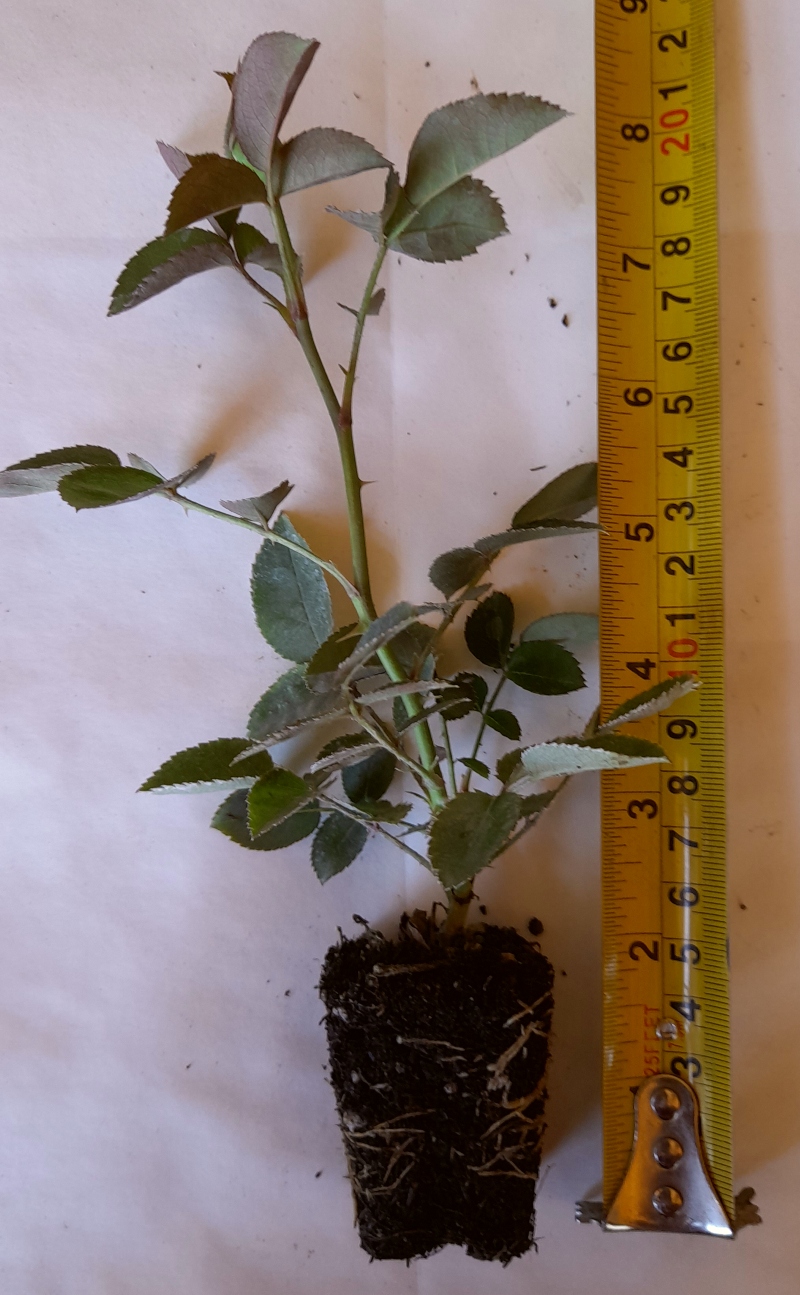
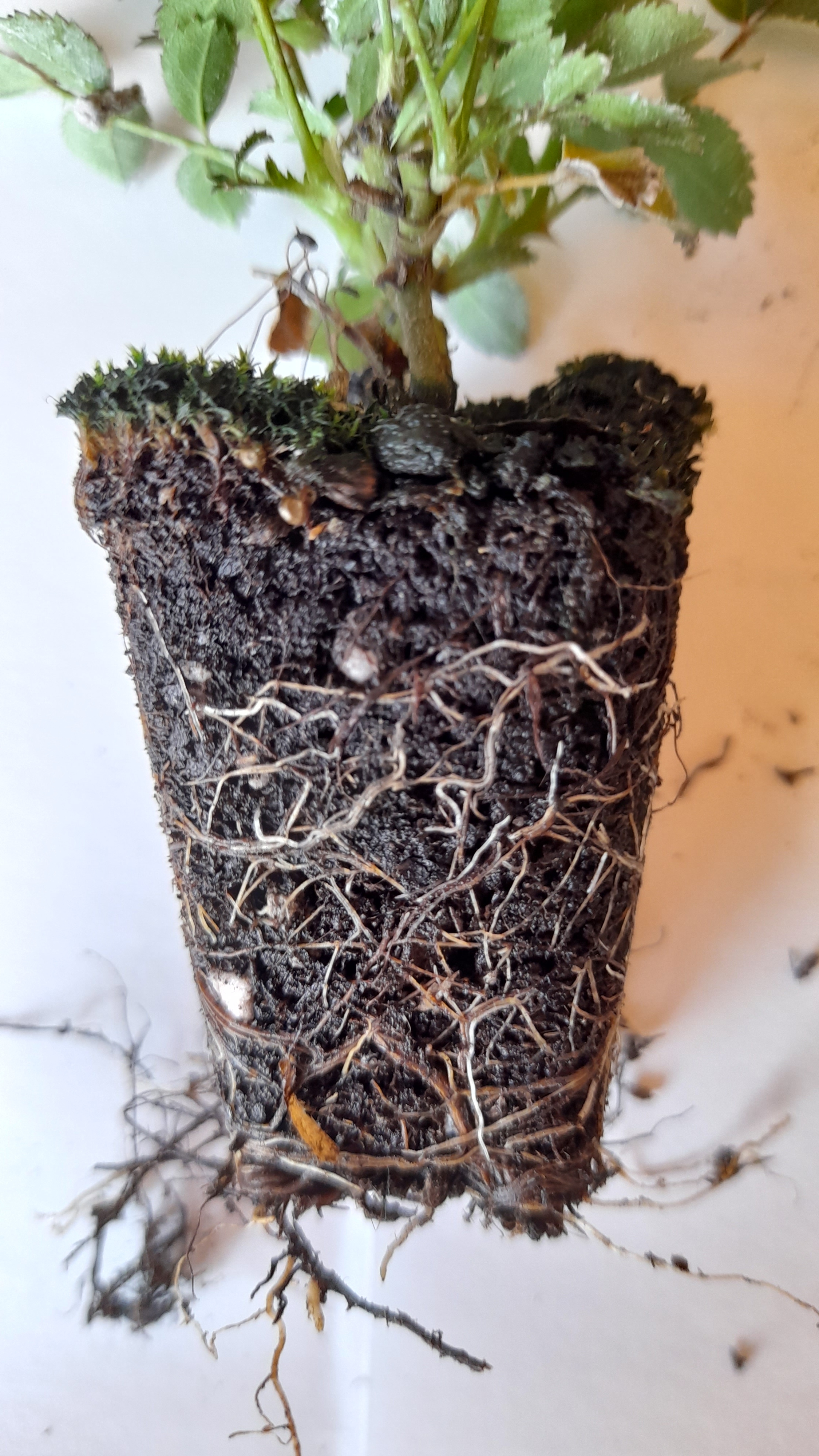
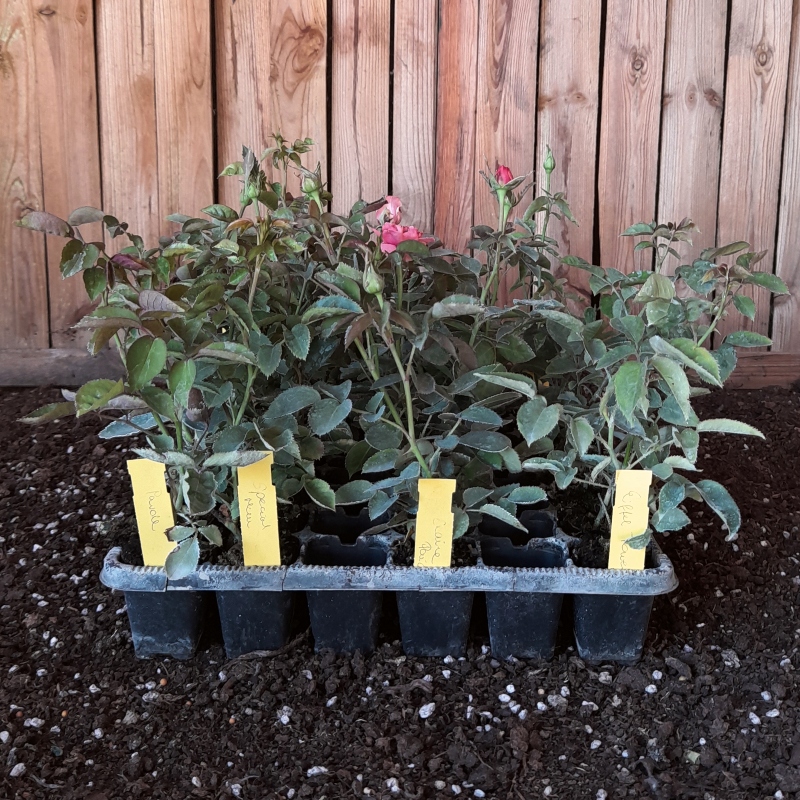
PharmaRosa® NEONATAL own-rooted rose propagation material in a plug, with a root system penetrating the plug (semi-finished product / semi-finished rose). PharmaRosa® NEONATAL rose propagation material size: 3–6‑month‑old, own-rooted cutting with a uniform developmental stage. PharmaRosa® NEONATAL rose propagation material root system: plug densely penetrated by well-developed white roots (root system detail). PharmaRosa® NEONATAL tray stock: own-rooted rose propagation material in trays, uniform developmental stage (10 pcs/tray).

Captions (from left to right): Semi-finished product (NEONATAL own-rooted rose propagation material in a plug with a fully developed root system) • Size demonstration (3–6‑month‑old, uniform cutting) • Root system detail (plug penetrated by the root system) • Tray stock (10 pcs/tray, uniform developmental stage)

pharmarosaneonatal.hupharmarosaneonatal.skpharmarosaneonatal.ropharmarosaneonatal.depharmarosaneonatal.co.ukpharmarosaneonatal.sipharmarosaneonatal.czpharmarosaneonatal.atpharmarosaneonatal.itpharmarosaneonatal.frpharmarosaneonatal.plpharmarosaneonatal.espharmarosaneonatal.nlpharmarosaneonatal.ptpharmarosaneonatal.lupharmarosaneonatal.sepharmarosaneonatal.lvpharmarosaneonatal.fipharmarosaneonatal.ltpharmarosaneonatal.ee

Which product type is right for you?

Pages for private customers
Garden roses for the family garden, with minimal care  → ORIGINAL®
Premium garden roses – instant impact, a truly showpiece garden  → EXTRA®
Pages for professionals and private customers
Roses for public spaces – large areas, sustainable maintenance  → NATURAL®
Roses for projects – hedge and row planting, fast implementation  → RAPID®
For professional partners only
Production – propagation material for garden roses, wholesale  → NEONATAL®

Company details

PharmaRosa Ltd.
Company registration number: 01-09-717479
VAT number: 13075314-2-43
Plant health registration no.: HU130721
Bank account (IBAN):
HU85117631891388688400000000
BIC (SWIFT): OTPVHUHB
Bank name: OTP Bank Nyrt.