| Mass‑market nursery lines for project landscaping |
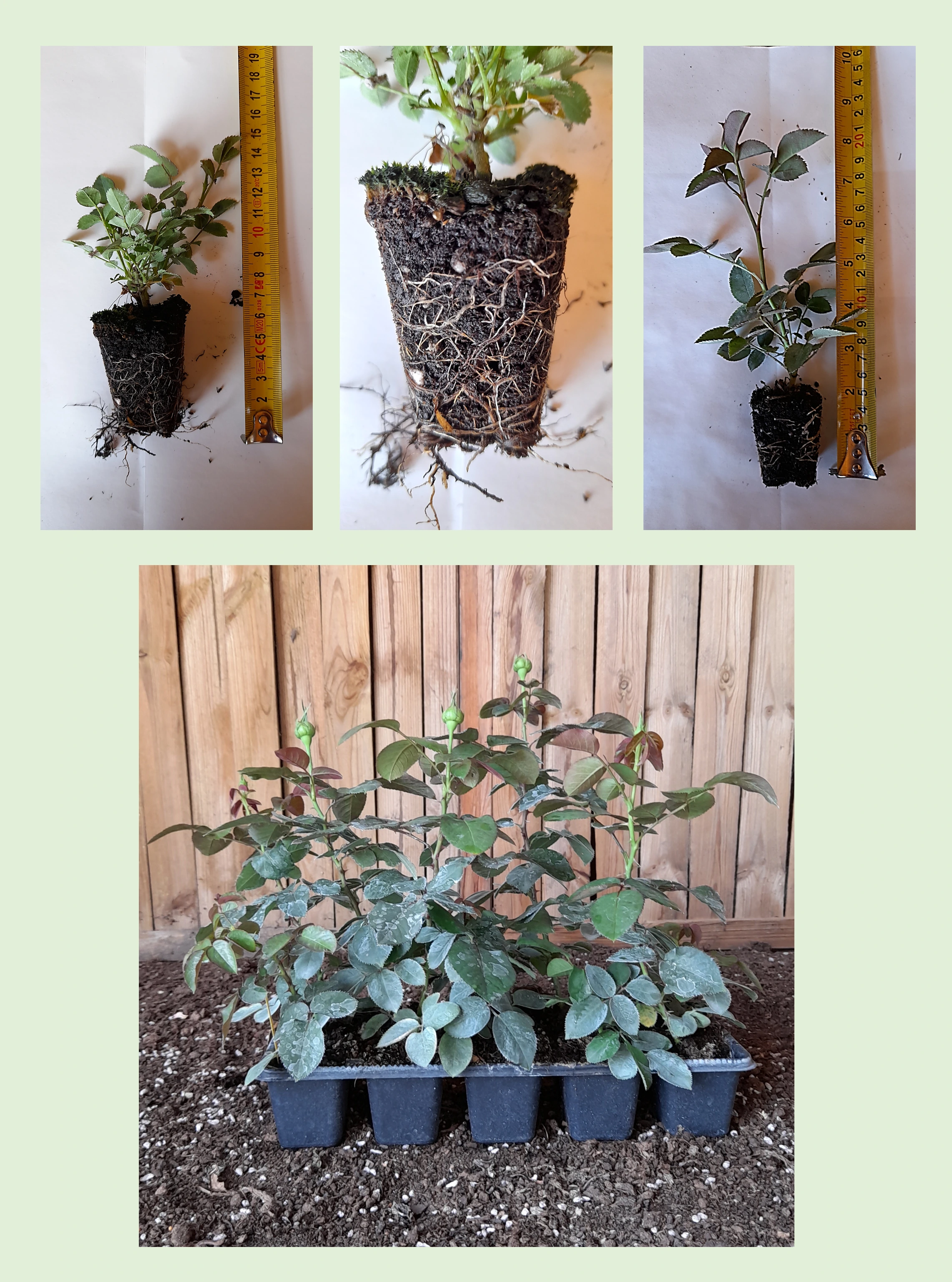
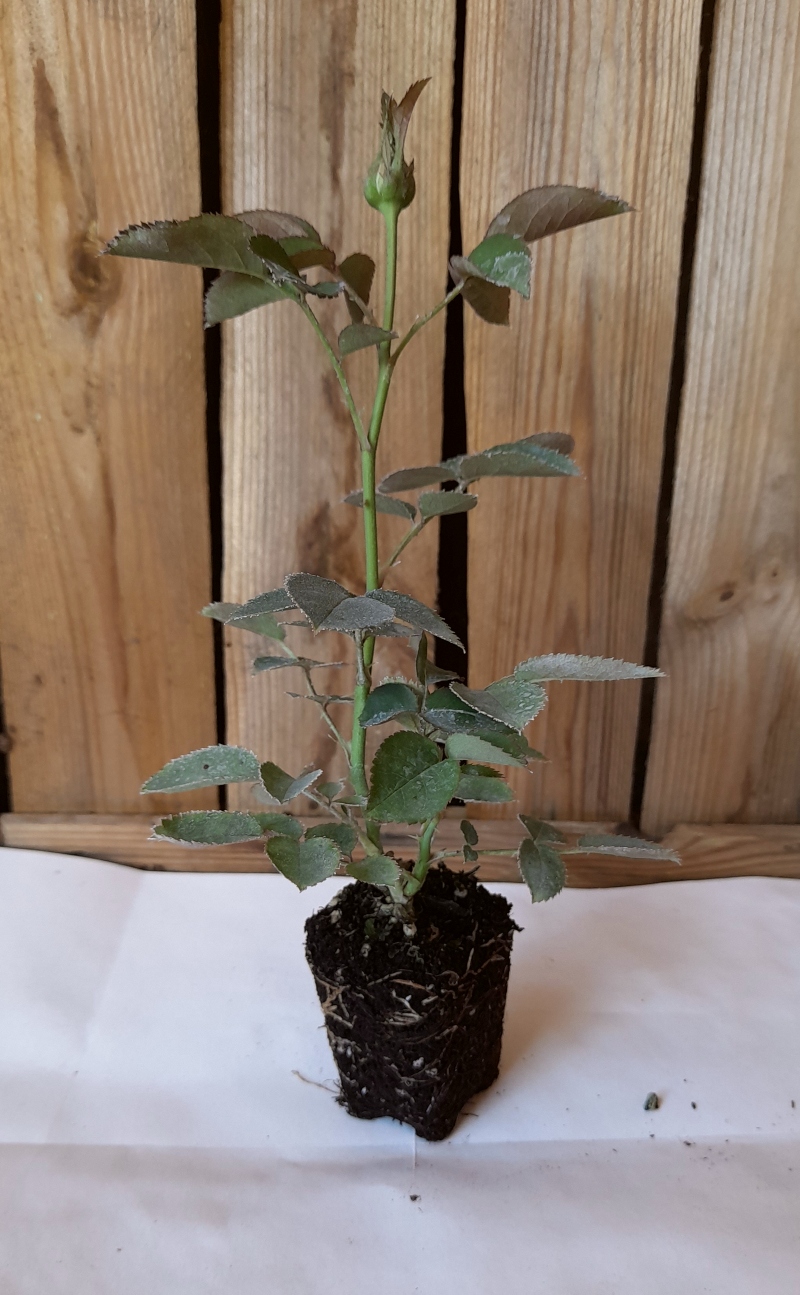
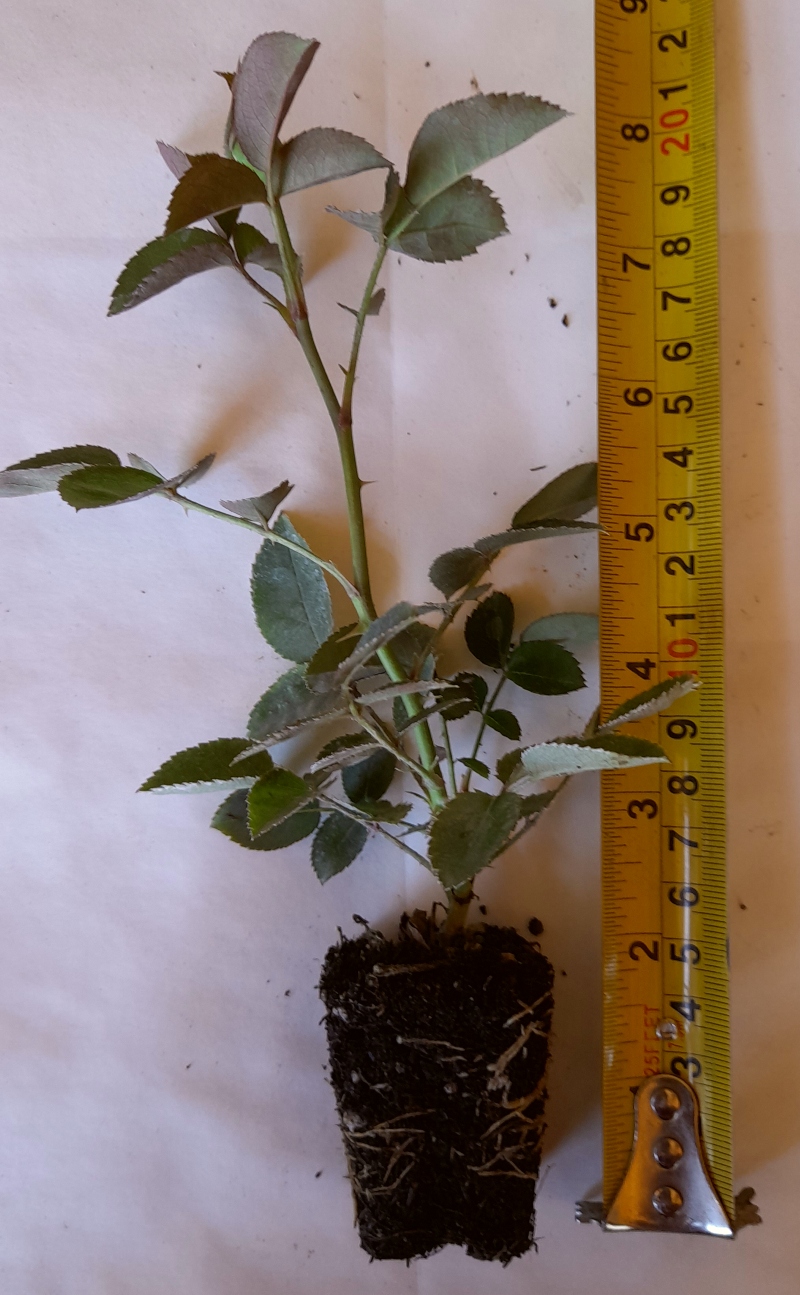
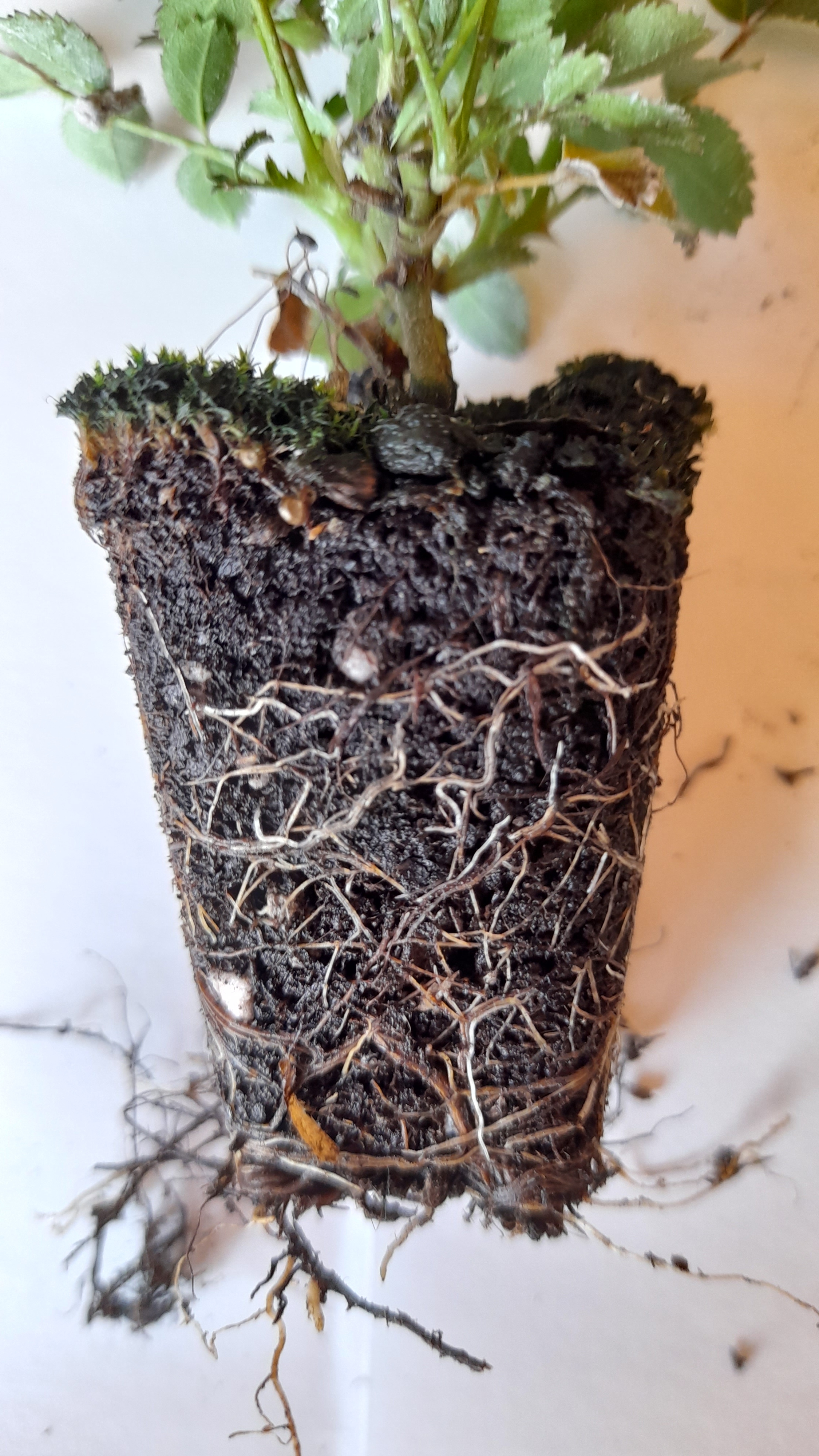
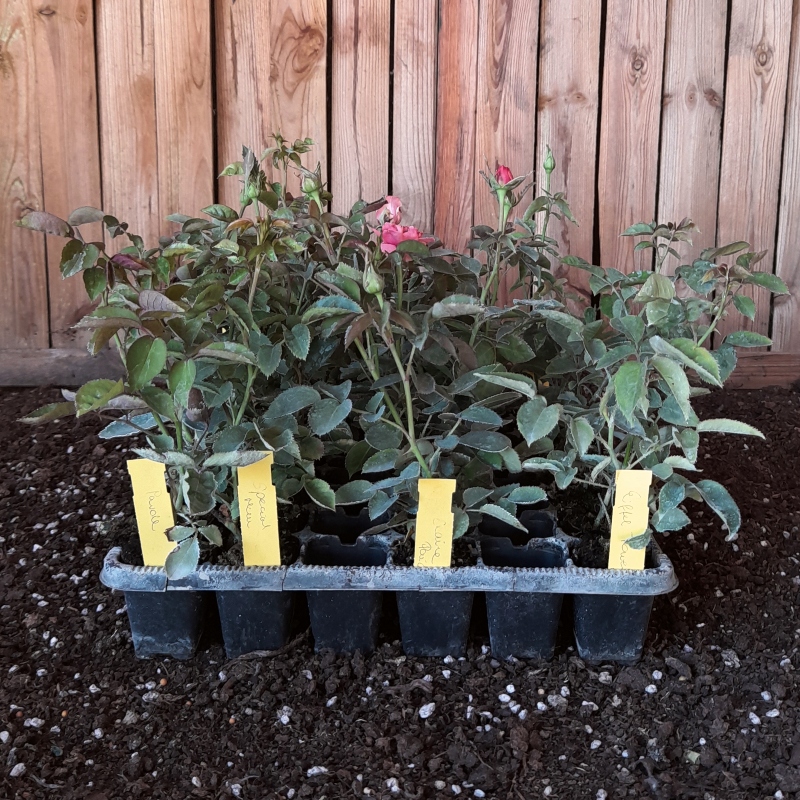
The core strength is fast ground coverage from a compact, bushy plant that quickly fills 1.5–2 L containers into a uniform, dense, bush‑trained finished product suitable for project mass planting. In practice this supports fast bench turnover and reliable grading for flowerbed and park lines, matching positioning for large‑scale landscape architecture / mass‑use schemes. Own‑root form stabilises renewal and lifespan, giving wholesalers consistent blocks to re‑order for landscape contractor supply. |
| Public‑realm and municipal schemes |
High disease resistance, including resistance to powdery mildew, black spot and rust, translates into low maintenance loads and predictable performance under municipal care regimes with minimal skilled pruning. Recommended as a low‑maintenance project mass‑planting shrub for urban green spaces, edging and hedging, it aligns well with park and streetscape contracts where visual uniformity and reduced chemical intervention support long‑term budgets, particularly on exposed, humid western UK sites. This reliability is attractive for public‑realm framework partners. |
| Colour‑driven flowerbed and bedding ranges |
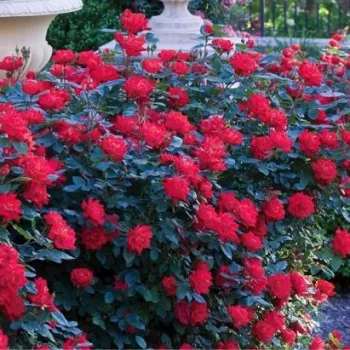
Vibrant cherry‑red colour, with good presentation from newly opened buds through uniform full bloom, gives a strong visual block in bedding and flowerbed concepts. The compact 85–115 cm habit and cluster‑flowered, cup‑shaped blooms allow dense planting in project mass planting schemes, while the recommended 1.5–2 L pot keeps transport and display efficient. This colour impact, combined with uniform, dense branching, underpins ranges designed as fast‑coverage, high‑impact solutions for project‑serving wholesalers. |
| Extended‑season landscape offers |
Remontant flowering with abundant second flush supports an extended sales and planting window, reducing risk around specific delivery weeks. In production, rooted cuttings can be scheduled so that 1.5–2 L bush‑trained stock reaches consistent bud and foliage stages for phased call‑offs into park, urban green space and hedge projects. Continuous repeat flowering helps fulfil specifications for long display periods in thematic rose displays and mixed landscape schemes, adding value for integrator‑type nursery networks. |
| Low‑input, resilient plant programs |
Once established, good heat and moderate drought tolerance, combined with H7 winter hardiness and Swedish Zone 4 rating, make this cultivar a robust option for low‑input planting schemes. In nursery production, this resilience allows more secure outdoor standing and simplifies watering regimes for 1.5–2 L crops, supporting reliable grading for flowerbed and shrub‑group projects. Such tolerance reduces replacement risk in large installations, an asset for maintenance‑oriented contractors. |
| Hedge and edging production lines |
The even 85–115 cm height and spread, together with dense foliage and moderately thorny shoots, lend themselves to low, informal hedges and edging. As uniform, dense, bush‑trained finished plants from small containers, they can be planted in linear schemes where rapid canopy closure is key. Own‑root material maintains structure and fill‑in over time, supporting long hedge runs in commercial and public‑realm projects served by wholesale consolidators. |
| Container and large‑tub landscape supply |
Dense branching and self‑cleaning flowers create tidy presentation in containers, reducing grooming time during holding and retail‑style display. While the recommended core route is 1.5–2 L for mass planting, plants can be stepped up into 40–50 litre containers or larger tubs to supply high‑impact shrub groups for civic entrances and institutional sites. Repeat flowering and clean foliage maintain visual value over longer holding periods for cash‑and‑carry depots. |
| Thematic and sustainability‑focused rose collections |
Awards such as Australian Gold Medal, A.R.T.S. Master Rose and UC Davis WUCOLS Blue Ribbon confirm its performance in sustainable, low‑input contexts, reinforcing its suitability for rose collections and demonstration plantings focused on resilient cultivars. As pharmaROSA® NEONATAL own‑root stock, it fits cultivar maintenance beds and show‑garden style stands, where identity, long‑term stability and predictable regeneration matter as much as uniform finished form for curated collection suppliers. |