Bedding rose

20-225-1
20-225-2

Eye of the Tiger

Bedding rose

CHEwbullseye – Christopher Hugh Warner

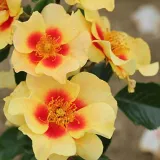
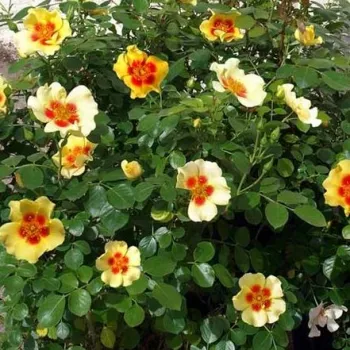
The petals' ground colour is sunshine yellow, with a distinct deep carmine-red eye spot at the centre. - bedding, floribunda, rose - mild, restrained-scented rose - soft, discreet character

– Striking yellow blooms with bold red eye.
– Compact, bushy habit for beds and pots.
– Especially attractive to bees and pollinators.
– Reliable repeat flowering through the season.
– Proven award-winning performance in trials.
Special feature: Extremely hardy to about −34 °C, ideal for colder gardens.
Standard finished product
Eye of the Tiger
pharmaROSA® NEONATAL rooted rose cutting
29,63 £
Due to courier service regulations – and the introduction of customs clearance – delivery to Ireland is temporarily suspended.
3 (3941)
facebook   twitter

Eye of the Tiger – CHEwbullseye – pharmaROSA® NEONATAL rooted cutting

Floribunda performance, compact structure and reliable hardiness make Eye of the Tiger (CHEwbullseye) a practical choice for nursery propagation beds and container grow-on where predictable, medium-maintenance finished stock is required. The bright, single, cluster-flowered blooms with a pronounced central eye give strong visual impact in retail-standard 2–3 L product, while own-root material supports long-term stability for collection plantings and public-realm schemes in climates where winter resilience and wind exposure are routine considerations in planning. Medium disease and heat tolerance are straightforward to manage in professional systems, allowing you to programme uniform batches for edging, bedding and low-hedge lines. With tray-rooted cuttings forming Year 1 roots, Year 2 aerial framework and Year 3 full ornamental value, this cultivar underpins consistent, repeatable output for rose-specialist ranges, and sits comfortably in a “reliable garden performance” positioning for retail and reseller channels.


Usage options

Target area Reasoning
Standard 2–3 L container production for garden-centre retail The compact, bushy habit with equal height and spread supports dense, saleable canopies in the recommended standard container route and 2–3 L target pot. Medium maintenance and moderate disease levels fit typical nursery spray and monitoring regimes, while remontant cluster flowering supports the “reliable garden performance” promise at point of sale. Own-root tray material integrates well into existing stock programmes for retail and reseller distribution, giving predictable grading and scheduling for garden-centre buyers
Bedding and edging lines for urban and municipal plantings The moderate height and dense, glossy foliage create clear edging lines and bedding blocks suitable for flower beds, low hedges and urban green spaces. Medium self-cleaning reduces deadheading pressure without promising zero maintenance, aligning with realistic public-realm service levels. Own-root longevity and regenerative capacity support low replacement rates in longer-running schemes, while the cultivar’s reliable garden performance supports specification in public and institutional projects for municipal-contract suppliers
Colour-theme and novelty eye-zone assortments The sunshine-yellow petals with a contrasting red eye and good visibility in medium-sized clusters provide strong visual differentiation for thematic collections or colour-driven benches. Using bush-trained, compact plants in 2–3 L pots allows you to present consistent tiers of eye-zone floribundas as a standard finished product. Own-root propagation gives identity security for cultivar collections and show gardens, supporting stable ranges for specialist-rose retailers
Pollinator-friendly ranges for public and private clients The single, 5–12 petal flowers with exposed stamens and documented pollinator appeal make this cultivar suitable for pollinator-marked ranges in containers or bedding schemes. A standard container product path with bush-trained plants ensures clean presentation while still delivering ecological value, supporting thematic rose gardens and institutional projects seeking visible biodiversity features. Own-root durability underpins long-term planting concepts aimed at landscape-specifiers
Wholesaler programmes for cold-climate markets The documented hardiness down to approximately -34 to -32 °C (RHS H7, USDA 4a) gives confidence for production targeting colder regions, provided standard medium-level pest and disease management is applied. Own-root plants handle propagation loads and regeneration well, limiting winter losses and supporting dependable capacity planning. This aligns with wholesalers needing robust, standard finished product roses for broad retail networks in northern-distribution partners
Container specimen and low hedge production The balanced, bushy shrub form at 85–115 cm makes it suitable as a compact specimen or low hedge in standard containers, with the option to step selected batches into 40–50 litre units for landscape-ready pieces. Moderate self-cleaning and remontant flowering provide ongoing display without excessive grooming, supporting the “reliable garden performance” positioning. Own-root structure gives long service life and stand uniformity for landscape-nursery clients
Collection blocks and stock plants for propagation Own-root NEONATAL material is well suited for establishing cultivar-true stock blocks, with dense foliage and moderate prickliness allowing efficient handling and cutting collection. Medium maintenance needs are compatible with routine nursery regimes, and the remontant habit gives multiple collection windows. The stable floribunda structure and proven performance record support long-term inclusion in private-label or curated ranges for integrator-networks
Urban container and mixed planting schemes The compact, bushy habit and moderate heat tolerance (“tolerates heat well; requires watering in dry spells”) work well for containers and mixed plantings in urban green space, where irrigation can be scheduled professionally. Standard 2–3 L product can be upsized by partners to project-specific volumes, with own-root plants maintaining structure and flowering quality. This supports reliable garden performance narratives in city projects and retail promotions geared to urban-project wholesalers

Finished-product ideas

  • 2–3 L eye-zone floribunda line – compact, bush-trained plants with vivid yellow-and-red single clusters, following the standard container route and 2–3 L target pot, positioned as reliable garden performance floribundas for mixed retail benches – retail / reseller
  • Pollinator-feature bedding series – batches selected for strong single flowering and good cluster display, grown in standard containers then block-planted into beds or low hedges to highlight pollinator-friendly attributes – municipal and institutional clients
  • Cold-climate hardy colour range – own-root plants emphasising H7 / USDA 4a hardiness, finished in 2–3 L and optional 40–50 litre specimens to give flexible options for regions with severe winters – northern and high-altitude markets
  • Urban container hedge modules – closely spaced plants in 2–3 L upgraded to 40–50 litre troughs or pots, using the bushy, even habit for low hedges and edges in urban green space, aligning with medium-maintenance service contracts – landscape and facilities contractors
  • Curated collection and trial garden sets – uniform own-root plants for thematic rose gardens or show collections, combining reliable form, remontant cluster flowering and stable identification in NEONATAL trays for onward propagation – specialist rose gardens and breeders

Technical cultivar profile
Parameter Data
Name and registration Floribunda, Hybrid Hulthemia persica bedding rose; registered as CHEwbullseye, marketed as Eye of the Tiger; ARS exhibition name Eye of the Tiger; collection category bedding rose, exhibition bush floribunda.
Origin and breeding Bred by Christopher Hugh Warner in the United Kingdom (2006) from ‘Belting Pink’ × ‘Golden Age’; introduced 2015 via Pépinières de la Saulaie, France; developed within the Chris Warner Roses breeding programme.
Awards and recognition RNRS Certificate of Merit, St Albans (2014); Gold Standard, Gold Standard Rose Trials (2015); First Prize, Lyon Rose Competition (2015); Novelty Award, New Zealand National Rose Competition (2016); Public Award, The Hague.
Growth and structural characteristics Compact, bushy shrub with dense, mid-green glossy foliage; height and spread both around 85–115 cm, moderately thorny; suited to bush-trained forms for beds, edging and containers requiring stable, uniform outlines.
Flower morphology Single, flat flowers with 5–12 petals, cluster-flowered on the stems; medium flower size around 1.5–2.75 inches; remontant with plentiful second flowering, providing repeated display under standard cultural regimes.
Colour data and phenology Sunshine-yellow ground with a deep crimson-red central eye (ARS YB; RHS 14A outer, 53A inner); buds open deep yellow, colours soften to buttery yellow and rose-pink eye as blooms age, maintaining a distinct central zone.
Fragrance and aroma Fragrance soft and discreet, described as mild and restrained; not primarily selected for scent but offers a gentle background aroma compatible with high-density planting and urban applications where strong fragrance is not essential.
Hip characteristics Occasional hips, globose and orange-red, around 6–9 mm in diameter; decorative but not produced in heavy quantities, adding modest seasonal interest without materially affecting flowering performance.
Resistance and winter hardiness Moderate tolerance to powdery mildew, black spot and rust, requiring periodic control; heat tolerance moderate with need for watering in prolonged drought; winter hardy to about -34 to -32 °C (RHS H7, USDA 4a, Swedish zone 5).
Horticultural recommendations Best used in flower beds, edging, containers, specimens and low hedges, including urban green space; medium maintenance with occasional pest and disease interventions; recommended as bush-trained, compact plants in standard 2–3 L containers.

Eye of the Tiger Bedding rose CHEwbullseye combines compact bushy growth, vivid single cluster flowering and proven winter hardiness with predictable, regenerative own-root performance, making it a sound candidate for aligning capacity and scheduling in your rose programme.

Detailed product attributes

Product Identification Data

Product Name: EYE OF THE TIGER – yellow bedding floribunda rose - Warner
Product Type: pharmaROSA® NEONATAL - rooted rose cutting
Cultivar Authenticity: Verified:10.07.2025
Cultivar Quality Rating: premium silver
Item Number: [807] 20-225 (14.02.2026) pharmarosaneonatal.co.uk

Name and Registration

Meaning of Cultivar Name: The phrase "A tigris szeme" refers to the song of the same name by the rock band Survivor.
Cultivar Synonym: Cyrus®; Queen of Sheba®; Ringo™
Registered Cultivar Name: CHEwbullseye
Original Trade Name: Eye of the Tiger
Current Trade Name: Eye of the Tiger Bedding rose CHEwbullseye
Rose Group: Floribunda, Hybrid Hulthemia persica
Commercial Type: bedding, floribunda, rose
Commercial Group: Bed rose
Exhibition Category: exhibition bush rose (floribunda)
Collection: Bedding rose

Origin and Breeding

Initial Distributor: Pépinières de la Saulaie (France)
Breeder: Christopher Hugh Warner
Breeding Company / Institution: Chris Warner Roses, Newport (Shropshire, United Kingdom)
Breeding Year: United Kingdom, 2006
Parentage: ‘Belting Pink’ × ‘Golden Age’

Awards and Honours

Horticultural Ratings and Recommendations: Gold Standard; Gold Standard Rose Trials (2015)
Competition and Show Awards: RNRS Certificate of Merit – St Albans (2014); Gold Standard – Gold Standard Rose Trials (2015); First Prize – Lyon Rose Competition (2015); Novelty Award – New Zealand National Rose Competition (2016); Public Award – The Hague International Rose Competiti

Growth and Structural Characteristics

Height: 2.8-3.8ft (85-115 cm)
Spread: 2.8-3.8ft (85-115 cm)
Growth Habit: bushy (shrub)
Foliage: The variety has dense foliage. Its leaves have a glossy surface and a mid-green shade.
Prickliness: moderately thorny
Self-Cleaning Description: Some of the spent flowers fall off naturally, while others remain partly on the plant.
Self-Cleaning Intensity: Self-cleaning: moderate.

Flower Morphology

Petal Count: 5–12
Flower Fullness: single-flowered
Flower Shape: flat
Flower Size: M (1,5-2,75 in)
Inflorescence Type: cluster-flowered
Colour Code: ARS code: YB RHS code: 14A (outer), 53A (inner)
Repeat Flowering: Remontant, with a plentiful second flowering.

Colour Data and Phenology

Colour: yellow
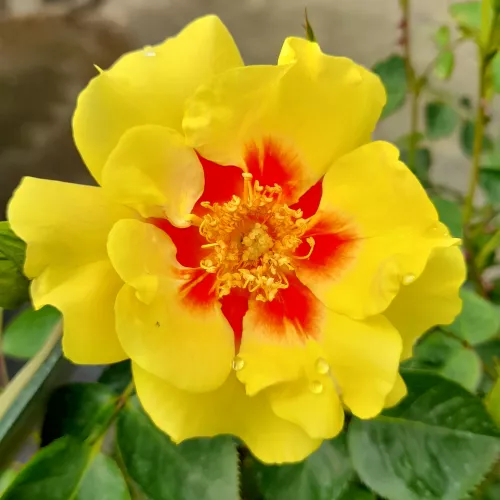
Flower Colour Description: The petals' ground colour is sunshine yellow, with a distinct deep carmine-red eye spot at the centre.
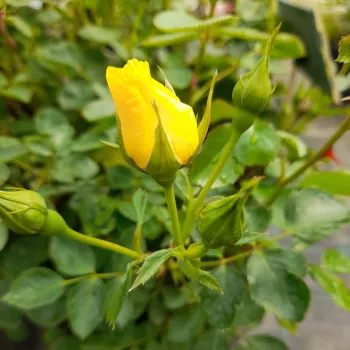
Closed Bud: Deep yellow bud with a uniform tone and no bright greenish tinge.
Newly Opened Flower: Bright yellow petals with a contrasting crimson-red centre.
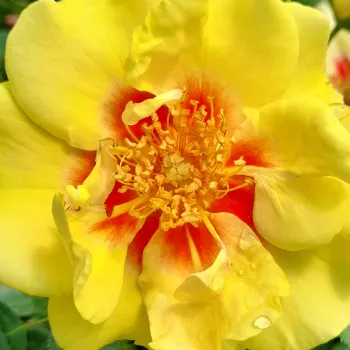
Full Bloom: The yellow becomes slightly paler, the spot remains a vivid carmine red with a wreath of golden-yellow stamens.
Before Fading: The petals fade to buttery yellow, the central eye softens to rose red.
Colour Fading Description: As the flower opens, the bright yellow fades to buttery yellow and the central crimson-red patch softens to rose pink.

Fragrance and Aroma

Fragrance Strength: mild, restrained-scented rose
Fragrance Character: soft, discreet character
Pollinator Attraction: Simple flowers with 5–12 petals attract pollinators well because the simple flower form leaves the stamens accessible, while semi‑double or double forms with extra petals can obscure the stamens and reduce attractiveness to pollinating insects.
Pollinator-Friendly Rating: Especially pollinator-friendly due to its simple flowers with 5–12 petals.

Hip Characteristics

Hip Shape: spherical
Hip Colour: orange-red
Hip Comment: Occasionally produced, 6–9 mm in diameter, globose, orange-red rose hip.

Resistance and Hardiness

Hardiness (°C): -34–-32 °C
Heat and Drought Tolerance Description: Tolerates heat well; requires regular watering during prolonged dry periods.
Disease Resistance: moderate
  • powdery mildew – moderate
  • black spot – moderate
  • rust – moderate

Horticultural Recommendations

Recommended product path: Standard container
Release form: Bush-trained, compact plant
Recommended use: Maintenance requirement medium; occasionally requires pest and disease control.
Primary Uses: flower bed, edging, container, specimen, low hedge, urban green space

Comments

Positioning: Standard finished product
Target customer/channel: Retail / reseller
Main value proposition: Reliable garden performance
EYE OF THE TIGER – yellow bedding floribunda rose - Warner
The petals' ground colour is sunshine yellow, with a distinct deep carmine-red eye spot at the centre. - bedding, floribunda, rose - mild, restrained-scented rose - soft, discreet character
The rose webshop. - yellow - mild, restrained-scented rose - Eye of the Tiger - bedding, floribunda, rose - (2.8-3.8ft (85-115 cm))
Inflorescence: cluster-flowered Height: 2.8-3.8ft (85-115 cm) Flower shape: flat Winter hardiness: 6b yellow - Pépinières de la Saulaie (France) bedding, floribunda, rose - Flower size: M (1,5-2,75 in) Flower size: M (1,5-2,75 in) - Height: 2.8-3.8ft (85-115 cm) Height: 2.8-3.8ft (85-115 cm) - Flower fullness: single-flowered Eye of the Tiger - Roses in the garden | pharmaROSA® Neonatal - premium silver Christopher Hugh Warner

We showcase the external appearance of the roses available for online purchase from our webshop.


Which product type is right for you?


PharmaRosa® NEONATAL is the cost‑effective starting point for rose product production.

As a uniform, own‑rooted propagation material, it provides a stable basis for further growing-on and can be integrated flexibly into different finished product production technologies.
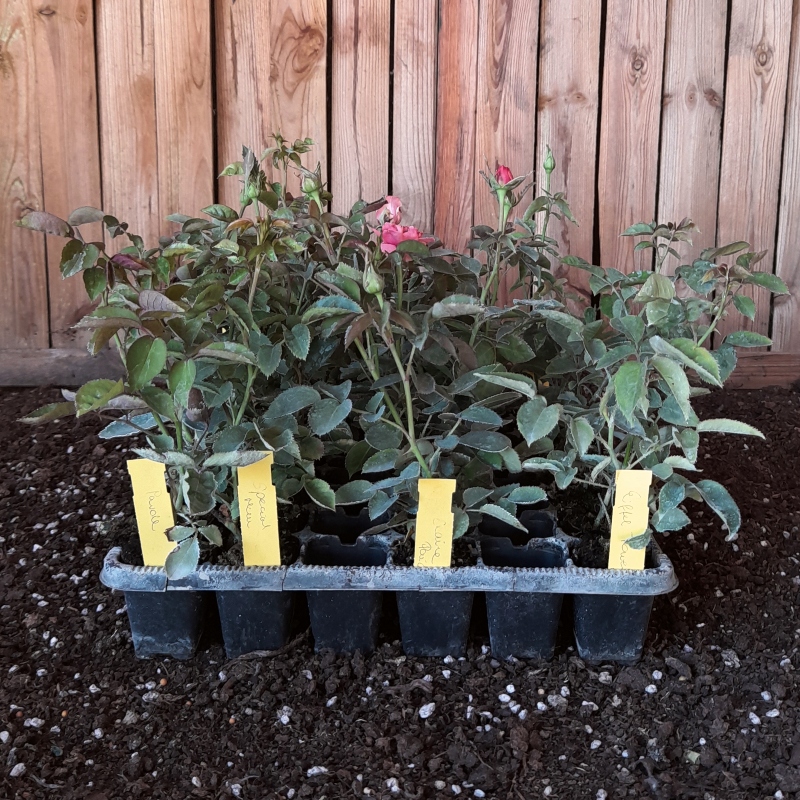
Rooted in trays (rooted), 3–6‑month‑old, own‑rooted rose cutting.
Uniform developmental stage, with a root system that has thoroughly penetrated the plug.
For professional growing‑on.
Tray packaging: 10 pcs/tray.
Quality and varietal identity: production supported by a dedicated identification and traceability logic.
Can be transplanted during frost‑free periods, designed for finished product production.

PharmaRosa® NEONATAL provides a controlled, uniform starting stock for planned growing‑on that can be integrated into your own technology – especially where scheduling and varietal identity are paramount.


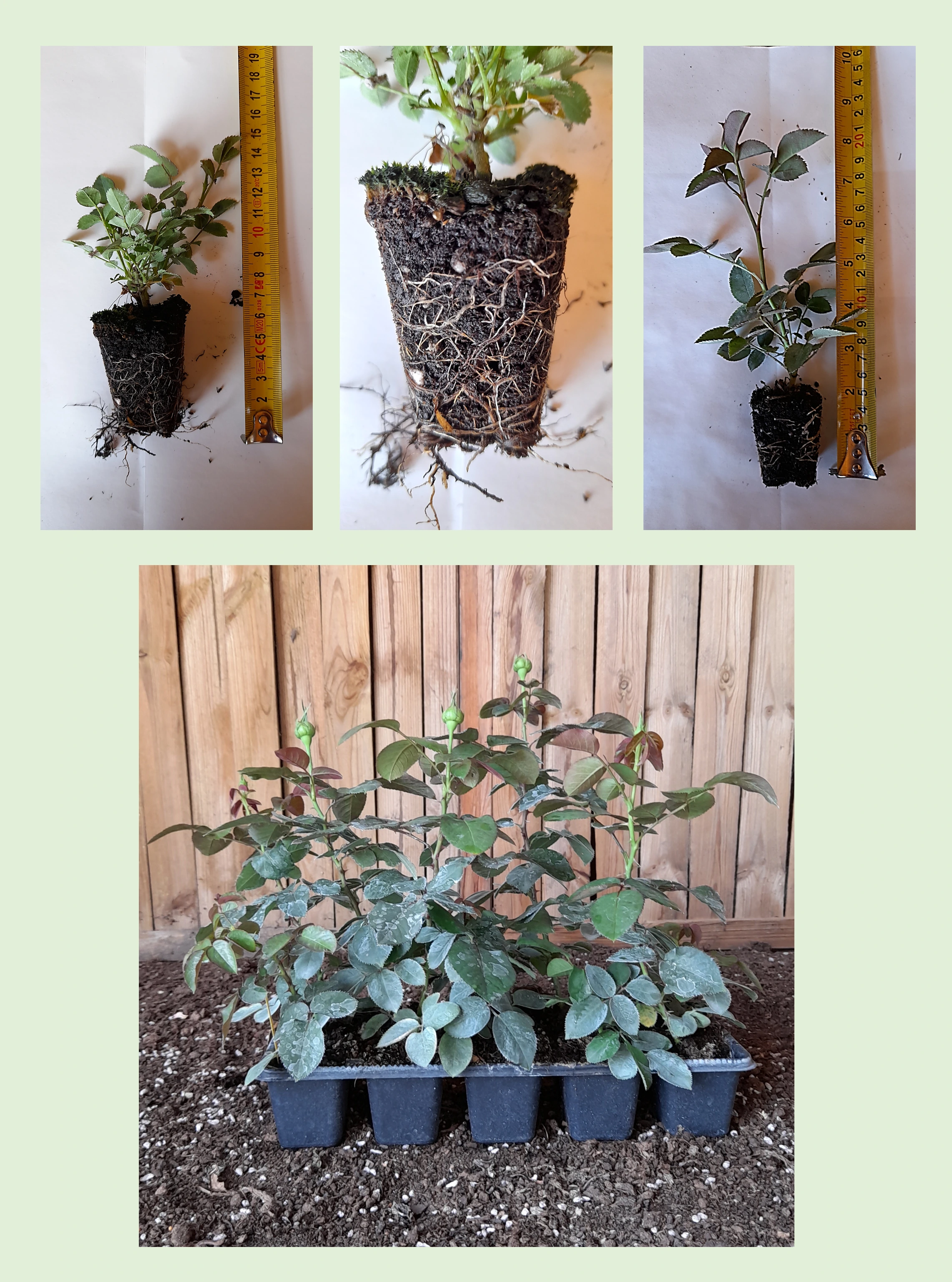
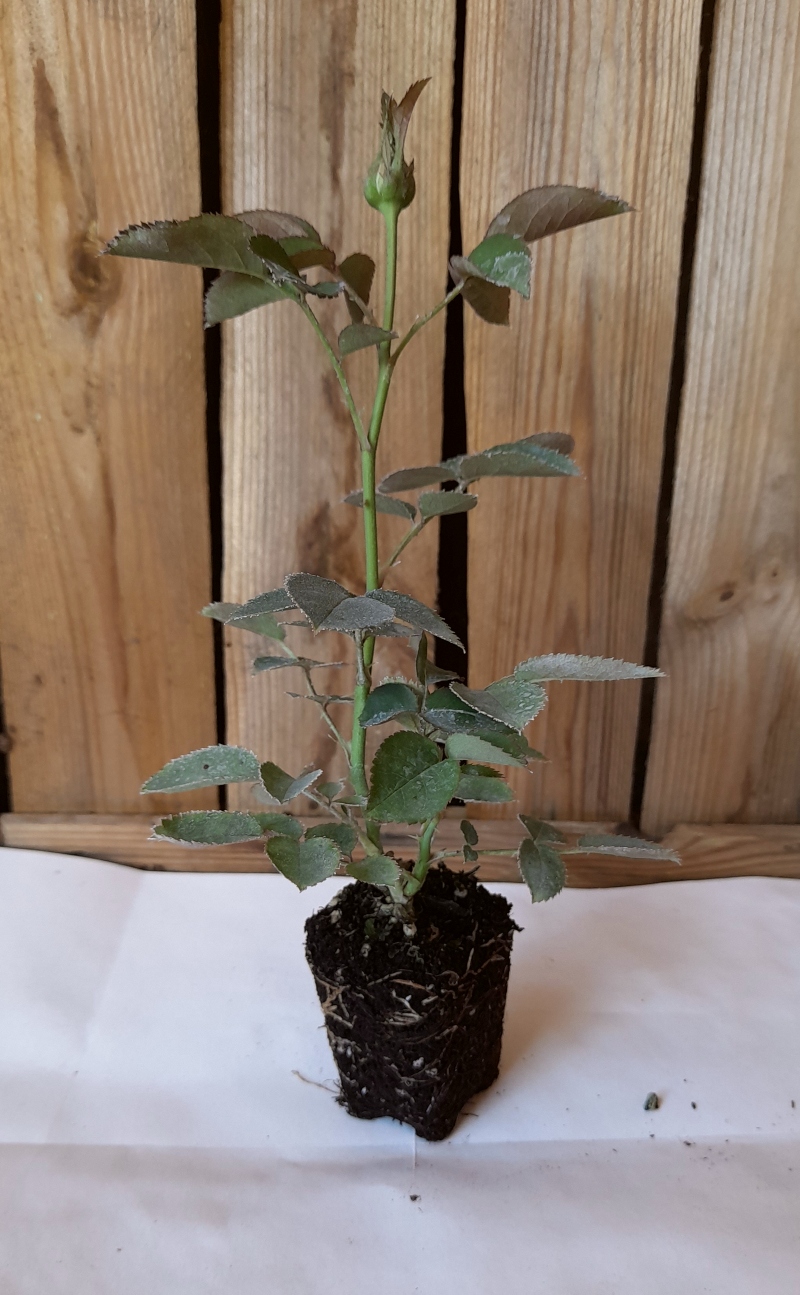
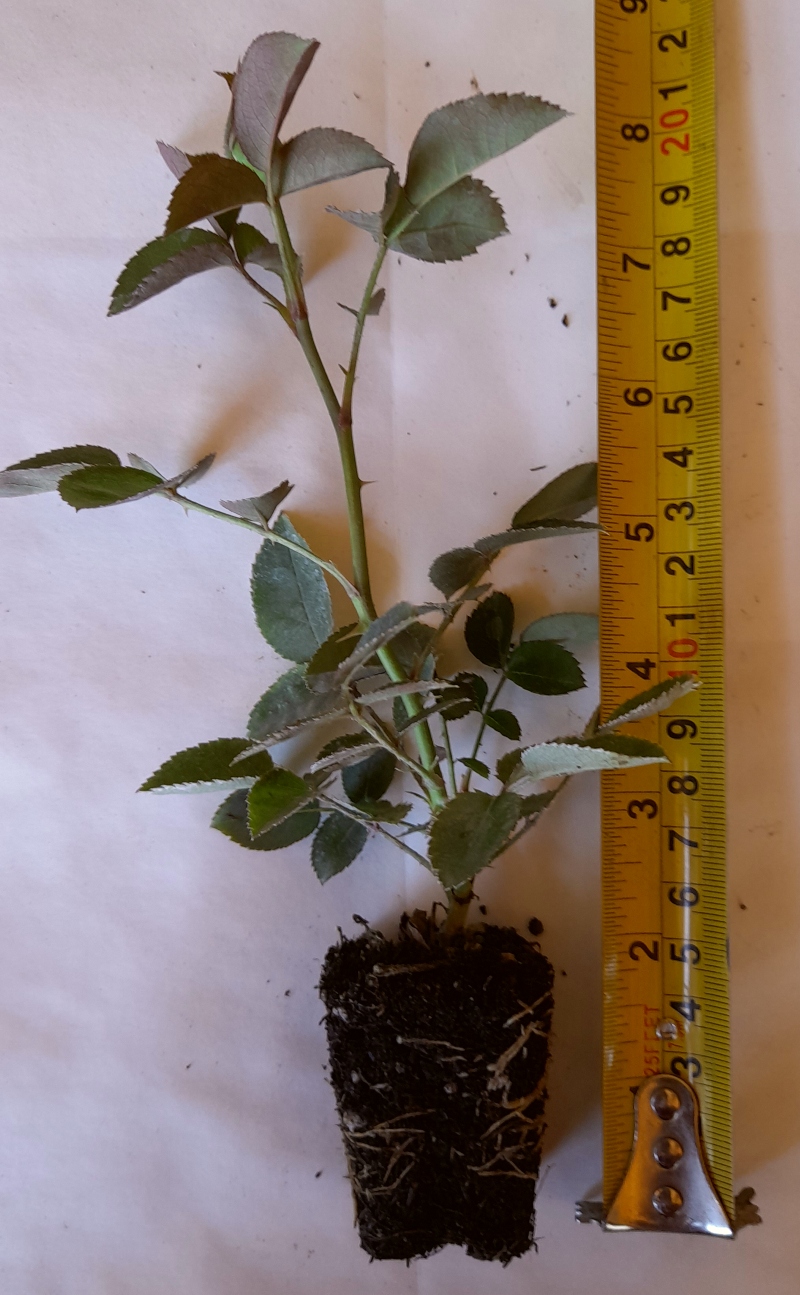
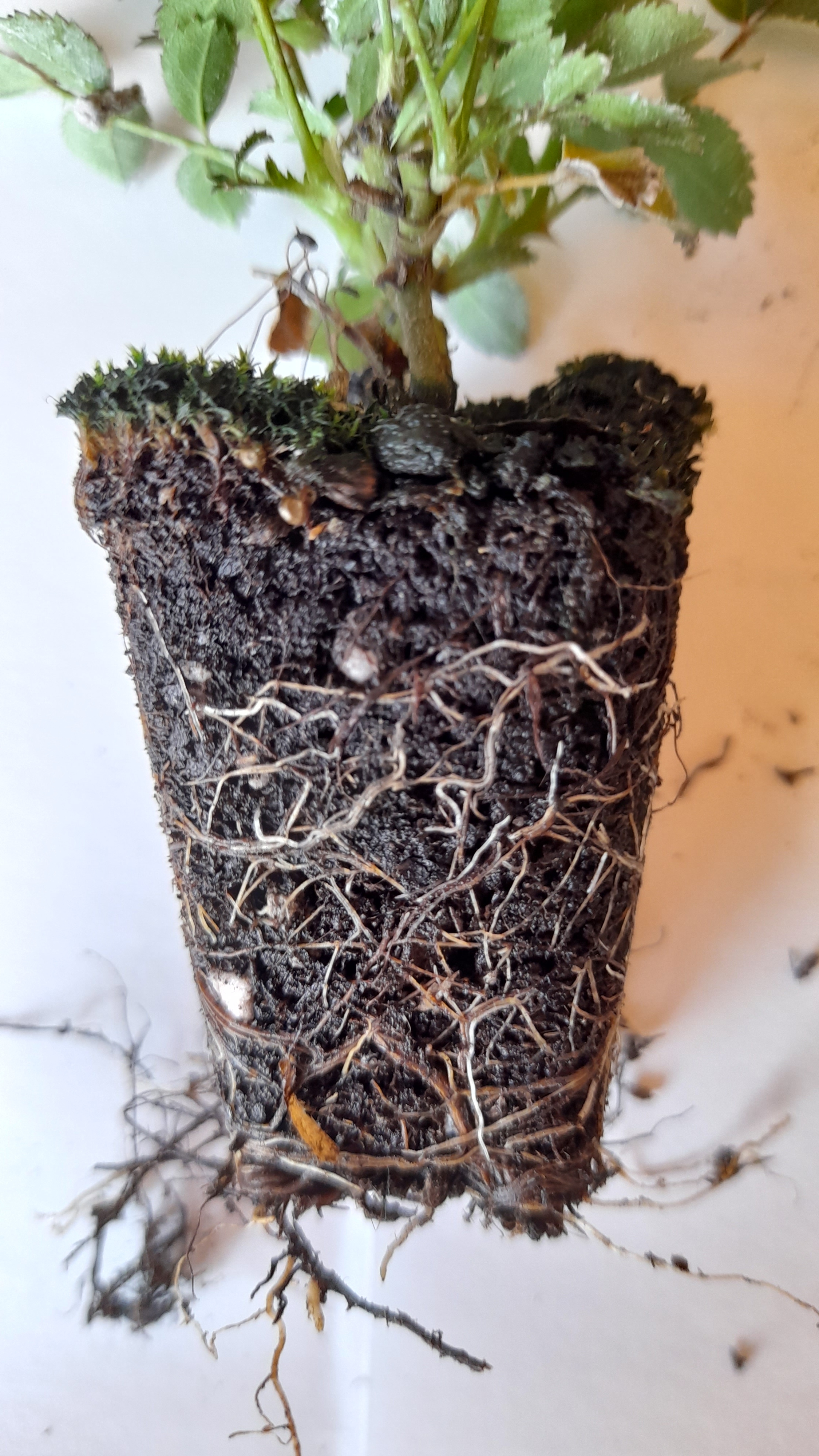
PharmaRosa® NEONATAL own-rooted rose propagation material in a plug, with a root system penetrating the plug (semi-finished product / semi-finished rose). PharmaRosa® NEONATAL rose propagation material size: 3–6‑month‑old, own-rooted cutting with a uniform developmental stage. PharmaRosa® NEONATAL rose propagation material root system: plug densely penetrated by well-developed white roots (root system detail). PharmaRosa® NEONATAL tray stock: own-rooted rose propagation material in trays, uniform developmental stage (10 pcs/tray).

Captions (from left to right): Semi-finished product (NEONATAL own-rooted rose propagation material in a plug with a fully developed root system) • Size demonstration (3–6‑month‑old, uniform cutting) • Root system detail (plug penetrated by the root system) • Tray stock (10 pcs/tray, uniform developmental stage)

pharmarosaneonatal.hupharmarosaneonatal.atpharmarosaneonatal.co.ukpharmarosaneonatal.czpharmarosaneonatal.depharmarosaneonatal.ropharmarosaneonatal.sipharmarosaneonatal.skpharmarosaneonatal.itpharmarosaneonatal.frpharmarosaneonatal.nlpharmarosaneonatal.plpharmarosaneonatal.lupharmarosaneonatal.ptpharmarosaneonatal.espharmarosaneonatal.ltpharmarosaneonatal.sepharmarosaneonatal.lvpharmarosaneonatal.eepharmarosaneonatal.fi

Which product type is right for you?

Pages for private customers
Garden roses for the family garden, with minimal care  → ORIGINAL®
Premium garden roses – instant impact, a truly showpiece garden  → EXTRA®
Pages for professionals and private customers
Roses for public spaces – large areas, sustainable maintenance  → NATURAL®
Roses for projects – hedge and row planting, fast implementation  → RAPID®
For professional partners only
Production – propagation material for garden roses, wholesale  → NEONATAL®

Company details

PharmaRosa Ltd.
Company registration number: 01-09-717479
VAT number: 13075314-2-43
Plant health registration no.: HU130721
Bank account (IBAN):
HU85117631891388688400000000
BIC (SWIFT): OTPVHUHB
Bank name: OTP Bank Nyrt.