Tapis Persan – MACeye – pharmaROSA® NEONATAL rooted cutting
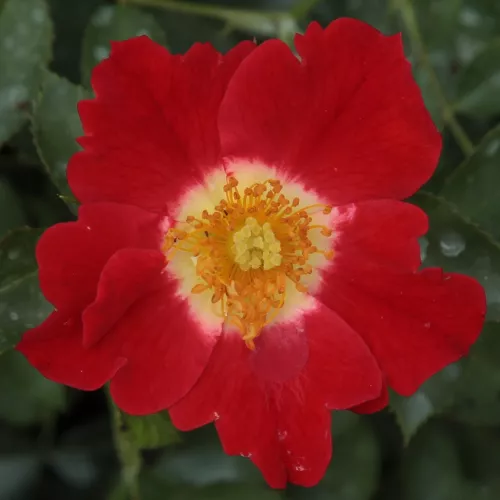
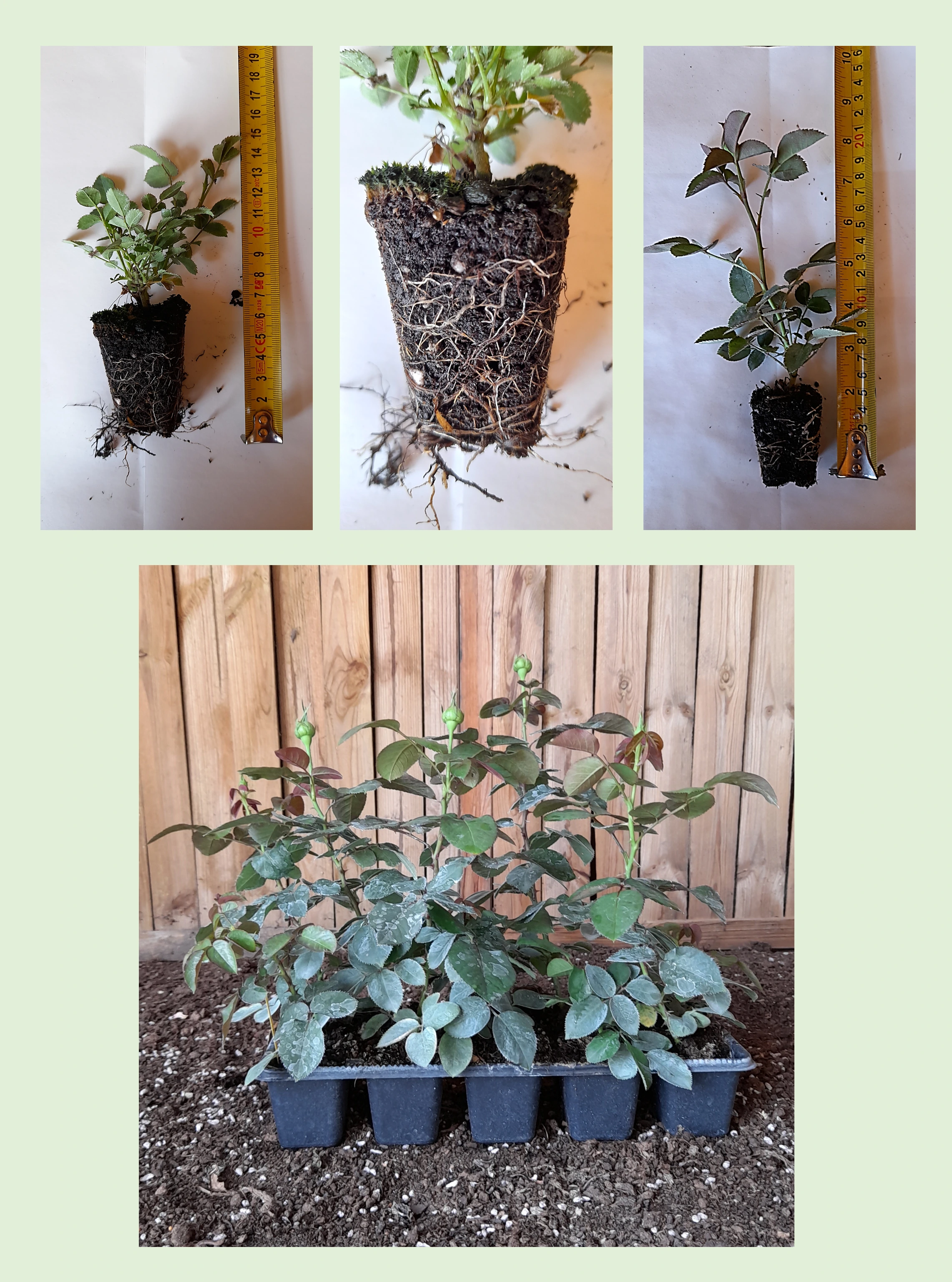
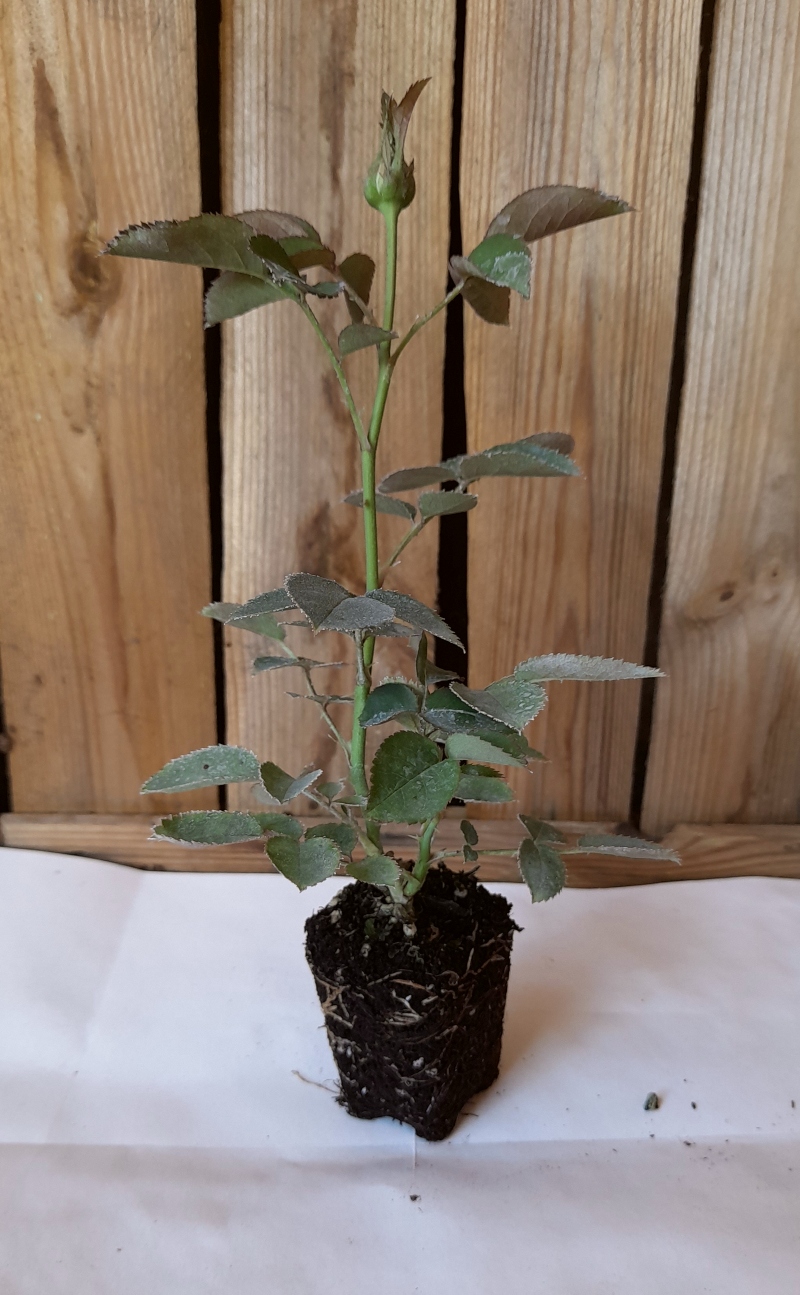
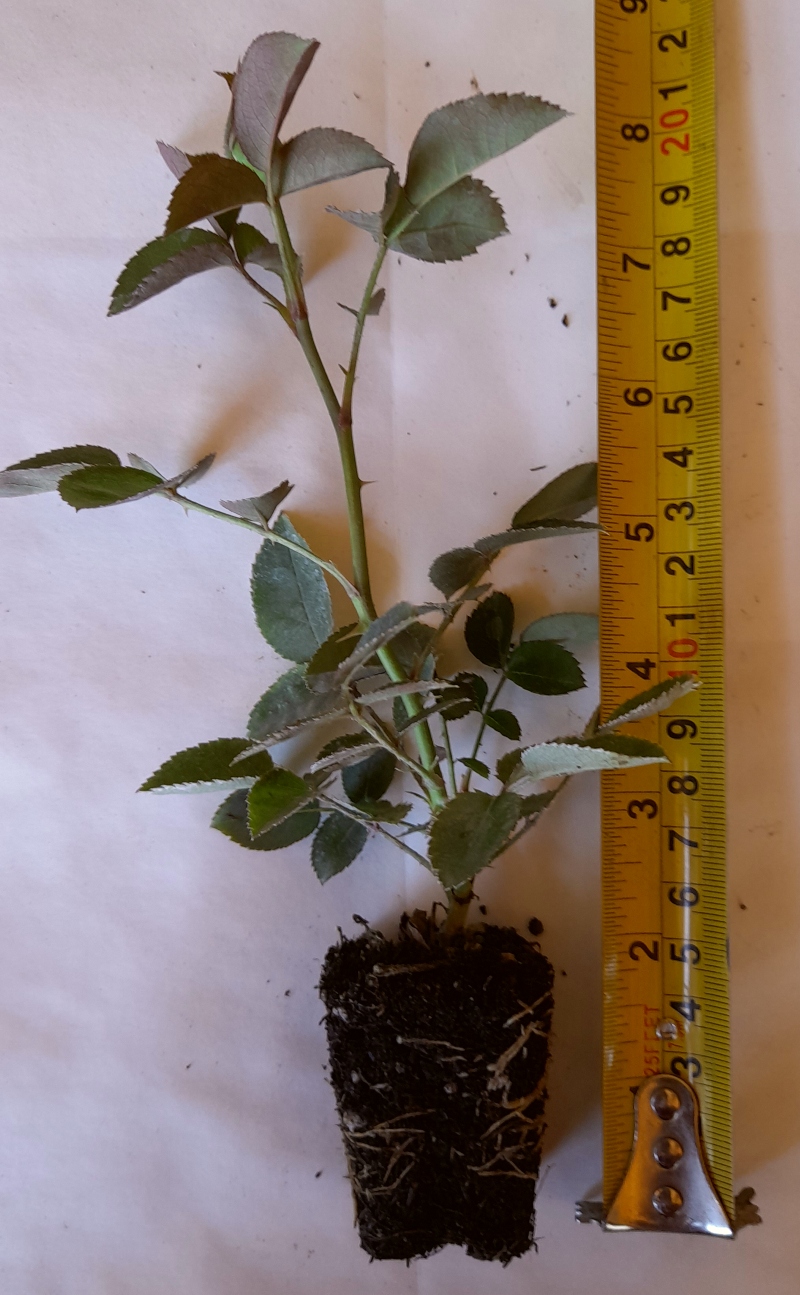
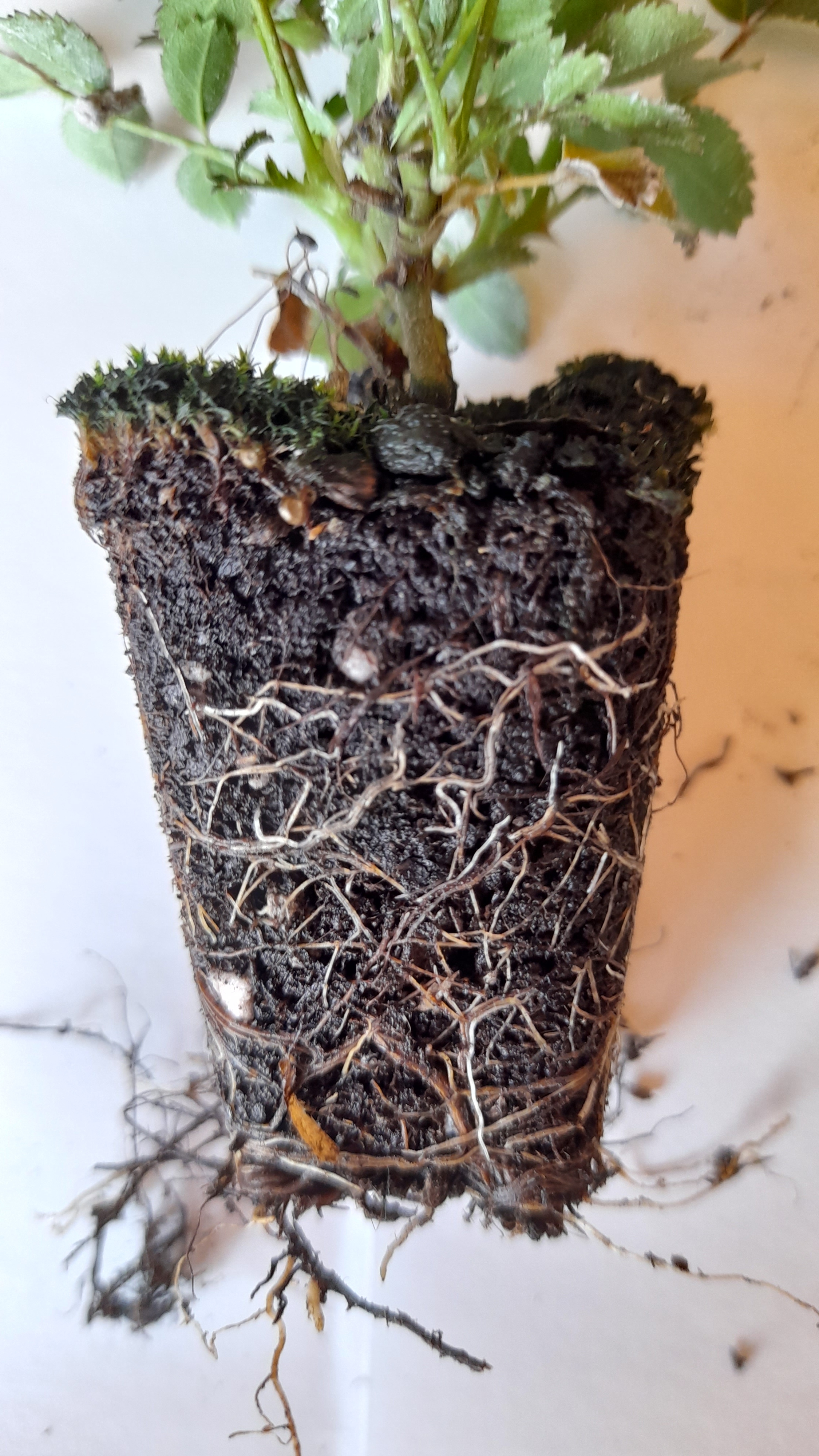
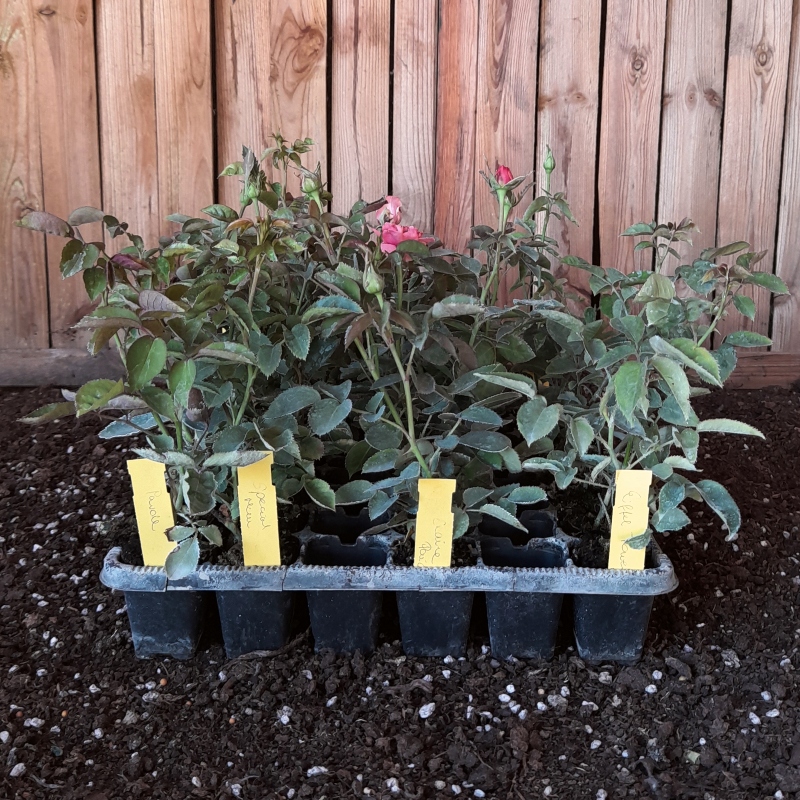
Hand-painted colour effects, floribunda bedding versatility and clustered flowering make Tapis Persan a distinctive option for professional growers building thematic or collection-led assortments. As a bush-trained, compact shrub with remontant flowering, it supports reliable, season-long display in standard 2–3 L containers for retail and reseller channels focused on dependable garden performance. Medium disease resistance with targeted protection, combined with RHS H7 winter rating, provides a resilient base for nursery and park supply in regions where winters and wind can be demanding yet production must stay predictable. Own-root pharmaROSA® NEONATAL propagation material underpins homogeneous beds, low replacement rates and renewable stock, following a natural development arc where roots stabilise in year one, shoots structure in year two and full ornamental value emerges from year three. With moderate self-cleaning and explicitly pollinator-friendly single blooms, this cultivar fits sustainable, diversity-oriented plant ranges as a reproducible, collection-grade component. Its height and spread suit flowerbeds, borders and urban green spaces, while container options support flexible deployment in public or private projects at wholesale scale.
Usage options
Finished-product ideas
- Hand-Painted Bedding 2–3 L Line – floribunda bedding-range SKU in standard 2–3 L pots, emphasising vivid scarlet-red and cream-white blooms with remontant clustered flowering, targeted to general retail/reseller garden performance programmes – retail/reseller
- Pollinator Rose Feature Pot – own-root plants upsized from 2–3 L into 40–50 L containers as statement pollinator-friendly specimens for civic entrances and educational gardens, leveraging single, pollen-rich flowers and bushy structure – public-realm suppliers
- Urban Courtyard Floribunda Mix – mixed-floribunda palettes for enclosed urban schemes, using medium disease resistance with planned protection, standard container production, and reliable remontant flowering as a dependable design backbone – landscape contractors
- Awarded Exhibition Collection Unit – labelled collection plants highlighting exhibition floribunda status and award history, supplied in uniform 2–3 L bush-trained form for thematic and show gardens requiring traceable, story-rich cultivars – collection-led nurseries
- Hedging and Boundary Rose Pack – multi-unit packs optimised for hedge or boundary lines, using moderately dense foliage, clustered flowering and own-root longevity to build repeatable, low-replacement structures – regional wholesalers
Technical cultivar profile
| Parameter |
Data |
| Name and registration |
Registered as MACeye, marketed as Tapis Persan within the Hand-painted roses collection; also known in exhibition use as Eye Paint, classified as a floribunda bedding rose in the bed rose group. |
| Origin and breeding |
Bred by Samuel Darragh McGredy IV from ‘MACyeleye’ × ‘Picasso’; bred in 1969 and registered in 1976 by McGredy Roses International, which also handled initial distribution from New Zealand. |
| Awards and recognition |
Recognised with multiple exhibition honours, including Gold medal at Baden-Baden and Merit certificate in the New Zealand Experimental Garden in 1976, plus Belfast awards for best cluster-flowered rose and a Merit diploma in 1978. |
| Growth and structural characteristics |
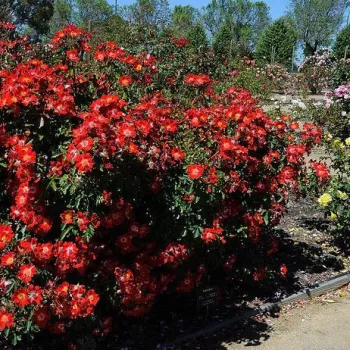
Bushy, slightly spreading shrub reaching about 120–180 cm high with 65–95 cm spread, moderately dense dark green foliage and moderate thorniness, forming a compact, bush-trained structure appropriate for beds, borders and container culture. |
| Flower morphology |
Produces small, flat single flowers in clusters, typically 5–12 petals and 0.5–1.5 inches across; remontant habit ensures a strong second flush, with moderate self-cleaning that still benefits from periodic deadheading for best continuity. |
| Colour data and phenology |
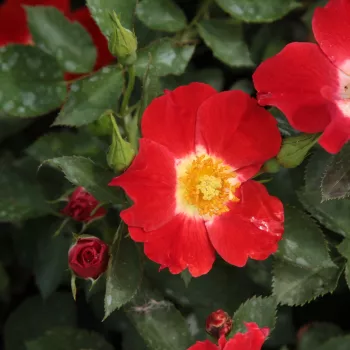
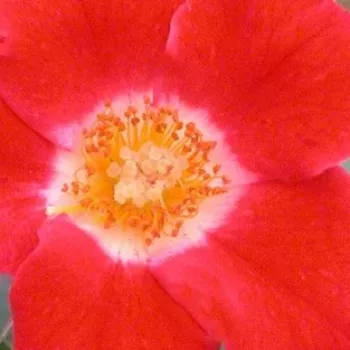
Vibrant scarlet-red petals with a contrasting cream-white eye (RHS 46A, 11C; ARS RB); buds are deep red, blooms fade lighter while retaining contrast, and the flat, open form accentuates the bright centre throughout successive flowering waves. |
| Fragrance and aroma |
Fragrance is very weak and barely perceptible, so the cultivar is chosen primarily for colour display and floral structure rather than scent, fitting production schemes where visual impact and pollinator access are the primary specification. |
| Hip characteristics |
Moderately sets egg-shaped hips 11–15 mm in diameter, typically in RHS 33B orange tones, adding discreet late-season interest without significantly distracting from the hand-painted flower character in ornamental plantings. |
| Resistance and winter hardiness |
Rated H7 with approximate hardiness between -21 and -18 °C, suited to USDA zone 6b and Swedish zone 3; shows good resistance to powdery mildew and rust, medium tolerance to black spot, and moderate heat and drought tolerance with watering support. |
| Horticultural recommendations |
Performs in beds, borders, parks, urban green spaces, containers, hedges and as specimens or cut sources; prefers well-ventilated sites, while enclosed humid courtyards require active pest and disease management for consistent, reliable garden performance. |
Tapis Persan MACeye as pharmaROSA® NEONATAL own-root material combines vivid floribunda bedding colour, pollinator-friendly single clusters and H7-rated resilience into predictable, regenerating stands; let us align on volumes and scheduling to suit your programmes.