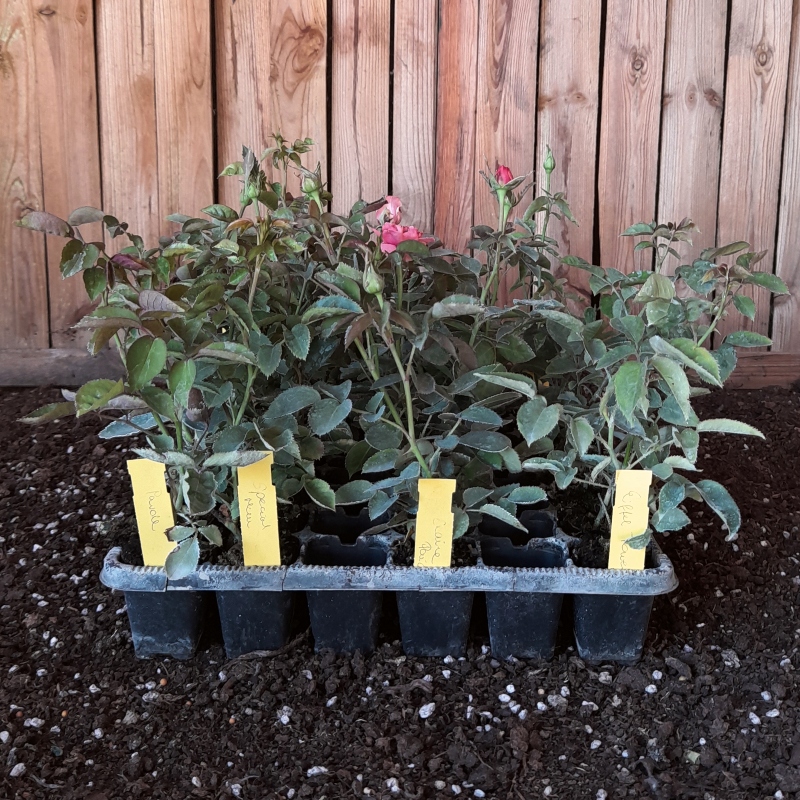
Botanical rose

20-745-1
20-745-2

Rosa pimpinellifolia Frühlingsmorgen

Spring

- – Wilhelm J. H. Kordes II.

A medium-intensity, pure pink–carmine base-coloured bloom that lightens towards the petal bases to a cream tone, occasionally with a pale yellowish tint, creating a subtle two‑tone pink–cream‑yellow effect. - landscaping shrub rose - medium-strength, clea

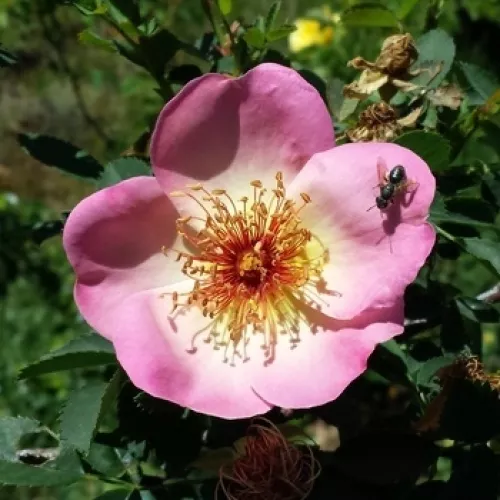
– Large single blooms in soft pink and cream tones.
– Medium, clearly noticeable wild‑rose fragrance.
– Extremely robust, disease‑resistant landscaping shrub.
– Hardy to around –35 °C, ideal for cold climates.
– Masses of showy crimson‑red hips in autumn.
– Special feature: RHS Award of Garden Merit, trusted for reliable garden performance.
Project (landscape architecture / mass use)
Rosa pimpinellifolia Frühlingsmorgen
pharmaROSA® NEONATAL rooted rose cutting
28,23 £
Due to courier service regulations – and the introduction of customs clearance – delivery to Ireland is temporarily suspended.
4 (5713)
facebook   twitter

Rosa pimpinellifolia Frühlingsmorgen – pharmaROSA® NEONATAL rooted cutting

Landscape growers looking for dependable project material gain a vigorous, bushy shrub from Rosa pimpinellifolia Frühlingsmorgen, combining uniform coverage, dense foliage and a clearly defined hedge and screening role for projects in public or naturalistic schemes. As own-root pharmaROSA® NEONATAL material, 3–6‑month tray-rooted cuttings support predictable crop timing into 1.5–2 L production and beyond, building homogeneous blocks for mass planting with low maintenance demand and stable long-term structure. The once-flowering, single pink-yellow blooms are strongly pollinator-oriented, followed by plentiful crimson hips for seasonal interest in thematic and collection plantings. In practice, Year 1 focuses on root establishment, Year 2 on structural shoot build-up and Year 3 on full ornamental and hedging performance, aligning well with nursery scheduling for wholesale landscape supply, including colder Scottish and northern English sites where proven winter resilience supports reliable contract delivery.


Usage options

Target area Reasoning
Project mass hedging for landscape contractors The cultivar’s vigorous, bushy, upright habit and dense, matte medium-dark foliage translate into fast, even hedge lines when grown on from uniform own-root material. NEONATAL tray-rooted cuttings slot efficiently into a 1.5–2 L route, then on to field or larger containers as required for project mass planting. Combined with its positioning for landscape architecture and screening hedges, this supports predictable stand structure and straightforward specification work for landscape contractor pipelines
Low-input municipal and institutional plantings This is a generally healthy, vigorous shrub with low maintenance requirements and documented resistance to powdery mildew, black spot and rust, reducing intervention in local authority or institutional schemes. Own-root production underpins long lifespan and regeneration capacity, keeping replacement rates low across large plantings. A 1.5–2 L starter format from NEONATAL material enables economical scaling for project mass planting while still maturing into dense, bush-trained finished units aligned to long-term public-realm use for municipal procurement frameworks
Pollinator-focused public and collection gardens Large, single, accessible flowers with prominent yellow to reddish-brown stamens make this a specifically pollinator-friendly option for thematic and collection gardens. When routed through 1.5–2 L own-root production, plants establish quickly into mixed borders or wildflower-style schemes, offering a clear ecological narrative. Its project positioning and shrub rose exhibition category make it easy to position in public-realm and institutional pollinator programmes for ecology-driven project specifiers
Seasonal interest in naturalistic and wildflower schemes The once-flowering display of pink-yellow single blooms is followed by many crimson-red, egg-shaped hips of good size, giving a strong seasonal arc in naturalistic or cottage-style landscapes. NEONATAL own-root material allows nurseries to build uniform, bush-trained batches for beds alongside walls and mixed perennial plantings. This aligns with project mass planting routes where visual impact and low ongoing input are key decision drivers for public-realm landscape wholesalers
Cold-climate and exposed-site contracts High winter resilience is a core attribute here, with hardiness verified to around -35 °C, H7 and Swedish zone 1–4, suiting many UK schemes in cooler or more exposed positions. Own-root plants give a robust structural base that withstands repeated pruning cycles in hedges and screening roles. NEONATAL material into 1.5–2 L provides a consistent starting point for projects in northern and more exposed locations where durable structure and predictable survival underpin contract performance for Scotland/North England project suppliers
Collection, botanic and heritage rose gardens With a clear Kordes pedigree, botanical rose commercial group and RHS Award of Garden Merit, this cultivar adds curatorial value in collections and themed rose gardens. Its distinctive single flower form, parentage and hip display suit interpretive planting. Own-root NEONATAL production supports cultivar authenticity and long-term maintenance stands, fitting the need for gene-bank style plantings and structured ranges within professional shrub and park rose assortments for collection-focused nurseries
Structure plants in mixed borders and beds The bushy, upright habit and dense foliage create solid structure in mixed perennial borders and beds, especially along walls or in transition zones to wilder planting. Routing NEONATAL cuttings through 1.5–2 L, then into larger 40–50 L containers where required, gives contractors flexible planting modules with reliable architecture. This matches the product path towards project mass planting while supporting premium shrub rose lines within wholesale offers for design-led trade customers
Fragrant landscape accents and sensory routes A medium-strength, clearly perceptible muscatel to wild-rose–violet fragrance offers added value in sensory gardens and pedestrian routes where scent contributes to user experience. The uniform, dense, bush-trained finished form is easy to repeat in rhythmical planting patterns from a NEONATAL 1.5–2 L base. Combined with low maintenance requirements, this supports dependable, multi-sensory shrub rose components within broader project-oriented shrub assortments for sensory and healthcare projects

Finished-product ideas

  • Project hedge module 40–50 L – Own-root plants grown from NEONATAL 1.5–2 L starters into 40–50 L units, emphasising dense, bushy, upright structure and low maintenance for quick-install screening hedges in landscape contracts – landscape contractor / project wholesaler
  • Pollinator shrub drift 5 L – Uniform 5 L shrubs focused on single, accessible blooms and documented pollinator attraction, offered as repeated drifts for thematic public and institutional pollinator schemes – ecology-focused public-realm supplier
  • AGM collection specimen 7.5–10 L – Premium 7.5–10 L specimens highlighting RHS Award of Garden Merit status and botanical rose grouping for curated collection beds and show gardens – heritage and botanic garden partners
  • Hip-interest landscape block 10–15 L – Bush-trained plants in 10–15 L containers positioned for autumn hip display and strong structural foliage, ideal for mixed borders and naturalistic mass plantings in public landscapes – municipal and campus projects
  • Fragrant park border unit 5 L – 5 L NEONATAL-derived shrubs selected for consistent architecture and medium, clear fragrance, designed as repeatable modules for sensory routes and park borders – healthcare, education and leisure schemes

Technical cultivar profile
Parameter Data
Name and registration Current trade name Rosa pimpinellifolia Frühlingsmorgen Spring Wilhelm J.H. Kordes II; ARS name Fruhlingsmorgen; shrub / park rose and hedging plant within the landscaping shrub rose commercial type.
Origin and breeding Bred by Wilhelm J. H. Kordes II at W. Kordes’ Söhne, Germany, from (‘E. G. Hill’ × ‘Cathrine Kordes’) × Rosa spinosissima var. altaica; breeding completed 1941 with introduction to commerce in 1942.
Awards and recognition Holds the Royal Horticultural Society Award of Garden Merit (United Kingdom, 2012), supporting reliable garden and landscape performance under UK conditions and reinforcing confidence for professional specification.
Growth and structural characteristics Bushy, upright shrub with dense, matte medium-dark, slightly grey-green foliage and dense thorniness; forms solid structural mass for hedges and borders, though precise height and spread data are not provided.
Flower morphology Single, flat, cluster-flowered blooms with approximately 5–12 petals, large-flowered for the class; non-remontant, flowering once, with sizeable, open faces that sit clearly above foliage for maximum visual and ecological effect.
Colour data and phenology Medium-intensity pink–carmine outer petal zones lightening to cream or pale yellowish tones toward the base, creating a subtle pink–cream–yellow two-tone effect; newly opened blooms display particularly clear pink–carmine shades.
Fragrance and aroma Medium-strength, clearly noticeable fragrance with muscatel and wild-rose–violet notes, giving a light yet distinct floral character that enhances sensory value in close-contact landscapes such as paths, seating areas and entrances.
Hip characteristics Produces numerous ornamental, crimson-red, egg-shaped hips of around 10–20 mm diameter in autumn, giving strong seasonal follow-on interest and wildlife value where hips are allowed to form in landscape or collection settings.
Resistance and winter hardiness Rated resistant to powdery mildew, black spot and rust; hardy to approximately -35 °C (H7, Swedish zones 1–4, USDA 6b), supporting robust performance in colder or exposed locations when used in landscape or park schemes.
Horticultural recommendations Suited to hedges, screening, mixed borders, cottage and naturalistic plantings and pollinator-friendly schemes; maintenance needs are low, pruning is moderate and infrequent, and finished products are best offered as uniform, dense, bush-trained shrubs.

Rosa pimpinellifolia Frühlingsmorgen offers dense, low-maintenance, disease-resistant own-root structure with strong hip and pollinator value, giving predictable, long-lived landscape stands; we would welcome discussing scheduling and volume for your project programmes.
Detailed product attributes

Product Identification Data

Product Name: ROSA PIMPINELLIFOLIA FRÜHLINGSMORGEN – pink-yellow landscape shrub rose - Wilhelm J.H. Kordes II
Product Type: pharmaROSA® NEONATAL - rooted rose cutting
Cultivar Authenticity: Verified:23.06.2025
Cultivar Quality Rating: premium bronze
Item Number: [1053] 20-745 (14.02.2026) pharmarosaneonatal.co.uk

Name and Registration

Meaning of Cultivar Name: The name means 'spring morning' in German.
Cultivar Synonym: Frühlingsmorgen; Fruehlingsmorgen; Spring Morning
Original Trade Name: Frühlingsmorgen
Current Trade Name: Rosa pimpinellifolia Frühlingsmorgen Spring Wilhelm J.H. Kordes II
Rose Group: Shrub
Commercial Type: landscaping shrub rose
Commercial Group: Botanical rose
Exhibition Category: shrub rose, park rose, hedging plant
Collection: Spring

Origin and Breeding

Registration Year: Data not available
Breeder: Wilhelm J. H. Kordes II.
Breeding Company / Institution: W. Kordes’ Söhne (Germany)
Breeding Year: Germany, 1941
Parentage: (‘E. G. Hill’ × ‘Cathrine Kordes’) × ‘Rosa spinosissima var. altaica’

Awards and Honours

Horticultural Ratings and Recommendations: RHS Award of Garden Merit (United Kingdom) (2012)

Growth and Structural Characteristics

Height: #VALUE!
Spread: #VALUE!
Growth Habit: bushy, upright
Foliage: The variety has dense foliage. Its leaves have a matte surface and are medium-dark, slightly grey-green in hue.
Prickliness: densely thorned
Self-Cleaning Description: No data on self-cleaning.
Self-Cleaning Intensity: No data on self‑cleaning strength.

Flower Morphology

Petal Count: 5–12
Flower Fullness: single-flowered
Flower Shape: flat
Flower Size: L (2,75-3,95 in)
Inflorescence Type: cluster-flowered
Colour Code: ARS code: pb RHS code: 56C (outer), 14B (inner)
Repeat Flowering: Non-remontant, blooms once.

Colour Data and Phenology

Colour: pink-yellow
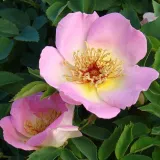
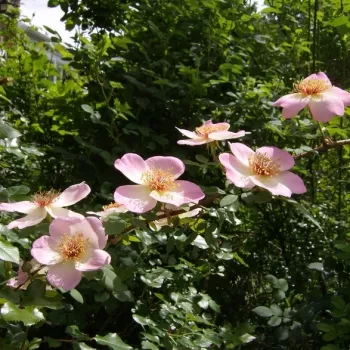
Flower Colour Description: A medium-intensity, pure pink–carmine base-coloured bloom that lightens towards the petal bases to a cream tone, occasionally with a pale yellowish tint, creating a subtle two‑tone pink–cream‑yellow effect.
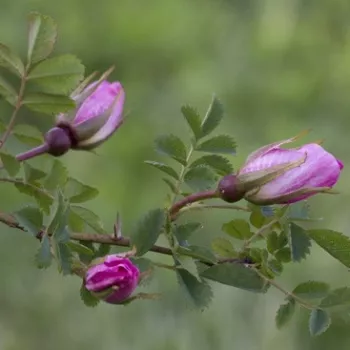
Closed Bud: The closed buds are pink, displaying the medium‑intense pink shade characteristic of the open flower.
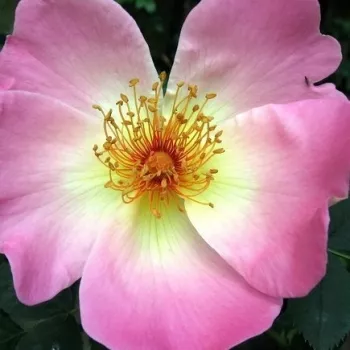
Newly Opened Flower: The newly opening flowers unfold with large, single, pure pink–carmine petals; the outer petal parts are a deeper pink, while at the base the petal bases form a creamy, pale yellow ring around the striking golden‑yellow to reddish‑brown stamens.
Full Bloom: In full bloom the flower is large, flat-opening and single; the outer parts of the petals are a clear, medium-strong pink–carmine shade, while the petal bases create a creamy, pale yellowish-pink centre. In the centre of the flower are densely arranged go
Before Fading: Data not available.
Colour Fading Description: No data on colour fading.

Fragrance and Aroma

Fragrance Strength: medium-strength, clearly scented rose
Fragrance Character: muscatel, wild-rose–violet, light floral
Pollinator Attraction: Large, single (4–10 petal), fully open flowers with yellow–orange stamens that are highly visible and easily accessible, making them very attractive to pollinators.
Pollinator-Friendly Rating: Specifically pollinator-friendly variety

Hip Characteristics

Hip Shape: egg-shaped
Hip Colour: crimson-red
Hip Comment: Primarily ornamental, it produces many large red rose hips in autumn.

Resistance and Hardiness

Hardiness (°C): -35–-35 °C
Heat and Drought Tolerance Description: No data are available on heat–drought tolerance.
Heat and Drought Tolerance Level: Data not available.
Disease Resistance: resistant
  • powdery mildew – resistant
  • black spot – resistant
  • rust – resistant

Horticultural Recommendations

Recommended product path: Project mass planting
Release form: Uniform, dense, bush-trained finished product
Recommended use: Maintenance requirement low; a vigorous, generally healthy rose that is typically well resistant to powdery mildew, black spot and rust, and requires only moderate, infrequent pruning.
Primary Uses: hedges and screening hedges, mixed perennial borders and beds alongside walls, cottage/naturalistic and wildflower gardens, pollinator-friendly (bee- and butterfly-friendly) plantings

Comments

Positioning: Project (landscape architecture / mass use)
Target customer/channel: Landscape contractor, project-serving wholesaler / maintenance
Main value proposition: Fast coverage – uniformity
ROSA PIMPINELLIFOLIA FRÜHLINGSMORGEN – pink-yellow landscape shrub rose - Wilhelm J.H. Kordes II
A medium-intensity, pure pink–carmine base-coloured bloom that lightens towards the petal bases to a cream tone, occasionally with a pale yellowish tint, creating a subtle two‑tone pink–cream‑yellow effect. - landscaping shrub rose - medium-strength, clea
#VALUE!
Inflorescence: cluster-flowered Height: #VALUE! Flower shape: flat Winter hardiness: 4b pink-yellow - - landscaping shrub rose - Flower size: L (2,75-3,95 in) Flower size: L (2,75-3,95 in) - Height: #VALUE! Height: #VALUE! - Flower fullness: single-flowered Rosa pimpinellifolia Frühlingsmorgen - Roses in the garden | pharmaROSA® Neonatal - premium bronze Wilhelm J. H. Kordes II.

We showcase the external appearance of the roses available for online purchase from our webshop.


Which product type is right for you?


PharmaRosa® NEONATAL is the cost‑effective starting point for rose product production.

As a uniform, own‑rooted propagation material, it provides a stable basis for further growing-on and can be integrated flexibly into different finished product production technologies.

Rooted in trays (rooted), 3–6‑month‑old, own‑rooted rose cutting.
Uniform developmental stage, with a root system that has thoroughly penetrated the plug.
For professional growing‑on.
Tray packaging: 10 pcs/tray.
Quality and varietal identity: production supported by a dedicated identification and traceability logic.
Can be transplanted during frost‑free periods, designed for finished product production.

PharmaRosa® NEONATAL provides a controlled, uniform starting stock for planned growing‑on that can be integrated into your own technology – especially where scheduling and varietal identity are paramount.


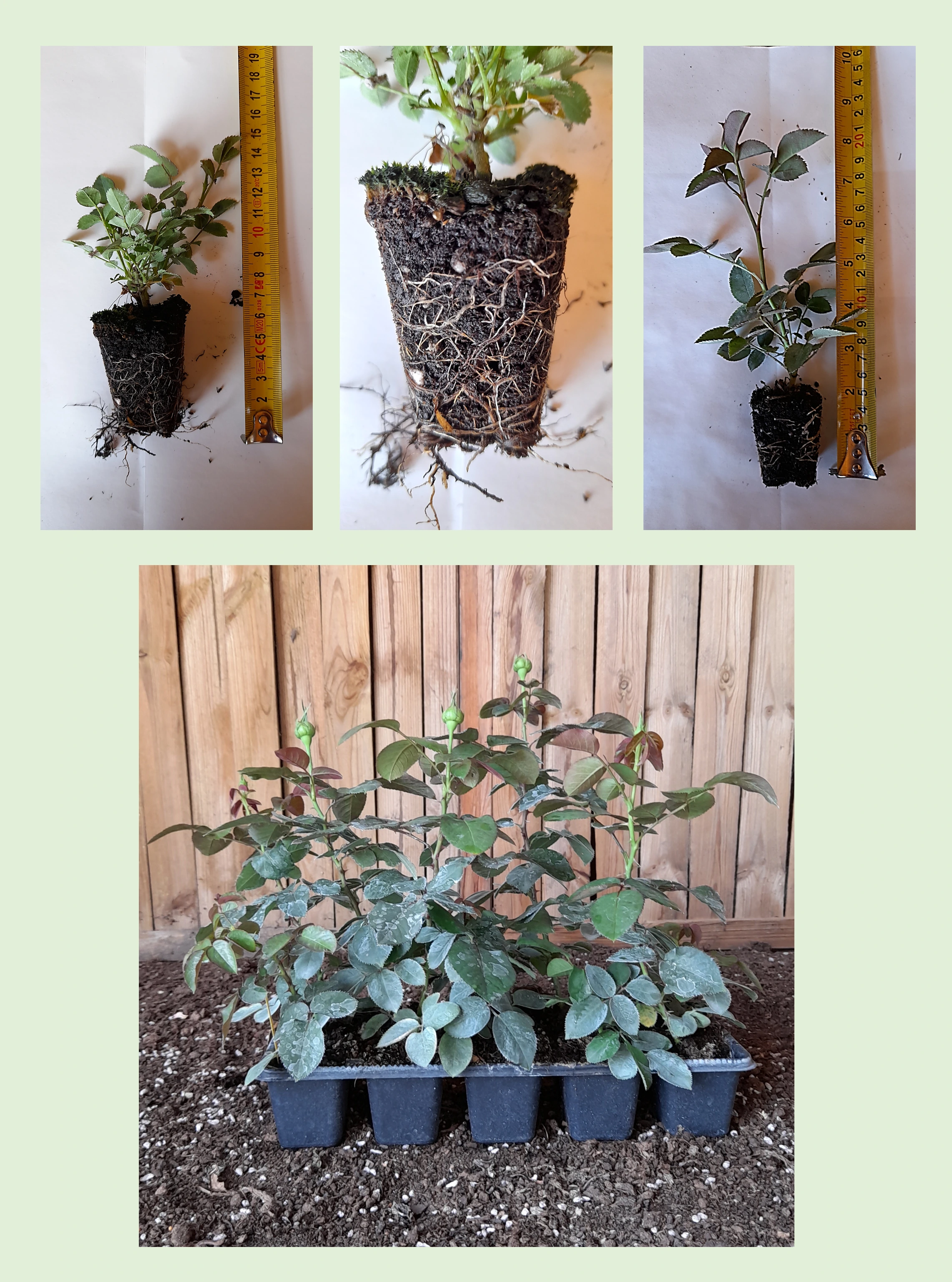
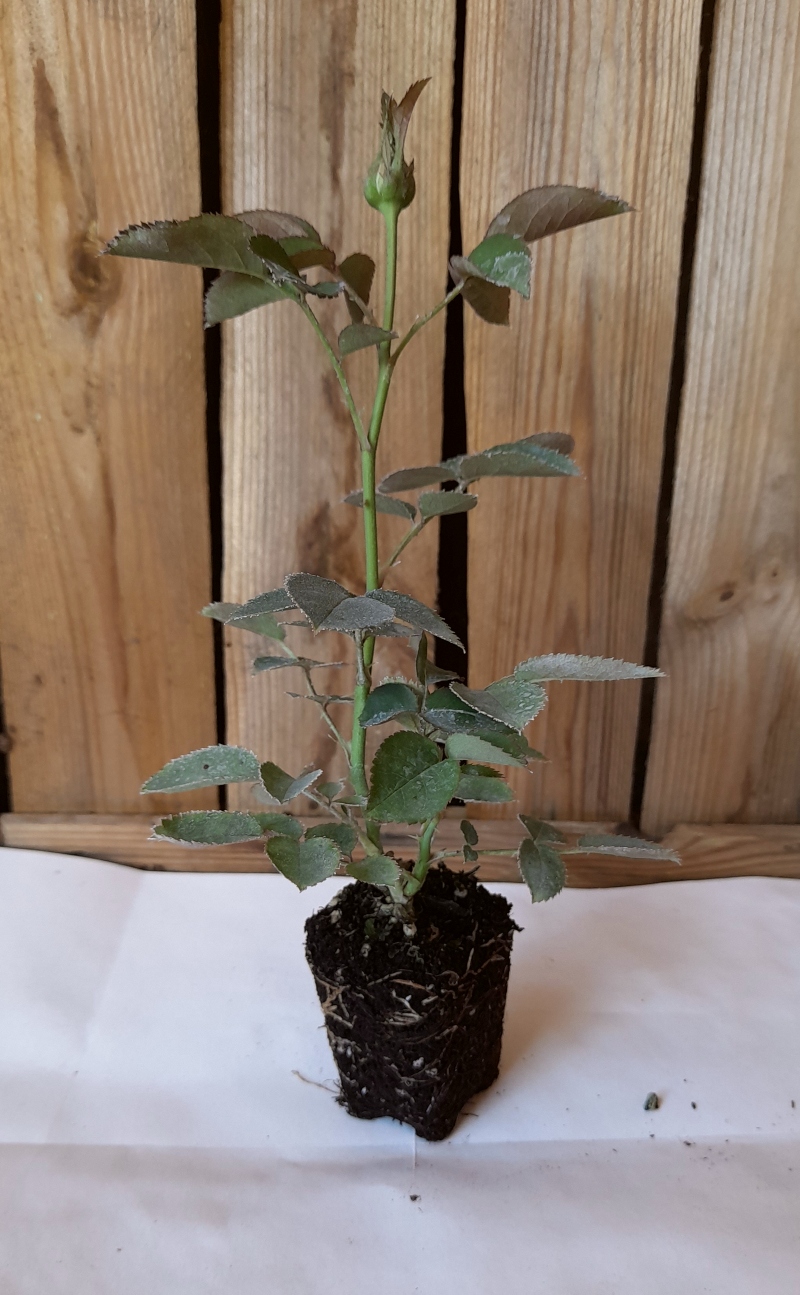
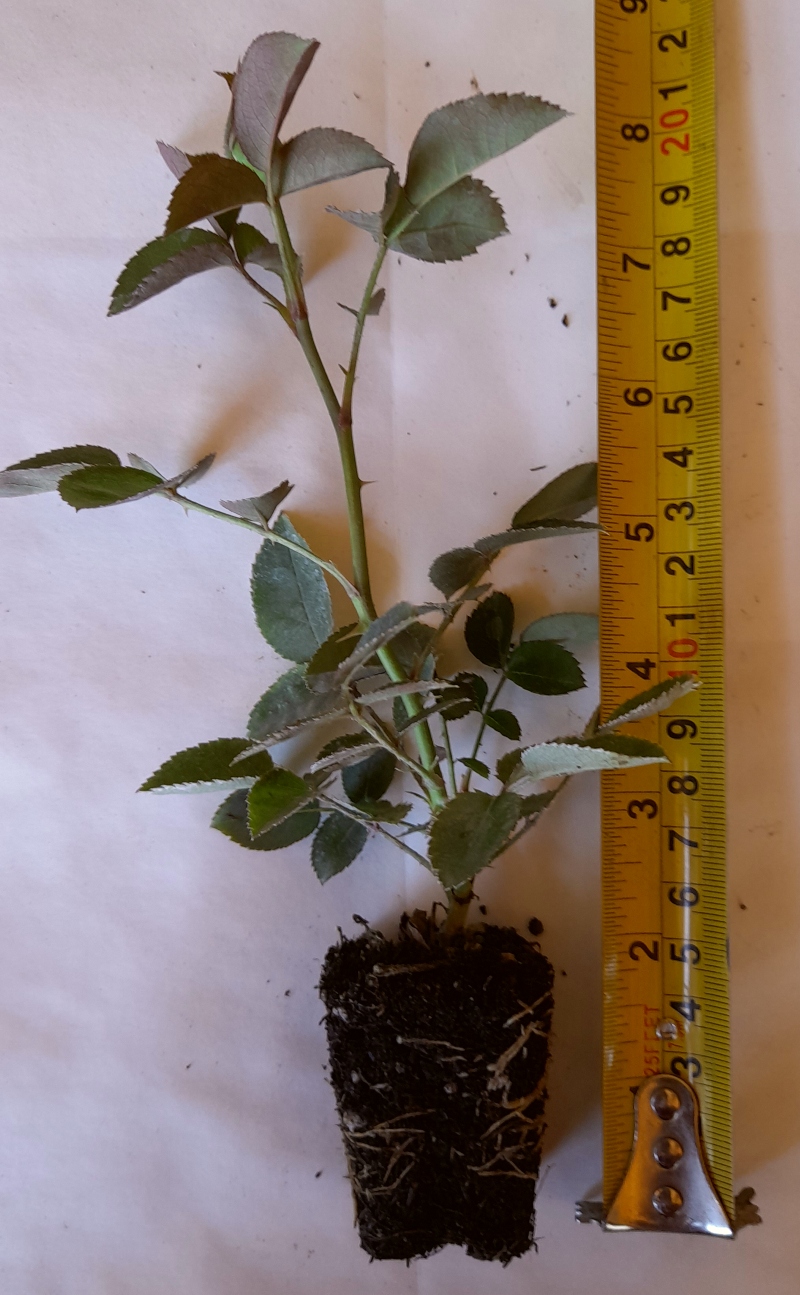
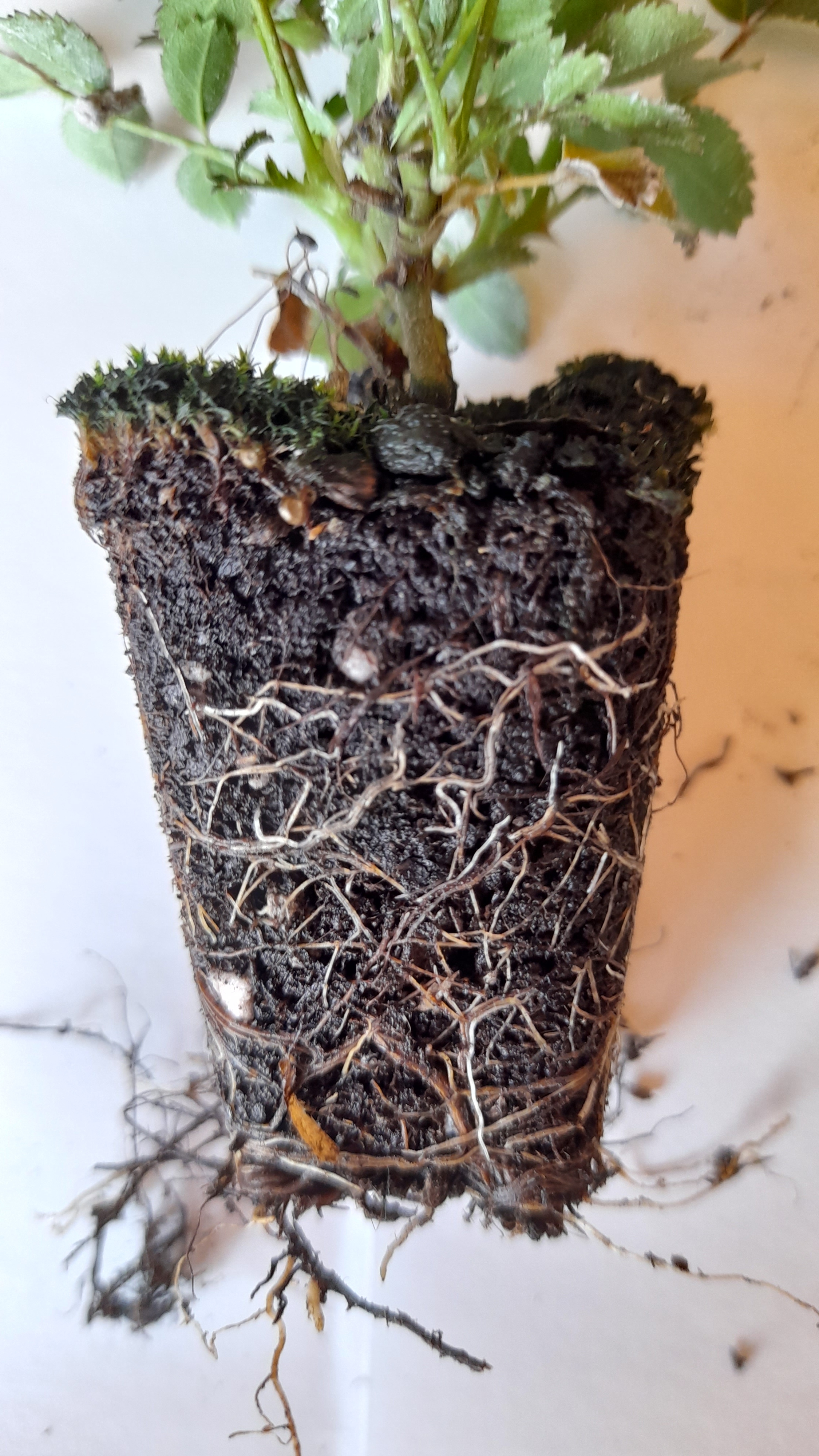
PharmaRosa® NEONATAL own-rooted rose propagation material in a plug, with a root system penetrating the plug (semi-finished product / semi-finished rose). PharmaRosa® NEONATAL rose propagation material size: 3–6‑month‑old, own-rooted cutting with a uniform developmental stage. PharmaRosa® NEONATAL rose propagation material root system: plug densely penetrated by well-developed white roots (root system detail). PharmaRosa® NEONATAL tray stock: own-rooted rose propagation material in trays, uniform developmental stage (10 pcs/tray).

Captions (from left to right): Semi-finished product (NEONATAL own-rooted rose propagation material in a plug with a fully developed root system) • Size demonstration (3–6‑month‑old, uniform cutting) • Root system detail (plug penetrated by the root system) • Tray stock (10 pcs/tray, uniform developmental stage)

pharmarosaneonatal.co.ukpharmarosaneonatal.ropharmarosaneonatal.skpharmarosaneonatal.depharmarosaneonatal.sipharmarosaneonatal.czpharmarosaneonatal.atpharmarosaneonatal.frpharmarosaneonatal.itpharmarosaneonatal.plpharmarosaneonatal.espharmarosaneonatal.nlpharmarosaneonatal.lupharmarosaneonatal.ptpharmarosaneonatal.lvpharmarosaneonatal.sepharmarosaneonatal.fipharmarosaneonatal.ltpharmarosaneonatal.eepharmarosaneonatal.hu

Which product type is right for you?

Pages for private customers
Garden roses for the family garden, with minimal care  → ORIGINAL®
Premium garden roses – instant impact, a truly showpiece garden  → EXTRA®
Pages for professionals and private customers
Roses for public spaces – large areas, sustainable maintenance  → NATURAL®
Roses for projects – hedge and row planting, fast implementation  → RAPID®
For professional partners only
Production – propagation material for garden roses, wholesale  → NEONATAL®

Company details

PharmaRosa Ltd.
Company registration number: 01-09-717479
VAT number: 13075314-2-43
Plant health registration no.: HU130721
Bank account (IBAN):
HU85117631891388688400000000
BIC (SWIFT): OTPVHUHB
Bank name: OTP Bank Nyrt.