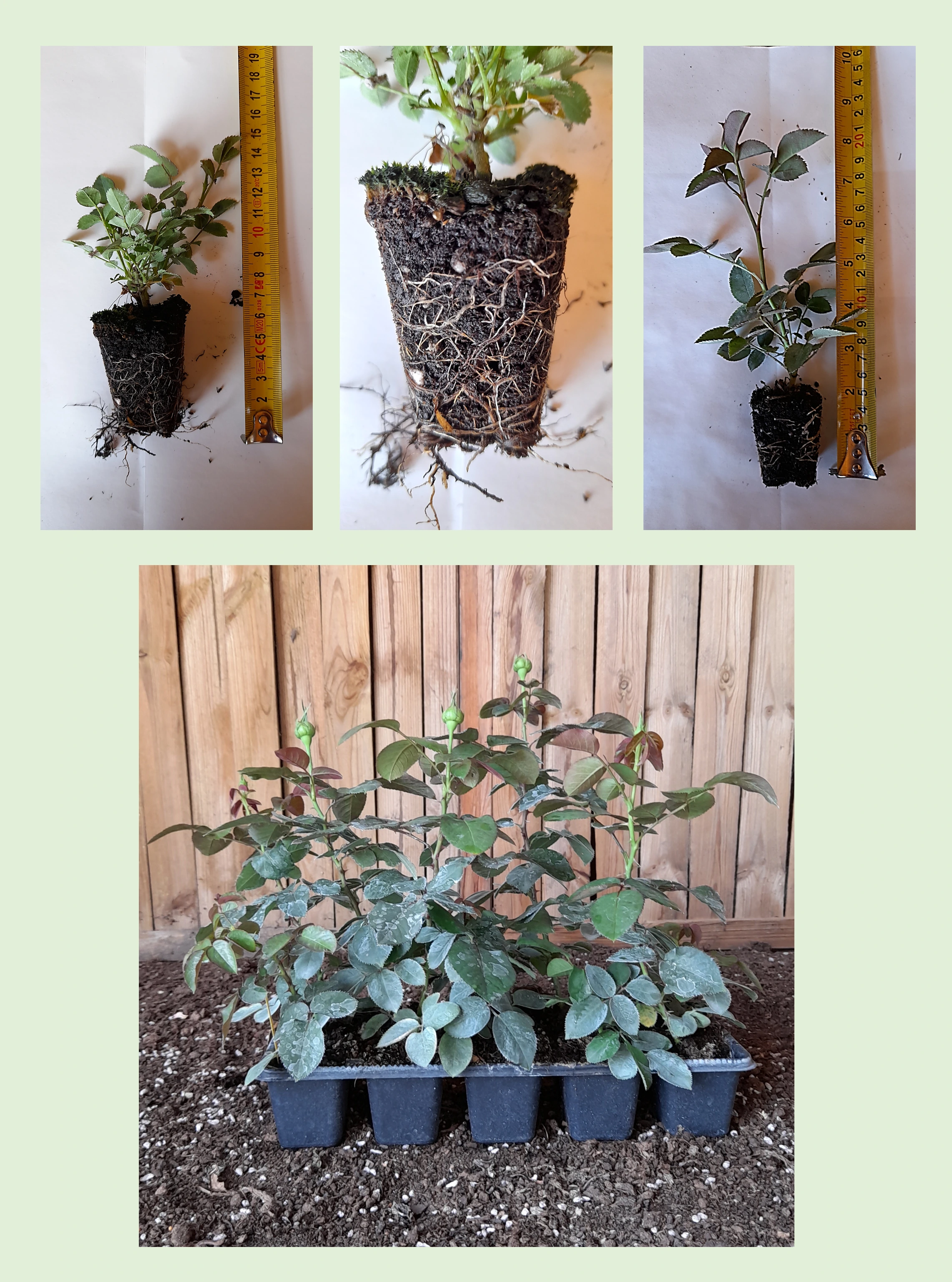
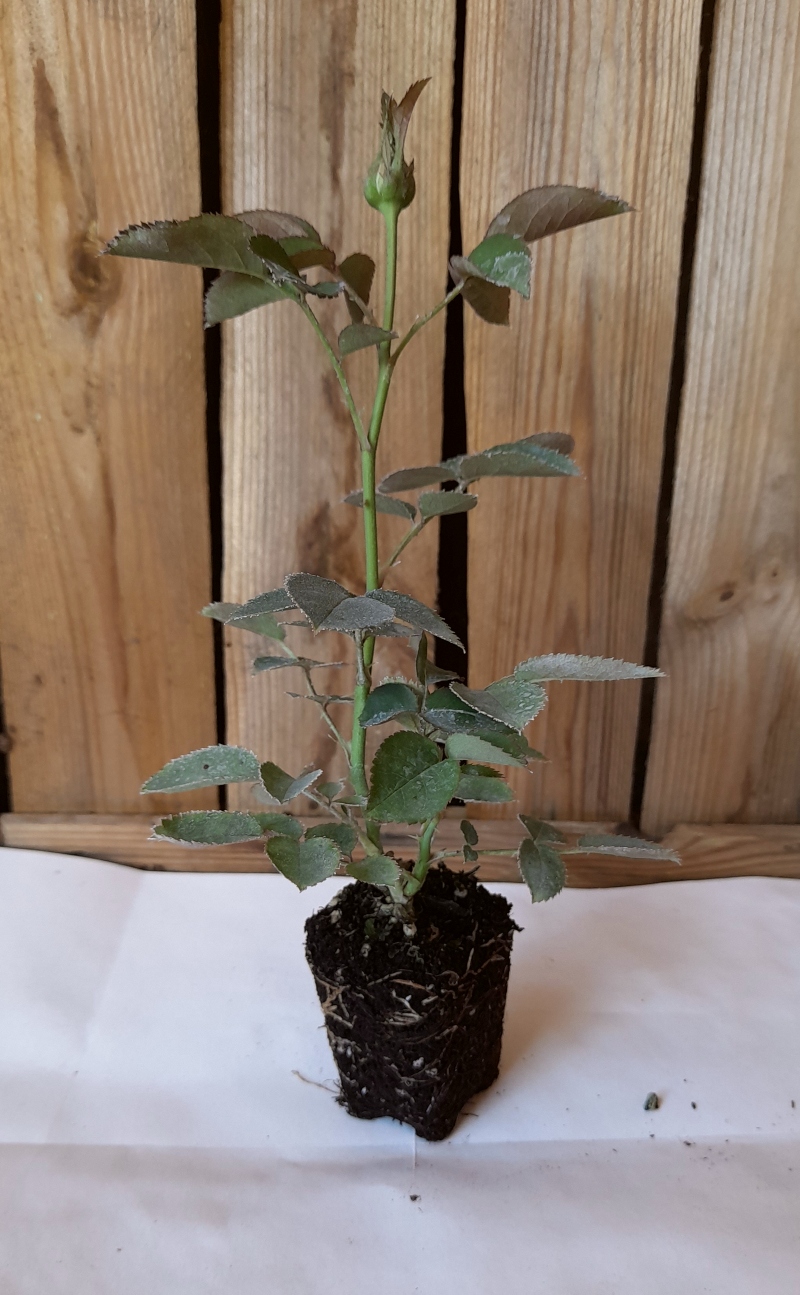
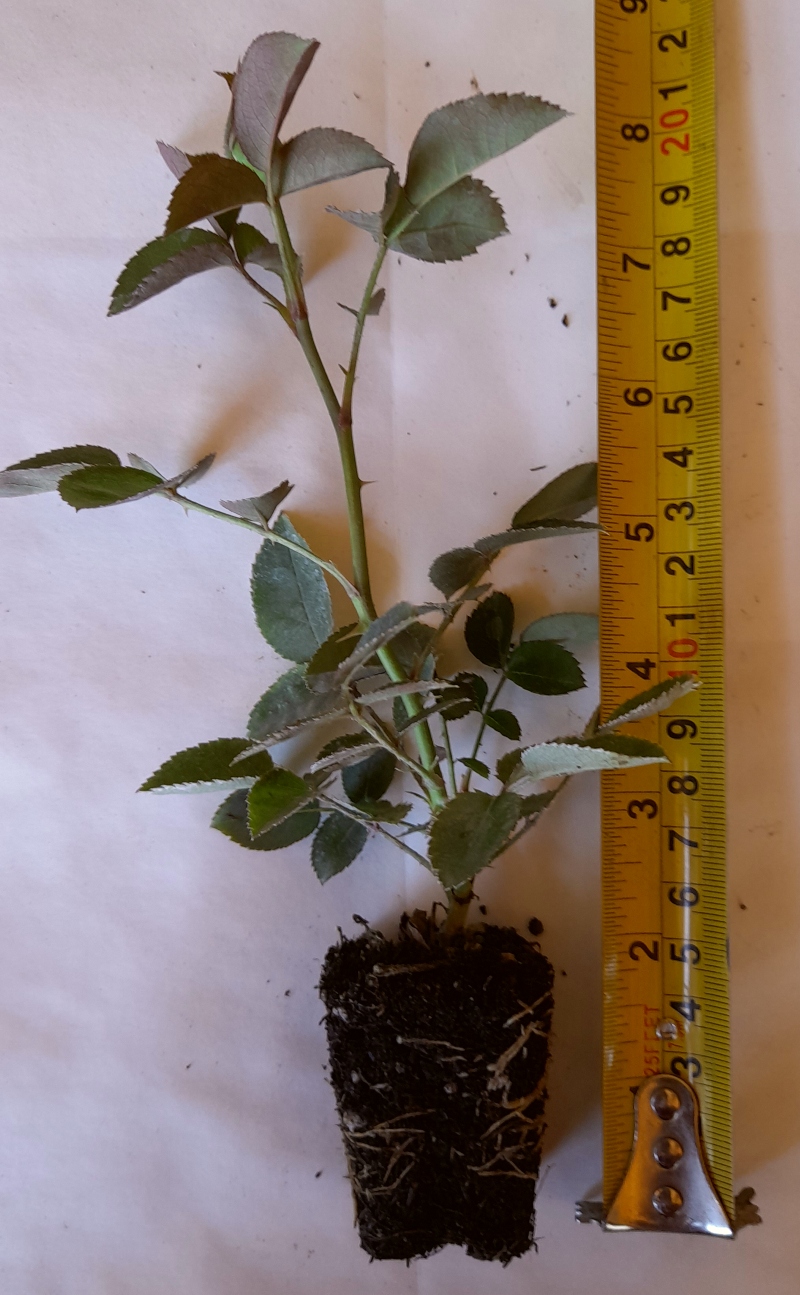
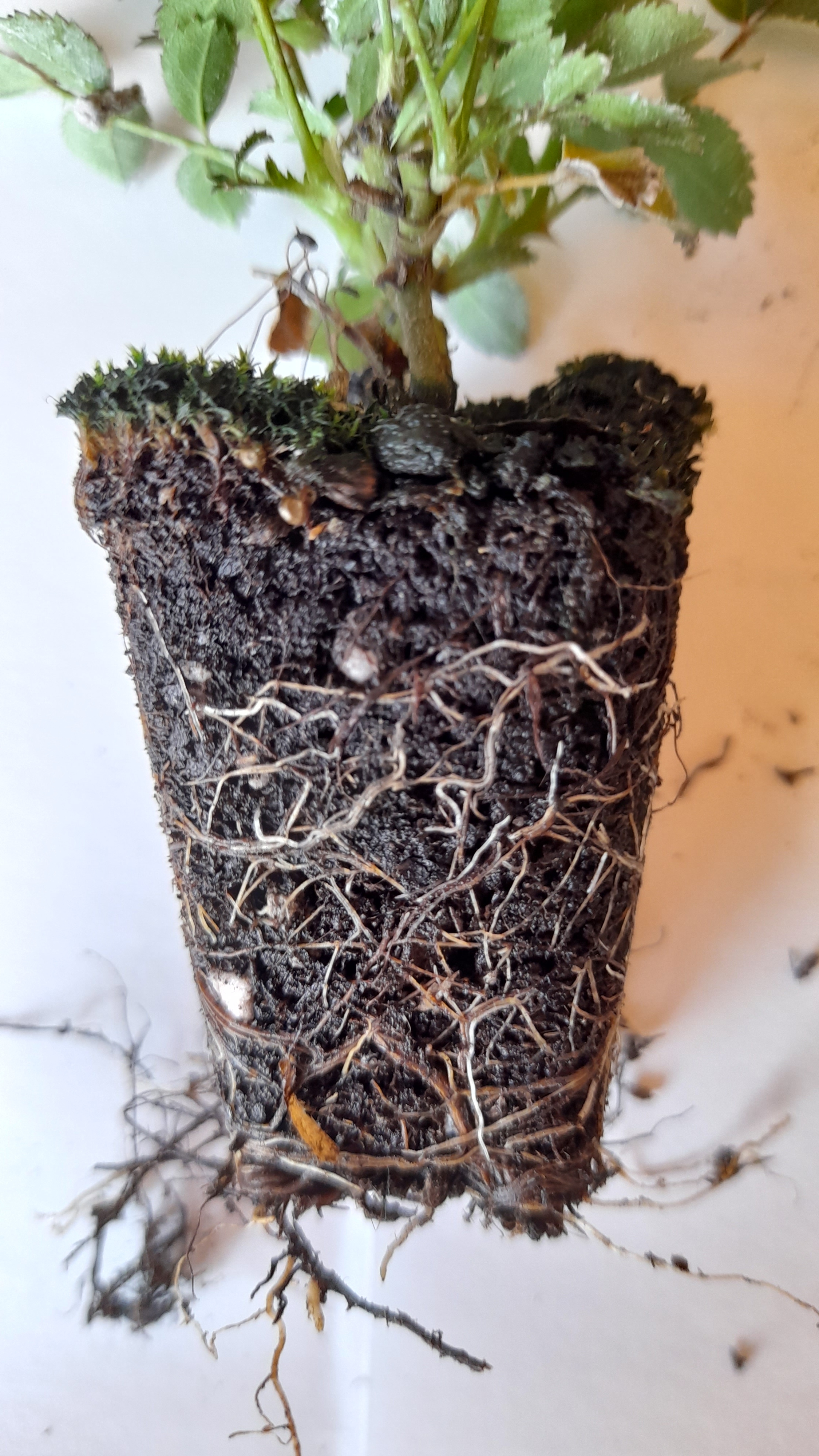
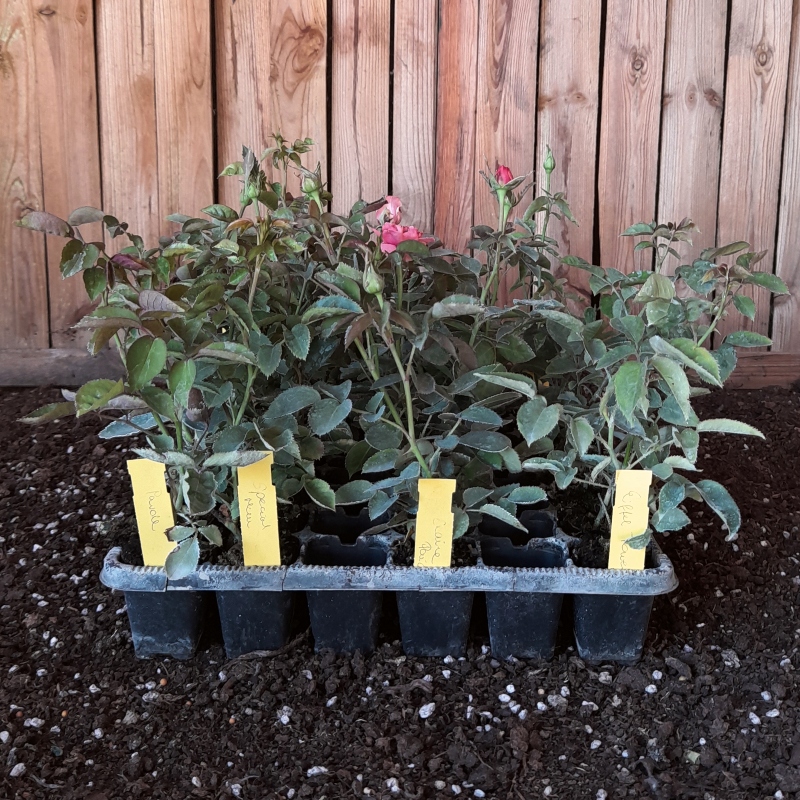
PRINCESS HITOMI – pink hybrid tea rose – pharmaROSA® NEONATAL rooted cutting
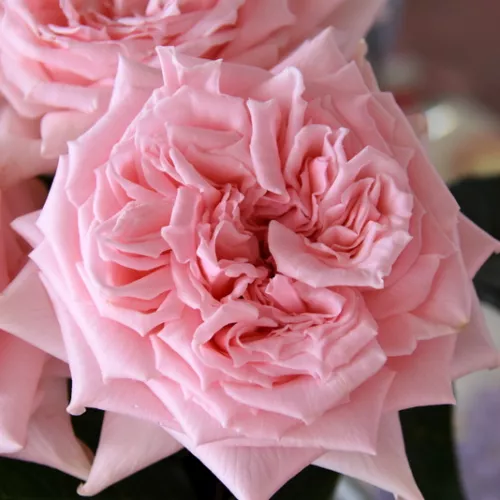
Premium own‑root pharmaROSA® NEONATAL material for PRINCESS HITOMI provides a stable propagation base where exclusive flower quality and repeat flowering underpin reliable nursery scheduling for premium 5–7 L bush‑trained production. Its upright, medium‑height growth, dense glossy foliage and exhibition‑grade, very double pastel‑pink blooms support high‑impact, specimen‑level output for retail and reseller programmes targeting exclusive finished product ranges. On own roots it offers long‑term regeneration capacity and predictable, homogeneous stands that suit UK nursery networks and public‑realm supply chains in cooler regions, with reliable winter performance even in Scottish and northern English conditions. Planned with a professional development arc – roots consolidating in year one, structural shoots forming in year two, and full ornamental and commercial value reached by year three – it integrates smoothly into premium container rose ranges and collection‑grade plantings where cultivar identity and continuity matter.
Usage options
Finished-product ideas
- Premium 5–7 L exhibition bush – Upright, bush-trained plants with 3–5 canes in 5–7 L containers, showcasing very double, uniform pastel-pink blooms for premium benches; positioned as an exclusive named cultivar for the retail / reseller channel.
- Boutique container cut-flower mother stock – Own-root 5–7 L bushes maintained as cutting sources, leveraging remontant flowering and exhibition flower form for small-scale, high-value cut flower supply to specialist floristry-led retail partners.
- Named specimen for show gardens – Individually labelled plants in 40–50 L containers, highlighting dense glossy foliage and sugar-glazed pink flowers as focal points in thematic and collection gardens, supplied through project-oriented nursery channels.
- Collection-bed cultivar blocks – Uniform own-root rows in nursery or display beds where authenticity, long lifespan and stable flowering form are key, supporting cultivar collections and gene-bank style stands for institutional and specialist partners.
- Retail-exclusive feature line – Branded pots emphasising the feminine cultivar name, premium gold quality rating and exhibition recognition, built around bush-trained 5–7 L plants for curated, high-margin rose tables in garden centres.
Technical cultivar profile
| Parameter |
Data |
| Name and registration |
Hybrid tea rose, commercial group Hybrid tea rose; current trade name PRINCESS HITOMI Hybrid tea rose Kunieda, American Rose Society exhibition name PRINCESS HITOMI; former name and registered code not provided. |
| Origin and breeding |
Bred by Kunieda Keiji at Rose Farm Keiji, Shiga Prefecture, Japan; breeding year 2018, introduced by Wabara from 2019; registration in the central ICR section recorded for 2018, parentage data not provided. |
| Awards and recognition |
Holds SAF Blue Ribbon and SAF Red Ribbon distinctions in competition and show contexts, underscoring its value as an exhibition Hybrid Tea for cut flower and display use; further collector or rating data not provided. |
| Growth and structural characteristics |
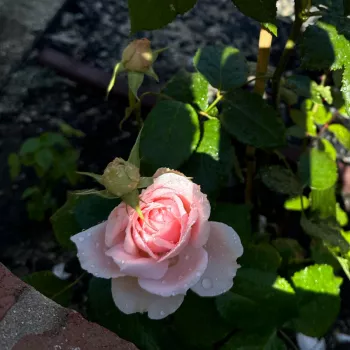
Upright bush habit reaching around 95–125 cm high with 50–70 cm spread; dense, medium-green glossy foliage and moderate prickliness; self-cleaning is weak, so spent, very double blooms may need manual removal in production. |
| Flower morphology |
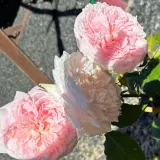
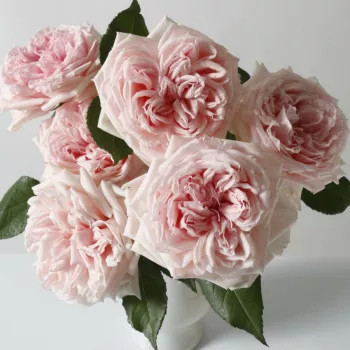
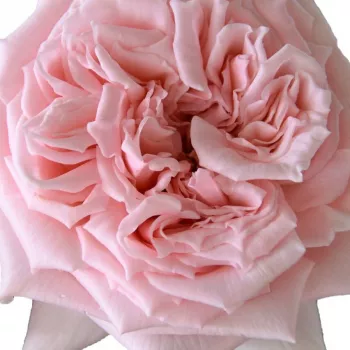
Very double, cupped Hybrid Tea blooms with over 40 petals, forming small S-sized flowers of around 0.5–1.5 inches; borne in clusters, with remontant behaviour and a generous second flowering flush under suitable management. |
| Colour data and phenology |
Soft pastel pink overall impression; buds pale off-white pink, opening to creamy, delicate pink, then uniform sugar-glazed pink slightly paler at edges; colour long-lasting with only slight lightening in strong sun despite a noted low retention rating. |
| Fragrance and aroma |
Described as medium-strength with a pleasantly spreading scent; detailed fragrance character is not provided, yet the combination of strong flower form and discernible perfume supports cut flower and specimen uses. |
| Hip characteristics |
Rose hips are only occasionally produced and reported as extremely small, with diameters given as 0–0 mm; further information on hip colour, shape or ornamental value is not provided. |
| Resistance and winter hardiness |
Moderate disease resistance overall, with black spot rated resistant and powdery mildew and rust moderate; tolerates heat if regularly watered during dry periods; hardy to approximately -21 to -18 °C (RHS H7, Swedish zone 3, USDA 6b). |
| Horticultural recommendations |
Suited to cut flower, flower bed and specimen roles; recommended as a premium container product in 5–7 L pots, bush-trained with 3–5 framework canes; medium maintenance requirements with occasional plant protection advisable. |
PRINCESS HITOMI combines exhibition-grade pastel-pink blooms, upright bush-trained structure and reliable hardiness on own roots, offering long-lived, predictable stands that support exclusive finished-product ranges; we invite you to discuss volumes, timing and integration.