Climbing rose

21-545-1
21-545-2

Kalyke

Climbing rose

KEItoli – Seizo Suzuki

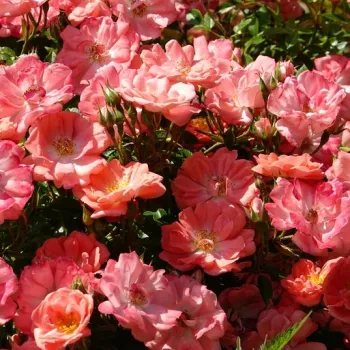
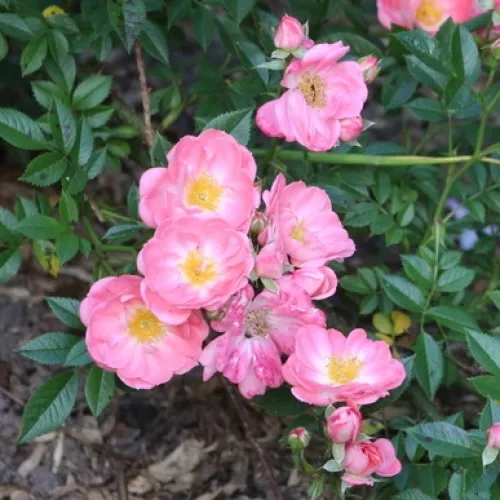
Warm, salmon-pink petals with a pale, creamy-yellow inner shade. - climber, climbing rose - mild, delicately scented rose - classic rose character

– Warm salmon-pink flowers with creamy centres.
– Spreading Climbing rose for vertical accents.
– Compact height suits beds, slopes and edging.
– Mild, classic rose fragrance in bloom.
– Awarded Paris Bagatelle Certificate 1989.
– Special feature: Once-flowering display inspired by the Hanami-Gawa cherry blossom tradition.
Exclusive, space-defining – specialty
Kalyke
pharmaROSA® NEONATAL rooted rose cutting
27,54 £
Due to courier service regulations – and the introduction of customs clearance – delivery to Ireland is temporarily suspended.
4.5 (6686)
facebook   twitter

KALYKE – salmon-pink climbing rose – Suzuki (pharmaROSA® NEONATAL)

Vertical cultivation of KALYKE within the pharmaROSA® NEONATAL range offers you a reliable, own-root propagation base for trained climber production, from nursery propagation beds through to 5–7 L container lines intended as an exclusive, space-defining finished product. This salmon-pink, semi-double cluster-flowered climber develops a spreading habit with dense, glossy dark foliage, suitable for staked, trained systems where 3–5 main canes are established early for future framework. Once-flowering yet visually distinctive, it is positioned as a vertical garden feature for thematic and collection plantings, particularly where Japanese-bred cultivars and named selections are valued in show gardens and curated schemes that must perform reliably in colder conditions, with winter hardiness aligned to climates where coastal winds and low temperatures are regular seasonal factors. Own-root production supports long-term regeneration and homogeneous stands, allowing you to plan a three-year development arc—roots in year one, structural shoots in year two, and full ornamental impact in year three—while the semi-double form and modestly sized flowers maintain a refined appearance that suits specialist retail and reseller partners. Disease susceptibility requires disciplined plant protection, but in return KALYKE offers a niche specialty climber for differentiated, collection-grade ranges and vertical features within professional UK nursery and wholesale programmes.


Usage options

Target area Reasoning
Trained climber in 5–7 L retail containers The spreading, compact 90–150 cm framework with 3–5 trained canes fits efficiently into 5–7 L production, giving a controllable vertical feature for retail/reseller ranges. Own-root stability supports predictable capacity and low replacement, despite the need for regular plant protection. Once-flowering character suits positioning as an exclusive, space-defining climber in curated retail collections, backed by nursery propagation beds and uniform tray-rooted cuttings as the propagation base for retail / reseller.
Propagation beds for vertical-feature stock Dense, slightly glossy foliage and a spreading habit enable the build-up of visually strong mother-plant style stands in propagation beds, ensuring uniform canes for later staking and training. Own-root material regenerates well after cutting, allowing sustainable renewal of stock. Using NEONATAL cuttings as a long-term propagation base helps maintain a stable supply of this niche vertical garden feature for show gardens and thematic rose collections aimed at nursery / wholesale.
Thematic and collection rose gardens The Japanese origin, named exhibition identity (Hanami-Gawa) and distinctive salmon-pink, semi-double clusters make KALYKE an attractive choice for thematic and collector-oriented rose gardens. Non-remontant, single-season flowering is acceptable in curated displays, where narrative and uniqueness outweigh continuous bloom. Own-root production supports long lifespans and consistent identity for collection plantings managed as high-value, exclusive, space-defining vertical features for public-realm and show gardens.
Groundcover and slope edging with support structures The 120–200 cm spread and moderately thorny, spreading habit can be utilised on slopes and edges where low, trained frameworks or low supports are installed. Although introduced as a climber, it can be guided horizontally to stabilise visual lines along paths or banks. Own-root resilience permits harder pruning and regeneration after shaping, while planned 5–7 L outputs give an immediately structured look on installation for landscape contractors.
Vertical accent in park and public flower beds KALYKE’s small, salmon-pink clusters and once-flowering but concentrated display lend themselves to focal-season accent plantings in parks and public beds. H7-level hardiness and suitability for colder zones provide security for northern UK schemes where winter and wind exposure are regular considerations, supporting reliable framework survival when used as a vertical garden feature within planned municipal programmes for public-realm suppliers.
Private-label climber for specialist retailers The combination of a distinctive trade name, exhibition name, Japanese breeding background and Paris Bagatelle recognition offers a clearly positionable story for private-label or branded climber lines. Own-root NEONATAL supply underpins consistent identity, predictable growth habit and long-term renewal of stock, important when supporting catalogue continuity for exclusive, space-defining vertical garden features sold through specialist garden centres.
Containerised display plants for show and trial gardens Producing KALYKE as a staked, trained climber in 5–7 L containers allows nurseries and integrators to create movable display specimens for trial or show gardens. The mild, classic rose fragrance and refined pastel colour transition support evaluation in thematic contexts. Own-root plants respond well to staged pruning and retraining, useful for repeated seasonal presentation cycles targeting demonstration and trial sites.
Source material for vertical features in larger containers For long-term structural use (e.g. at entrances or feature pergolas), NEONATAL material can be grown on into 40–50 L containers, building stable, multi-caned frameworks before final site planting. Own-root structure safeguards against graft failure and supports regeneration after harsh winters, helping maintain homogeneous vertical features where exclusive, space-defining climbers form part of a premium landscape offer for integrator networks.

Finished-product ideas

  • 5–7 L trained climber for premium retail – Once-flowering salmon-pink clusters on 3–5 trained canes, produced from NEONATAL own-root stock for predictable structure and identity, supplied as an exclusive, space-defining climber – target: retail / reseller.
  • Collection-grade Japanese heritage climber – Emphasising Japanese breeding origin and exhibition name, grown on in uniform batches from own-root cuttings for thematic and collector gardens requiring reliable winter-hardy vertical features – target: show gardens and specialist nurseries.
  • Park accent climber in structural containers – Grown into 40–50 L containers to establish stable frameworks for park entrances and focal beds, leveraging own-root regeneration and H7 hardiness for long-term vertical garden features – target: public-realm and municipal suppliers.
  • Low, trained groundcover edge units – Spreading habit channelled along low supports in 5–7 L pots, using own-root resilience to tolerate shaping and pruning on slopes and edges, offered as a niche edging solution – target: landscape and project wholesalers.
  • Private-label climber with award story – Positioned under a bespoke brand using the Paris Bagatelle certificate and distinctive colour story, underpinned by stable, own-root NEONATAL supply for consistent, exclusive climber lines – target: brand-focused retailers and integrators.

Technical cultivar profile
Parameter Data
Name and registration Climbing rose cultivar Kalyke (Registered as KEItoli), American Rose Society exhibition name Hanami-Gawa, commercial type climber; pharmaROSA NEONATAL own-root propagation material for professional production.
Origin and breeding Bred by Seizo Suzuki, Keisei Rose Nursery, Japan, from an unknown Japanese seedling × ‘Petite Folie’ (MEIherode); introduced 1984 via Meilland International and The Conard-Pyle Co., registration and US plant patent from 1984.
Awards and recognition Recognised with a Certificate at the Paris Bagatelle rose competition in 1989, providing a useful narrative and quality signal for collection-focused production and premium vertical-feature positioning.
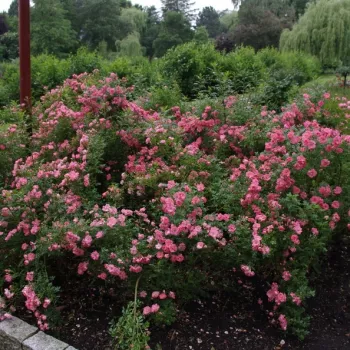
Growth and structural characteristics Spreading climber/mini-climber habit, 90–150 cm in height and 120–200 cm spread, moderately thorny, with dense, slightly glossy dark green foliage; spent flowers often remain and set small hips, self-cleaning is weak.
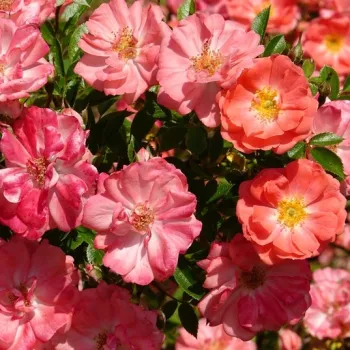
Flower morphology Semi-double, flat flowers with 13–25 petals, small size (0.5–1.5 in), borne in clusters; non-remontant, flowering once per season, supporting a concentrated display window rather than continuous flowering.
Colour data and phenology Salmon-pink outer petals with pale creamy-yellow inner shades (ARS PB, RHS 36B outer, 11C inner); colour lightens through bloom to pastel pink with pale yellow throat, moderate colour retention and visible fading with age.
Fragrance and aroma Classic rose-type fragrance with mild intensity, offering a delicately scented effect; semi-double flowers provide limited pollinator attraction due to reduced access to nectar and stamens beneath the petal whorl.
Hip characteristics Hip formation generally sparse, but occasional 4–7 mm ellipsoid orange-red hips may appear where spent flowers are retained; hips contribute modest seasonal interest but are not a primary ornamental feature.
Resistance and winter hardiness Highly susceptible to powdery mildew, black spot and rust, requiring intensive plant protection regimes; winter-hardy to approximately -21 to -18 °C (H7, Swedish zone 3, USDA 6b), suitable for colder and exposed regions.
Horticultural recommendations Best used as a trained climber or spreading groundcover with support in 5–7 L or larger containers; maintenance demand is high due to disease sensitivity, making it suitable for professionally managed, protected production systems.

KALYKE – salmon-pink climbing rose – Suzuki offers dense, glossy foliage, award-backed vertical impact and winter-hardy frameworks on predictable own-root stands, making it a considered option for exclusive climber ranges where we can jointly plan capacity and scheduling.
Detailed product attributes

Product Identification Data

Product Name: KALYKE – salmon-pink climbing rose - Suzuki
Product Type: pharmaROSA® NEONATAL - rooted rose cutting
Cultivar Authenticity: Verified:21.09.2025
Cultivar Quality Rating: premium bronze
Item Number: [1538] 21-545 (14.02.2026) pharmarosaneonatal.co.uk

Name and Registration

Meaning of Cultivar Name: The term Hanami-gawa means “flower-viewing river” and is the name of a river in Chiba Prefecture that refers to the tradition of viewing cherry blossoms.
Cultivar Synonym: Ferdy; Ferdi; Hanami-Gawa; Hanamigawa; 花見川; KEItoli; Kalyke
Current Trade Name: Kalyke Climbing rose KEItoli
Rose Group: Climber, Mini -Climber
Commercial Type: climber, climbing rose
Commercial Group: Climbing rose
Exhibition Category: shrub rose
Collection: Climbing rose

Origin and Breeding

Initial Distributor: Meilland International (France); The Conard -Pyle Co. (United States)
Registration Year: 1984 (USA PP 5 841 – application 1 Aug 1984; protection 30 Dec 1986)
Breeder: Seizo Suzuki
Breeding Company / Institution: Keisei Rose Nursery (Japan)
Breeding Year: Japan, 1983
Parentage: unknown Japanese seedling × ‘Petite Folie’ (MEIherode)

Growth and Structural Characteristics

Height: 3-4.9ft (90-150 cm)
Spread: 3.9-6.6ft (120-200 cm)
Growth Habit: spreading
Foliage: The variety’s foliage is dense and its leaves have a slightly glossy surface with a dark green hue.
Prickliness: moderately thorny
Self-Cleaning Description: Spent flowers generally remain on the plant and form rose hips.
Self-Cleaning Intensity: Self-cleaning: weak

Flower Morphology

Petal Count: 13-25
Flower Fullness: semi double
Flower Shape: flat
Flower Size: S (0,5-1,5 in)
Inflorescence Type: cluster-flowered
Colour Code: ARS code: PB RHS code: 36B (outer), 11C (inner)
Repeat Flowering: Not remontant; flowers once.

Colour Data and Phenology

Colour: salmon-pink
Flower Colour Description: Warm, salmon-pink petals with a pale, creamy-yellow inner shade.
Closed Bud: The outer surface is vivid salmon-pink, with the tone subtly deepening towards the tip.
Newly Opened Flower: The outer petals are vivid salmon pink, while the centre shows a soft yellowish-cream hue.
Full Bloom: The petal surface lightens, changing from salmon pink to pastel pink, while a pale yellow persistently remains in the throat.
Before Fading: The outer petals fade to a pale pink, while the inner colour leans towards creamy white.
Colour Fading Description: The flowers fade as they age.

Fragrance and Aroma

Fragrance Strength: mild, delicately scented rose
Fragrance Character: classic rose character
Pollinator Attraction: Semi-double flowers with 13–25 petals attract pollinators only to a limited extent, as the semi-double form and reduced accessibility of the stamens restrict insect access to nectar and pollen.
Pollinator-Friendly Rating: Semi-double-flowered variety; pollinator-friendly: limited — attracts bees and other pollinators only weakly.

Hip Characteristics

Hip Shape: ellipsoid-shaped
Hip Colour: orange-red
Hip Comment: Rose hip formation is expected to be sparse; occasionally 4–7 mm in diameter, ellipsoid-shaped, orange-red hips may appear.

Resistance and Hardiness

Hardiness (°C): -21–-18 °C
Heat and Drought Tolerance Description: Heat tolerance is good; there are no clear data on drought tolerance.
Disease Resistance: highly susceptible
  • powdery mildew – highly susceptible
  • black spot – highly susceptible
  • rust – highly susceptible

Horticultural Recommendations

Recommended product path: Trained climber finished product
Release form: Staked, trained (3–5 main canes)
Recommended use: Maintenance requirement high; low disease resistance, requires regular plant protection measures.
Primary Uses: groundcover, slope, edging, park, flower bed

Comments

Positioning: Exclusive, space-defining – specialty
Target customer/channel: Retail / reseller
Main value proposition: Vertical garden feature, distinctive habit
KALYKE – salmon-pink climbing rose - Suzuki
Warm, salmon-pink petals with a pale, creamy-yellow inner shade. - climber, climbing rose - mild, delicately scented rose - classic rose character
Online rose order - salmon-pink - mild, delicately scented rose - Kalyke - climber, climbing rose - (3-4.9ft (90-150 cm))
Primary Uses: groundcover, slope, edging, park, flower bed + Height: 3-4.9ft (90-150 cm) Colour: salmon-pink + Commercial Type: climber, climbing rose Repeat Flowering: Not remontant; flowers once. + Primary Uses: groundcover, slope, edging, park, flower bed Primary Uses: groundcover, slope, edging, park, flower bed + Growth Habit: spreading Flower Size: S (0,5-1,5 in) + Height: 3-4.9ft (90-150 cm) Flower Fullness: semi double + Flower Shape: flat Colour: salmon-pink + Repeat Flowering: Not remontant; flowers once. Flower Fullness: semi double + Height: 3-4.9ft (90-150 cm) Commercial Type: climber, climbing rose + Flower Size: S (0,5-1,5 in) Inflorescence Type: cluster-flowered + Flower Size: S (0,5-1,5 in) Growth Habit: spreading + Height: 3-4.9ft (90-150 cm) Primary Uses: groundcover, slope, edging, park, flower bed + Height: 3-4.9ft (90-150 cm) Colour: salmon-pink + Flower Fullness: semi double Breeder: Seizo Suzuki + Colour: salmon-pink

We showcase the external appearance of the roses available for online purchase from our webshop.


Which product type is right for you?


PharmaRosa® NEONATAL is the cost‑effective starting point for rose product production.

As a uniform, own‑rooted propagation material, it provides a stable basis for further growing-on and can be integrated flexibly into different finished product production technologies.
Rooted in trays (rooted), 3–6‑month‑old, own‑rooted rose cutting.

Uniform developmental stage, with a root system that has thoroughly penetrated the plug.
For professional growing‑on.
Tray packaging: 10 pcs/tray.
Quality and varietal identity: production supported by a dedicated identification and traceability logic.
Can be transplanted during frost‑free periods, designed for finished product production.

PharmaRosa® NEONATAL provides a controlled, uniform starting stock for planned growing‑on that can be integrated into your own technology – especially where scheduling and varietal identity are paramount.


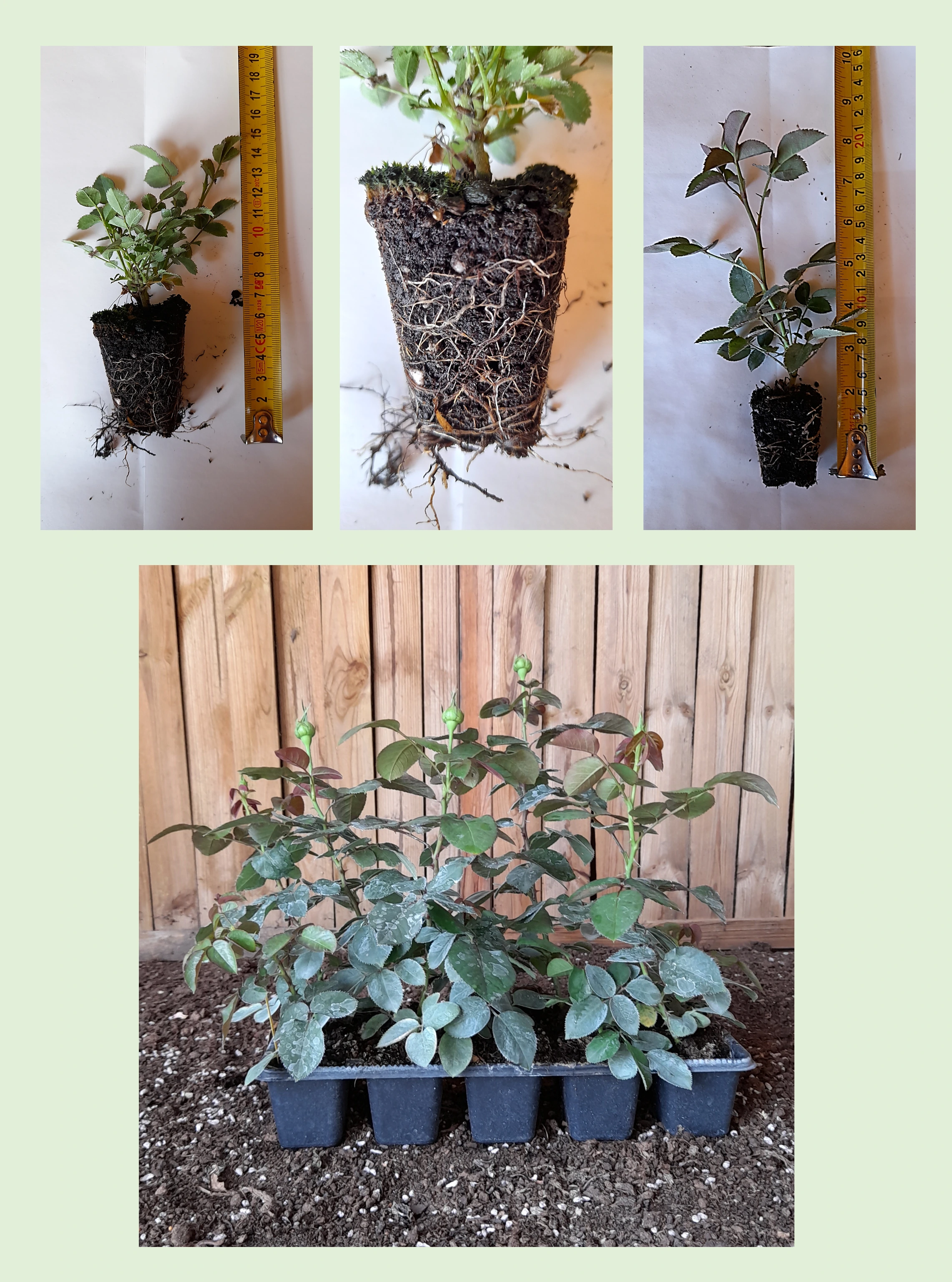
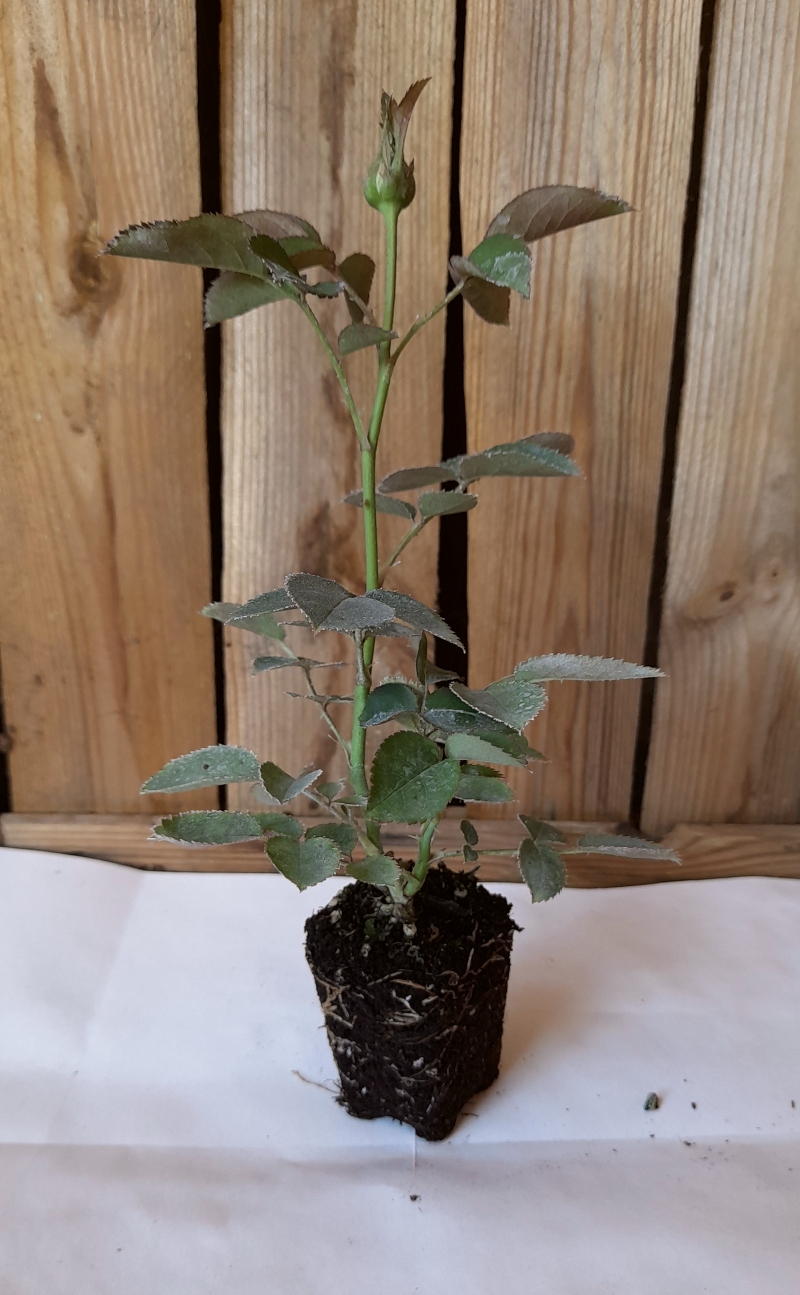
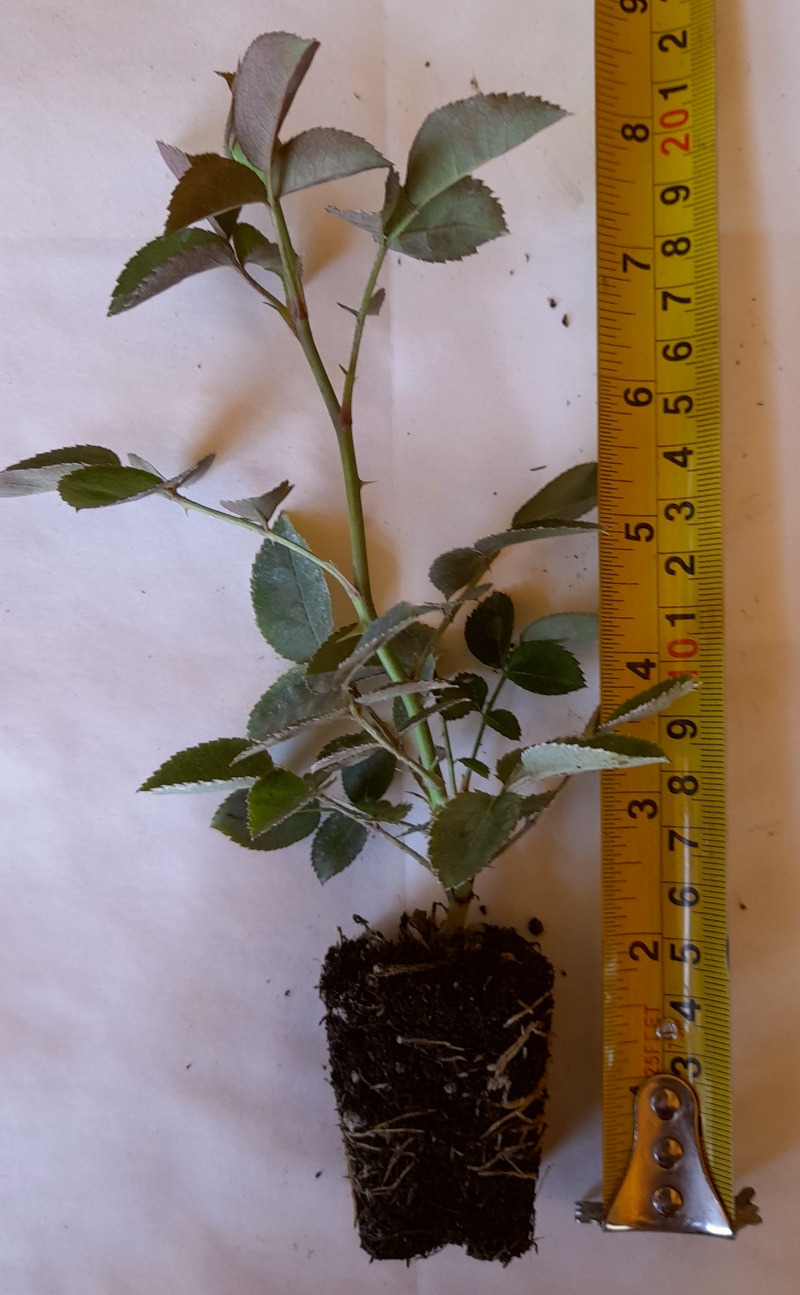
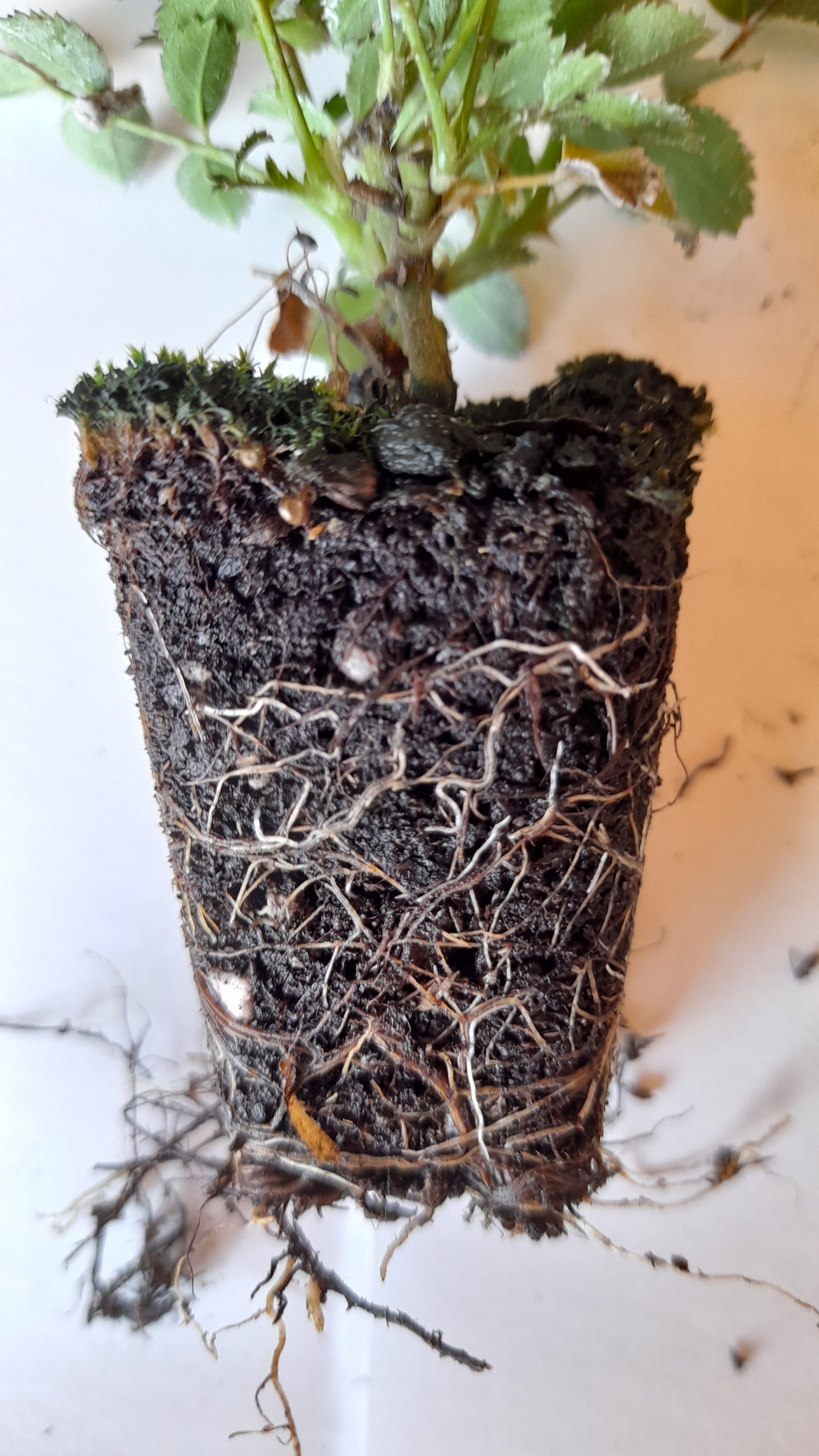
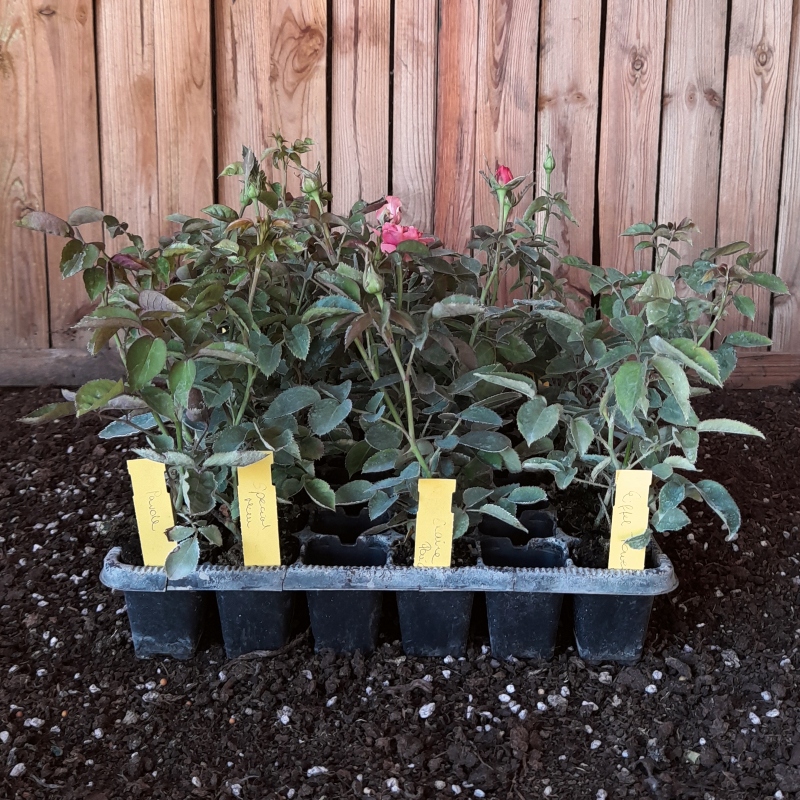
PharmaRosa® NEONATAL own-rooted rose propagation material in a plug, with a root system penetrating the plug (semi-finished product / semi-finished rose). PharmaRosa® NEONATAL rose propagation material size: 3–6‑month‑old, own-rooted cutting with a uniform developmental stage. PharmaRosa® NEONATAL rose propagation material root system: plug densely penetrated by well-developed white roots (root system detail). PharmaRosa® NEONATAL tray stock: own-rooted rose propagation material in trays, uniform developmental stage (10 pcs/tray).

Captions (from left to right): Semi-finished product (NEONATAL own-rooted rose propagation material in a plug with a fully developed root system) • Size demonstration (3–6‑month‑old, uniform cutting) • Root system detail (plug penetrated by the root system) • Tray stock (10 pcs/tray, uniform developmental stage)

pharmarosaneonatal.atpharmarosaneonatal.co.ukpharmarosaneonatal.hupharmarosaneonatal.czpharmarosaneonatal.depharmarosaneonatal.ropharmarosaneonatal.sipharmarosaneonatal.skpharmarosaneonatal.itpharmarosaneonatal.frpharmarosaneonatal.nlpharmarosaneonatal.plpharmarosaneonatal.lupharmarosaneonatal.ptpharmarosaneonatal.espharmarosaneonatal.ltpharmarosaneonatal.sepharmarosaneonatal.lvpharmarosaneonatal.eepharmarosaneonatal.fi

Which product type is right for you?

Pages for private customers
Garden roses for the family garden, with minimal care  → ORIGINAL®
Premium garden roses – instant impact, a truly showpiece garden  → EXTRA®
Pages for professionals and private customers
Roses for public spaces – large areas, sustainable maintenance  → NATURAL®
Roses for projects – hedge and row planting, fast implementation  → RAPID®
For professional partners only
Production – propagation material for garden roses, wholesale  → NEONATAL®

Company details

PharmaRosa Ltd.
Company registration number: 01-09-717479
VAT number: 13075314-2-43
Plant health registration no.: HU130721
Bank account (IBAN):
HU85117631891388688400000000
BIC (SWIFT): OTPVHUHB
Bank name: OTP Bank Nyrt.