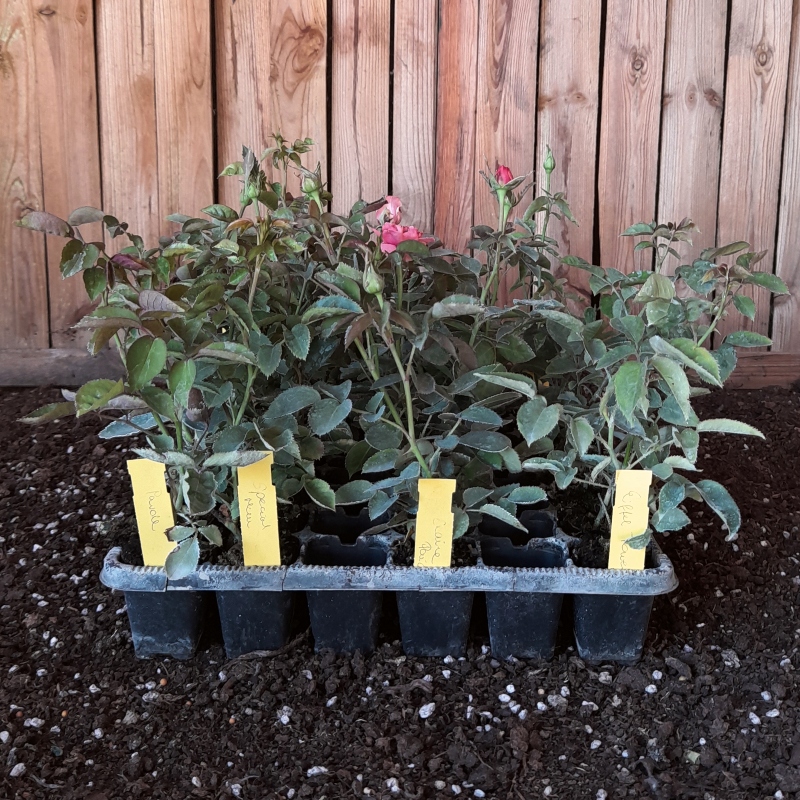
Historical Rose

21-335-1
21-335-2

Kazanlik

Historic rose

- – -

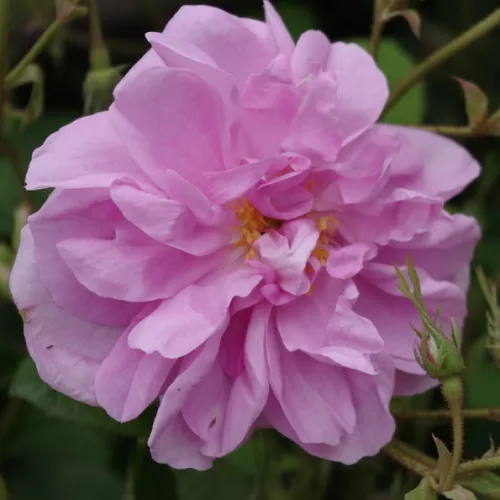
Uniform mid-toned pink with a slightly warm hue. - historical, damask rose - very strongly scented, noticeable from a distance rose - perfumed, rose-scented

– Very strongly rose-scented, ideal for fragrance gardens
– Historic Damask rose with authentic character
– Tall, bushy shrub with dense, matt foliage
– Medium-sized, double, flat mid-pink blooms
– Good winter hardiness to RHS rating H7
– Special feature: Traditional rose-oil variety from Kazanlik, famed since 1612.
Selection / specialty
Kazanlik
pharmaROSA® NEONATAL rooted rose cutting
30,87 £
Due to courier service regulations – and the introduction of customs clearance – delivery to Ireland is temporarily suspended.
4.5 (6677)
facebook   twitter

Kazanlik – historic pink Damask rose | pharmaROSA® NEONATAL rooted cutting

Historic Kazanlik offers professional growers a dependable own-root base for premium, once-flowering Damask production where fragrance and traditional character are decisive. As a tray-grown, 3–6-month-old NEONATAL rooted cutting, it integrates cleanly into nursery propagation beds and 5–7 L premium container lines, supporting predictable scheduling and homogeneous stands. The strongly scented, mid-pink, double blooms combine heritage appeal with a defined seasonal peak, ideal for curated ranges in thematic and scented collections. Own-root structure underpins regenerative, long-term planting in show and heritage projects, supporting reduced replacement and a stable stock base across cycles. Its bushy, dense-foliage habit and 140–200 cm height allow clear specification for hedge, specimen and park applications, including 40–50 litre final containers for landscape-ready material. Winter performance suits UK nursery networks that must serve sites where cold, wind and exposure require resilient shrub roses. This aligns well with UK public- and private-collection projects that value authenticity, continuity of supply and specialty positioning based on a documented historical cultivar, while the own-root platform supports the natural Year 1 roots, Year 2 framework, Year 3 full ornamental value development arc for reliable capacity planning.


Usage options

Target area Reasoning
Thematic and historic rose collections Kazanlik’s well-documented Damask background and introduction in 1889 make it a credible choice for historic and Dowager-type ranges, matching premium container, specialty routes in 5–7 L formats. Own-root propagation in NEONATAL trays supports identity-secure cultivar maintenance, fitting thematic rose gardens and curated historic collections for retail and collector audiences, especially where professional rose production with 1600 cultivars on own roots underpins a comprehensive historic offer for nursery and heritage partners
Fragrance and scented-garden programmes The very strongly scented, rose-perfumed blooms allow you to position this cultivar as a fragrance anchor within scented garden concepts. A once-blooming, high-impact flush in mid-pink supports premium, seasonal 5–7 L container production with a clear sales story. Own-root, bush-trained plants with discreet support give durable frameworks that suit longer-lived fragrance borders, especially when taken on into 40–50 litre landscape-grade containers for public or institutional projects focused on fragrance garden and traditional ambiance for retail and project channels
Hedge, screen and boundary planting The 140–200 cm height, 120–180 cm spread and bushy, dense foliage enable robust hedge or boundary uses. Growers can present Kazanlik in premium container, specialty lines as a characterful, scented hedge option, with own-root resilience supporting long-term stands and low replacement in park or boundary schemes. Moderately maintenance-demanding canes (deadheading and structural trimming) suit professional horticultural teams, while larger 40–50 litre units provide ready-formed, hedge-start modules for public-realm and estate suppliers
Specimen shrubs for park and estate planting As a bush-trained, historically significant Damask with dense, matt mid-green foliage, Kazanlik works well as a free-standing specimen in parks, estates and traditional gardens. NEONATAL rooted cuttings provide a uniform starting point for building 5–7 L and then 40–50 litre presentation stock, with own-root longevity supporting renewal from basal shoots over time. This benefits nurseries and integrators servicing public-realm and institutional plantings that rely on stable ornamental value and predictable capacity for municipal and landscape contractors
Flowerbed and mixed border concepts The medium-sized, clustered, double blooms in warm mid-pink tones, fading to pale pink with creamy edges, bring clear seasonal focus to flowerbeds and mixed borders. Professional growers can standardise a once-blooming schedule, aligning production batches of 5–7 L premium containers to peak display windows. Own-root material tolerates typical planting stresses, helping maintain homogeneous beds with limited replacement in retail-driven flowerbed concepts and in public display beds where a stable, traditional rose character is required for garden-centre and project buyers
Specialist historic rose retail ranges Positioned as a historical, Damask rose with ARS Dowager show credentials, Kazanlik adapts naturally to specialist retail ranges targeting collectors. NEONATAL own-root cuttings allow nurseries to maintain mother blocks and propagate consistent batches for premium container, specialty lines, leveraging its moderate disease profile within managed programmes. This supports collection-style retail offers and niche catalogues where selection / specialty, fragrance garden and traditional ambiance underpin the core value proposition for specialist retail partners
Collection and gene-bank style plantings Own-root propagation supports long-term cultivar conservation, as plants can rejuvenate from the base without graft compatibility concerns. Kazanlik’s clear historic provenance and defined Damask group make it suitable for maintenance blocks, reference collections and gene-bank style stands. NEONATAL material in trays is easy to organise, store and upscale into 5–7 L containers for subsequent planting, supporting systems serving public-realm and institutional projects that require dependable genetic continuity and, where needed, good winter and wind tolerance for northern and exposed sites in institutional and conservation schemes
Show, exhibition and demonstration gardens The cultivar’s ARS Phoenix Rose Society Dowager Rose Queen (2006) result offers an exhibition-relevant credential for show and demonstration gardens. Professional growers can deploy this in curated lines for thematic rose gardens, providing 5–7 L premium containers timed to a single, high-quality flowering period. Own-root vigour and dense habit give a stable display framework, while the strong fragrance enhances visitor experience, supporting public-facing demonstration sites and promotional installations that reflect selection / specialty and traditional ambiance for show-garden and event organisers

Finished-product ideas

  • Historic Fragrance 7L Bush – Bush-trained, discreetly supported 5–7 L containers highlighting once-blooming, very strongly scented mid-pink flowers; suited to premium historic and scented-garden ranges for retail/collector channels.
  • Damask Heritage Hedge Module – Heavier 40–50 litre containers with 140–200 cm, dense, bushy shrubs positioned for boundary and hedge planting, leveraging own-root longevity for public-realm and estate supply partners.
  • Curated Dowager Collection Line – Uniform 5–7 L NEONATAL-derived plants grouped with other historic roses to create a labelled, story-led collection for specialist retailers and mail-order catalogues targeting connoisseur buyers.
  • Rose Oil Tradition Feature Specimen – Larger, specimen-grade containers referencing the Kazanlak rose-oil heritage, using bush-trained, own-root plants for parks and show gardens via landscape and institutional procurement routes.
  • Gene-Bank Maintenance Stock – Structurally strong, own-root shrubs grown on from trays into 5–7 L containers for secure cultivar maintenance blocks serving nursery networks, conservation projects and public garden collections.

Technical cultivar profile
Parameter Data
Name and registration Kazanlik, a historical Damask rose marketed as Kazanlik Historic rose, classified as an old historic rose (Dowager) within the Historic rose collection; unregistered cultivar with American Rose Society exhibition name Kazanlik.
Origin and breeding Historic Damask type with complex Rosa gallica hybrid parentage; breeder and breeding institution unknown, with early references around 1612 and wider commercial introduction in 1889 by Dr Georg Dieck in Germany.
Awards and recognition Recognised in exhibition circuits as an old historic rose, including Dowager Rose Queen at the ARS Phoenix Rose Society Show in 2006, supporting its relevance for heritage-focused and show-oriented plant ranges.
Growth and structural characteristics Bushy shrub reaching about 140–200 cm in height and 120–180 cm spread, with dense mid-green, matt foliage and strong prickliness; spent blooms persist and require manual removal due to weak self-cleaning behaviour.
Flower morphology Medium-sized, flat, double flowers with 26–39 petals, borne in clusters; non-remontant, providing a single, concentrated flowering period suited to defined seasonal programmes rather than continuous-flowering displays.
Colour data and phenology Mid-toned warm pink blooms (ARS MP, RHS 58A/62B), buds deep pink with darker tips, opening to vibrant mid-pink then fading to pale pink with creamy edges; colour retention is modest, with noticeable lightening as flowers age.
Fragrance and aroma Very strongly scented flowers with classic rose perfume, noticeable from a distance; double form limits access for pollinators, so the cultivar is primarily ornamental and fragrance-led rather than designed for ecological planting value.
Hip characteristics Hip set is generally poor because of the double flower form, though occasional 12–20 mm ellipsoidal hips may occur, typically orange-red and sparsely distributed, having limited impact on the plant’s overall ornamental effect.
Resistance and winter hardiness Moderate disease resistance, with powdery mildew, black spot and rust all at manageable moderate levels; hardy to around −21 to −18 °C (RHS H7, USDA 6b, Swedish zone 3), with reasonable heat and moderate drought tolerance requiring irrigation in extended dry spells.
Horticultural recommendations Recommended for flowerbeds, parks, specimen and hedge uses, plus scented gardens; medium maintenance needs with some plant protection and manual deadheading; supplied bush-trained with discreet support for premium container and specialty market routes.

Kazanlik Historic rose offers strong fragrance, bushy structure and historic authenticity on a predictable, regenerative own-root base, making it a sound option for nurseries and project suppliers wishing to discuss capacity, timelines and future specialist ranges.
Detailed product attributes

Product Identification Data

Product Name: KAZANLIK – historic pink Damask rose
Product Type: pharmaROSA® NEONATAL - rooted rose cutting
Cultivar Authenticity: Verified:24.06.2025
Cultivar Quality Rating: premium gold
Item Number: [1328] 21-335 (14.02.2026) pharmarosaneonatal.co.uk

Name and Registration

Meaning of Cultivar Name: The name comes from the Bulgarian town of Kazanlak (Kazanlîk), where roses are still grown in large quantities for the production of rose oil.
Cultivar Synonym: Rosa damascena var. trigintipetala; ‘R. x damascena “Trigintipetala”; Trigintipetala; Professeur Émile Perrot
Current Trade Name: Kazanlik Historic rose
Rose Group: Damask
Commercial Type: historical, damask rose
Commercial Group: Historical rose
Exhibition Category: old historic rose (Dowager)
Collection: Historic rose

Origin and Breeding

Initial Distributor: Dr. Georg Dieck (Germany, 1889)
Registration Year: unregistered cultivar
Breeder: -
Breeding Company / Institution: unknown / no data
Breeding Year: -, 1612
Parentage: Rosa gallica × Rosa phoenicia; Rosa gallica × Rosa moschata; Rosa gallica × Rosa fedtschenkoana

Awards and Honours

Competition and Show Awards: ARS Phoenix Rose Society Show – Dowager Rose Queen (2006)

Growth and Structural Characteristics

Height: 4.6-6.6ft (140-200 cm)
Spread: 3.9-5.9ft (120-180 cm)
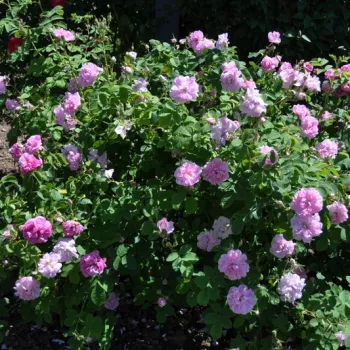
Growth Habit: bushy
Foliage: This variety has dense foliage. The leaves have a matt surface and a mid-green shade.
Prickliness: densely thorned
Self-Cleaning Description: Most of the spent blooms remain on the plant and require manual removal.
Self-Cleaning Intensity: self-cleaning: weak

Flower Morphology

Petal Count: 26-39
Flower Fullness: double-flowered
Flower Shape: flat
Flower Size: M (1,5-2,75 in)
Inflorescence Type: clustered
Colour Code: ARS code: MP RHS code: 58A, 62B
Repeat Flowering: Non-remontant; blooms once.

Colour Data and Phenology

Colour: pink
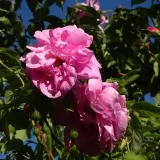
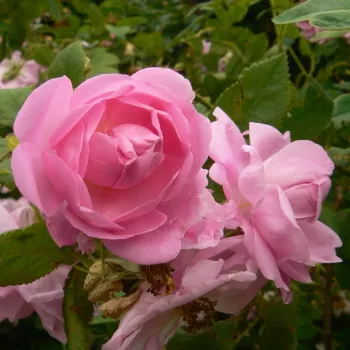
Flower Colour Description: Uniform mid-toned pink with a slightly warm hue.
Closed Bud: Deep pink with a slightly darker tone at the tip of the bud.
Newly Opened Flower: Vibrant mid-pink petals with a delicate silvery sheen.
Full Bloom: Pure mid-pink. The inner petals are paler and the outer petals a slightly deeper shade.
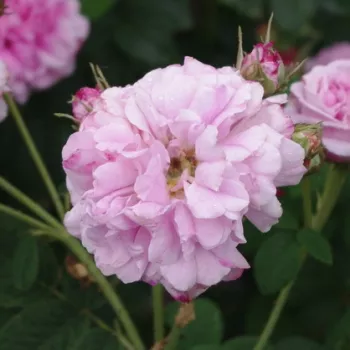
Before Fading: Fading pale pink with creamy pink edges.

Colour Fading Description: As the bloom opens the mid‑pink hue noticeably fades and, before the flower finishes flowering, it becomes a pale pink with creamy edges.

Fragrance and Aroma

Fragrance Strength: very strongly scented, noticeable from a distance rose
Fragrance Character: perfumed, rose-scented
Pollinator Attraction: Its heavily double flower form, which obscures the stamens and limits access to nectar and pollen, makes it considerably less attractive to pollinating insects.
Pollinator-Friendly Rating: Its double flowers attract pollinators only to a limited extent, so it is primarily ornamental and has low pollinator-friendliness.

Hip Characteristics

Hip Shape: ellipsoidal
Hip Colour: orange-red
Hip Comment: Hip formation is expected to be poor due to the double flowers; occasionally 12–20 mm in diameter, ellipsoid, orange‑red hips may appear.

Resistance and Hardiness

Hardiness (°C): -21–-18 °C
Heat and Drought Tolerance Description: Tolerates heat well and copes with moderate drought; requires watering during prolonged dry periods.
Disease Resistance: moderate
  • powdery mildew – moderate
  • black spot – moderate
  • rust – moderate

Horticultural Recommendations

Recommended product path: Premium container, specialty
Release form: Bush-trained + discreet support
Recommended use: Maintenance requirement medium; occasionally requires plant protection.
Primary Uses: flowerbed, park, specimen planting, hedge, scented garden

Comments

Positioning: Selection / specialty
Target customer/channel: Retail/collector
Main value proposition: Fragrance garden and traditional ambiance
KAZANLIK – historic pink Damask rose
Uniform mid-toned pink with a slightly warm hue. - historical, damask rose - very strongly scented, noticeable from a distance rose - perfumed, rose-scented
The rose webshop. - pink - very strongly scented, noticeable from a distance rose - Kazanlik - historical, damask rose - (4.6-6.6ft (140-200 cm))
Inflorescence: clustered Height: 4.6-6.6ft (140-200 cm) Flower shape: flat Winter hardiness: 6b pink - Dr. Georg Dieck (Germany, 1889) historical, damask rose - Flower size: M (1,5-2,75 in) Flower size: M (1,5-2,75 in) - Height: 4.6-6.6ft (140-200 cm) Height: 4.6-6.6ft (140-200 cm) - Flower fullness: double-flowered Kazanlik - Roses in the garden | pharmaROSA® Neonatal - premium gold -

We showcase the external appearance of the roses available for online purchase from our webshop.


Which product type is right for you?


PharmaRosa® NEONATAL is the cost‑effective starting point for rose product production.

As a uniform, own‑rooted propagation material, it provides a stable basis for further growing-on and can be integrated flexibly into different finished product production technologies.
Rooted in trays (rooted), 3–6‑month‑old, own‑rooted rose cutting.
Uniform developmental stage, with a root system that has thoroughly penetrated the plug.
For professional growing‑on.
Tray packaging: 10 pcs/tray.
Quality and varietal identity: production supported by a dedicated identification and traceability logic.
Can be transplanted during frost‑free periods, designed for finished product production.

PharmaRosa® NEONATAL provides a controlled, uniform starting stock for planned growing‑on that can be integrated into your own technology – especially where scheduling and varietal identity are paramount.


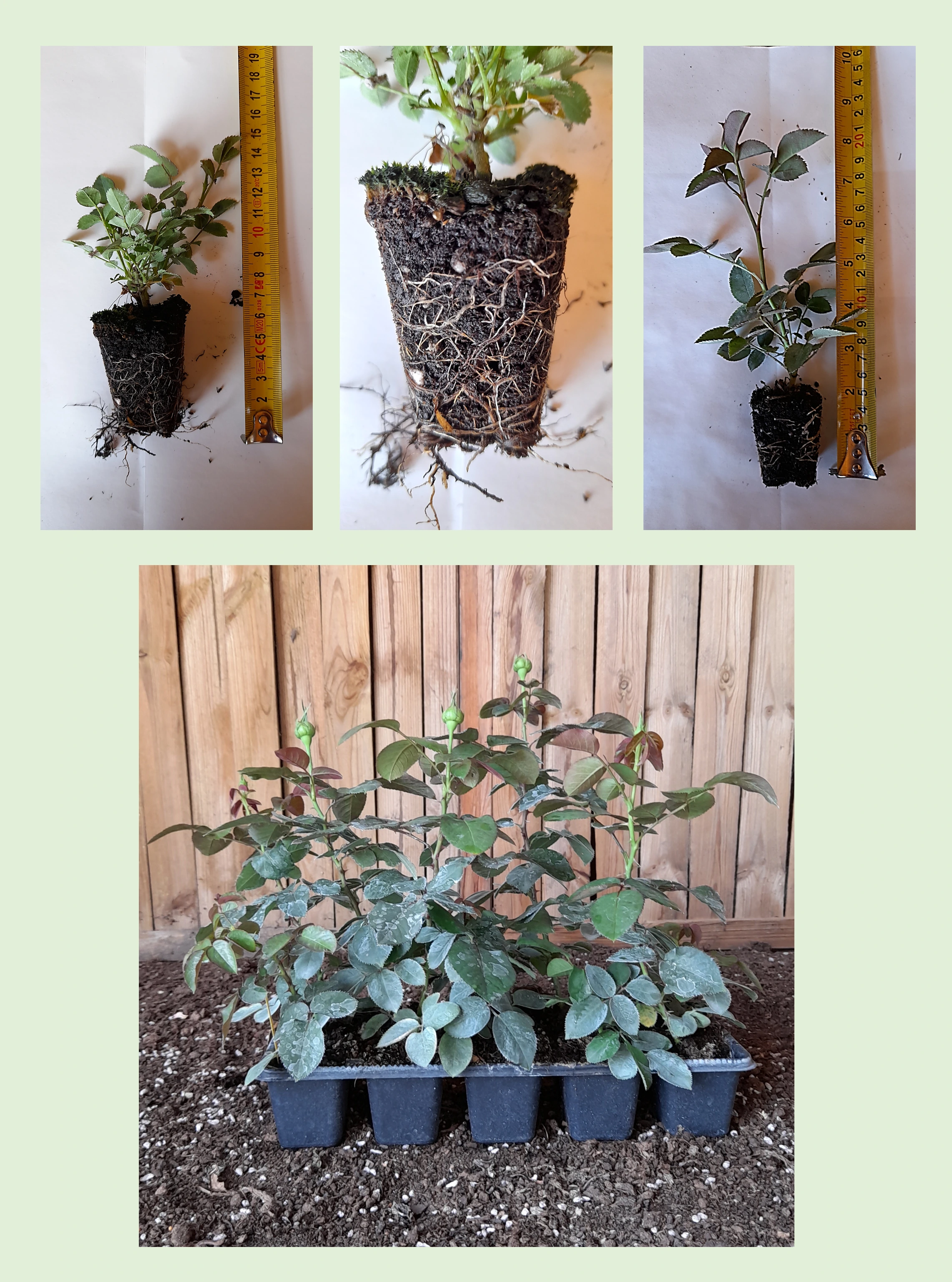
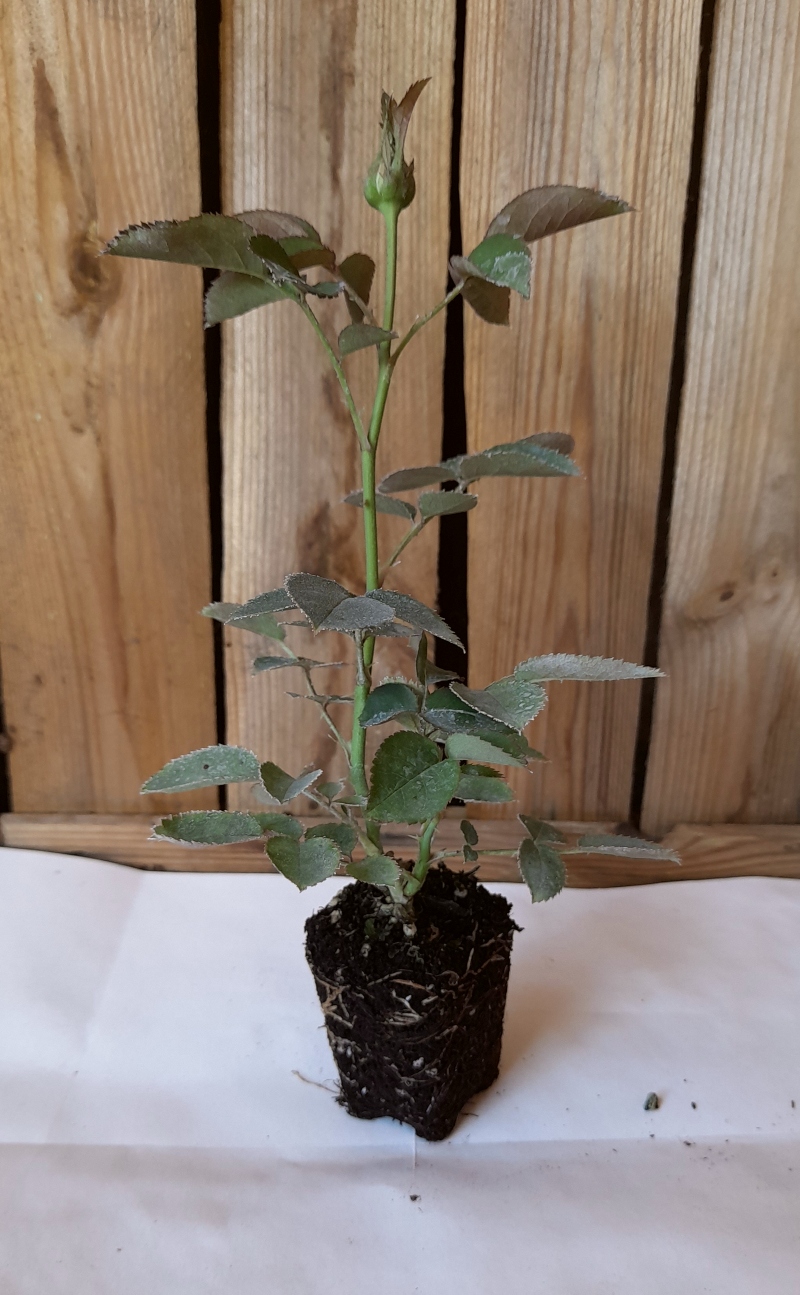
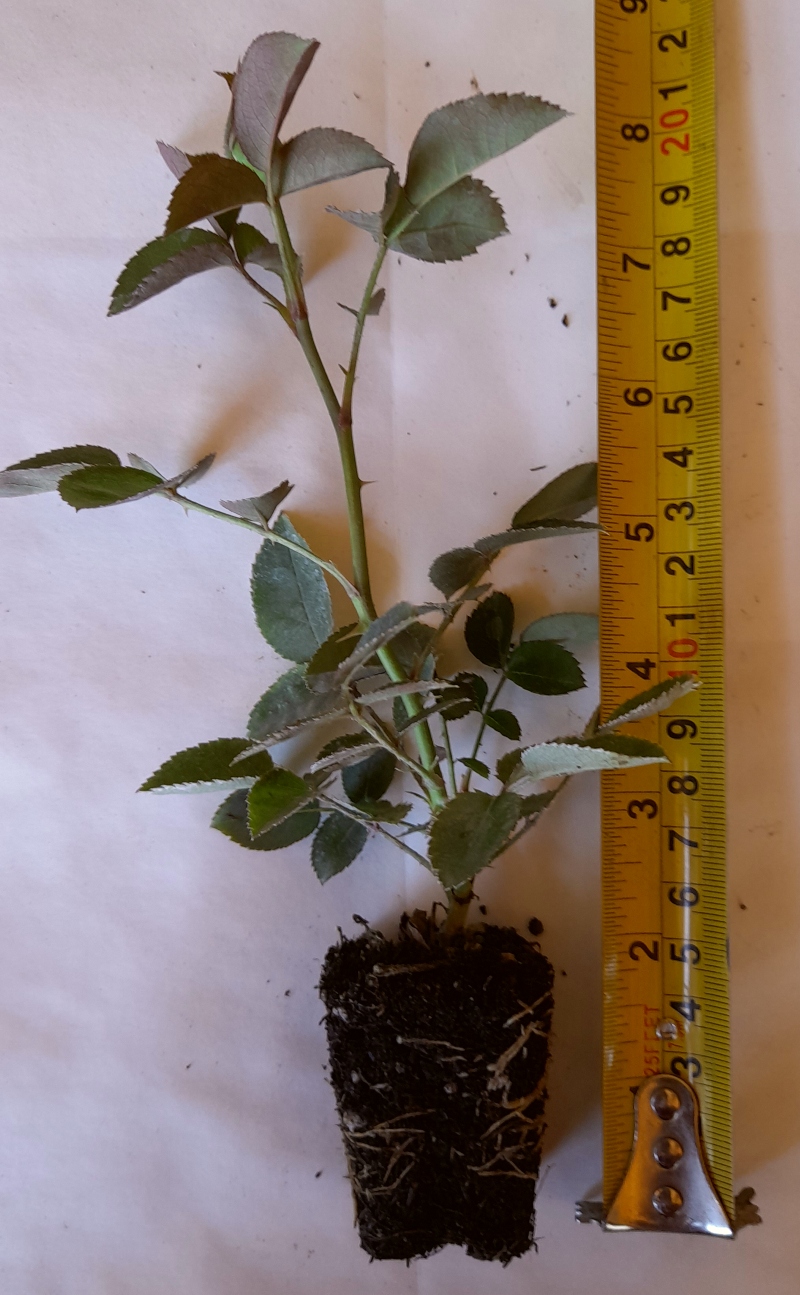
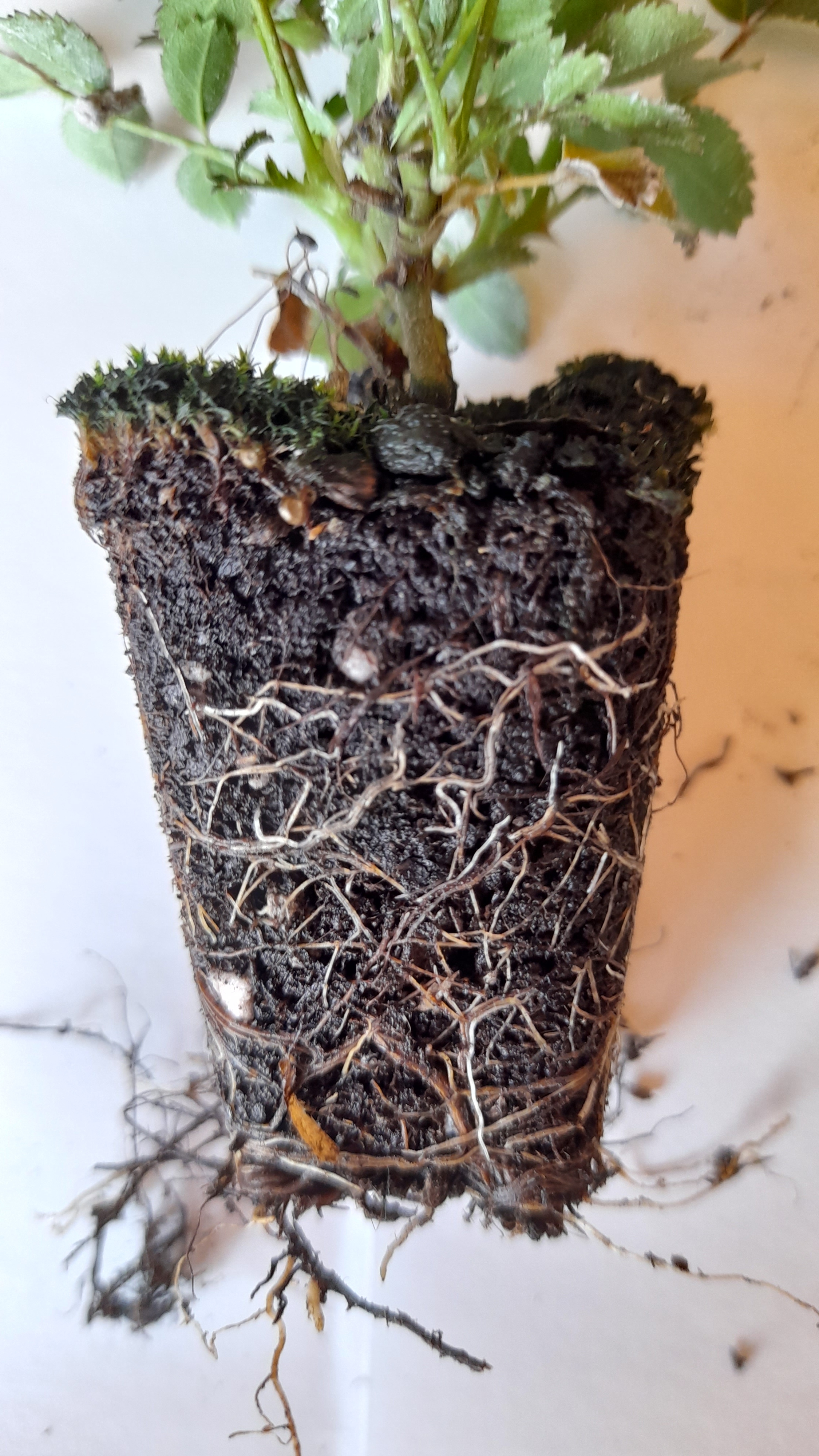
PharmaRosa® NEONATAL own-rooted rose propagation material in a plug, with a root system penetrating the plug (semi-finished product / semi-finished rose). PharmaRosa® NEONATAL rose propagation material size: 3–6‑month‑old, own-rooted cutting with a uniform developmental stage. PharmaRosa® NEONATAL rose propagation material root system: plug densely penetrated by well-developed white roots (root system detail). PharmaRosa® NEONATAL tray stock: own-rooted rose propagation material in trays, uniform developmental stage (10 pcs/tray).

Captions (from left to right): Semi-finished product (NEONATAL own-rooted rose propagation material in a plug with a fully developed root system) • Size demonstration (3–6‑month‑old, uniform cutting) • Root system detail (plug penetrated by the root system) • Tray stock (10 pcs/tray, uniform developmental stage)

pharmarosaneonatal.hupharmarosaneonatal.atpharmarosaneonatal.co.ukpharmarosaneonatal.czpharmarosaneonatal.depharmarosaneonatal.ropharmarosaneonatal.sipharmarosaneonatal.skpharmarosaneonatal.itpharmarosaneonatal.frpharmarosaneonatal.nlpharmarosaneonatal.plpharmarosaneonatal.lupharmarosaneonatal.ptpharmarosaneonatal.espharmarosaneonatal.ltpharmarosaneonatal.sepharmarosaneonatal.lvpharmarosaneonatal.eepharmarosaneonatal.fi

Which product type is right for you?

Pages for private customers
Garden roses for the family garden, with minimal care  → ORIGINAL®
Premium garden roses – instant impact, a truly showpiece garden  → EXTRA®
Pages for professionals and private customers
Roses for public spaces – large areas, sustainable maintenance  → NATURAL®
Roses for projects – hedge and row planting, fast implementation  → RAPID®
For professional partners only
Production – propagation material for garden roses, wholesale  → NEONATAL®

Company details

PharmaRosa Ltd.
Company registration number: 01-09-717479
VAT number: 13075314-2-43
Plant health registration no.: HU130721
Bank account (IBAN):
HU85117631891388688400000000
BIC (SWIFT): OTPVHUHB
Bank name: OTP Bank Nyrt.