Groundcover

20-327-1
20-327-2

Kessi

Ground cover

- – Gebrüder Schultheis; Henry Bennett

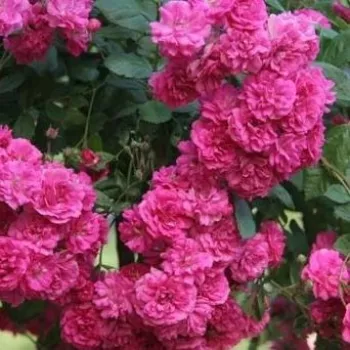
Bright, saturated carmine-pink petals. - groundcover rose - mild, yet noticeable-scented rose - scent description not available

– Bright, saturated carmine-pink double blooms.
– Reliable remontant flowering through the season.
– Upright habit gives fast, even groundcover.
– Medium care needs, suitable for projects.
– Good hardiness to around –25 °C winters.
– Special feature: Historic Schultheis & Bennett rose reintroduced for modern landscape use.
Project (landscape architecture / mass use)
Kessi
pharmaROSA® NEONATAL rooted rose cutting
28,20 £
Due to courier service regulations – and the introduction of customs clearance – delivery to Ireland is temporarily suspended.
3 (3327)
facebook   twitter

KESSI – carmine-pink groundcover rose – Schultheis & Bennett

This vigorous own-root groundcover cultivar offers coverage and fast, uniform establishment for project-scale plantings, with carmine-pink, double, cluster-flowered blooms delivering long-season colour in borders, slopes and urban schemes. Its medium-maintenance profile and moderate self-cleaning make it straightforward to manage in nursery beds and landscape contracts where predictable workload is important. Hardy to H7 with USDA 5b equivalence, it is suitable for exposed mass plantings where reliable winter performance underpins repeat business, for example in public-realm or municipal contexts where reliable nationwide supply must cope with strong winds and low winter temperatures in northern sites. The recommended professional route is project mass planting from 1.5–2 L containers, forming uniform, dense, bush-trained finished stock with consistent height and spread. As pharmaROSA NEONATAL own-root material, it supports long-term renewal and stable stands in thematic rose gardens and landscape collections, with predictable capacity planning from propagation through to wholesale despatch. Planned as a scalable own-root base, it aligns well with nursery networks, integrator systems and public-project contracts that depend on homogeneous blocks and low replacement rates over time, following a natural progression from strong rooting in year one, structural framework in year two and full ornamental effect from year three onwards.


Usage options

Target area Reasoning
Project mass groundcover for public-realm schemes The strong ground-covering habit and fast, uniform canopy are aligned to project mass planting where quick surface closure and dependable carmine-pink display support visual impact. Using NEONATAL material into 1.5–2 L containers allows you to build dense, bush-trained finished plants with predictable spacing, ideal for municipal beds and large corporate campuses. Own-root longevity stabilises stands across maintenance cycles, reducing replanting risk for long-term framework plantings and supporting professional wholesale supply chains. Particularly suitable where winter-hardy schemes must tolerate wind and low temperatures in northern and exposed UK locations for landscape contractor / project-serving wholesaler.
Rose and shrub borders in thematic collections The upright, medium-tall habit with moderately dense, mid-green foliage provides a clear structural element in shrub and rose borders, while double, cupped, cluster-flowered carmine-pink blooms add historical character. NEONATAL rooted cuttings can be lined out or container-grown to 1.5–2 L for uniform, bush-trained units that slot easily into collection designs in thematic rose gardens. Own-root regeneration supports long-term collection maintenance, facilitating renewal pruning and phased replacement without varietal shift, helping curators maintain consistent design lines and cultivar identity for thematic rose garden managers / specialist nurseries.
Slopes, banks and erosion-conscious planting The combination of spread (up to 140 cm) and upright, branching growth makes this cultivar effective for stabilising smaller slopes and banks where visual groundcover and structural stems are both valued. Using the recommended project mass planting route, growers can prepare uniform 1.5–2 L plants that establish quickly and create interlocking canopies, minimising bare soil. Own-root structure provides resilience after hard pruning or weather damage, valuable where access is difficult and replacement is costly, supporting long-term performance in infrastructure and roadside projects for infrastructure landscape contractors / framework suppliers.
Urban green spaces and streetscape planting Medium disease resistance, with specific resistance to powdery mildew and black spot, supports reliable performance under urban stress and intermittent maintenance. The recommended medium maintenance profile and occasional plant protection fit typical UK municipal and commercial maintenance regimes, where high-input care is often unrealistic. Producing a uniform, dense, bush-trained finished product in 1.5–2 L pots enables efficient planting in traffic islands, verges and car parks, while own-root durability supports long service life under pruning and incidental damage for municipal green-space providers / commercial estate managers.
Container terraces and forecourt display blocks The compact flower size with abundant, remontant clusters gives a continuous carmine-pink effect that reads well at short viewing distance in container groupings. Growers can offer uniform, bush-trained 1.5–2 L containers as a project-ready element, or line on to larger, 40–50 L containers for more imposing terrace and forecourt units in commercial settings. Own-root plants handle repeated pruning and repositioning without graft-related variability, supporting consistent appearance across batches and seasons for cash-and-carry wholesalers / commercial terrace specifiers.
Edging for paths and planted boundaries The height range of 100–160 cm, combined with good spread and upright habit, creates a defined edging line while still reading as groundcover, suitable for paths, car-park boundaries and perimeter beds. NEONATAL plants grown on to 1.5–2 L can be block-produced for predictable edging modules, simplifying layout calculations for landscape architects. Own-root stability promotes uniform regrowth after edging cuts, maintaining a consistent profile and reducing the need for selective replacements that can disrupt design rhythm for landscape architects / design-and-build contractors.
Collection and maintenance plantings in rose gardens The historic background and clear cultivar identity make this variety relevant where documented rose collections and gene-bank style stands are required. Using NEONATAL own-root material ensures genetic fidelity and long-term stand stability, while the uniform, dense, bush-trained finish matches the disciplined presentation expected in show and thematic gardens. Remontant flowering with mild fragrance adds interpretive value without complicating maintenance, as the medium self-cleaning behaviour only requires occasional attention in programmed tasks for heritage garden managers / collection-focused nurseries.
Contract growing for integrator and network supply The combination of hardy, remontant, ground-covering performance and medium maintenance suits standardised assortments for integrator systems and nursery networks focused on project mass planting. NEONATAL production allows predictable rooting windows, scalable numbers and uniform 1.5–2 L output, supporting capacity planning for calendar-based tenders. Own-root technology underpins homogeneous blocks and low replacement rates across multi-year framework agreements, strengthening professional credibility in public-realm and institutional supply chains for integrator networks / framework-contract growers.

Finished-product ideas

  • Municipal Groundcover Block 2L – Uniform, dense, bush-trained 1.5–2 L plants for project mass planting, using the cultivar’s fast coverage and hardiness to service municipal beds and verges – landscape contractor / project-serving wholesaler
  • Rose Border Structural Line – Upright, branching plants in 2 L pots positioned as repeating border elements in thematic rose gardens, combining structural height with remontant carmine-pink clusters – specialist rose nurseries / garden estates
  • Slope Stabiliser 40L – Own-root specimens grown on into 40–50 L containers for immediate impact on banks and embankments, leveraging spreading habit and regeneration capacity – infrastructure and highway landscape contractors
  • Urban Terrace Rose 2L – Medium-maintenance, mildew- and black-spot-resistant plants in 2 L containers for commercial terraces and urban forecourts, providing continuous colour on a manageable care regime – commercial property landscapers / facility managers
  • Collection Line NEONATAL – NEONATAL tray-rooted own-root material earmarked for cultivar collections and show gardens, focusing on genetic authenticity, long-term stand stability and documented historical relevance – heritage gardens / collection curators

Technical cultivar profile
Parameter Data
Name and registration Current trade name Kessi – carmine-pink groundcover rose – Schultheis & Bennett; commercial type groundcover rose within the Ground cover group; exhibition shrub rose and exhibition historical shrub rose.
Origin and breeding Raised by Gebrüder Schultheis in Germany and Henry Bennett in the United Kingdom, with introductions in 1882 and 1999 via Henry Bennett & Co. and Rosenhof Schultheis; detailed parentage is unknown.
Awards and recognition No confirmed competition, collector or lifetime awards are documented for this cultivar; its positioning is based on practical groundcover performance and professional project suitability rather than show results.
Growth and structural characteristics Upright habit forming moderately dense foliage on mid-green, slightly glossy leaves; height around 100–160 cm with 80–140 cm spread, moderately prickly stems and medium self-cleaning, some spent blooms needing removal.
Flower morphology Double, cupped flowers with approximately 26–39 petals carried in large clusters; small flower size of about 0.5–1.5 inches, with strong remontant behaviour and a second flush that is also notably abundant.
Colour data and phenology Bright carmine-pink blooms, RHS 57C outer and 57A inner petals; dark carmine-pink buds open saturated, then lighten gradually to pale pink before fading, providing a moderated but persistent colour display over time.
Fragrance and aroma Fragrance strength is mild yet noticeable, though no detailed scent character description is currently available; primarily selected and positioned as an ornamental groundcover and project rose rather than a fragrance variety.
Hip characteristics Occasionally forms vivid red, spherical hips around 12–18 mm in diameter, RHS 43A, which can add small-scale seasonal interest without dominating the overall groundcover and flowering effect in planted schemes.
Resistance and winter hardiness Medium overall disease resistance with good resistance to powdery mildew and black spot, medium rust response; winter hardy to approximately −26 to −23 °C, RHS H7, corresponding to Swedish zone 4 and USDA zone 5b.
Horticultural recommendations Recommended for groundcover, borders, edging, slopes, containers, terraces and urban green spaces; medium maintenance with occasional plant protection; best routed to project mass planting as uniform, dense, bush-trained finished stock.

KESSI – carmine-pink groundcover rose – Schultheis & Bennett combines fast, uniform coverage, hardy remontant performance and own-root longevity for predictable, low-replacement stands; please contact us to coordinate volumes and production timing for your programmes.


Detailed product attributes

Product Identification Data

Product Name: KESSI – carmine-pink groundcover rose - Schultheis & Bennett
Product Type: pharmaROSA® NEONATAL - rooted rose cutting
Cultivar Authenticity: Verified:08.09.2025
Cultivar Quality Rating: premium bronze
Item Number: [997] 20-327 (14.02.2026) pharmarosaneonatal.co.uk

Name and Registration

Meaning of Cultivar Name: Kessi: unknown; Heinrich Schultheis: The name was given in honour of the German rose breeder Heinrich Schultheis.
Current Trade Name: Kessi Ground cover Schultheis & Bennett
Rose Group: Ground cover
Commercial Type: groundcover rose
Commercial Group: Ground cover
Exhibition Category: shrub rose; exhibition historical shrub rose
Collection: Ground cover

Origin and Breeding

Initial Distributor: Rosenhof Schultheis (Germany, 1999); Henry Bennett & Co. (United Kingdom, 1882)
Introduction Year: 1999; 1882
Registration Year: Data not available
Breeder: Gebrüder Schultheis; Henry Bennett
Breeding Company / Institution: Gebrüder Schultheis, Steinfurth (Germany); Shepperton Manor Nursery, Wiltshire (United Kingdom)
Breeding Year: Germany, 1999
Parentage: unknown; unknown

Growth and Structural Characteristics

Height: 3.3-5.2ft (100-160 cm)
Spread: 2.6-4.6ft (80-140 cm)
Growth Habit: upright
Foliage: The variety has moderately dense foliage. The leaves have a slightly glossy surface and a mid-green shade (approximately RHS 137A).
Prickliness: moderately prickly
Self-Cleaning Description: Some spent blooms remain on the plant and may require subsequent cleaning.
Self-Cleaning Intensity: self-cleaning: medium

Flower Morphology

Petal Count: 26-39
Flower Fullness: double flowered
Flower Shape: cupped
Flower Size: S (0,5-1,5 in)
Inflorescence Type: cluster-flowered, large-sized
Colour Code: ARS code: mr RHS code: 57C (outer), 57A (inner)
Repeat Flowering: Remontant; the second flowering is also plentiful.

Colour Data and Phenology

Colour: carmine-pink
Flower Colour Description: Bright, saturated carmine-pink petals.
Closed Bud: Dark carmine‑pink bud, with an even deeper shade at the tip.
Newly Opened Flower: Pure carmine pink, with paler shading on the outer petal edges.

Full Bloom: Uniform carmine-pink, with a slightly darker tone on the inner petals.
Before Fading: Carmine pink gradually lightens, shifting to a pale pink.
Colour Fading Description: Uniform carmine-pink when opening, then gradually lightening; before fading it turns to a pale pink.

Fragrance and Aroma

Fragrance Strength: mild, yet noticeable-scented rose
Fragrance Character: scent description not available
Pollinator Attraction: Its very double flower form (40+ petals) limits its attractiveness to pollinators because the dense petals reduce stamen accessibility.
Pollinator-Friendly Rating: Its double flowers mostly conceal the stamens, so its pollinator-friendliness is limited; mainly an ornamental cultivar.

Hip Characteristics

Hip Shape: spherical
Hip Colour: bright red (RHS 43A)
Hip Comment: Occasionally produced, 12–18 mm in diameter, spherical, vivid red (RHS 43A) rose hip.

Resistance and Hardiness

Hardiness (°C): -26–-23 °C
Heat and Drought Tolerance Description: Tolerates heat well; requires irrigation during prolonged drought.
Disease Resistance: medium
  • powdery mildew – resistant
  • black spot – resistant
  • rust – medium

Horticultural Recommendations

Recommended product path: Project mass planting
Release form: Uniform, dense, bush-trained finished product
Recommended use: Maintenance requirement medium; occasional plant protection required.
Primary Uses: groundcover, border, edging, slope, container, terrace, urban green space

Comments

Positioning: Project (landscape architecture / mass use)
Target customer/channel: Landscape contractor, project-serving wholesaler / maintenance
Main value proposition: Fast coverage – uniformity
KESSI – carmine-pink groundcover rose - Schultheis & Bennett
Bright, saturated carmine-pink petals. - groundcover rose - mild, yet noticeable-scented rose - scent description not available
Online rose order - carmine-pink - mild, yet noticeable-scented rose - Kessi - groundcover rose - (3.3-5.2ft (100-160 cm))
Inflorescence: cluster-flowered, large-sized Height: 3.3-5.2ft (100-160 cm) Flower shape: cupped Winter hardiness: 7b carmine-pink - Rosenhof Schultheis (Germany, 1999); Henry Bennett & Co. (United Kingdom, 1882) groundcover rose - Flower size: S (0,5-1,5 in) Flower size: S (0,5-1,5 in) - Height: 3.3-5.2ft (100-160 cm) Height: 3.3-5.2ft (100-160 cm) - Flower fullness: double flowered Kessi - Roses in the garden | pharmaROSA® Neonatal - premium bronze Gebrüder Schultheis; Henry Bennett

We showcase the external appearance of the roses available for online purchase from our webshop.


Which product type is right for you?


PharmaRosa® NEONATAL is the cost‑effective starting point for rose product production.

As a uniform, own‑rooted propagation material, it provides a stable basis for further growing-on and can be integrated flexibly into different finished product production technologies.
Rooted in trays (rooted), 3–6‑month‑old, own‑rooted rose cutting.
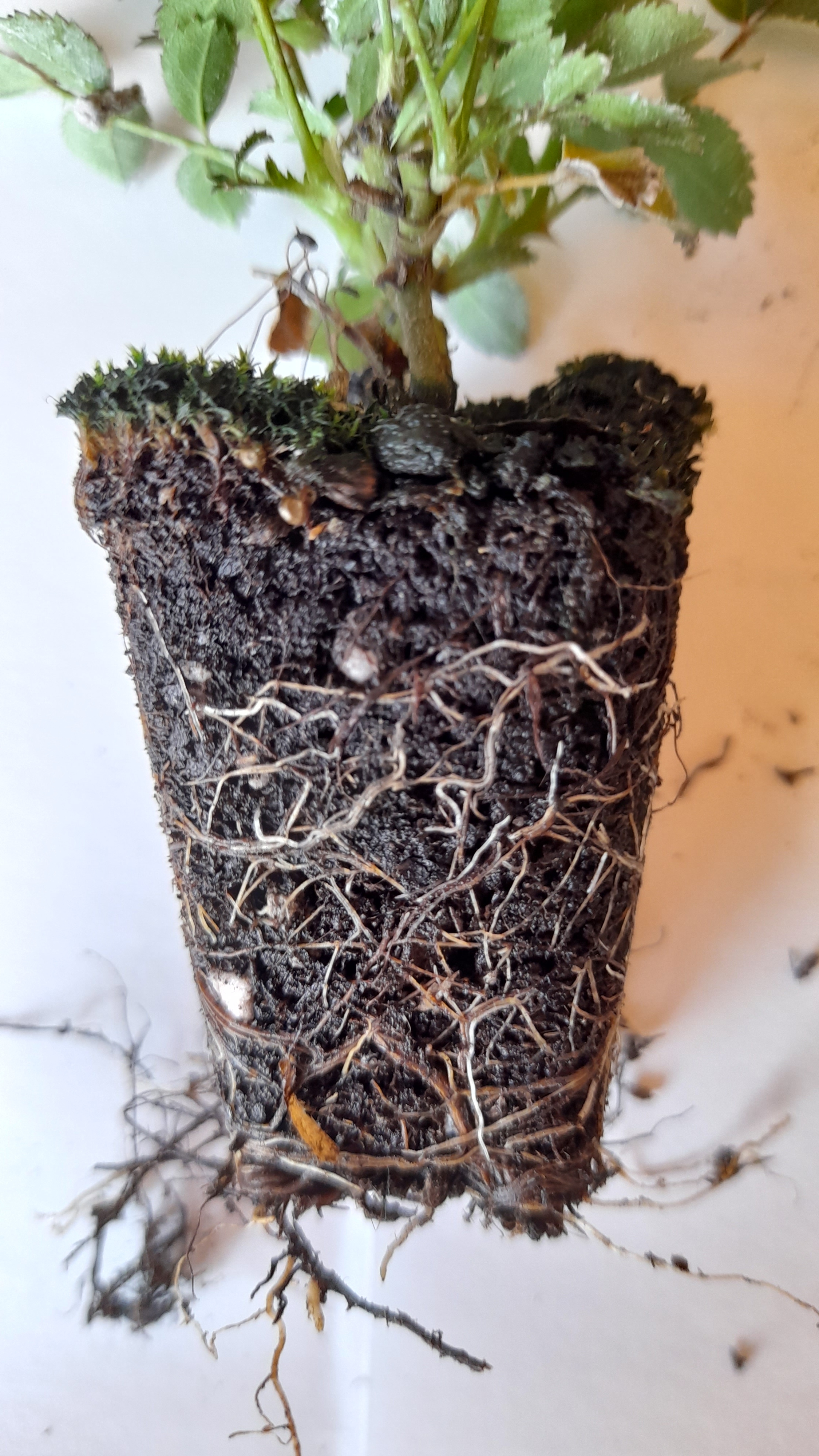
Uniform developmental stage, with a root system that has thoroughly penetrated the plug.
For professional growing‑on.
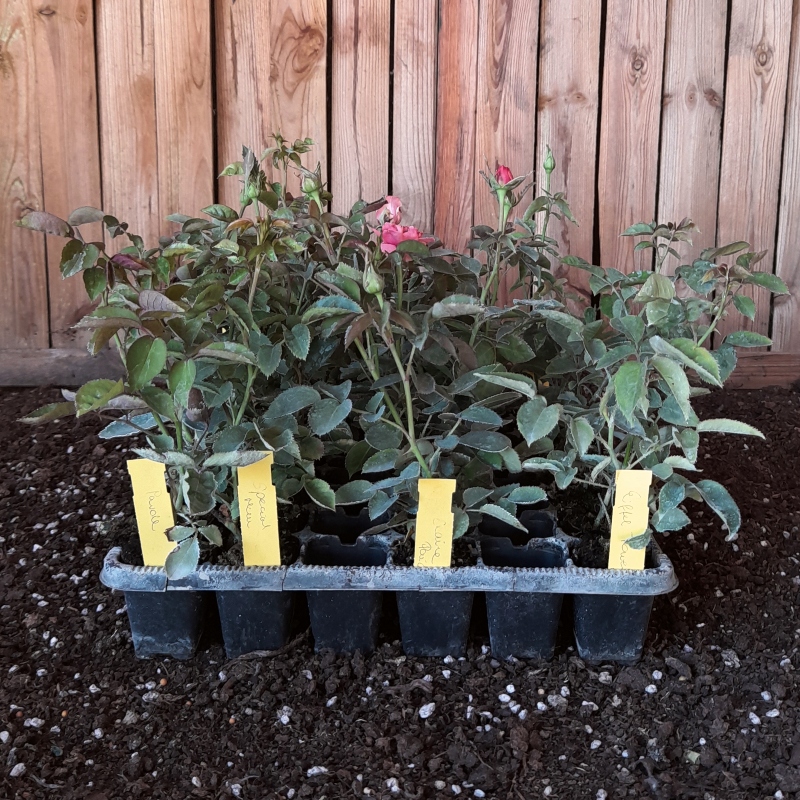
Tray packaging: 10 pcs/tray.
Quality and varietal identity: production supported by a dedicated identification and traceability logic.
Can be transplanted during frost‑free periods, designed for finished product production.

PharmaRosa® NEONATAL provides a controlled, uniform starting stock for planned growing‑on that can be integrated into your own technology – especially where scheduling and varietal identity are paramount.


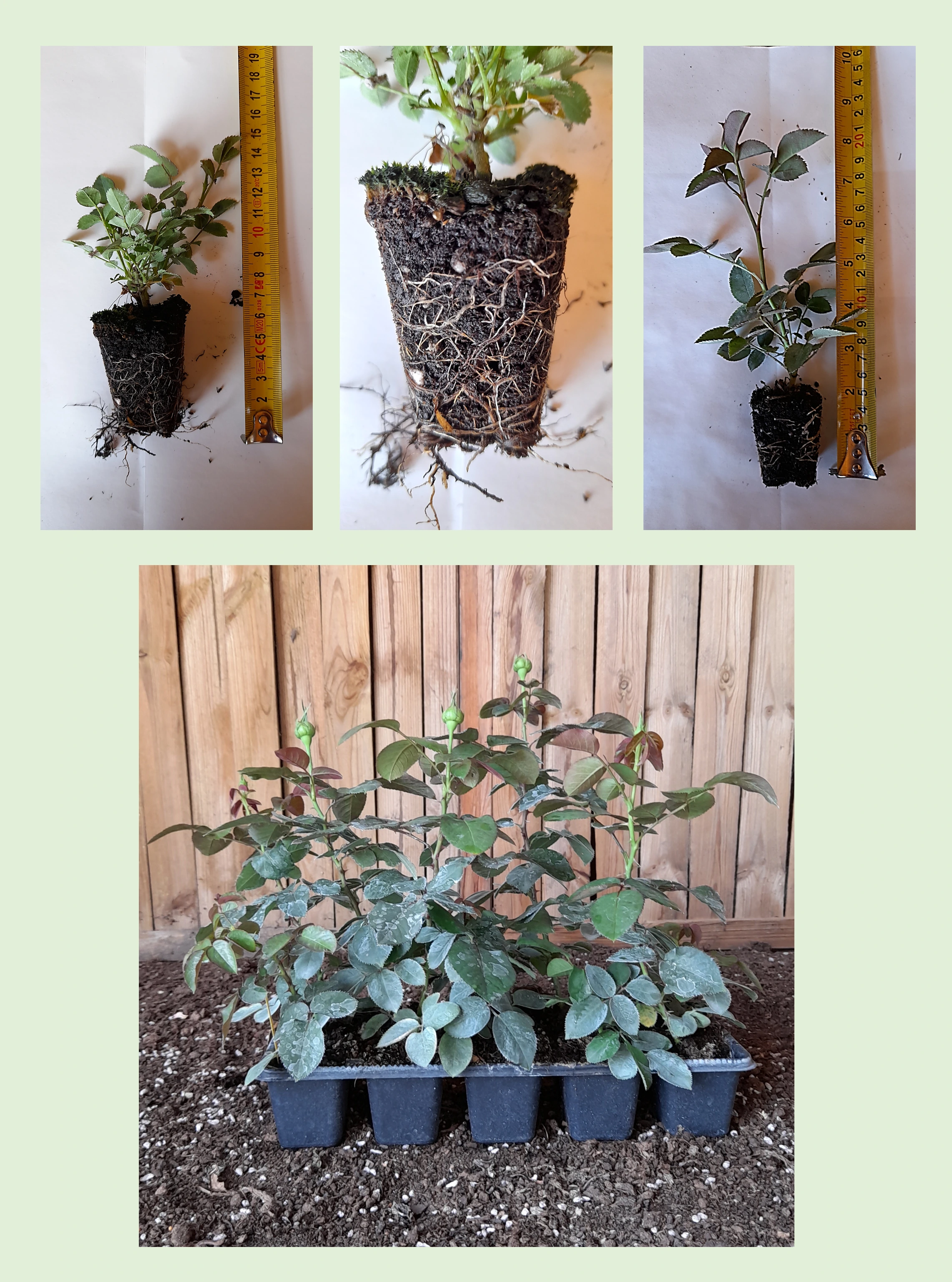
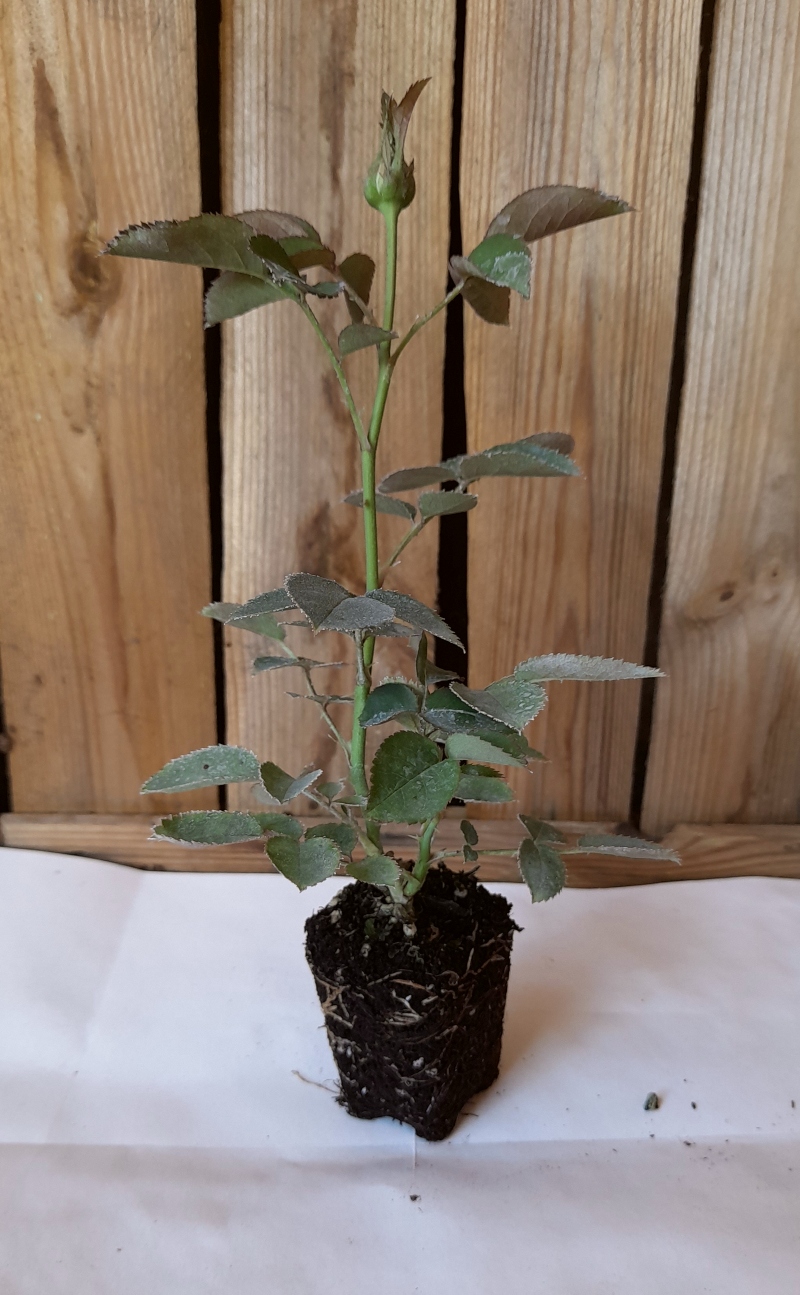
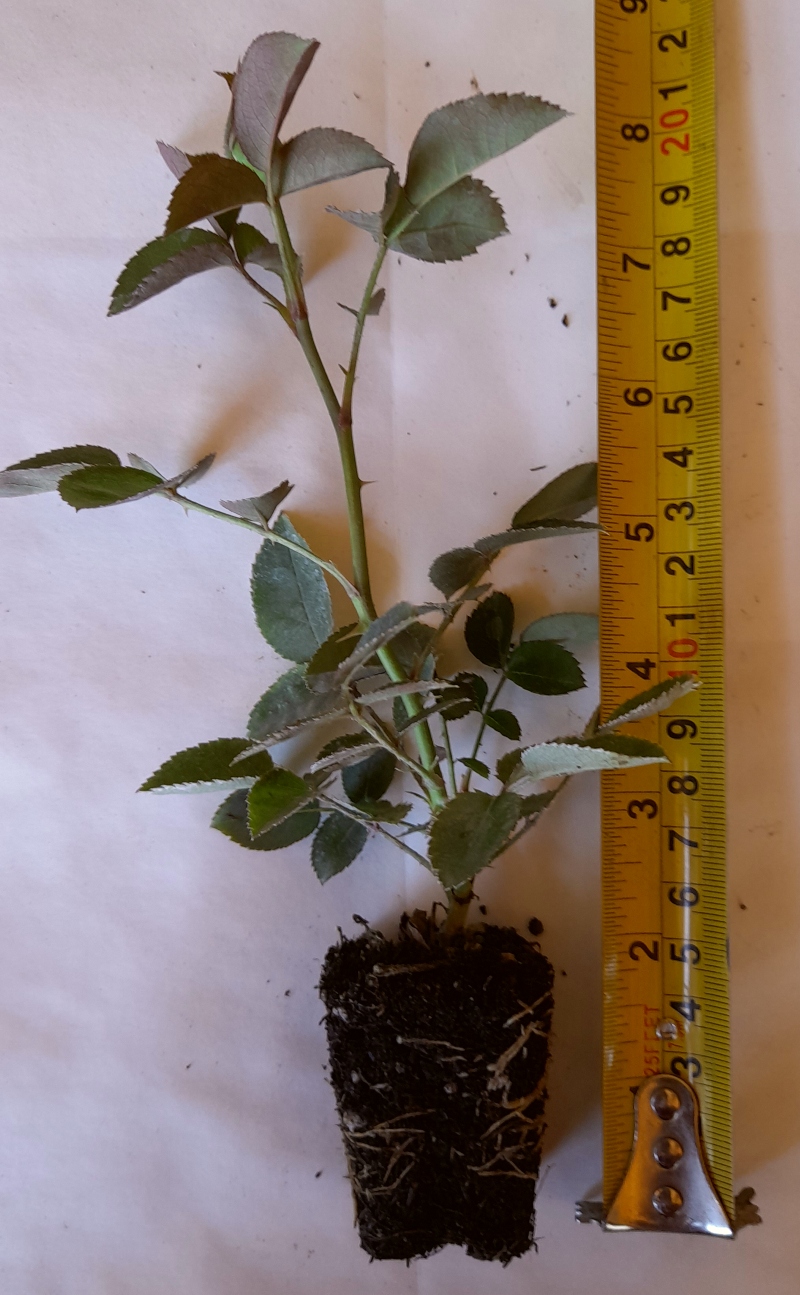
PharmaRosa® NEONATAL own-rooted rose propagation material in a plug, with a root system penetrating the plug (semi-finished product / semi-finished rose). PharmaRosa® NEONATAL rose propagation material size: 3–6‑month‑old, own-rooted cutting with a uniform developmental stage. PharmaRosa® NEONATAL rose propagation material root system: plug densely penetrated by well-developed white roots (root system detail). PharmaRosa® NEONATAL tray stock: own-rooted rose propagation material in trays, uniform developmental stage (10 pcs/tray).

Captions (from left to right): Semi-finished product (NEONATAL own-rooted rose propagation material in a plug with a fully developed root system) • Size demonstration (3–6‑month‑old, uniform cutting) • Root system detail (plug penetrated by the root system) • Tray stock (10 pcs/tray, uniform developmental stage)

pharmarosaneonatal.hupharmarosaneonatal.atpharmarosaneonatal.co.ukpharmarosaneonatal.czpharmarosaneonatal.depharmarosaneonatal.ropharmarosaneonatal.sipharmarosaneonatal.skpharmarosaneonatal.itpharmarosaneonatal.frpharmarosaneonatal.nlpharmarosaneonatal.plpharmarosaneonatal.lupharmarosaneonatal.ptpharmarosaneonatal.espharmarosaneonatal.ltpharmarosaneonatal.sepharmarosaneonatal.lvpharmarosaneonatal.eepharmarosaneonatal.fi

Which product type is right for you?

Pages for private customers
Garden roses for the family garden, with minimal care  → ORIGINAL®
Premium garden roses – instant impact, a truly showpiece garden  → EXTRA®
Pages for professionals and private customers
Roses for public spaces – large areas, sustainable maintenance  → NATURAL®
Roses for projects – hedge and row planting, fast implementation  → RAPID®
For professional partners only
Production – propagation material for garden roses, wholesale  → NEONATAL®

Company details

PharmaRosa Ltd.
Company registration number: 01-09-717479
VAT number: 13075314-2-43
Plant health registration no.: HU130721
Bank account (IBAN):
HU85117631891388688400000000
BIC (SWIFT): OTPVHUHB
Bank name: OTP Bank Nyrt.