Bedding rose

21-389-1
21-389-2

Léonie Lamesch

Bedding rose

- – Peter Lambert

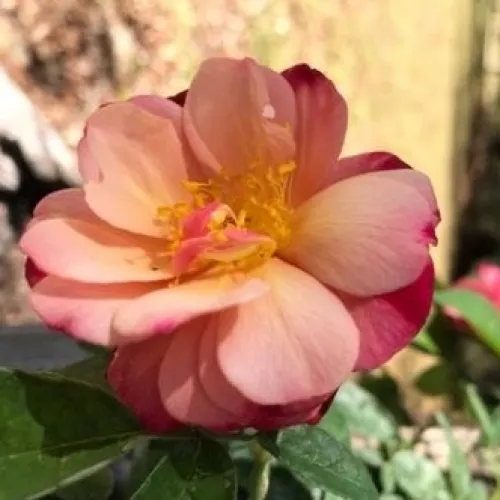
Light copper‑orange base colour with a golden‑yellow centre and a fine carmine‑red edge, which slowly fades to a pale creamy tone. - polyantha bedding rose - medium-strength, noticeably fragrant rose - pleasantly spicy, fruity aroma

– Vibrant orange-yellow blooms with red edges
– Abundant repeat flowering in generous clusters
– Compact, bushy habit for beds and borders
– Moderately hardy to -21 °C for UK gardens
– Medium disease tolerance for easier upkeep
Special feature: Historic 1899 Lambert polyantha, ideal for mass planting projects.
Project (landscape architecture / mass use)
Léonie Lamesch
pharmaROSA® NEONATAL rooted rose cutting
29,63 £
Due to courier service regulations – and the introduction of customs clearance – delivery to Ireland is temporarily suspended.
4.5 (6739)
facebook   twitter

Léonie Lamesch – pharmaROSA® NEONATAL rooted cutting

Professional growers looking to build reliable mass‑planting lines will find Léonie Lamesch a stable own‑root option for project‑driven bedding and border programmes where uniform, bush‑trained plants are essential. This historic polyantha shrub combines remontant flowering with compact, bushy structure, supporting a dense, tray‑to‑bench workflow into 1.5–2 L containers and onwards to uniform, dense, bush‑trained finished products for project mass planting. The semi‑double, small, clustered blooms deliver a distinctive orange‑yellow bicolour effect with a fine carmine edge, supported by mid‑green, slightly glossy foliage and moderate self‑cleaning to keep blocks visually tidy between maintenance visits. Own‑root NEONATAL material offers predictable renewal and stand longevity under repeated trimming and production stress, with development typically moving from root build‑up in year one, stronger framework in year two and full ornamental show from year three onwards. With moderate disease and winter tolerance aligned to UK nursery practice, it suits large‑scale propagation for landscape contractors and project‑serving wholesalers where dependable coverage and uniformity are required for public and park bedding schemes in conditions that handle regular wind and winter exposure in northern and higher sites.


Usage options

Target area Reasoning
Project mass planting beds The compact, bushy habit with 80–120 cm height and 100–140 cm spread supports quick visual coverage in project mass planting routes. Propagation from uniform NEONATAL cuttings into 1.5–2 L pots yields coherent, bench‑even batches for bed and border schemes where “fast coverage – uniformity” is the core promise. This suits tendering to project‑serving wholesalers and landscape contractor supply where reliable bedding stands are required for public park contracts and curated rose garden beds for project-serving wholesalers.
Border and park framework planting The shrub–polyantha character, upright bush habit and moderately dense mid‑green foliage allow Léonie Lamesch to function as a consistent low framework in borders and park edges. Grow‑on producers can work with a uniform, dense, bush‑trained finished product form, launching from 1.5–2 L containers and scaling into park modules or, where required, final 40–50 litre park containers. The moderate maintenance need and verified cultivar identity fit long‑term park and institutional schemes aimed at landscape contractors and maintenance-focused wholesalers.
Colour‑themed bedding programmes The copper‑orange to creamy yellow bicolour, with carmine‑red margins, gives distinctive yet harmonious colour blocks for thematic rose gardens and curated collections. Remontant, abundant second flowering extends colour presence for bedding programmes, supporting the “fast coverage – uniformity” value proposition. NEONATAL own‑root propagation into 1.5–2 L pots provides consistent colour effect per batch in seasonal project windows, helpful for suppliers structuring colour‑coded ranges for landscape contractors.
Container production for project logistics The moderate vigour, compact height and bushy structure perform well in 1.5–2 L containers produced as uniform, dense, bush‑trained units, while also scaling into 40–50 litre containers for park and estate applications. Own‑root propagation offers stable re‑shooting after transport or holding periods, important for project scheduling. This supports the positioning towards project mass planting for public‑realm schemes, aligning with UK nursery distribution where nationwide movement and island routes are routine for integrator-type suppliers.
Thematic and historic rose collections With its 1899 German origin and Lambert breeding background, Léonie Lamesch fits themed and historic rose collections in dedicated rose gardens. NEONATAL own‑root material supports cultivar maintenance and collection blocks where identity and long‑term renewal capacity are important. Moderate hardiness to around –21 °C and H7 rating allow use in exposed collection beds, while the polyantha bedding profile still honours “fast coverage – uniformity” for visitors and curators working through specialist collection wholesalers and rose-focused nurseries.
Polyantha shrub rose ranges As a polyantha bedding shrub with semi‑double, cluster‑flowered small blooms, this cultivar helps complete professional polyantha segments. Its moderate maintenance requirement and medium self‑cleaning make it predictable for large nursery runs, balancing labour and quality in production. Routing NEONATAL cuttings into 1.5–2 L project‑ready units gives a clear SKU for bed, border and park buyers, supporting wholesalers who market structured polyantha sub‑ranges to landscape contractors.
Mixed rose and perennial schemes The medium disease tolerance, moderate heat tolerance and H7 hardiness make Léonie Lamesch a workable element in mixed perennial and rose schemes, particularly in northern and more exposed UK sites where winter and wind load must be considered. Own‑root plants in 1.5–2 L containers adapt well to staggered planting schedules in complex designs. This supports project‑oriented offers to public‑realm clients, reinforcing the “fast coverage – uniformity” message for project-serving wholesalers.
Low‑maintenance visual coverage in public areas Medium self‑cleaning and remontant flowering give repeated colour without intensive deadheading, useful in public beds managed on standard maintenance cycles. NEONATAL own‑root production provides stands that regenerate reliably after pruning or incidental damage, supporting predictable replacement rates and capacity planning. Uniform, dense, bush‑trained plants produced in 1.5–2 L pots meet public‑realm tender needs for consistent, fast‑cover planting modules marketed via project and maintenance‑oriented landscape suppliers.

Finished-product ideas

  • Project bedding 2 L line – Uniform, dense, bush‑trained Léonie Lamesch in 1.5–2 L containers for project mass planting, exploiting its bushy habit and fast coverage to serve park bed contracts – target audience/channel: landscape contractors via project-serving wholesalers
  • Historic polyantha collection pot – NEONATAL own‑root material grown into compact 2 L shrubs as part of a curated historic polyantha range, using its 1899 Lambert origin and small, cluster‑flowered blooms – target audience/channel: specialist nurseries and collection-focused wholesalers
  • Park edge 40 L module – Larger 40–50 litre containerised shrubs for park borders and path edges, leveraging the upright bush habit, remontant flowering and moderate hardiness for robust, long‑term installations – target audience/channel: public-realm and municipal project suppliers
  • Colour‑themed bed mix – 1.5–2 L plants batched by flower colour effect, using the copper‑orange to creamy yellow bicolour and remontant habit to anchor orange‑yellow project schemes – target audience/channel: design-led landscape firms and public garden projects
  • Polyantha shrub range block – Standardised NEONATAL‑based production of Léonie Lamesch as a key SKU in a broader polyantha shrub assortment, built on its compact structure and moderate maintenance requirement – target audience/channel: integrator wholesalers serving regional nursery networks

Technical cultivar profile
Parameter Data
Name and registration Current trade name Léonie Lamesch, commercial polyantha bedding rose in the bed rose group; exhibition category shrub rose; unregistered variety with American Rose Society exhibition name Léonie Lamesch.
Origin and breeding Bred by Peter Lambert, Lambert & Söhne, Germany, from ‘Aglaia’ × (‘Mignonette’ × ‘Shirley Hibberd’); introduced and first distributed by Lambert & Söhne in 1899 as a historic shrub polyantha rose.
Awards and recognition not provided
Growth and structural characteristics Bushy, upright shrub with height around 80–120 cm and spread 100–140 cm; moderately dense, mid‑green, slightly glossy foliage (RHS 137A); sparsely thorned shoots for easier handling in nursery and landscape use.
Flower morphology Semi‑double, cup‑shaped blooms with 13–25 petals and small 0.5–1.5 inch diameter; cluster‑flowered inflorescences; remontant with abundant second flush; medium self‑cleaning, some spent blooms retained on the plant.
Colour data and phenology Light copper‑orange base with golden‑yellow centre and fine carmine‑red edges; opens copper‑orange, then fades to creamy yellow with a purplish‑red veil; ARS code ob, RHS 24B outer and 14B inner petal zones described.
Fragrance and aroma Pleasant spicy, fruity fragrance of medium strength, clearly noticeable in flower beds; semi‑double flowers offer limited but present pollinator interest, with partially obscured stamens reducing but not eliminating attraction.
Hip characteristics Rose‑hip set is generally sparse; when present, small spherical orange‑red hips around 5–8 mm diameter develop, adding minor autumn interest without significantly affecting ornamental bedding performance.
Resistance and winter hardiness Moderate overall disease tolerance, with powdery mildew, black spot and rust rated moderate; winter hardy to approximately –21 to –18 °C, RHS H7, corresponding to USDA zone 6b and Swedish zone 3 in temperate climates.
Horticultural recommendations Suited to beds, borders, parks and containers; medium maintenance, occasional pest and disease control advised; recommended as uniform dense bush‑trained finished product for project mass planting, typically in 1.5–2 L production pots.

Léonie Lamesch as pharmaROSA® NEONATAL own-root material combines compact bushy structure, remontant cluster flowering and moderate hardiness into predictable, regenerative, long-lived stands; we invite you to discuss capacity planning and scheduling options.

Detailed product attributes

Product Identification Data

Product Name: LÉONIE LAMESCH – orange-yellow flower-bed polyantha rose - Lambert
Product Type: pharmaROSA® NEONATAL - rooted rose cutting
Cultivar Authenticity: Verified:11.09.2025
Cultivar Quality Rating: premium silver
Item Number: [1382] 21-389 (14.02.2026) pharmarosaneonatal.co.uk

Name and Registration

Meaning of Cultivar Name: The name is a female given name.
Original Trade Name: Léonie Lamesch
Current Trade Name: Léonie Lamesch Bedding rose Lambert
Rose Group: Shrub, Polyantha
Commercial Type: polyantha bedding rose
Commercial Group: Bed rose
Exhibition Category: shrub rose
Collection: Bedding rose

Origin and Breeding

Initial Distributor: Lambert & Söhne (Germany)
Registration Year: unregistered variety
Breeder: Peter Lambert
Breeding Company / Institution: Lambert & Söhne (Trier)
Breeding Year: Germany, 1899
Parentage: ‘Aglaia’ × (‘Mignonette’ × ‘Shirley Hibberd’)

Growth and Structural Characteristics

Height: 2.6-3.9ft (80-120 cm)
Spread: 3.3-4.6ft (100-140 cm)
Growth Habit: bushy, upright
Foliage: The variety's foliage is moderately dense, with leaves that have a slightly glossy surface and a mid-green shade (RHS 137A).
Prickliness: sparsely thorned
Self-Cleaning Description: Some of the spent flowers fall off naturally, while others remain on the plant.
Self-Cleaning Intensity: Self-cleaning: medium.

Flower Morphology

Petal Count: 13-25
Flower Fullness: semi-double
Flower Shape: cup-shaped
Flower Size: S (0,5-1,5 in)
Inflorescence Type: cluster-flowered
Colour Code: ARS code: ob RHS code: 24B (outer), 14B (inner)
Repeat Flowering: Remontant, its second flowering is also abundant.

Colour Data and Phenology

Colour: orange-yellow
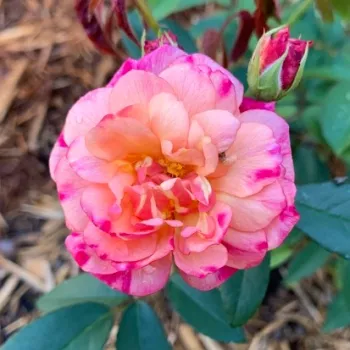
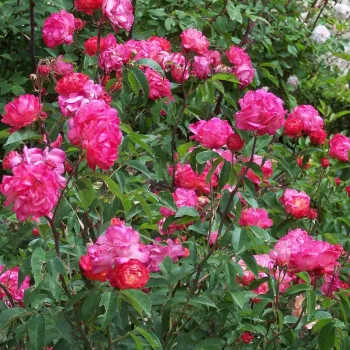
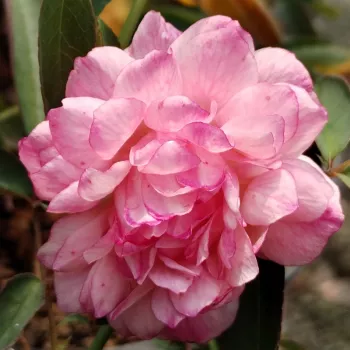
Flower Colour Description: Light copper‑orange base colour with a golden‑yellow centre and a fine carmine‑red edge, which slowly fades to a pale creamy tone.
Closed Bud: Deep orange-copper shade with a slightly reddish tip.
Newly Opened Flower: Copper‑orange petal surface with a golden‑yellow base, bright orange inside.
Full Bloom: Orange-based, with carmine-red shades on the petal edges, yellowish in the centre.
Before Fading: The orange hue fades to creamy yellow, with a purplish‑red veil remaining at the edges.
Colour Fading Description: As the bloom opens, the copper‑orange tone gradually fades to a creamy yellow, leaving a fine carmine‑purple veil at the petal edges.

Fragrance and Aroma

Fragrance Strength: medium-strength, noticeably fragrant rose
Fragrance Character: pleasantly spicy, fruity aroma
Pollinator Attraction: Its semi-double flowers and partially obscured stamens make it moderately attractive to pollinators.
Pollinator-Friendly Rating: Semi-double; a variety that moderately attracts pollinators. Pollinator-friendly: limited, mainly ornamental.

Hip Characteristics

Hip Shape: spherical
Hip Colour: orange-red
Hip Comment: Rose-hip formation is expected to be sparse; occasionally producing spherical, orange-red hips 5–8 mm in diameter.

Resistance and Hardiness

Hardiness (°C): -21–-18 °C
Heat and Drought Tolerance Description: Has average heat tolerance; requires supplementary watering during prolonged dry periods.
Disease Resistance: moderate
  • powdery mildew – moderate
  • black spot – moderate
  • rust – moderate

Horticultural Recommendations

Recommended product path: Project mass planting
Release form: Uniform, dense, bush-trained finished product
Recommended use: Maintenance requirement medium; occasionally requires pest and disease control.
Primary Uses: bed, border, park, container

Comments

Positioning: Project (landscape architecture / mass use)
Target customer/channel: Landscape contractor, project-serving wholesaler / maintenance
Main value proposition: Fast coverage – uniformity
LÉONIE LAMESCH – orange-yellow flower-bed polyantha rose - Lambert
Light copper‑orange base colour with a golden‑yellow centre and a fine carmine‑red edge, which slowly fades to a pale creamy tone. - polyantha bedding rose - medium-strength, noticeably fragrant rose - pleasantly spicy, fruity aroma
The rose webshop. - orange-yellow - medium-strength, noticeably fragrant rose - Léonie Lamesch - polyantha bedding rose - (2.6-3.9ft (80-120 cm))
Inflorescence: cluster-flowered Height: 2.6-3.9ft (80-120 cm) Flower shape: cup-shaped Winter hardiness: 6b orange-yellow - Lambert & Söhne (Germany) polyantha bedding rose - Flower size: S (0,5-1,5 in) Flower size: S (0,5-1,5 in) - Height: 2.6-3.9ft (80-120 cm) Height: 2.6-3.9ft (80-120 cm) - Flower fullness: semi-double Léonie Lamesch - Roses in the garden | pharmaROSA® Neonatal - premium silver Peter Lambert

We showcase the external appearance of the roses available for online purchase from our webshop.


Which product type is right for you?


PharmaRosa® NEONATAL is the cost‑effective starting point for rose product production.

As a uniform, own‑rooted propagation material, it provides a stable basis for further growing-on and can be integrated flexibly into different finished product production technologies.
Rooted in trays (rooted), 3–6‑month‑old, own‑rooted rose cutting.
Uniform developmental stage, with a root system that has thoroughly penetrated the plug.
For professional growing‑on.
Tray packaging: 10 pcs/tray.
Quality and varietal identity: production supported by a dedicated identification and traceability logic.
Can be transplanted during frost‑free periods, designed for finished product production.

PharmaRosa® NEONATAL provides a controlled, uniform starting stock for planned growing‑on that can be integrated into your own technology – especially where scheduling and varietal identity are paramount.


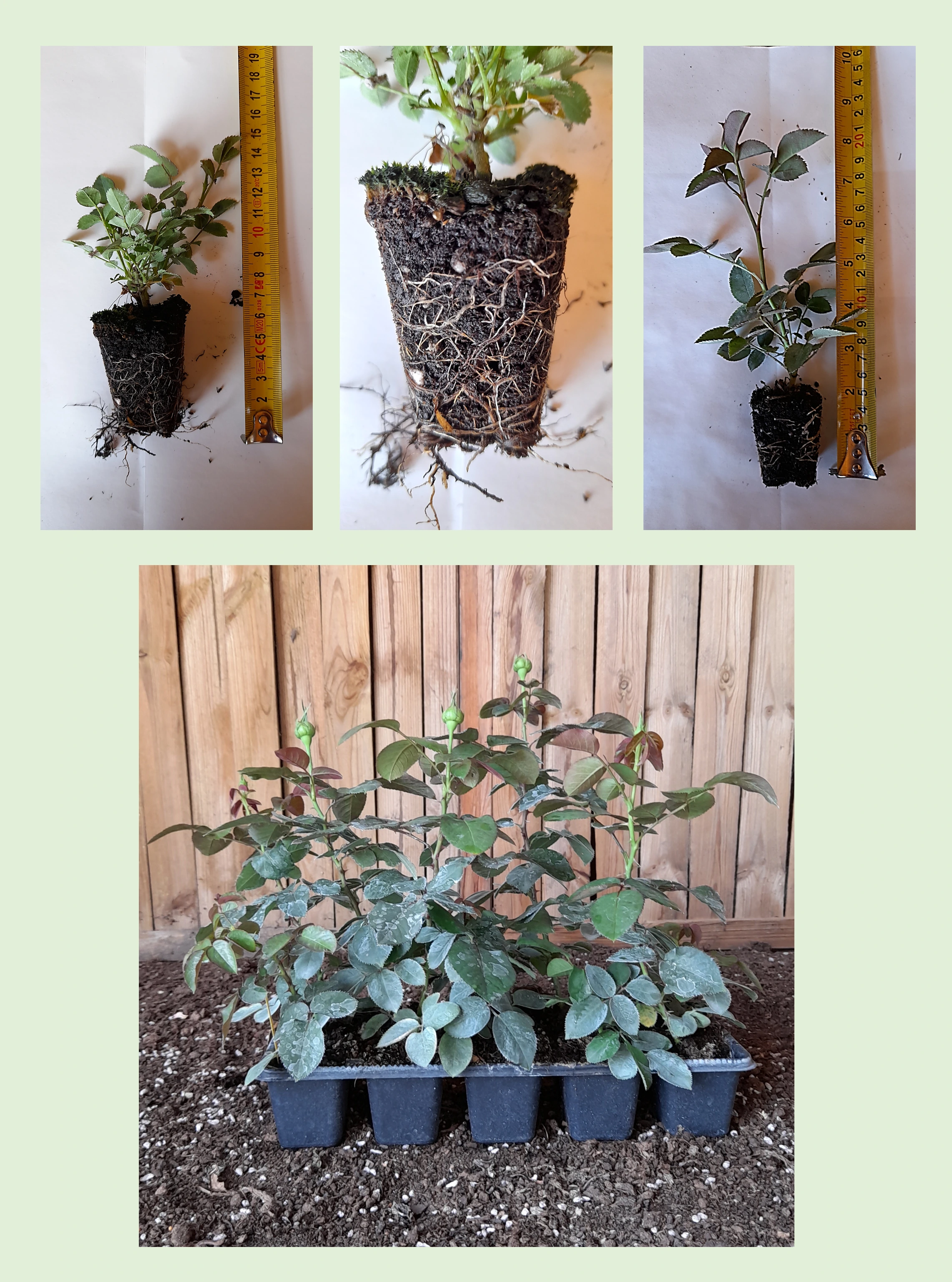
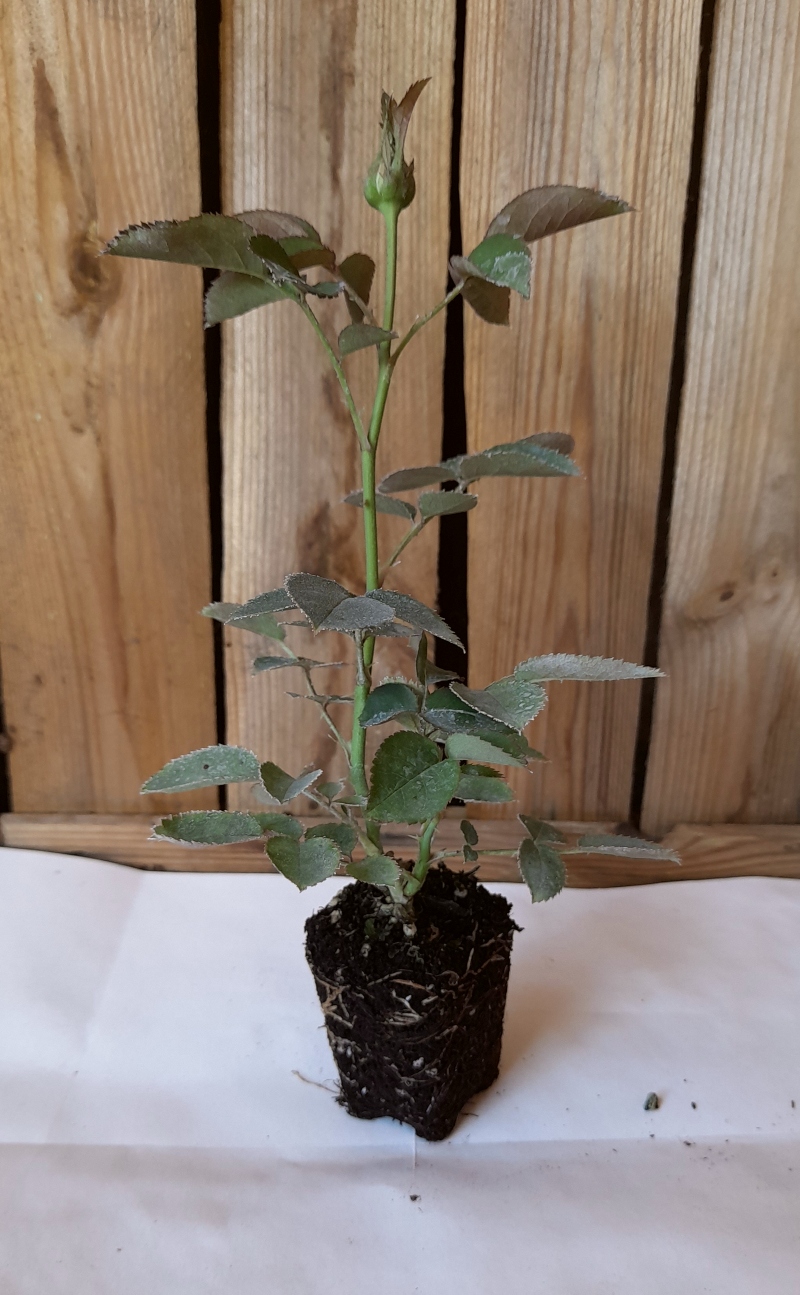
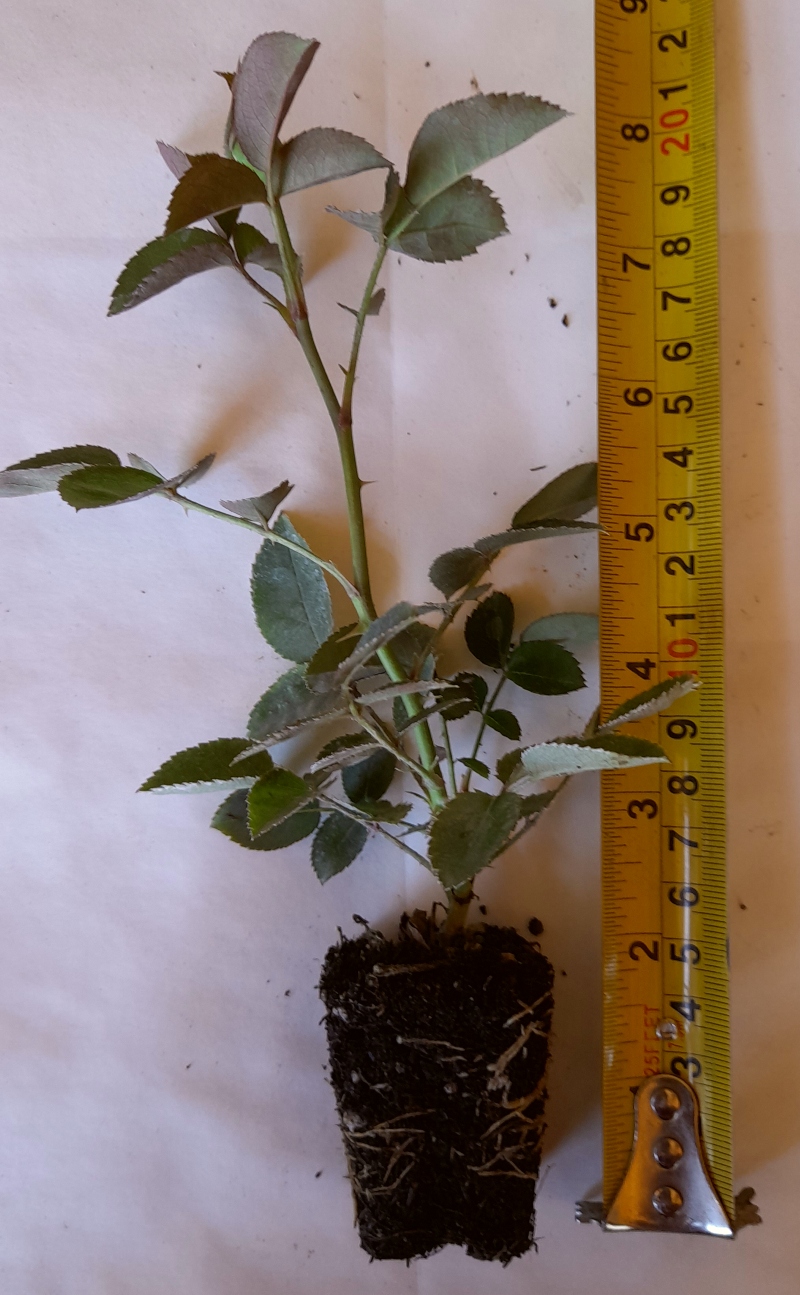
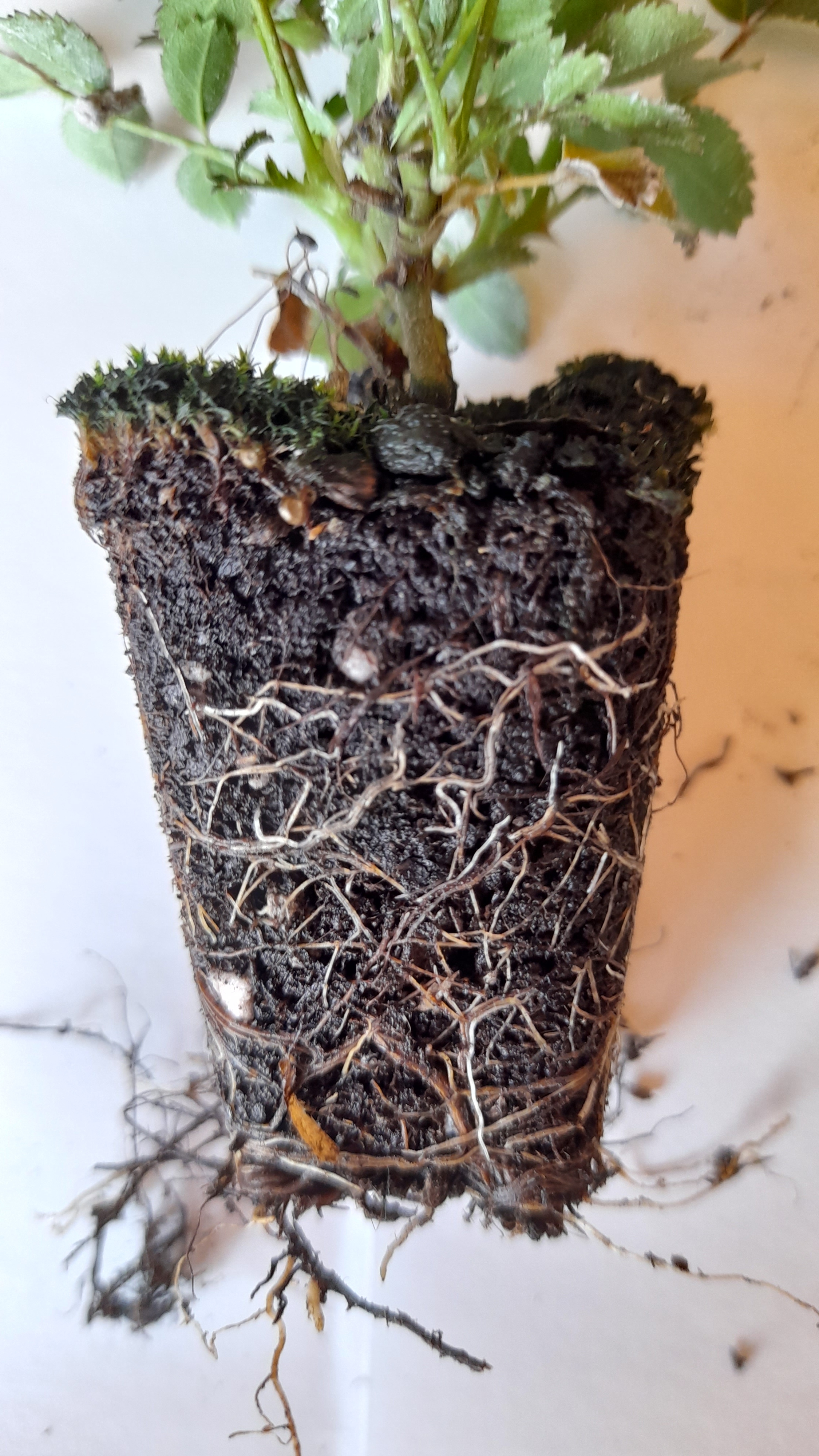
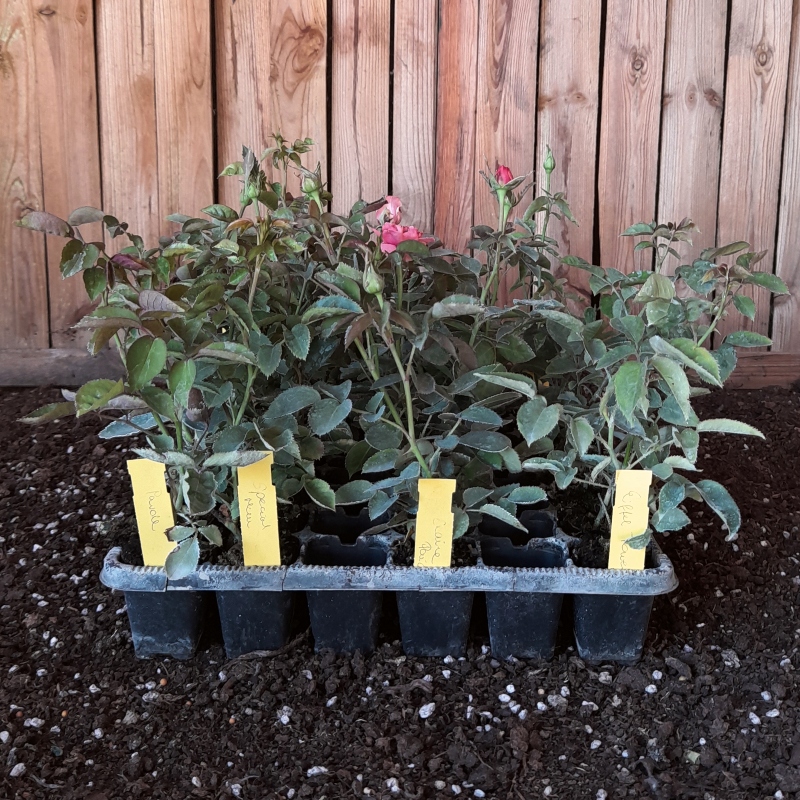
PharmaRosa® NEONATAL own-rooted rose propagation material in a plug, with a root system penetrating the plug (semi-finished product / semi-finished rose). PharmaRosa® NEONATAL rose propagation material size: 3–6‑month‑old, own-rooted cutting with a uniform developmental stage. PharmaRosa® NEONATAL rose propagation material root system: plug densely penetrated by well-developed white roots (root system detail). PharmaRosa® NEONATAL tray stock: own-rooted rose propagation material in trays, uniform developmental stage (10 pcs/tray).

Captions (from left to right): Semi-finished product (NEONATAL own-rooted rose propagation material in a plug with a fully developed root system) • Size demonstration (3–6‑month‑old, uniform cutting) • Root system detail (plug penetrated by the root system) • Tray stock (10 pcs/tray, uniform developmental stage)

pharmarosaneonatal.hupharmarosaneonatal.atpharmarosaneonatal.co.ukpharmarosaneonatal.czpharmarosaneonatal.depharmarosaneonatal.ropharmarosaneonatal.sipharmarosaneonatal.skpharmarosaneonatal.itpharmarosaneonatal.frpharmarosaneonatal.nlpharmarosaneonatal.plpharmarosaneonatal.lupharmarosaneonatal.ptpharmarosaneonatal.espharmarosaneonatal.ltpharmarosaneonatal.sepharmarosaneonatal.lvpharmarosaneonatal.eepharmarosaneonatal.fi

Which product type is right for you?

Pages for private customers
Garden roses for the family garden, with minimal care  → ORIGINAL®
Premium garden roses – instant impact, a truly showpiece garden  → EXTRA®
Pages for professionals and private customers
Roses for public spaces – large areas, sustainable maintenance  → NATURAL®
Roses for projects – hedge and row planting, fast implementation  → RAPID®
For professional partners only
Production – propagation material for garden roses, wholesale  → NEONATAL®

Company details

PharmaRosa Ltd.
Company registration number: 01-09-717479
VAT number: 13075314-2-43
Plant health registration no.: HU130721
Bank account (IBAN):
HU85117631891388688400000000
BIC (SWIFT): OTPVHUHB
Bank name: OTP Bank Nyrt.