Climbing rose

20-227-1
20-227-2

Little Rambler

Climbing rose

CHEWramb – Christopher H. Warner

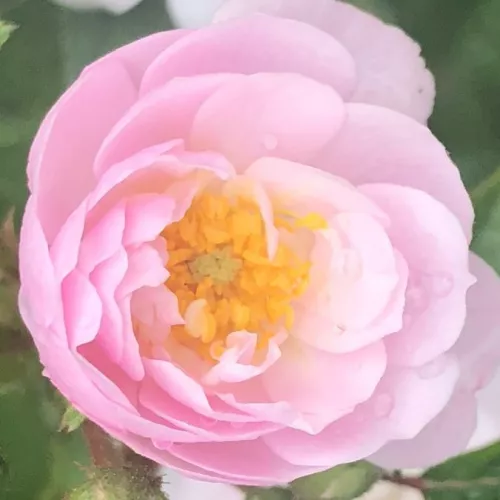
A pale, delicate pastel pink shade that lightens towards the edges of the petals. - climber, climbing rose - mild, subtly scented rose - soft, floral character

– Soft pastel pink clusters, very romantic
– Compact climber, ideal for small spaces
– Dense, glossy dark foliage for structure
– Mild, floral fragrance for close seating
– Attractive red hips add autumn interest
– Special feature: Awarded Certificate of Merit in Great Britain for its distinctive miniature climbing display.
Exclusive, space-defining – specialty
Little Rambler
pharmaROSA® NEONATAL rooted rose cutting
28,30 £
Due to courier service regulations – and the introduction of customs clearance – delivery to Ireland is temporarily suspended.
3 (4545)
facebook   twitter

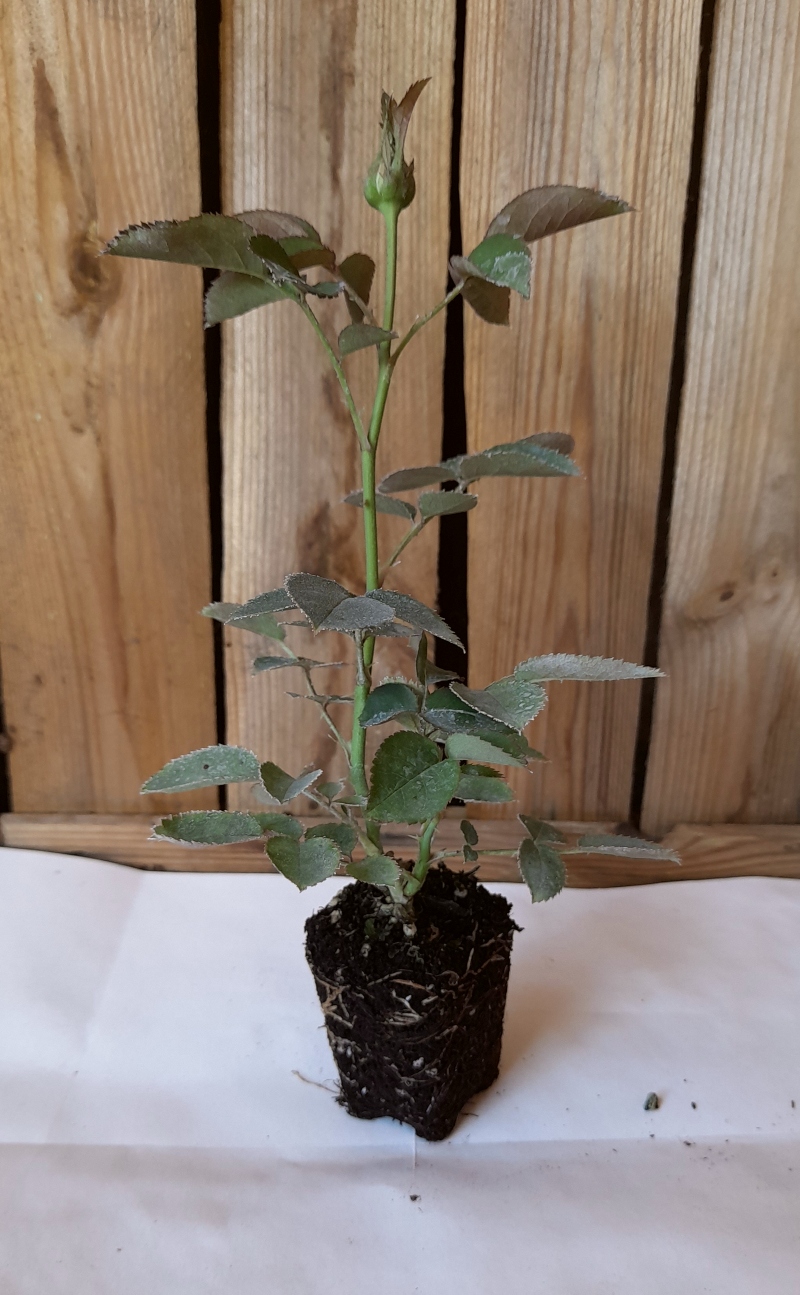
Little Rambler – pharmaROSA® NEONATAL own‑root climbing rose propagation material

Little Rambler offers vertical interest in a compact climbing format that suits high‑density nursery production and space‑efficient pergola or fence ranges, while its own‑root stability supports predictable long‑term capacity in professional networks. As a Miniature Climber with dense, dark green foliage and sparsely thorned canes, it combines structural elegance with efficient staked, trained supply in 5–7 L routes, ready for onward finishing as an exclusive, space‑defining feature rose. Remontant, cluster‑flowered, double blooms in soft pastel pink give a strong second flush and moderate self‑cleaning, underpinning reliable vertical garden display for thematic rose gardens and curated collections. Own‑root propagation helps build homogeneous, renewable stands with low replacement and stable ornamental value over time, with roots consolidating in year one, structural canes building in year two, and full vertical and floral effect realised from year three. Moderate disease tolerance and winter rating to H6 support consistent performance under UK nursery and project conditions, including more exposed Scottish and northern English sites with reliable winter and wind resilience, while the open‑centred clusters provide useful pollinator support for public‑realm schemes. Spherical red hips add a discrete seasonal accent, reinforcing its suitability for collection plantings and show gardens where year‑round interest and cultivar identity are key, and the own‑root, tray‑grown pharmaROSA® NEONATAL base makes storage, scheduling, and integration into complex wholesale assortments straightforward for professional growers.


Usage options

Target area Reasoning
Trained climber for pergolas and arches Compact climbing dimensions with 3–5 trained main canes make Little Rambler efficient to finish as a trained climber in 5–7 L pots, giving a precise, vertical garden feature for pergolas and arches. The own‑root base supports renewable canes and predictable habit, so you can plan exclusive, space‑defining introductions with stable quality across seasons for retail and reseller partners serving thematic rose gardens and curated collections for nursery–retail networks.
Fence and trellis ranges for vertical structuring The moderate height and 160–240 cm spread give reliable coverage for fences and trellis systems without excessive vigour, simplifying stock control and pruning in nursery holding. Staked, trained NEONATAL material slots well into a planned trained climber route in 5–7 L, supporting coherent vertical ranges. Own‑root longevity and the ability to regenerate from the base reduce replacement in public‑realm and institutional projects where vertical garden structure is a core promise for project‑oriented suppliers.
Containerised climber for patios and small gardens Miniature Climber genetics and dense, glossy foliage allow attractive container climber products, from 5–7 L up to 40–50 L final planters for patios or compact gardens. The remontant, cluster‑flowered pastel pink display delivers repeat value, while own‑root material tolerates repeated pruning and re‑shaping in container cycles. This suits exclusive, space‑efficient patio climber lines where a vertical garden feature is expected as a distinctive habit for premium garden centres.
Collection and show‑garden planting The defined breeding background and verified identity make Little Rambler a strong candidate for cultivar collections, thematic rose gardens and show installations. pharmaROSA® NEONATAL own‑root propagation underpins homogeneous planting blocks and long‑term maintenance of cultivar identity, supporting renewable canes and stable flowering. This aligns with exclusive, space‑defining presentations where vertical habit and pastel colour harmonise well for thematic rose collections.
Pollinator‑supporting vertical displays Double, open‑centred clusters with visible stamens bring moderate pollinator value into vertical plantings, useful for public‑realm or institutional schemes that combine ornamental specification with biodiversity aims. NEONATAL own‑root stock supports long lifespan and regeneration, meaning pollinator resources recover well after pruning cycles. This complements trained climber production in 5–7 L for vertical garden feature lines positioned as distinctive habit choices for public‑realm contractors.
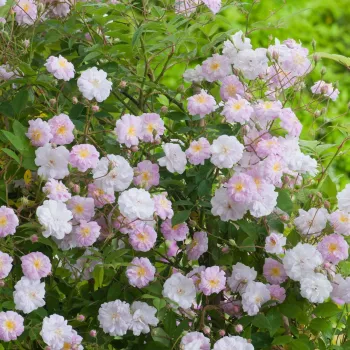
Season‑extended colour with repeat flowering Remontant flowering with an abundant second flush gives reliable season extension, while the colour transitions from soft sugar‑pink to paler pastels offer evolving visual interest on arches and obelisks. Using own‑root NEONATAL material as the base for trained climber products helps ensure that flowering performance remains homogeneous across batches. This supports exclusive vertical garden offers where consistent repeat bloom is a key part of the value message for assortment managers.
Moderate‑maintenance climber for public and private projects Moderate disease resistance and average heat–drought tolerance suit UK nursery and landscape conditions, provided irrigation is available in prolonged dry periods and basic pest control is scheduled. The own‑root system gives resilience after hard renovation pruning, which is important on pergolas and fences in institutional or municipal settings that receive cyclical maintenance. This enables specification as a vertical garden feature with realistic upkeep demands for landscape specifiers.
Vertical accent with hips for seasonal interest Moderate quantities of small, spherical red hips follow the pale pink clusters, adding late‑season structure on pergolas, obelisks and boundary plantings. Own‑root plants maintain this effect reliably as they age, with renewable cane growth supporting continuous flowering and fruiting. In more exposed northern and coastal schemes where winter and wind performance is important, this combination of vertical habit and seasonal detail reinforces exclusive, space‑defining concepts for wholesale distributors.

Finished-product ideas

  • 5–7 L trained pergola climber – Staked, 3–5 cane plants finished in 5–7 L pots, showcasing compact climbing habit and pastel clusters as an exclusive, space‑defining pergola solution – retail / reseller vertical ranges.
  • 40–50 L patio obelisk set – Own‑root plants grown on into 40–50 L containers with integrated obelisks, leveraging remontant flowering and dense foliage for high‑impact vertical garden features – design‑led garden centres.
  • Collection‑grade climber line – Uniform NEONATAL own‑root batches earmarked for thematic rose gardens and show collections, highlighting verified identity and controlled vigour – public‑realm and institutional project suppliers.
  • Pollinator‑friendly vertical trio – Cluster‑flowered Little Rambler offered as part of a curated climber trio, emphasising open‑centred blooms and repeat colour on fences and arches – retailers building biodiversity‑themed ranges.
  • Hip‑accent boundary climber – Trained climbers for boundary structures, promoted for pastel floral display followed by red hips, underpinned by own‑root regeneration and moderate maintenance – landscape and municipal channels.

Technical cultivar profile
Parameter Data
Name and registration Miniature Climber, registered as CHEWramb, marketed as Little Rambler Climbing rose CHEWramb; exhibition miniature climbing rose category, ARS exhibition name Little Rambler.
Origin and breeding Raised by Christopher H. Warner in the United Kingdom from complex miniature and shrub parentage; bred 1989, introduced and registered in 1994 by Warner’s Roses.
Awards and recognition Holds a Certificate of Merit awarded in Great Britain in 1991, providing additional confidence for use in exhibition‑grade and collection‑oriented plantings and product lines.
Growth and structural characteristics Climbing growth to about 180–260 cm high and 160–240 cm spread, with dense, dark green glossy foliage, sparsely thorned canes and a habit suited to training on pergolas, fences and obelisks.
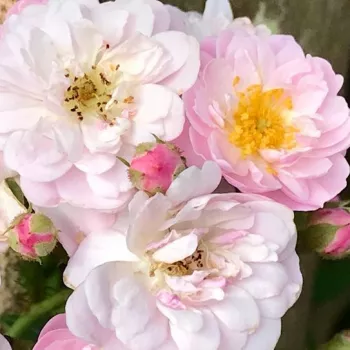
Flower morphology Small, cup‑shaped, double flowers with around 20–30 petals, forming cluster‑flowered trusses; remontant, with a strong second flush that supports prolonged decorative use on vertical structures.
Colour data and phenology Pale pastel pink blooms (RHS 65C–65D, ARS LP) open soft sugar‑pink, then fade toward creamy almost white edges, giving a gentle, evolving colour effect across repeated flowering cycles.
Fragrance and aroma Mild, soft floral fragrance that is noticeable at close range without dominating; open‑centred double blooms with visible stamens offer moderate pollinator attraction in suitable plantings.
Hip characteristics Produces moderate numbers of small, spherical red hips, around 4–7 mm in diameter, extending decorative interest into late season on trained structures and supporting visual texture in collections.
Resistance and winter hardiness Moderate resistance to powdery mildew, black spot and rust; average heat and drought tolerance needing irrigation in longer dry spells; hardy approximately to −18 to −15 °C, RHS H6, Swedish Zon 2, USDA 7a.
Horticultural recommendations Best used as a trained climber on pergolas, fences, obelisks, beds or containers; moderate maintenance with occasional pest control; own‑root NEONATAL material supplied rooted and staked for 5–7 L finishing.

Little Rambler combines compact climbing habit, remontant cluster flowering and discrete hip interest on a predictable own‑root base that supports long‑lived, regenerative stands; we would be pleased to discuss scheduling and capacity for your programme.

Detailed product attributes

Product Identification Data

Product Name: LITTLE RAMBLER – pink rambler rose, climber - Warner
Product Type: pharmaROSA® NEONATAL - rooted rose cutting
Cultivar Authenticity: Verified:10.03.2025
Cultivar Quality Rating: premium bronze
Item Number: [799] 20-227 (14.02.2026) pharmarosaneonatal.co.uk

Name and Registration

Meaning of Cultivar Name: The term "Kis futó" refers to the plant's compact size and trailing habit.
Cultivar Synonym: Baby Rambler
Original Trade Name: Little Rambler
Current Trade Name: Little Rambler Climbing rose CHEWramb
Rose Group: Miniature, Climber
Commercial Type: climber, climbing rose
Commercial Group: Climbing rose
Exhibition Category: exhibition miniature climbing rose
Collection: Climbing rose

Origin and Breeding

Initial Distributor: Warner’s Roses (United Kingdom)
Breeder: Christopher H. Warner
Breeding Company / Institution: Warner’s Roses
Breeding Year: United Kingdom, 1989
Parentage: (‘Cécile Brunner’ × ‘Baby Faurax’) × (‘Marjorie Fair’ × ‘Nozomi’)

Growth and Structural Characteristics

Height: 5.9-8.5ft (180-260 cm)
Spread: 5.2-7.9ft (160-240 cm)
Growth Habit: climbing
Foliage: This variety has dense foliage, with leaves that have a glossy surface and a dark green hue.
Prickliness: sparsely thorned
Self-Cleaning Description: Some of the spent flowers remain on the plant and require subsequent cleaning.
Self-Cleaning Intensity: Self-cleaning: medium.

Flower Morphology

Petal Count: 20-30
Flower Fullness: double
Flower Shape: cup-shaped
Flower Size: S (0,5-1,5 in)
Inflorescence Type: cluster-flowered
Colour Code: ARS code: LP RHS code: 65C, 65D
Repeat Flowering: Remontant, with an abundant second flowering.

Colour Data and Phenology

Colour: pink
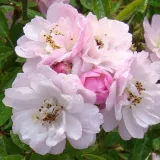
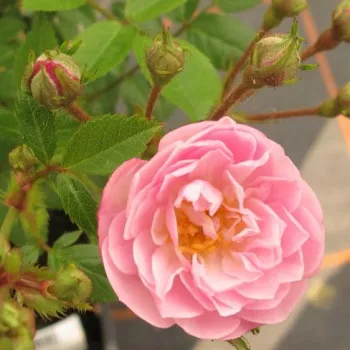
Flower Colour Description: A pale, delicate pastel pink shade that lightens towards the edges of the petals.
Closed Bud: Mid-pink with slightly deeper tones at the tips.
Newly Opened Flower: Soft sugar-pink, with a gentler transition on the outer petals.
Full Bloom: Even pale pink, fading to almost white at the edges.
Before Fading: The petals fade to an almost white colour, with creamy shades in places.
Colour Fading Description: The flowers fade from pale pink to almost white.

Fragrance and Aroma

Fragrance Strength: mild, subtly scented rose
Fragrance Character: soft, floral character
Pollinator Attraction: With an open (simple to semi‑double) flower form and visible, easily accessible stamens, it attracts bees and other pollinators.
Pollinator-Friendly Rating: Double, open‑centred flowers with visible stamens attract pollinators well, and are therefore moderately pollinator‑friendly.

Hip Characteristics

Hip Shape: spherical
Hip Colour: red
Hip Comment: Spherical red rose hips, 4–7 mm in diameter, produced in moderate quantities.

Resistance and Hardiness

Hardiness (°C): -18–-15 °C
Heat and Drought Tolerance Description: Average heat–drought tolerance; requires irrigation during prolonged drought.
Disease Resistance: moderate
  • powdery mildew – moderate
  • black spot – moderate
  • rust – moderate

Horticultural Recommendations

Recommended product path: Trained climber finished product
Release form: Staked, trained (3–5 main canes)
Recommended use: Maintenance requirement moderate; occasionally requires pest control.
Primary Uses: pergola, fence, obelisk, container, flower bed

Comments

Positioning: Exclusive, space-defining – specialty
Target customer/channel: Retail / reseller
Main value proposition: Vertical garden feature, distinctive habit
LITTLE RAMBLER – pink rambler rose, climber - Warner
A pale, delicate pastel pink shade that lightens towards the edges of the petals. - climber, climbing rose - mild, subtly scented rose - soft, floral character
pink mild, subtly scented rose Online rose purchase Little Rambler climber, climbing rose
Inflorescence: cluster-flowered Height: 5.9-8.5ft (180-260 cm) Flower shape: cup-shaped Winter hardiness: 6b pink - Warner’s Roses (United Kingdom) climber, climbing rose - Flower size: S (0,5-1,5 in) Flower size: S (0,5-1,5 in) - Height: 5.9-8.5ft (180-260 cm) Height: 5.9-8.5ft (180-260 cm) - Flower fullness: double Little Rambler - Roses in the garden | pharmaROSA® Neonatal - premium bronze Christopher H. Warner

We showcase the external appearance of the roses available for online purchase from our webshop.


Which product type is right for you?


PharmaRosa® NEONATAL is the cost‑effective starting point for rose product production.

As a uniform, own‑rooted propagation material, it provides a stable basis for further growing-on and can be integrated flexibly into different finished product production technologies.
Rooted in trays (rooted), 3–6‑month‑old, own‑rooted rose cutting.
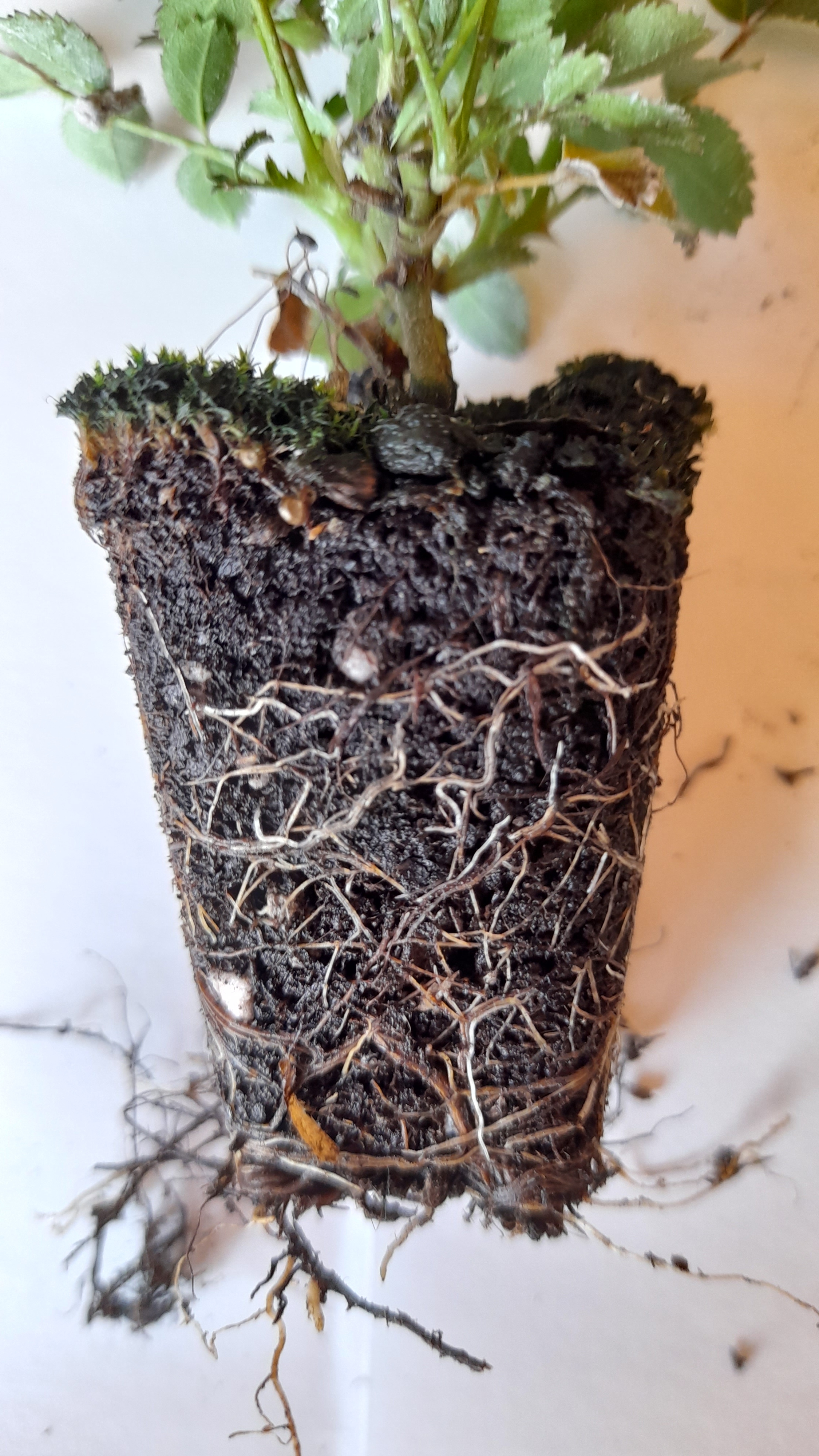
Uniform developmental stage, with a root system that has thoroughly penetrated the plug.
For professional growing‑on.
Tray packaging: 10 pcs/tray.
Quality and varietal identity: production supported by a dedicated identification and traceability logic.
Can be transplanted during frost‑free periods, designed for finished product production.

PharmaRosa® NEONATAL provides a controlled, uniform starting stock for planned growing‑on that can be integrated into your own technology – especially where scheduling and varietal identity are paramount.


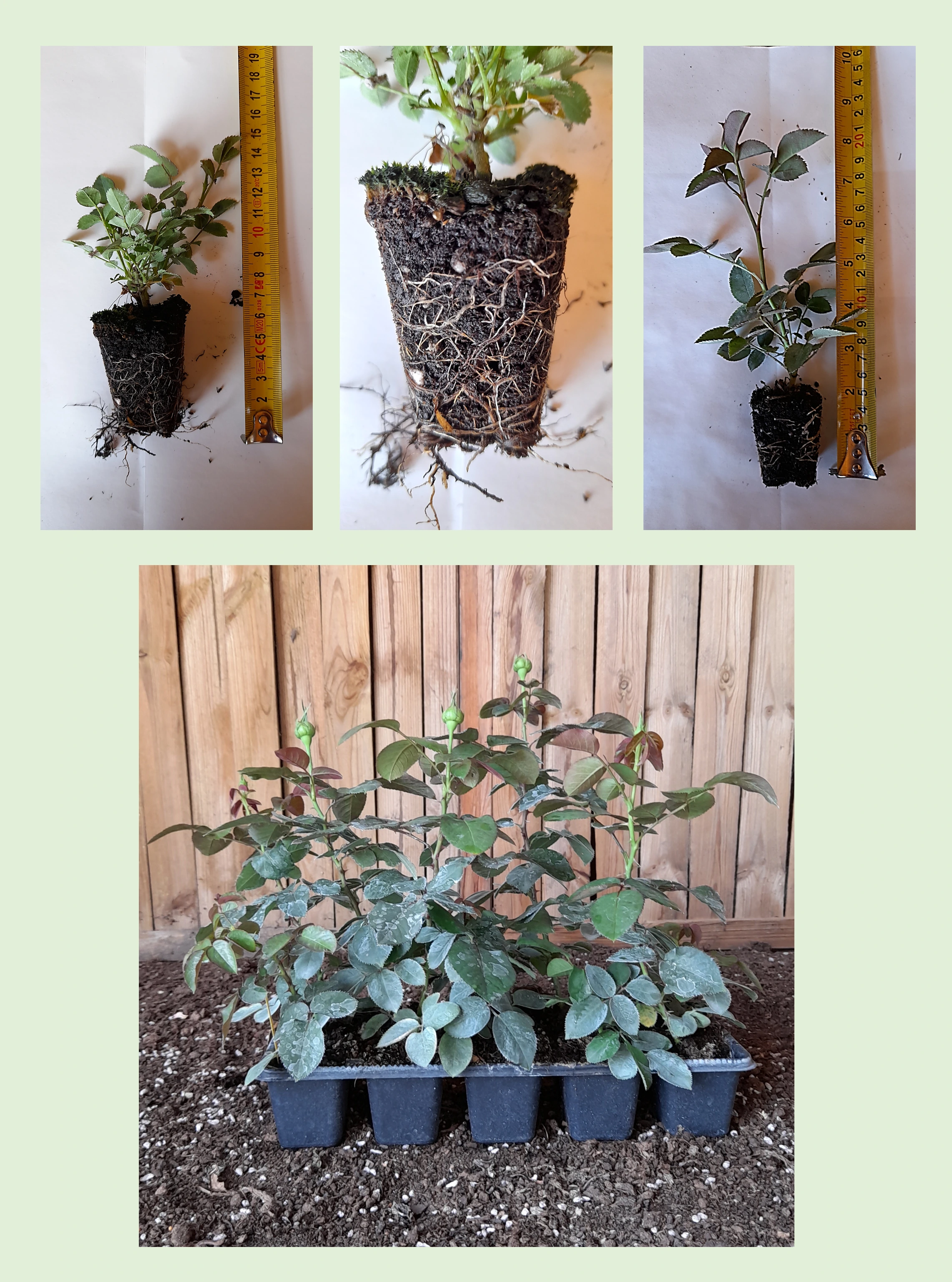
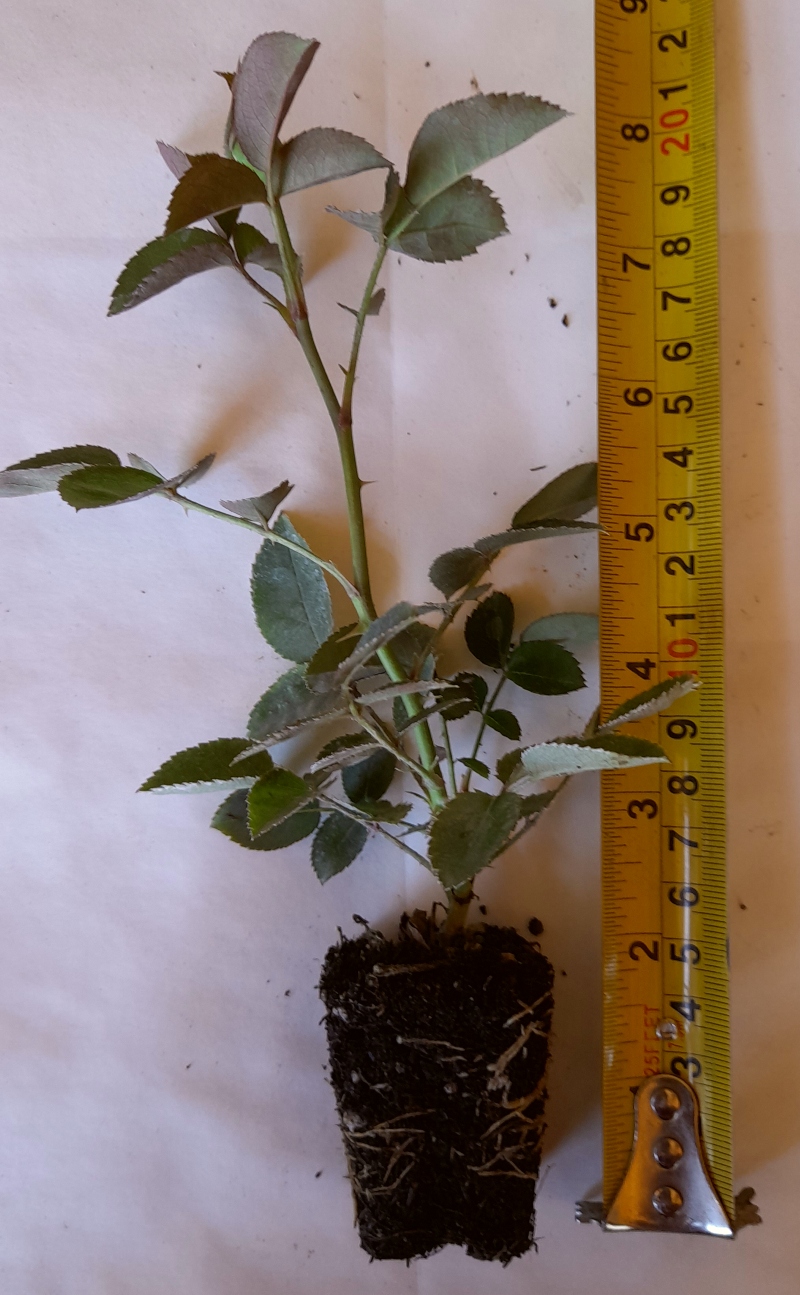
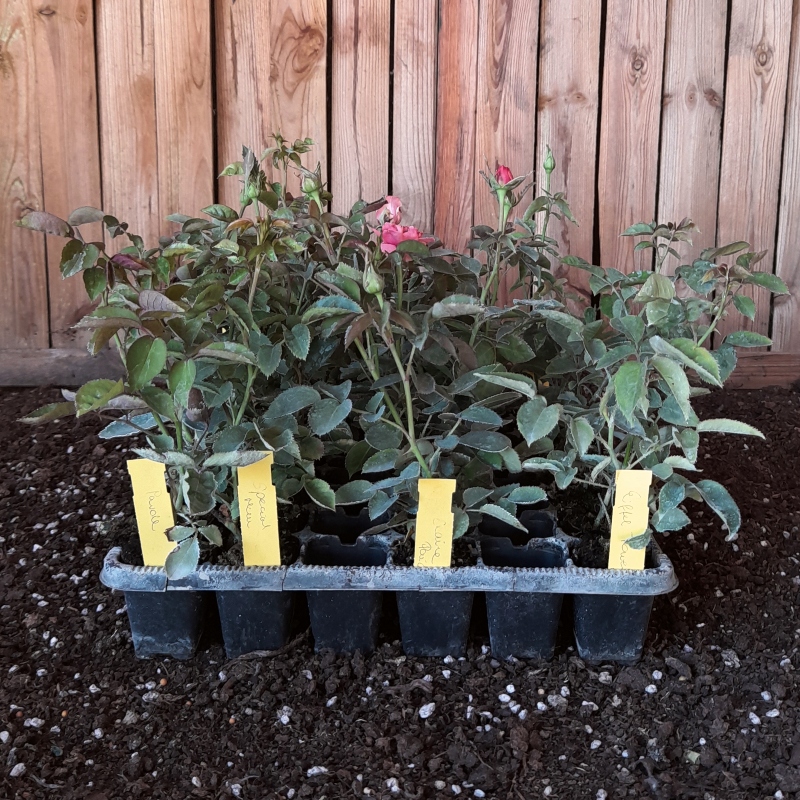
PharmaRosa® NEONATAL own-rooted rose propagation material in a plug, with a root system penetrating the plug (semi-finished product / semi-finished rose). PharmaRosa® NEONATAL rose propagation material size: 3–6‑month‑old, own-rooted cutting with a uniform developmental stage. PharmaRosa® NEONATAL rose propagation material root system: plug densely penetrated by well-developed white roots (root system detail). PharmaRosa® NEONATAL tray stock: own-rooted rose propagation material in trays, uniform developmental stage (10 pcs/tray).

Captions (from left to right): Semi-finished product (NEONATAL own-rooted rose propagation material in a plug with a fully developed root system) • Size demonstration (3–6‑month‑old, uniform cutting) • Root system detail (plug penetrated by the root system) • Tray stock (10 pcs/tray, uniform developmental stage)

pharmarosaneonatal.hupharmarosaneonatal.atpharmarosaneonatal.co.ukpharmarosaneonatal.czpharmarosaneonatal.depharmarosaneonatal.ropharmarosaneonatal.sipharmarosaneonatal.skpharmarosaneonatal.itpharmarosaneonatal.frpharmarosaneonatal.nlpharmarosaneonatal.plpharmarosaneonatal.lupharmarosaneonatal.ptpharmarosaneonatal.espharmarosaneonatal.ltpharmarosaneonatal.sepharmarosaneonatal.lvpharmarosaneonatal.eepharmarosaneonatal.fi

Which product type is right for you?

Pages for private customers
Garden roses for the family garden, with minimal care  → ORIGINAL®
Premium garden roses – instant impact, a truly showpiece garden  → EXTRA®
Pages for professionals and private customers
Roses for public spaces – large areas, sustainable maintenance  → NATURAL®
Roses for projects – hedge and row planting, fast implementation  → RAPID®
For professional partners only
Production – propagation material for garden roses, wholesale  → NEONATAL®

Company details

PharmaRosa Ltd.
Company registration number: 01-09-717479
VAT number: 13075314-2-43
Plant health registration no.: HU130721
Bank account (IBAN):
HU85117631891388688400000000
BIC (SWIFT): OTPVHUHB
Bank name: OTP Bank Nyrt.