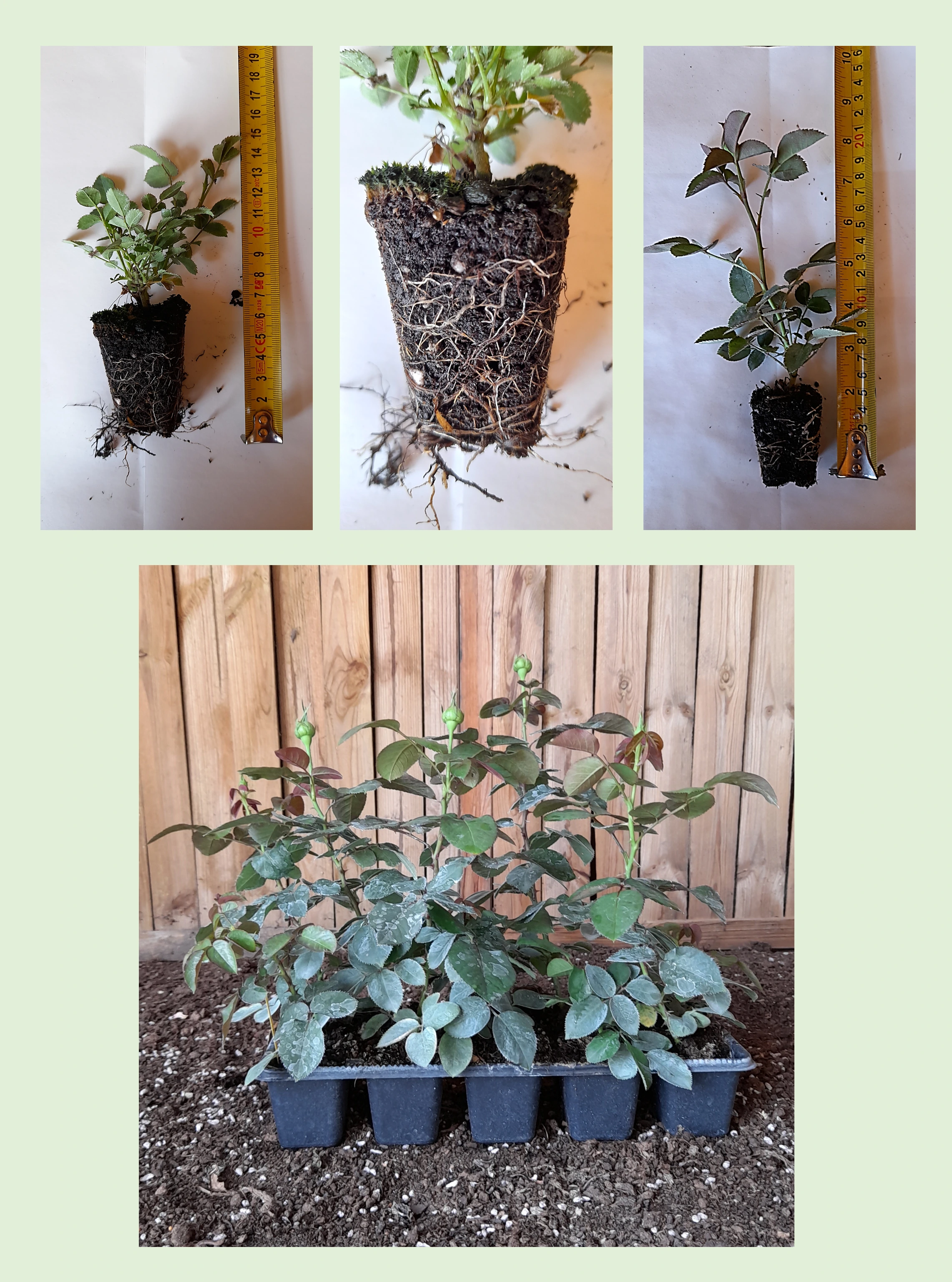
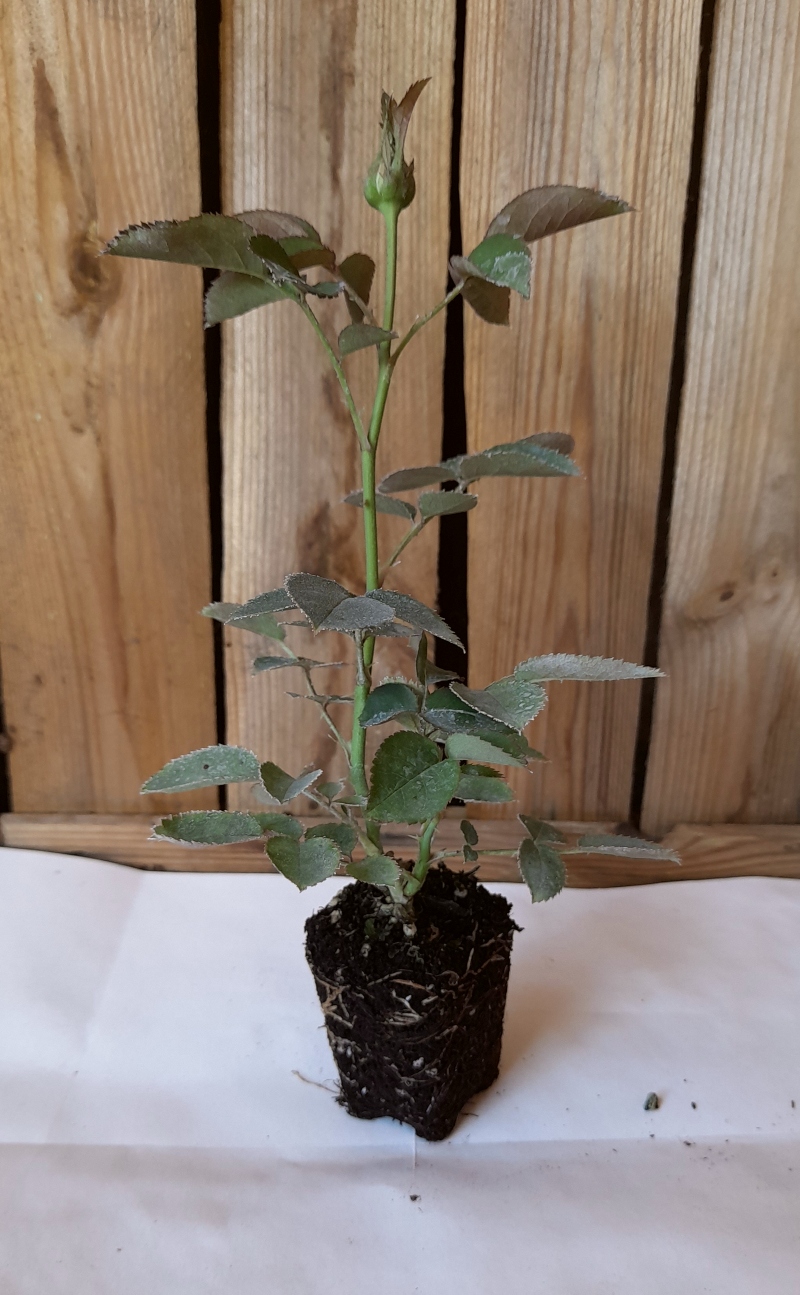
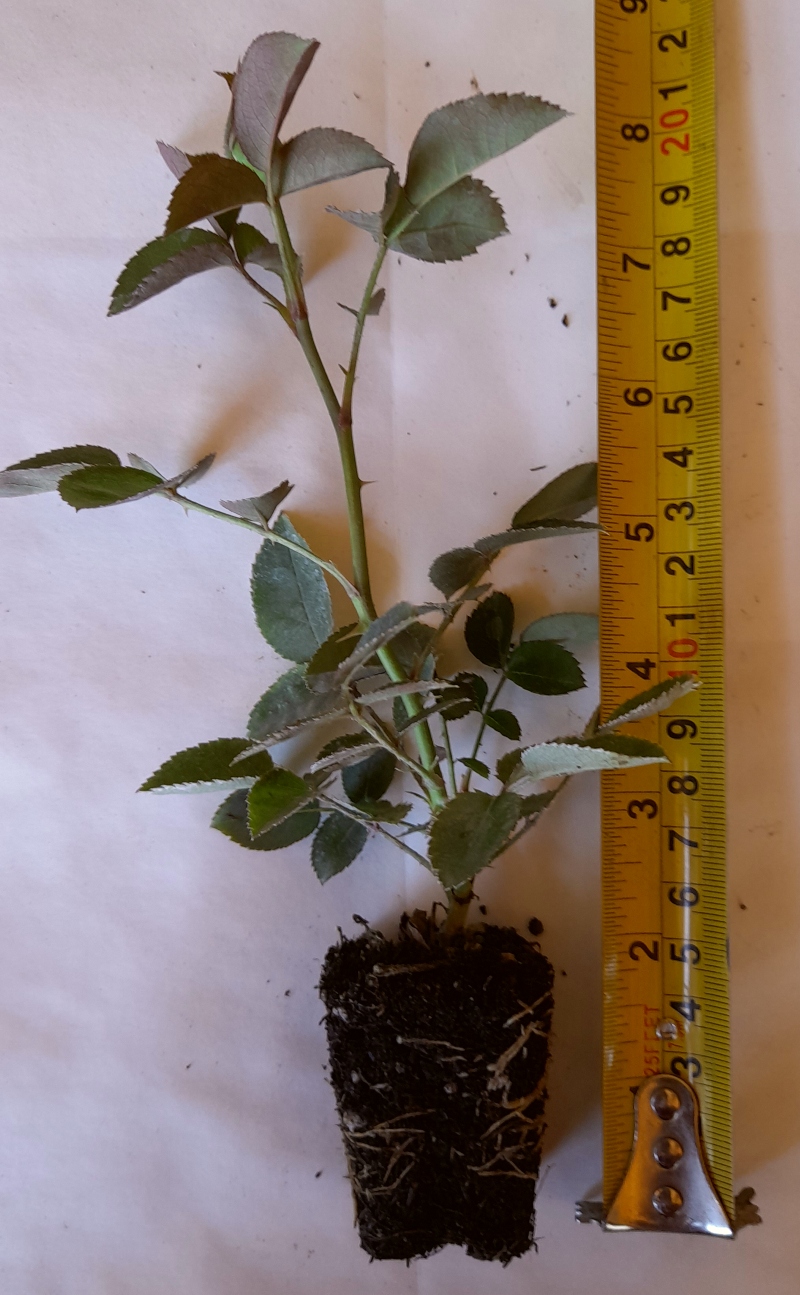
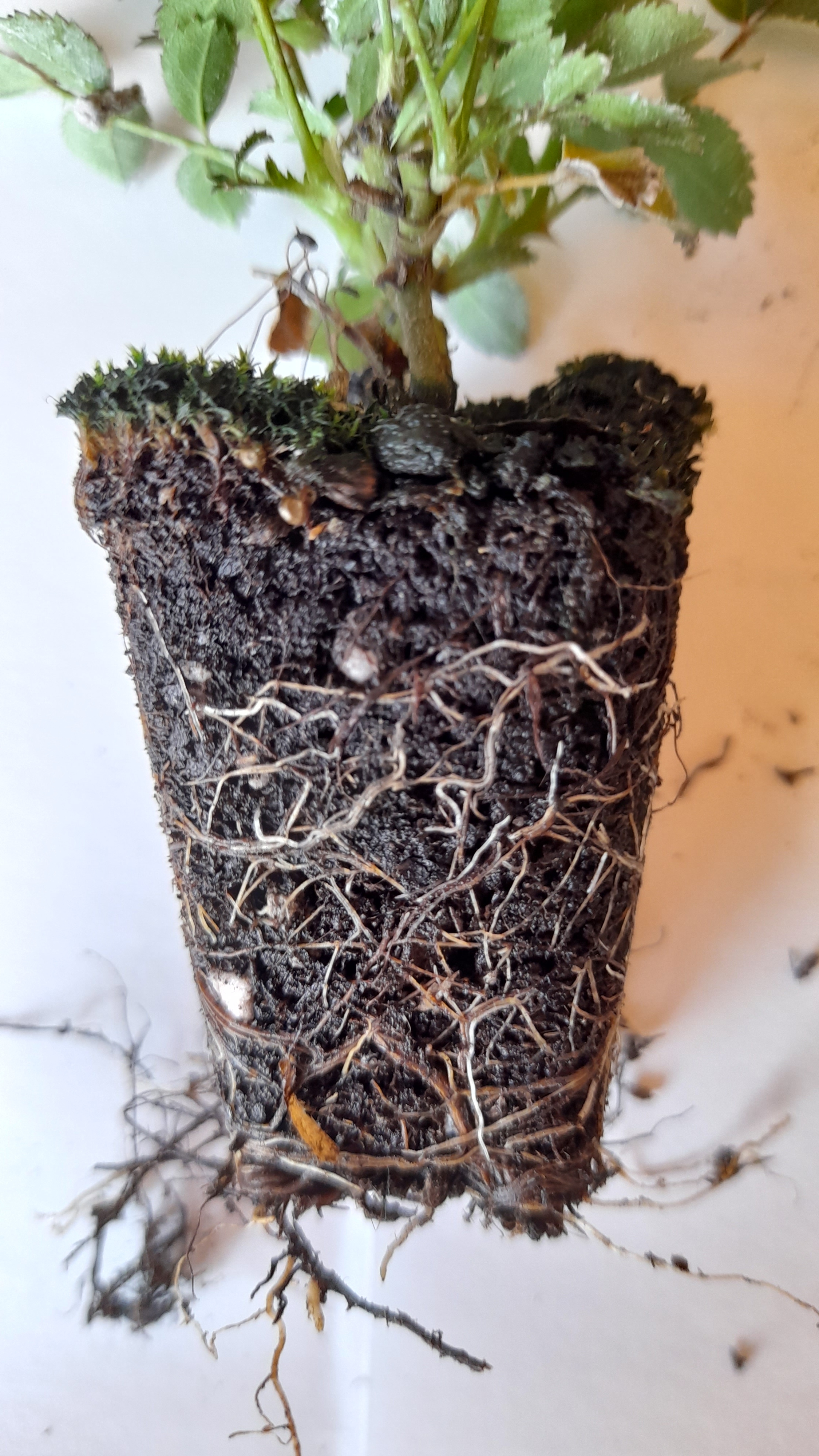
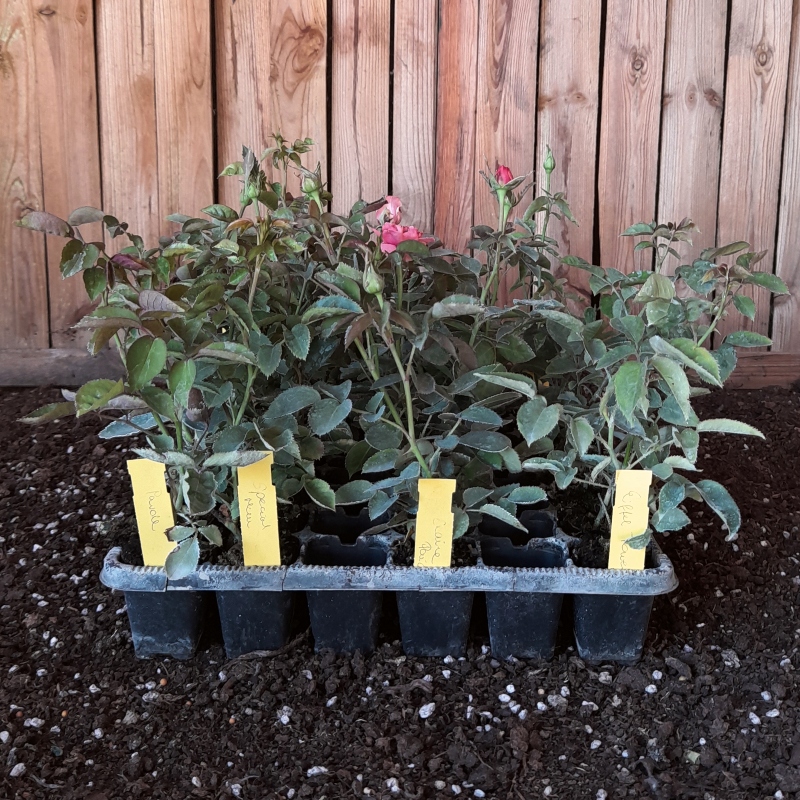
Little Rambler – pharmaROSA® NEONATAL own‑root climbing rose propagation material
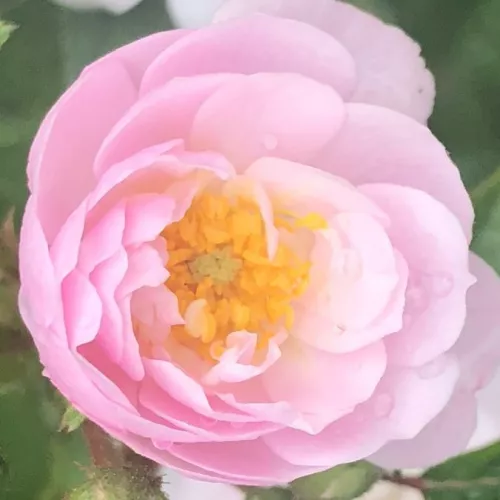
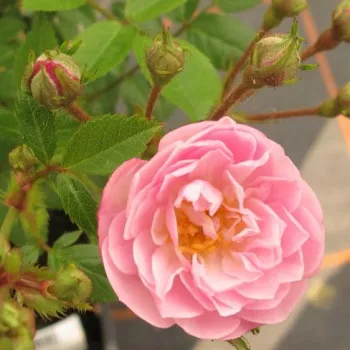
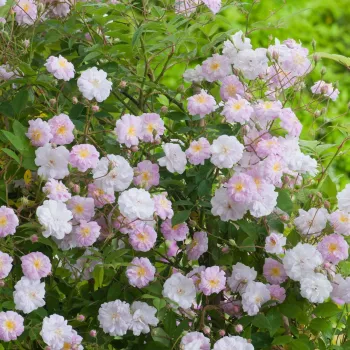
Little Rambler offers vertical interest in a compact climbing format that suits high‑density nursery production and space‑efficient pergola or fence ranges, while its own‑root stability supports predictable long‑term capacity in professional networks. As a Miniature Climber with dense, dark green foliage and sparsely thorned canes, it combines structural elegance with efficient staked, trained supply in 5–7 L routes, ready for onward finishing as an exclusive, space‑defining feature rose. Remontant, cluster‑flowered, double blooms in soft pastel pink give a strong second flush and moderate self‑cleaning, underpinning reliable vertical garden display for thematic rose gardens and curated collections. Own‑root propagation helps build homogeneous, renewable stands with low replacement and stable ornamental value over time, with roots consolidating in year one, structural canes building in year two, and full vertical and floral effect realised from year three. Moderate disease tolerance and winter rating to H6 support consistent performance under UK nursery and project conditions, including more exposed Scottish and northern English sites with reliable winter and wind resilience, while the open‑centred clusters provide useful pollinator support for public‑realm schemes. Spherical red hips add a discrete seasonal accent, reinforcing its suitability for collection plantings and show gardens where year‑round interest and cultivar identity are key, and the own‑root, tray‑grown pharmaROSA® NEONATAL base makes storage, scheduling, and integration into complex wholesale assortments straightforward for professional growers.
Usage options
Finished-product ideas
- 5–7 L trained pergola climber – Staked, 3–5 cane plants finished in 5–7 L pots, showcasing compact climbing habit and pastel clusters as an exclusive, space‑defining pergola solution – retail / reseller vertical ranges.
- 40–50 L patio obelisk set – Own‑root plants grown on into 40–50 L containers with integrated obelisks, leveraging remontant flowering and dense foliage for high‑impact vertical garden features – design‑led garden centres.
- Collection‑grade climber line – Uniform NEONATAL own‑root batches earmarked for thematic rose gardens and show collections, highlighting verified identity and controlled vigour – public‑realm and institutional project suppliers.
- Pollinator‑friendly vertical trio – Cluster‑flowered Little Rambler offered as part of a curated climber trio, emphasising open‑centred blooms and repeat colour on fences and arches – retailers building biodiversity‑themed ranges.
- Hip‑accent boundary climber – Trained climbers for boundary structures, promoted for pastel floral display followed by red hips, underpinned by own‑root regeneration and moderate maintenance – landscape and municipal channels.
Technical cultivar profile
| Parameter |
Data |
| Name and registration |
Miniature Climber, registered as CHEWramb, marketed as Little Rambler Climbing rose CHEWramb; exhibition miniature climbing rose category, ARS exhibition name Little Rambler. |
| Origin and breeding |
Raised by Christopher H. Warner in the United Kingdom from complex miniature and shrub parentage; bred 1989, introduced and registered in 1994 by Warner’s Roses. |
| Awards and recognition |
Holds a Certificate of Merit awarded in Great Britain in 1991, providing additional confidence for use in exhibition‑grade and collection‑oriented plantings and product lines. |
| Growth and structural characteristics |
Climbing growth to about 180–260 cm high and 160–240 cm spread, with dense, dark green glossy foliage, sparsely thorned canes and a habit suited to training on pergolas, fences and obelisks. |
| Flower morphology |
Small, cup‑shaped, double flowers with around 20–30 petals, forming cluster‑flowered trusses; remontant, with a strong second flush that supports prolonged decorative use on vertical structures. |
| Colour data and phenology |
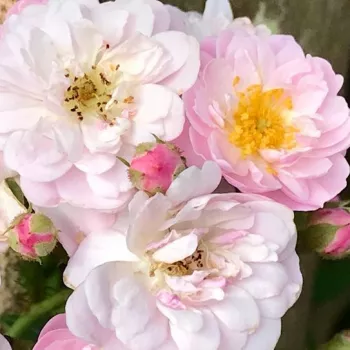
Pale pastel pink blooms (RHS 65C–65D, ARS LP) open soft sugar‑pink, then fade toward creamy almost white edges, giving a gentle, evolving colour effect across repeated flowering cycles. |
| Fragrance and aroma |
Mild, soft floral fragrance that is noticeable at close range without dominating; open‑centred double blooms with visible stamens offer moderate pollinator attraction in suitable plantings. |
| Hip characteristics |
Produces moderate numbers of small, spherical red hips, around 4–7 mm in diameter, extending decorative interest into late season on trained structures and supporting visual texture in collections. |
| Resistance and winter hardiness |
Moderate resistance to powdery mildew, black spot and rust; average heat and drought tolerance needing irrigation in longer dry spells; hardy approximately to −18 to −15 °C, RHS H6, Swedish Zon 2, USDA 7a. |
| Horticultural recommendations |
Best used as a trained climber on pergolas, fences, obelisks, beds or containers; moderate maintenance with occasional pest control; own‑root NEONATAL material supplied rooted and staked for 5–7 L finishing. |
Little Rambler combines compact climbing habit, remontant cluster flowering and discrete hip interest on a predictable own‑root base that supports long‑lived, regenerative stands; we would be pleased to discuss scheduling and capacity for your programme.