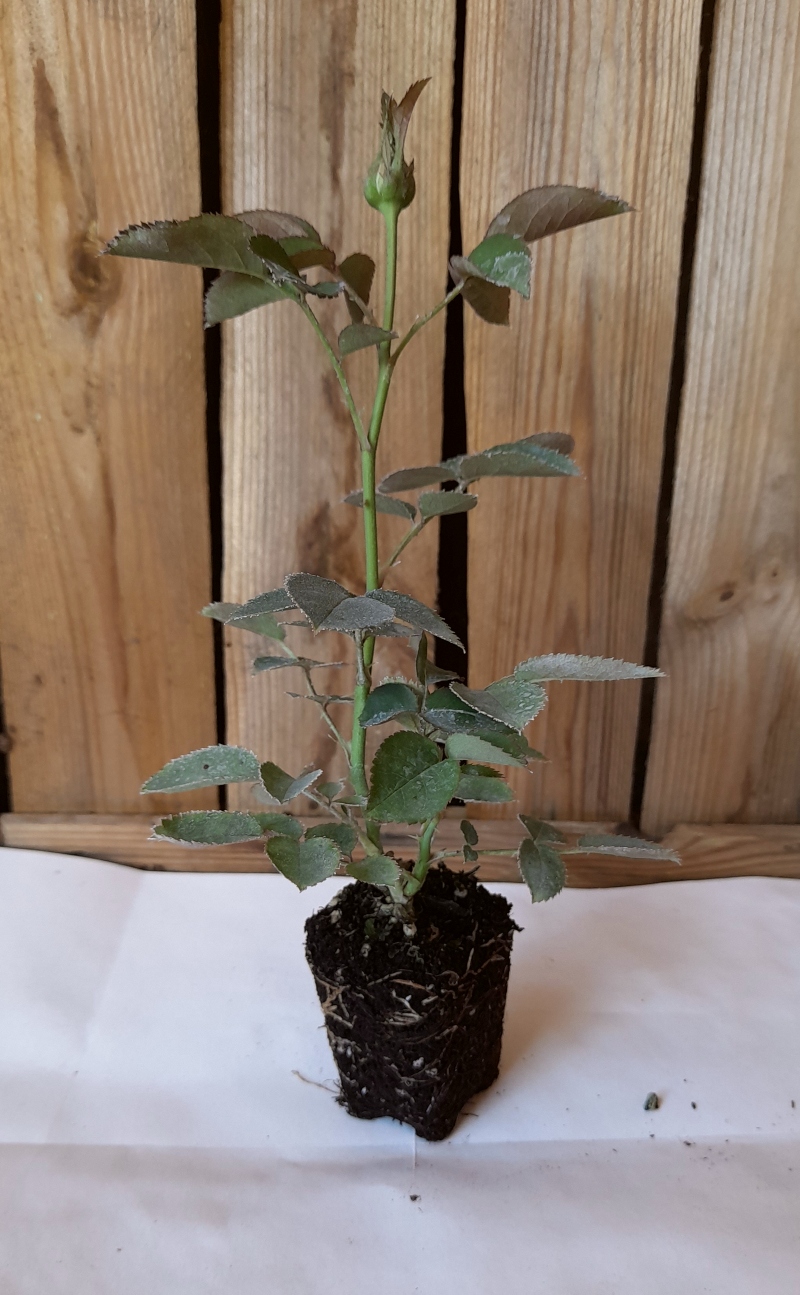
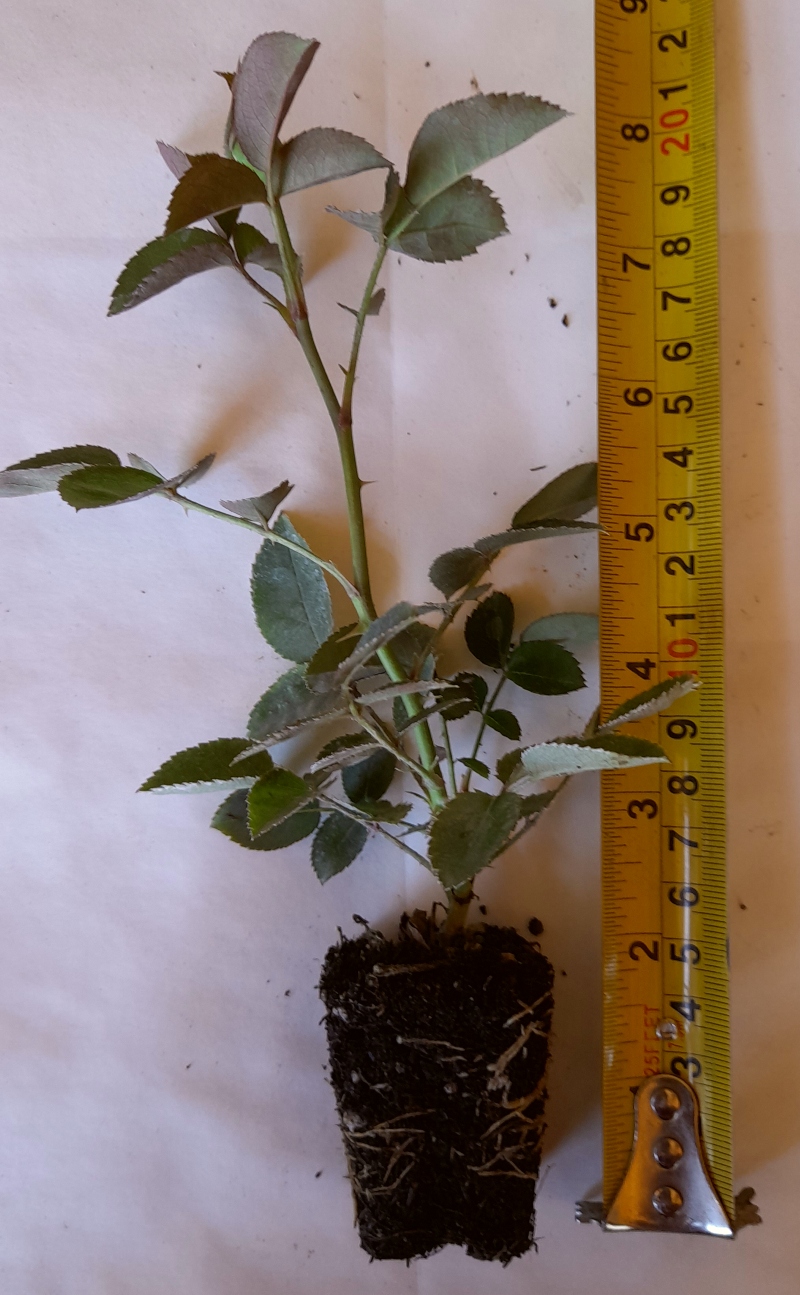
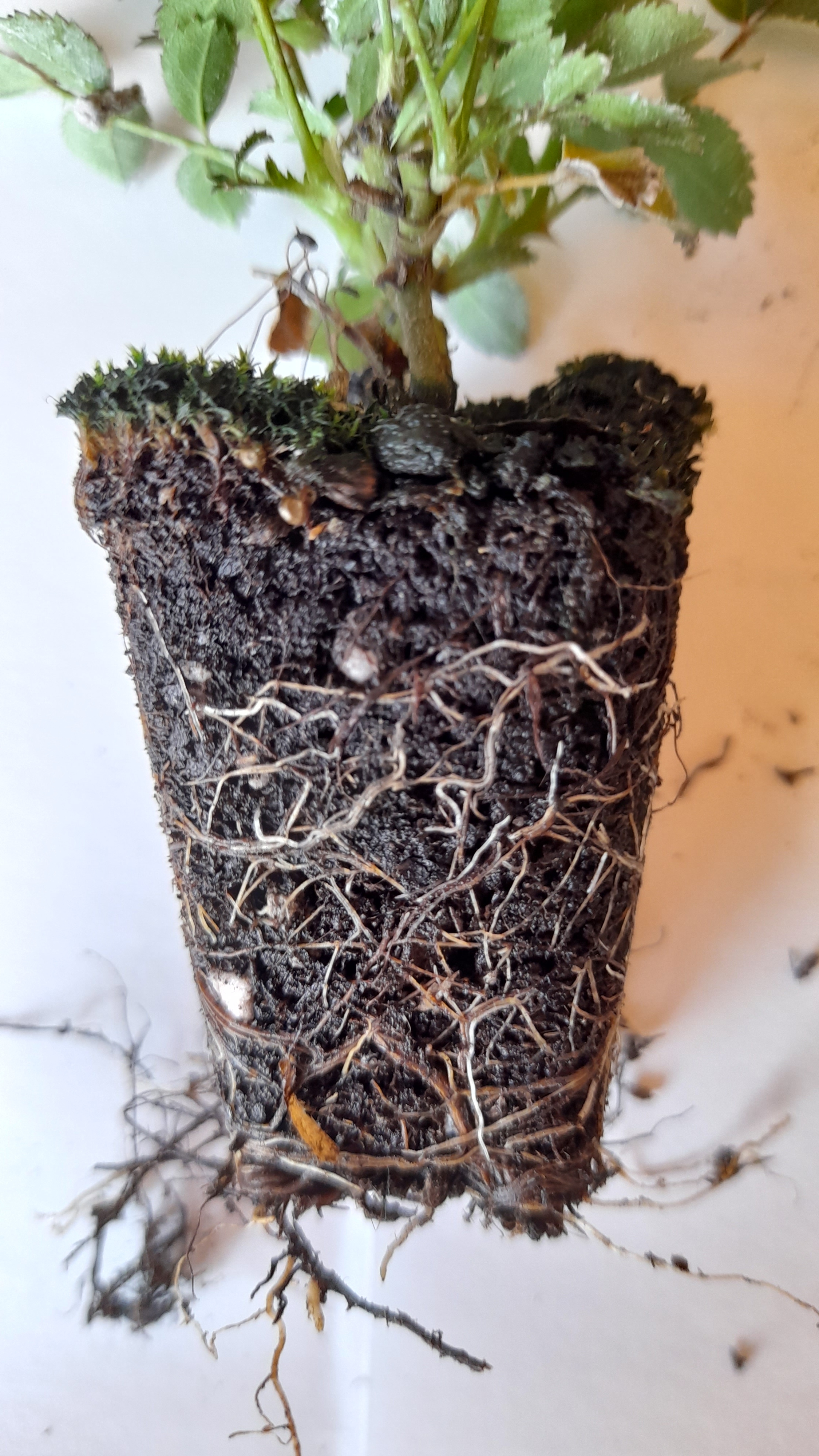
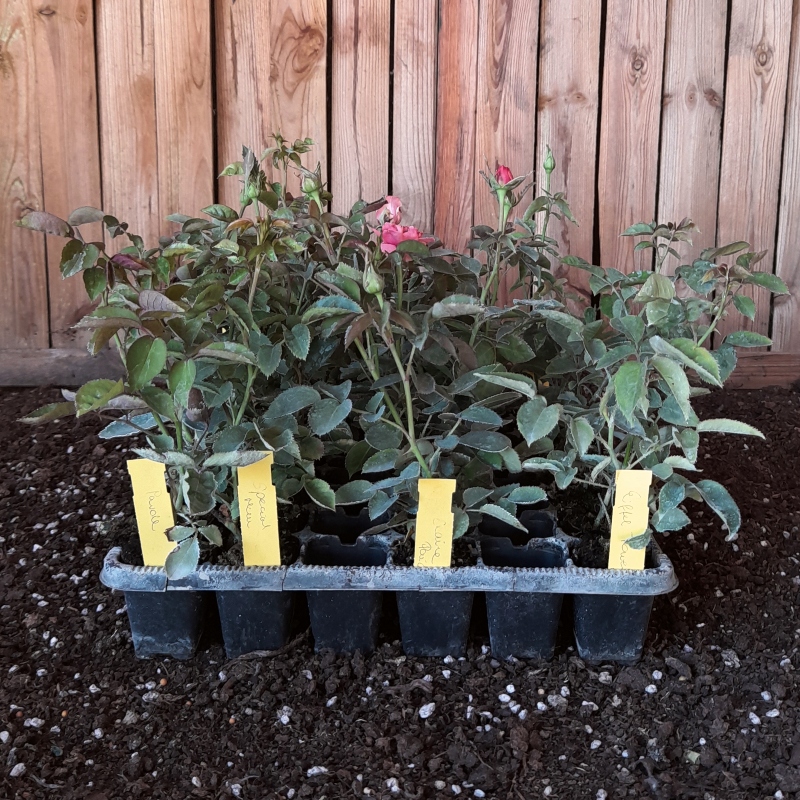
Orange Amorina – pharmaROSA® NEONATAL rooted cutting for professional production
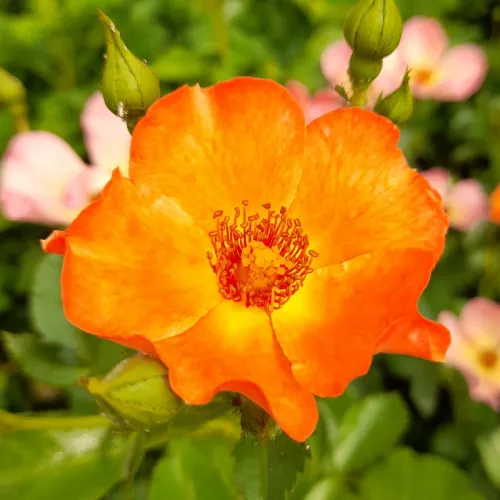
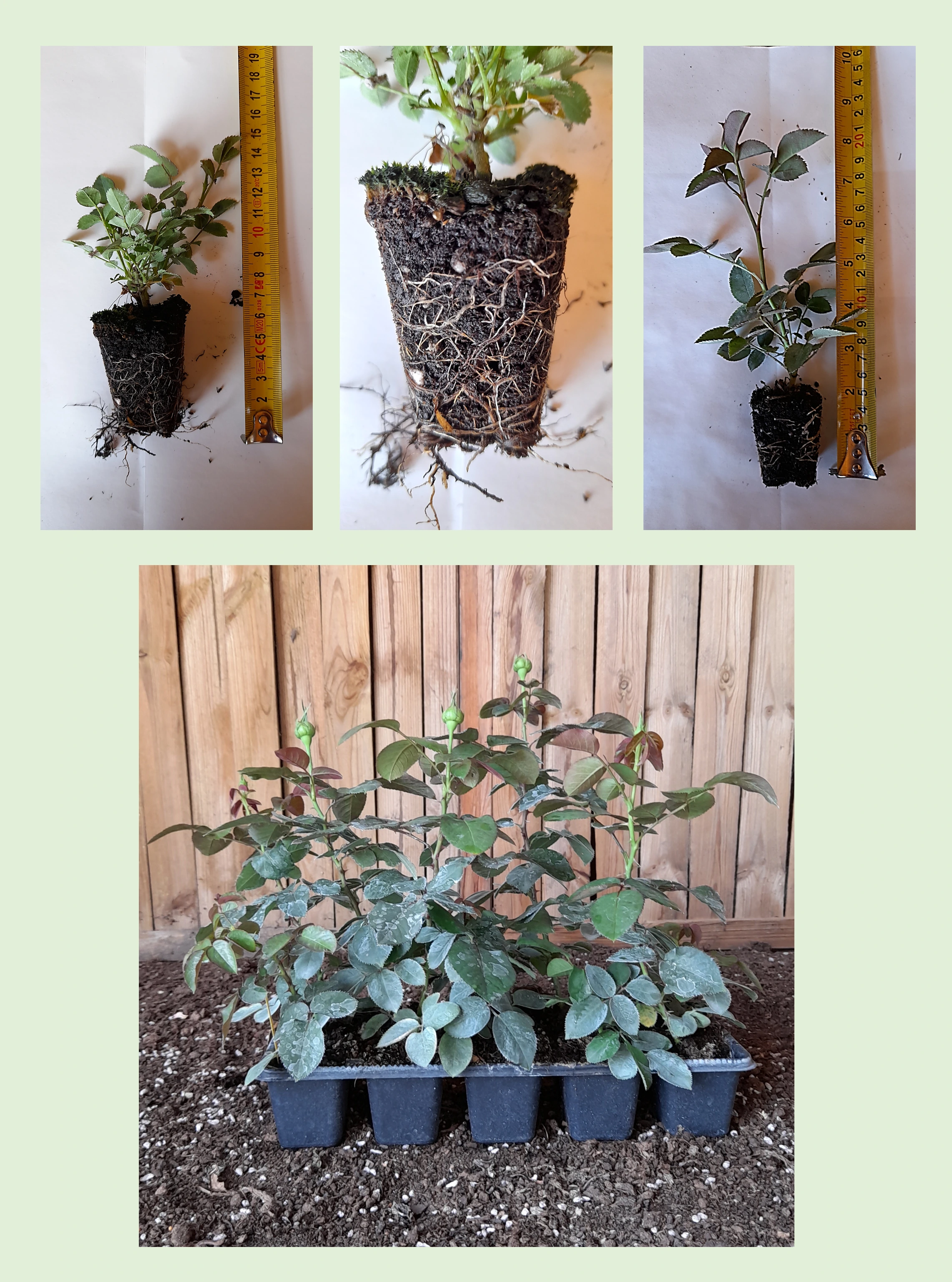
Orange Amorina delivers uniformity and fast bed coverage as pharmaROSA® NEONATAL own-root propagation material, supporting capacity planning for project-focused nursery networks that must service large municipal and commercial schemes in climates where winter and wind exposure are significant; its bushy, upright shrub habit and repeat-flowering, self-cleaning clusters are well suited to mass-planting routes in 1.5–2 L production, building dense, low-maintenance finished stock for landscape and park supply. Good disease resistance, reliable heat and drought tolerance, and predictable own-root regeneration underpin homogeneous stands with low replacement in longer-term urban and public-realm projects, while the orange, citrus-scented, pollinator-accessible, single flowers offer distinctive colour identity for thematic collections. From own-root cutting to finished plant, root systems consolidate in year one, structural shoot framework in year two, and full ornamental performance typically stabilises by year three, supporting sustainable, professional planning across wholesale pipelines.
Usage options
Finished-product ideas
- Project bedliner 2 L – 1.5–2 L bush-trained, uniform plants for fast ground coverage in mass landscape and park beds, using own-root resilience and strong disease tolerance – landscape contractor / framework tender lines
- Urban verge series – heat- and drought-tolerant 2 L stock for roadside and housing-association schemes, leveraging low maintenance and self-cleaning repeat flowering – municipal and highways planting programmes
- Orange collection block – curated batches for thematic rose gardens highlighting radiant orange, citrus-scented single blooms and partial pollinator value from stable own-root stands – show gardens and public collections
- 40–50 L specimen tub – upscaled own-root plants from 2 L starters into 40–50 L containers, emphasising bushy habit and repeat bloom for plazas, retail and hospitality sites – commercial terrace and streetscape supply
- Maintenance-light park rose – premium gold quality, low-pruning, disease-resistant plants positioned as a reliable backbone for urban green borders, fed from uniform NEONATAL trays – project-focused wholesalers and integrators
Technical cultivar profile
| Parameter |
Data |
| Name and registration |
Orange Amorina, modern shrub (landscape shrub) garden rose; commercial type landscape shrub rose, bed rose segment; other registration data not provided. |
| Origin and breeding |
Bred and introduced by De Ruiter Innovations B.V. (Netherlands); parentage unknown, breeding and registration years not provided; supplied as verified own-root material. |
| Growth and structural characteristics |
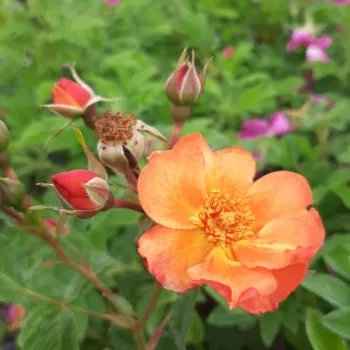
Bushy, upright shrub to about 60–85 cm high and 50–70 cm spread, moderately thorny; moderately dense, mid-green, slightly glossy foliage (RHS 137A); good overall structural balance. |
| Flower morphology |
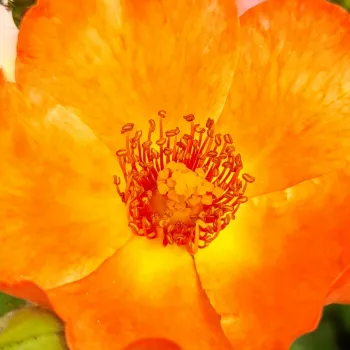
Single, flat flowers, medium size (1.5–2.75 in), 5–12 petals in clustered inflorescences; performs well in repeat flowering with an abundant second flush for extended seasonal impact. |
| Colour data and phenology |
Clear orange with subtle golden overtone; buds deep orange-red, opening to vibrant mandarin, then soft peachy-orange with creamy edges; colour retention moderate with lighter tones in strong sun. |
| Fragrance and aroma |
Medium-strength, clearly perceptible fresh orange-citrus scent; single flower form with exposed stamens is partly pollinator-friendly and visually aligns fragrance with colour expression. |
| Hip characteristics |
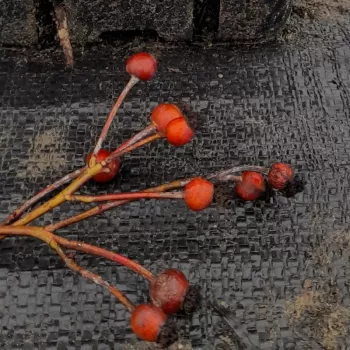
Produces moderate quantities of ellipsoid hips, approximately 10–14 mm diameter, orange-red (RHS 43A); hips contribute additional seasonal interest where deadheading is not prioritised. |
| Resistance and winter hardiness |
Good general disease resistance: resistant to powdery mildew and black spot, moderate against rust; hardy to about -21 to -18 °C (RHS H7), corresponding roughly to USDA Zone 6b and Swedish Zone 3. |
| Horticultural recommendations |
Primary uses: beds, parks, urban green spaces, edging and solitary plantings; low input, minimal pruning and feeding; recommended for uniform, dense, bush-trained finished plants and project mass plantings. |
Orange Amorina offers uniform coverage, good disease resistance and heat tolerance in a durable own-root form that supports predictable, low-replacement stands; we invite you to discuss schedules, volumes and alignment with your landscape project needs.