Botanical rose

21-041-1
21-041-2

Rosa pimpinellifolia Mon Amie Claire

Botanical rose

- – Ivan Louette

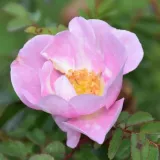
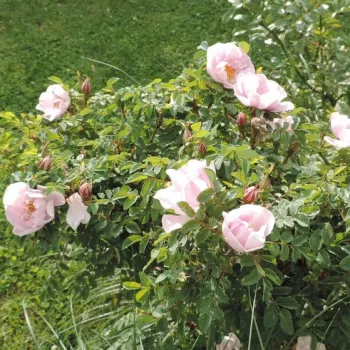
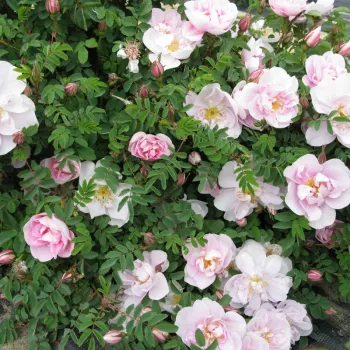
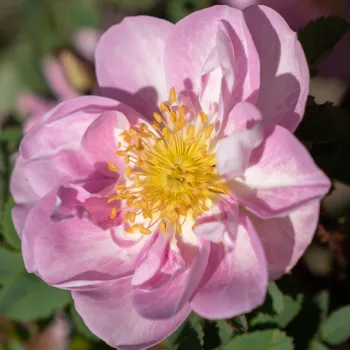
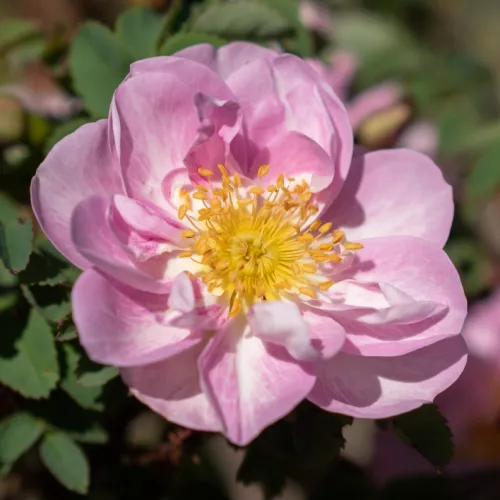
Soft, pale pink (pastel) semi-double flower that subtly fades to white and creamy-white during flowering. - landscape shrub rose - rose with a strong, clearly perceptible fragrance - scent description not available

– Strongly remontant, flowers generously twice yearly.
– Compact, bushy habit gives neat, full shrubs.
– Excellent disease resistance for low-maintenance plantings.
– Hardy to very low winter temperatures (RHS H7).
– Dark decorative hips for birds and winter interest.
– Special feature: Semi-double, insect-magnet blooms with a strong, clearly perceptible fragrance.
Project (landscape architecture / mass use)
Rosa pimpinellifolia Mon Amie Claire
pharmaROSA® NEONATAL rooted rose cutting
28,23 £
Due to courier service regulations – and the introduction of customs clearance – delivery to Ireland is temporarily suspended.
4 (5841)
facebook   twitter

ROSA PIMPINELLIFOLIA MON AMIE CLAIRE – pink landscape shrub rose – Ivan Louette

Landscape projects and collection-focused nurseries gain a resilient, own-root basis with ROSA PIMPINELLIFOLIA MON AMIE CLAIRE, a compact botanical shrub rose delivering fast, homogeneous coverage and low-input maintenance for project mass planting routes. Its dense, matt, dark bluish-green foliage and strongly remontant, semi-double blooms support uniform, bush-trained finished stock in 1.5–2 L containers, simplifying scheduling and batch presentation. Consistently high disease resistance and H7-level winter hardiness to around −29 °C underpin reliable performance for nursery networks and public-realm supply chains, even where winter and wind can be challenging. Strong pollinator attraction and decorative, bird-feeding hips align with ecological specifications in thematic and naturalistic rose collections, while own-root regeneration offers a durable, renewable planting base with predictable capacity over the long term. Developed for professional propagation beds and container grow-on, these tray-rooted cuttings fit easily into integrated production workflows and support stable, low-replacement stands by year 3, following a natural progression from root establishment in year 1 to structural shoot build-up in year 2.


Usage options

Target area Reasoning
Project mass planting in public landscapes Fast, homogeneous coverage with a dense, compact bush habit allows nurseries to supply uniform, bush-trained, low-input hedging and park shrubs in the 1.5–2 L project mass planting route, giving landscape contractors predictable, repeatable structure for public-realm schemes where fast coverage and uniformity are core promises for project-serving wholesalers
Low-maintenance hedge and boundary lines Good self-cleaning, sparse thorniness and minimal pruning needs translate into low-maintenance hedge products, offered as uniform bush-trained material in small containers for contractors working to constrained maintenance budgets, supporting positioning as a practical, fast-establishing hedge choice for landscape contractors
Pollinator-friendly thematic and show gardens Strongly pollinator-friendly, semi-double, repeatedly flowering blooms with accessible stamens enable growers to deliver credible “ecological” hedge and shrub lines from 1.5–2 L pots for thematic rose gardens and public biodiversity projects, reinforcing value where insect support and ornamental continuity are specified for public-realm suppliers
Naturalistic and woodland-edge plantings The botanical character and compact shrub form suit wildflower-style and woodland-edge schemes, where nurseries can supply uniform, dense, bush-trained units that knit quickly into naturalistic matrices, offering contractors reliable structure and soft pastel flowering from a small-pot, project-focused product path for nursery networks
Rock gardens and exposed, sunny sites Good heat and drought tolerance makes this cultivar an efficient choice for rock gardens and exposed beds, where 1.5–2 L bush-trained units establish quickly and require only occasional watering and feeding, fitting project mass planting schedules in schemes facing sunnier, drier aspects for integrated operators
Cold-climate and wind-exposed schemes H7 winter hardiness and reliable performance down to around −29 °C give nurseries confidence when supplying stock for northern and more exposed UK sites, with uniform propagation batches into 1.5–2 L finished units supporting large-scale municipal orders where tough winter and wind conditions have to be met for municipal contractors
Bird- and wildlife-focused plantings Dark, decorative, bird-feeding hips add autumn and winter value, allowing wholesalers to market bush-trained shrub units as multifunctional wildlife components in public and private projects, using the project mass planting route to build cohesive habitat corridors from manageable container sizes for ecological specifiers
Cultivar collections and botanical rose ranges The botanical rose identity and verified authenticity make this cultivar suitable for collection beds and curated ranges, supplied as consistent, own-root, bush-trained shrubs in 1.5–2 L pots, supporting nursery and garden partners building specialist Scots rose and pimpinellifolia assortments for collection-focused partners

Finished-product ideas

  • Pollinator Hedge Line – Uniform, bush-trained shrubs in 1.5–2 L containers emphasising strongly pollinator-friendly, remontant flowering for ecological hedge and boundary lines – landscape contractor and public-realm supply.
  • Botanical Park Shrub – Project mass planting product built on compact, dense growth and verified botanical origin, ideal for repeatable park shrub modules and themed Scots rose collections – project-serving wholesalers.
  • Eco-Rock Garden Unit – Small-container, bush-trained stock positioned for rock gardens and exposed beds, combining good drought tolerance with low-maintenance care needs – integrator systems and garden project chains.
  • Urban Wildlife Block – Hedge or block-planting SKU highlighting decorative, bird-feeding hips and resilient, own-root structure for long-term, low-replacement urban wildlife corridors – municipal and institutional tenders.
  • Collection Series Rosa pimpinellifolia – Curated line of botanical roses where this cultivar anchors assortments through authentic breeding background and compact habit, supplied as consistent 1.5–2 L shrubs – specialist nurseries and show gardens.

Technical cultivar profile
Parameter Data
Name and registration Current trade name: ROSA PIMPINELLIFOLIA MON AMIE CLAIRE – pink landscape shrub rose – Ivan Louette; commercial group: Botanical rose; exhibition category: shrub rose for hedging and park use.
Origin and breeding Botanical shrub rose bred in Belgium by Ivan Louette in 2005 from ‘Stanwell Perpetual’ × Rosa pimpinellifolia dwarf form (Quiberon, Brittany); detailed breeding company and introduction year not provided.
Awards and recognition Recommended in Scots roses trials at M.M. Gryshko Botanical Garden, Kyiv (2021) as a cultivar of high ornamental value and strong winter hardiness for urban green space applications in continental conditions.
Growth and structural characteristics Bushy, compact shrub with dense, matt, dark bluish-green foliage and sparsely thorned shoots; forms uniform, hedge-suitable plants; height and spread data not provided, but structure favours dense, coherent planting lines.
Flower morphology Semi-double flowers, 13–25 petals, medium size around 4–5 cm in clustered inflorescences of 3–5 blooms per stem; strongly remontant, giving a generous second flowering flush after the main early-season display.
Colour data and phenology Soft, pale pink pastel blooms (ARS mp, RHS 65C/65D) opening to near white or cream-white with a delicate veil; colour fades gradually without sudden bleaching, giving a light, refined effect across the shrub during flowering.
Fragrance and aroma Documented as having a strong, clearly perceptible rose fragrance; detailed scent character beyond intensity is not provided, but aromatic value adds to ornamental impact in hedge and specimen shrub applications.
Hip characteristics Produces numerous small, spherical hips around 10–15 mm, dark red to blackish; hips are decorative, edible and valued as winter bird food, extending interest and ecological function beyond the main flowering period.
Resistance and winter hardiness High resistance noted to powdery mildew, black spot and rust; hardiness rated RHS H7, approximately −29 to −23 °C, with Swedish zone 4 and USDA 5a, supporting reliable performance in cold, exposed landscape sites.
Horticultural recommendations Suited to hedges, specimen shrubs, rock gardens, naturalistic and woodland-edge beds and container cultivation; low maintenance with occasional pruning and feeding; finished form recommended as uniform, dense, bush-trained stock.

ROSA PIMPINELLIFOLIA MON AMIE CLAIRE offers compact, fast-covering, disease-resistant shrub structure on a durable own-root base for predictable, low-replacement stands; please contact us to align on propagation volumes and delivery windows.
Detailed product attributes

Product Identification Data

Product Name: ROSA PIMPINELLIFOLIA MON AMIE CLAIRE – pink landscape shrub rose - Ivan Louette
Product Type: pharmaROSA® NEONATAL - rooted rose cutting
Cultivar Authenticity: Verified:25.06.2025
Cultivar Quality Rating: premium bronze
Item Number: [1105] 21-041 (14.02.2026) pharmarosaneonatal.co.uk

Name and Registration

Meaning of Cultivar Name: The name in French means 'my girlfriend, Claire', and the rose was named in honour of Canadian rosarian Claire Laberge.
Cultivar Synonym: Rosa spinosissima
Original Trade Name: Mon Amie Claire
Current Trade Name: Rosa pimpinellifolia Mon Amie Claire Botanical rose Ivan Louette
Rose Group: Shrub
Commercial Type: landscape shrub rose
Commercial Group: Botanical rose
Exhibition Category: shrub rose, hedging, park rose
Collection: Botanical rose

Origin and Breeding

Introduction Year: Data not available
Registration Year: Data not available
Breeder: Ivan Louette
Breeding Company / Institution: unknown / no data
Breeding Year: Belgium, 2005
Parentage: ‘Stanwell Perpetual’ × (Rosa pimpinellifolia L. dwarf form, Quiberon peninsula, Brittany)

Awards and Honours

Horticultural Ratings and Recommendations: Scots roses in Northern Ukraine cultivar trial, M.M. Gryshko Botanical Garden (Kyiv, Ukraine) – recommended for urban green spaces as a cultivar of high ornamental value and winter hardiness (2021)

Growth and Structural Characteristics

Height: #VALUE!
Spread: #VALUE!
Growth Habit: bushy, compact
Foliage: The variety has dense foliage; the leaves are matt and a dark bluish-green.
Prickliness: sparsely thorned
Self-Cleaning Description: The flowers drop their petals after flowering, and many decorative dark red to blackish rose hips develop on the shoots, so the spent flower heads generally do not need to be removed.
Self-Cleaning Intensity: its self-cleaning is good

Flower Morphology

Petal Count: 13–25
Flower Fullness: semi-double flowered
Flower Shape: cup-shaped
Flower Size: M (1,5-2,75 in)
Inflorescence Type: clustered, 3-5 flowers/stem
Colour Code: ARS code: mp RHS code: 65C (outer), 65D (inner)
Repeat Flowering: It is strongly remontant, producing a generous second flowering.

Colour Data and Phenology

Colour: pink
Flower Colour Description: Soft, pale pink (pastel) semi-double flower that subtly fades to white and creamy-white during flowering.
Closed Bud: The closed buds are pink; no detailed information is available on additional shade or surface characteristics.
Newly Opened Flower: In newly opening condition the flowers are semi-double, uniformly very pale, soft pink in shade before the petals gradually lighten.
Full Bloom: At full opening the overall effect of the semi-double flowers is almost pure white or cream-white, at most with a very faint pink veil, therefore they give the bush a light, delicate pastel touch.
Before Fading: Before fading, the flowers, which are initially pale pink, become almost completely white or creamy-white, the original pink remaining only as a very faint shade on the petals.
Colour Fading Description: During opening, the flower’s colour gradually fades from light pink to white and creamy‑white; in strong sunlight the pink hue only fades moderately — it becomes slightly paler and does not bleach out suddenly.
Colour Retention Level: During opening, the bloom's colour gradually fades from light pink to white/cream‑white; in strong sunlight the pink hue only moderately fades — it pales slightly and does not bleach out suddenly.

Fragrance and Aroma

Fragrance Strength: rose with a strong, clearly perceptible fragrance
Fragrance Character: scent description not available
Pollinator Attraction: Semi-double flowers approximately 4–5 cm in diameter, flowering repeatedly from May to autumn, have readily accessible stamens, and the semi-double flower form combined with exposed stamens makes them highly attractive to pollinators.
Pollinator-Friendly Rating: Strongly pollinator-friendly variety (several specialist sources label it "bienenfreundlich", "Attraktiv für Insekten" and assign it the maximum insektenfreundlich rating)

Hip Characteristics

Hip Shape: spherical
Hip Colour: dark red
Hip Comment: Its dark, blackish hips are decorative, edible and provide good food for birds.

Resistance and Hardiness

Hardiness (°C): -29–-23 °C
Heat and Drought Tolerance Description: Well suited to sunny, exposed and drier sites and tolerant of moderate drought; in prolonged, hot drought it requires regular watering.
Disease Resistance: resistant
  • powdery mildew – resistant
  • black spot – resistant
  • rust – resistant

Horticultural Recommendations

Recommended product path: Project mass planting
Release form: Uniform, dense, bush-trained finished product
Recommended use: Maintenance requirement low; requires minimal care such as occasional pruning and feeding.
Primary Uses: hedge, specimen ornamental shrub, rock garden, wildflower or naturalistic bed and woodland-edge planting, container cultivation

Comments

Positioning: Project (landscape architecture / mass use)
Target customer/channel: Landscape contractor, project-serving wholesaler / maintenance
Main value proposition: Fast coverage – uniformity
ROSA PIMPINELLIFOLIA MON AMIE CLAIRE – pink landscape shrub rose - Ivan Louette
Soft, pale pink (pastel) semi-double flower that subtly fades to white and creamy-white during flowering. - landscape shrub rose - rose with a strong, clearly perceptible fragrance - scent description not available
#VALUE!
Inflorescence: clustered, 3-5 flowers/stem Height: #VALUE! Flower shape: cup-shaped Winter hardiness: 4b pink - - landscape shrub rose - Flower size: M (1,5-2,75 in) Flower size: M (1,5-2,75 in) - Height: #VALUE! Height: #VALUE! - Flower fullness: semi-double flowered Rosa pimpinellifolia Mon Amie Claire - Roses in the garden | pharmaROSA® Neonatal - premium bronze Ivan Louette

We showcase the external appearance of the roses available for online purchase from our webshop.


Which product type is right for you?


PharmaRosa® NEONATAL is the cost‑effective starting point for rose product production.

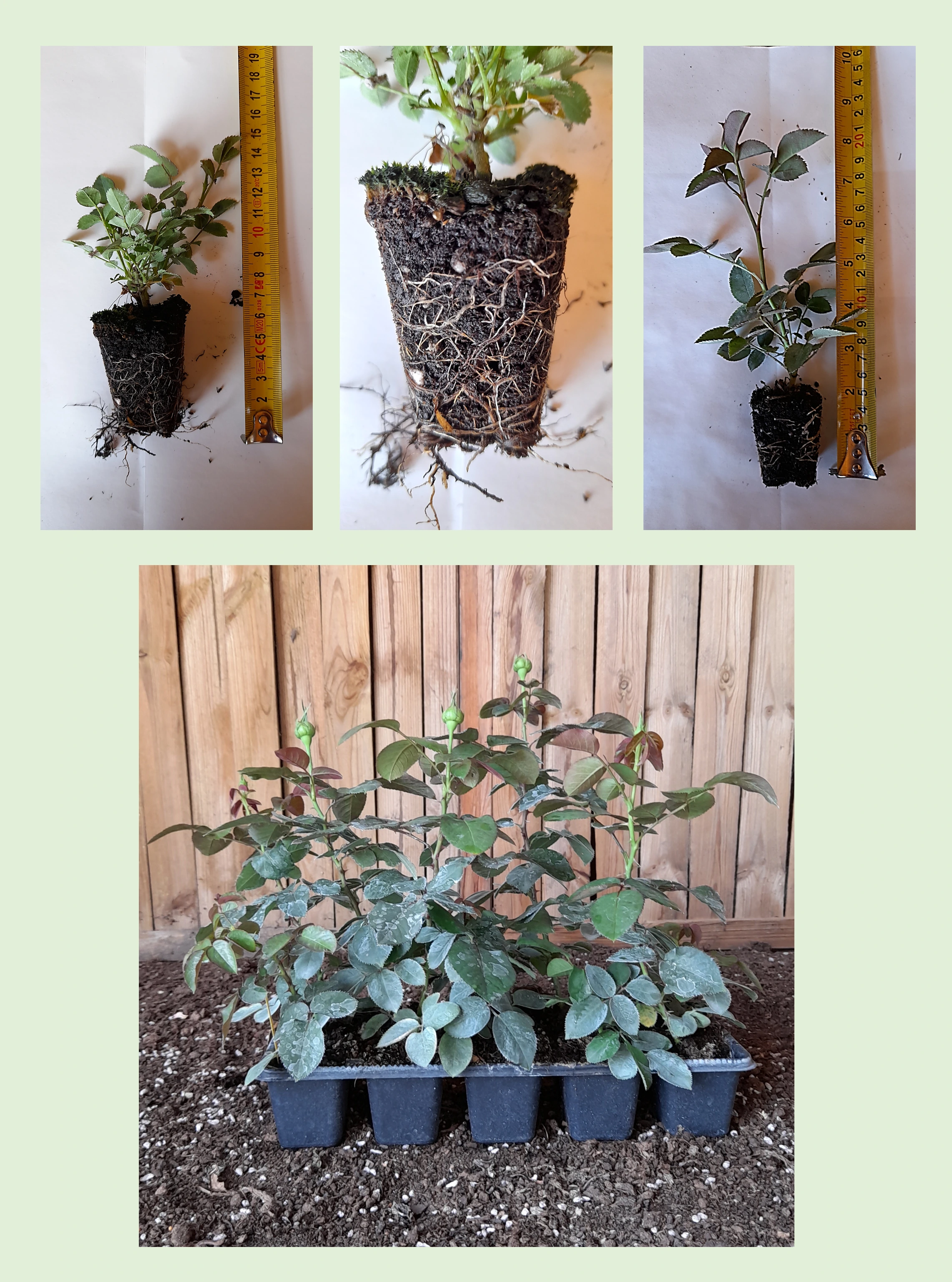
As a uniform, own‑rooted propagation material, it provides a stable basis for further growing-on and can be integrated flexibly into different finished product production technologies.
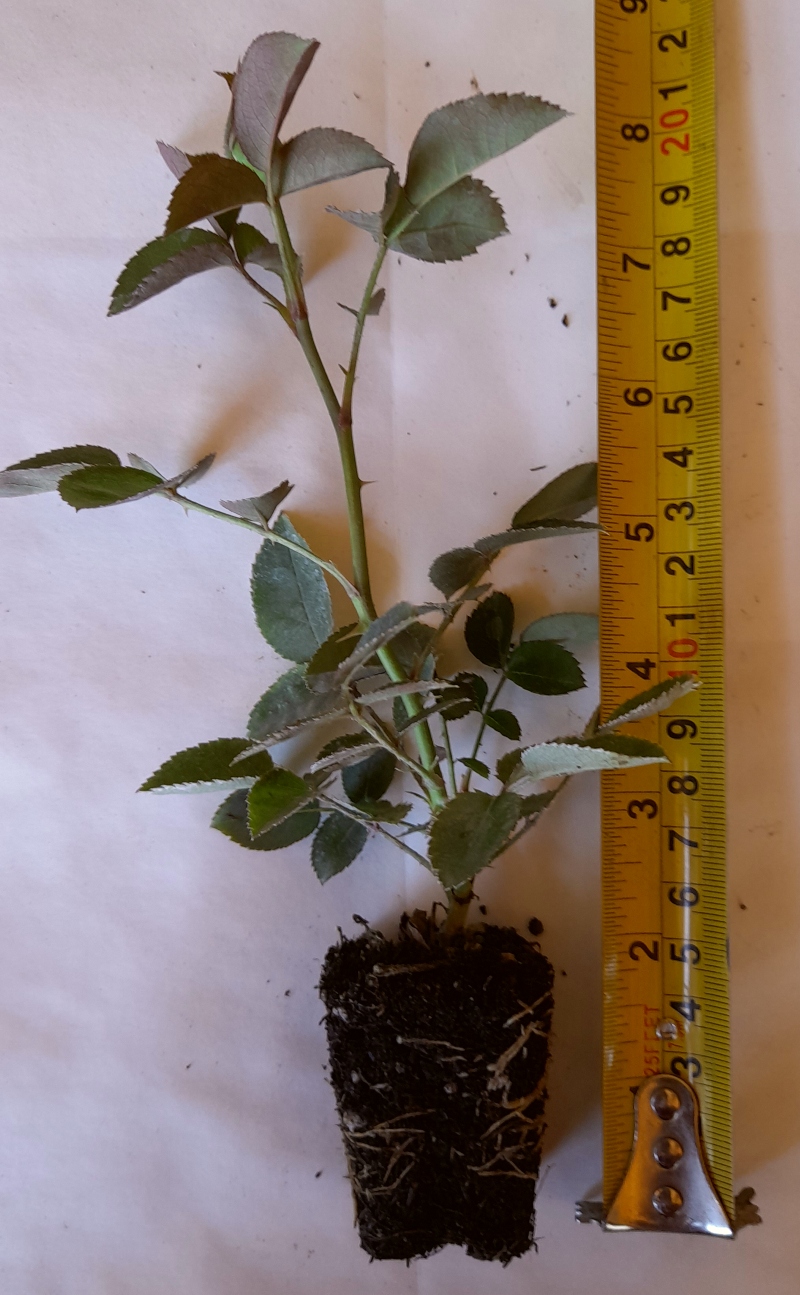
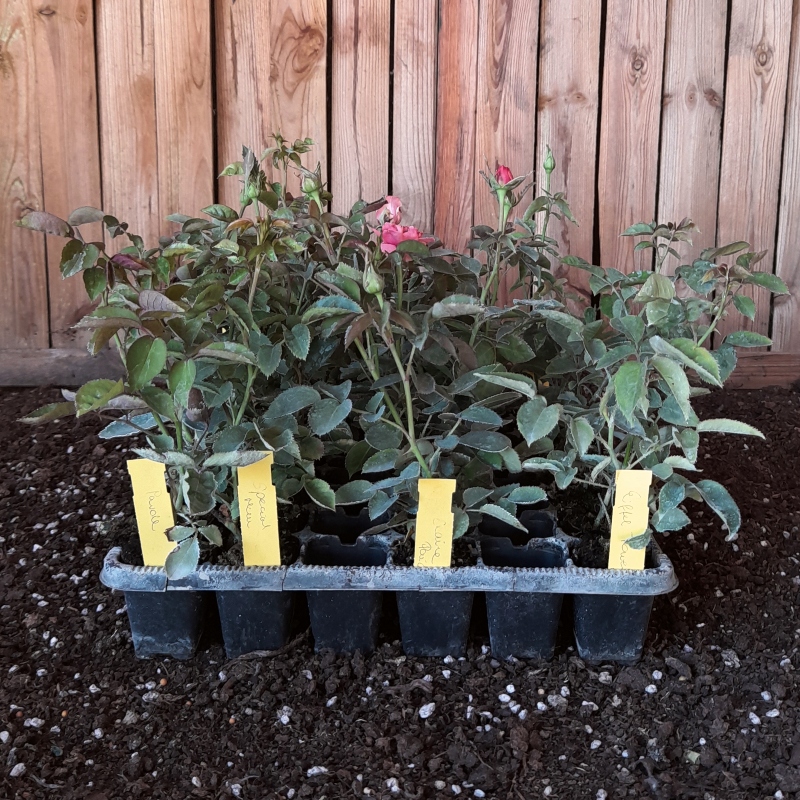
Rooted in trays (rooted), 3–6‑month‑old, own‑rooted rose cutting.
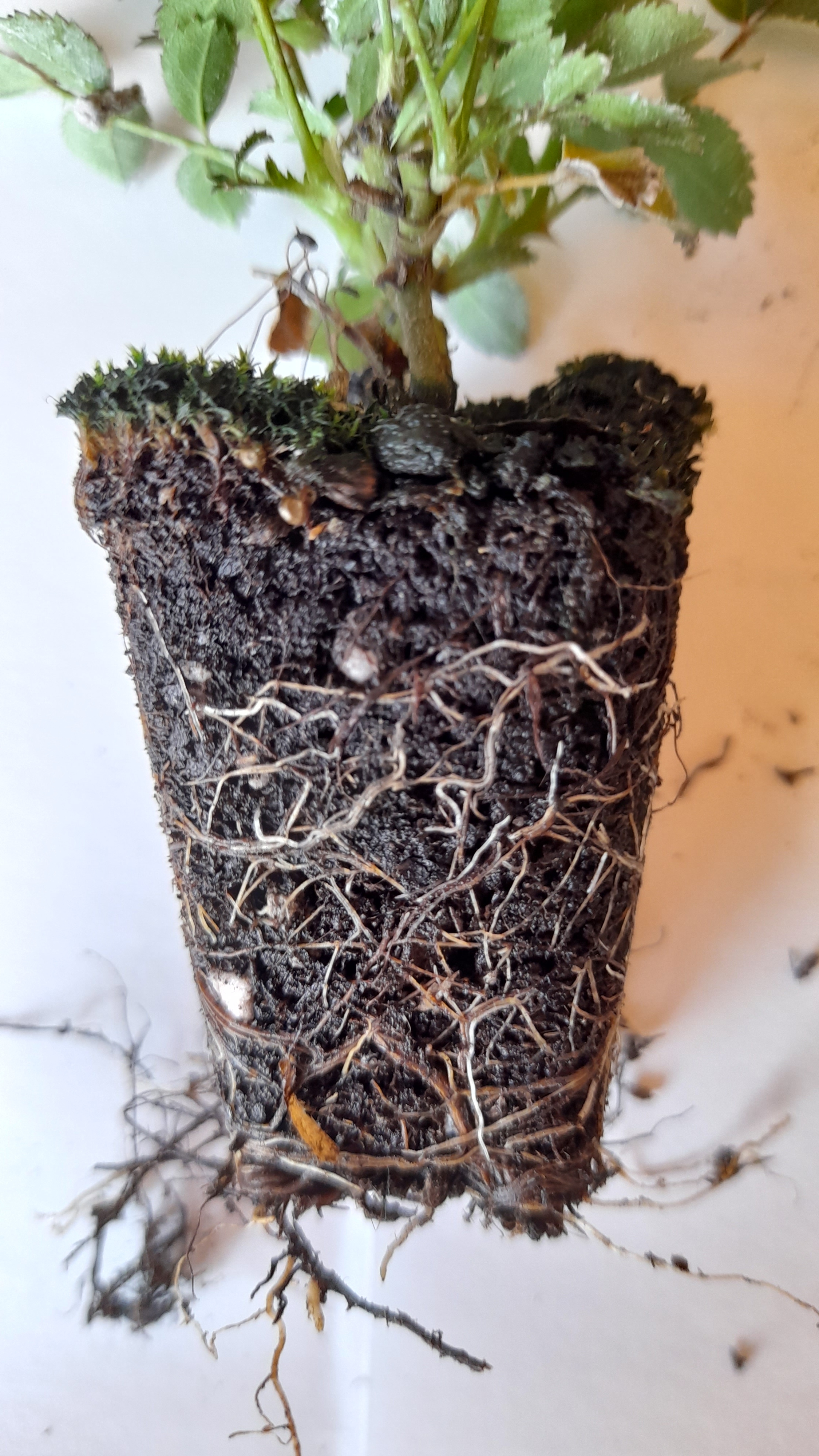
Uniform developmental stage, with a root system that has thoroughly penetrated the plug.
For professional growing‑on.
Tray packaging: 10 pcs/tray.
Quality and varietal identity: production supported by a dedicated identification and traceability logic.
Can be transplanted during frost‑free periods, designed for finished product production.

PharmaRosa® NEONATAL provides a controlled, uniform starting stock for planned growing‑on that can be integrated into your own technology – especially where scheduling and varietal identity are paramount.


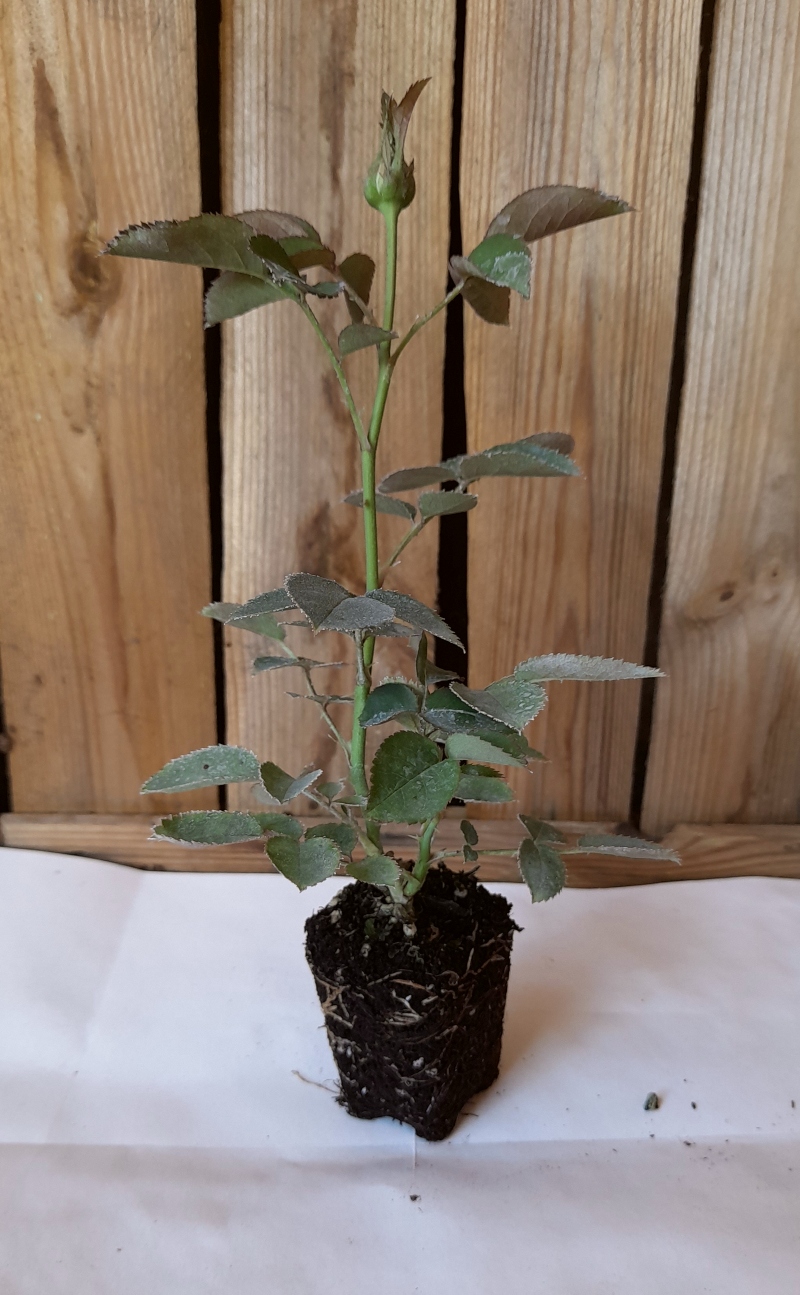
PharmaRosa® NEONATAL own-rooted rose propagation material in a plug, with a root system penetrating the plug (semi-finished product / semi-finished rose). PharmaRosa® NEONATAL rose propagation material size: 3–6‑month‑old, own-rooted cutting with a uniform developmental stage. PharmaRosa® NEONATAL rose propagation material root system: plug densely penetrated by well-developed white roots (root system detail). PharmaRosa® NEONATAL tray stock: own-rooted rose propagation material in trays, uniform developmental stage (10 pcs/tray).

Captions (from left to right): Semi-finished product (NEONATAL own-rooted rose propagation material in a plug with a fully developed root system) • Size demonstration (3–6‑month‑old, uniform cutting) • Root system detail (plug penetrated by the root system) • Tray stock (10 pcs/tray, uniform developmental stage)

pharmarosaneonatal.atpharmarosaneonatal.co.ukpharmarosaneonatal.czpharmarosaneonatal.depharmarosaneonatal.ropharmarosaneonatal.sipharmarosaneonatal.skpharmarosaneonatal.itpharmarosaneonatal.frpharmarosaneonatal.nlpharmarosaneonatal.plpharmarosaneonatal.lupharmarosaneonatal.ptpharmarosaneonatal.espharmarosaneonatal.ltpharmarosaneonatal.sepharmarosaneonatal.lvpharmarosaneonatal.eepharmarosaneonatal.fipharmarosaneonatal.hu

Which product type is right for you?

Pages for private customers
Garden roses for the family garden, with minimal care  → ORIGINAL®
Premium garden roses – instant impact, a truly showpiece garden  → EXTRA®
Pages for professionals and private customers
Roses for public spaces – large areas, sustainable maintenance  → NATURAL®
Roses for projects – hedge and row planting, fast implementation  → RAPID®
For professional partners only
Production – propagation material for garden roses, wholesale  → NEONATAL®

Company details

PharmaRosa Ltd.
Company registration number: 01-09-717479
VAT number: 13075314-2-43
Plant health registration no.: HU130721
Bank account (IBAN):
HU85117631891388688400000000
BIC (SWIFT): OTPVHUHB
Bank name: OTP Bank Nyrt.