Botanical rose

20-940-1
20-940-2

Rosa omeiensis pteracantha

Botanical rose

- – -

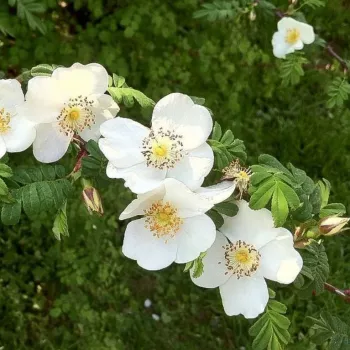
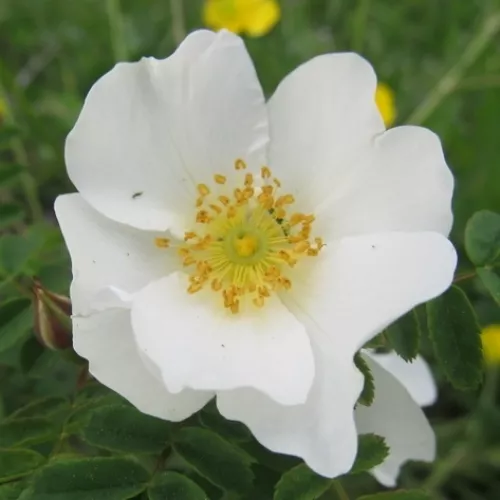
Small, simple, mostly four-petalled flower with pure white or slightly creamy petals and a pale yellow–golden-yellow ring of stamens, single-colour overall appearance without striping. - landscape shrub rose - mild, restrained fragrance rose - delicate, s

– Robust shrub with dense, upright habit.
– Simple white blooms with golden stamens.
– Highly resistant to major rose diseases.
– Very frost-hardy and drought-tolerant shrub.
– Especially attractive to bees and butterflies.
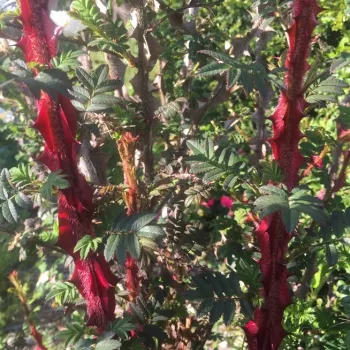
– Special feature: Striking, wing-like red thorns create impressive, protective hedges.
Project (landscape architecture / mass use)
Rosa omeiensis pteracantha
pharmaROSA® NEONATAL rooted rose cutting
28,12 £
Due to courier service regulations – and the introduction of customs clearance – delivery to Ireland is temporarily suspended.
3 (3696)
facebook   twitter

ROSA OMEIENSIS PTERACANTHA – white landscape shrub rose

Landscape production of Rosa omeiensis pteracantha offers professional growers a robust own-root base for uniform, bush-trained project stock where coverage, structural presence and low ongoing input are central. This botanical shrub aligns well with project mass planting in UK nursery and public-realm supply chains, performing reliably even in exposed sites with good winter and wind tolerance across northern regions. Once established, its good drought resilience and dense, thorny framework support low-maintenance hedge and protective-strip concepts, while the single white flowers and decorative hips add seasonal impact. The non-remontant flowering and simple, pollinator-friendly blooms are easy to schedule for solitary specimen and group plantings in thematic and naturalistic rose collections, with the own-root form underpinning long-term stability, predictable regeneration and homogeneous stands. In practice, rooted cuttings build roots in year one, then structural shoots in year two, reaching full ornamental value around year three for dependable projects. Tray-grown pharmaROSA® NEONATAL material integrates smoothly into nursery logistics, supporting continuous throughput into 1.5–2 L containers and onward field or landscape use for wholesale partners.


Usage options

Target area Reasoning
Project mass planting for fast, uniform structural cover The cultivar’s strong structural presence and dense, thorny framework translate into quick visual fill and consistent height lines in project mass planting, aligning well with uniform, dense, bush-trained finished products from 1.5–2 L pots. As own-root material it supports stable, repeatable batches for landscape-scale schemes where fast coverage and uniformity are key value promises to project-serving wholesalers and landscape contractors.
Hedge and protective strip production (impenetrable barriers) Densely thorned shoots and an upright, bushy habit make this variety particularly suited to thorny, impenetrable hedge and protective-strip concepts grown as uniform, dense, bush-trained items. Own-root propagation provides long-lived, regenerating hedge lines with low replacement needs, supporting project mass planting routes focused on protective corridors supplied through public-realm channels.
Low-maintenance park and group plantings Low maintenance requirements combined with good drought and heat tolerance allow producers to position this cultivar for extensive park and group plantings where irrigation and aftercare budgets are constrained. NEONATAL tray-rooted plants slot efficiently into 1.5–2 L production, then on into large-scale project mass planting, meeting specification for resilient park stock for municipal suppliers.
Frost-hardy structural planting in colder regions With hardiness down to approximately -28–-23 °C and RHS H5 rating, this shrub supports reliable overwintering in harsher UK and northern European sites, well suited to landscape projects in colder regions. Uniform, dense, bush-trained NEONATAL starts give predictable field performance, supporting mass planting where long-term structural reliability is a core promise for regional nurseries.
Pollinator- and wildlife-oriented rose schemes Single, open white flowers with easily accessible stamens and confirmed pollinator-friendly behaviour support insect- and bird-friendly schemes, including naturalistic gardens and wildlife corridors. Using own-root NEONATAL material into 1.5–2 L pots enables consistent scheduling for thematic rose collections where ecological value and coverage underpin offers to environmental contractors.
Naturalistic and botanical rose collections The botanical origin, species character and historic introduction make this cultivar suitable for thematic and collection plantings in show gardens and curated rose ranges. Own-root propagation through NEONATAL ensures cultivar authenticity and long-term stand stability, supporting project mass planting concepts for institutions emphasising diversity and collection curators.
Floristry stem and branch material production The striking, densely thorned shoots and later decorative hips provide distinctive floristry material when grown as uniform, dense, bush-trained stock, particularly if some plants are taken on into 40–50 litre field or container specimens. Own-root plants regenerate strongly after cutting, maintaining structural cover and ensuring reliable replenishment capacity for floristry wholesalers.
Decorative hip and winter-structure production Egg-shaped, orange-red hips up to 15 mm create a defined autumn–winter effect, valuable in park, hedge and naturalistic settings. Using NEONATAL rooted cuttings through a project mass planting route enables nurseries to offer predictable hip displays across large blocks, with dependable performance even in exposed, windy sites valued by specification-led buyers.

Finished-product ideas

  • Project hedge module 2 L – uniform, dense, bush-trained 1.5–2 L plants for fast-establishing, impenetrable hedges and protective strips, leveraging thorn density and low maintenance – landscape contractor / project-serving wholesaler
  • Park group shrub 5–7.5 L – own-root shrubs potted on from NEONATAL into mid-size containers for rapid park and group planting, combining fast structural coverage with good drought and frost tolerance – municipal and institutional projects
  • Wildlife corridor mix 2 L – 1.5–2 L material integrated into pollinator- and bird-friendly species mixes, using single, accessible flowers and hips for ecological schemes and naturalistic plantings – environmental and restoration contractors
  • Botanical collection specimen 40–50 L – selected plants grown into large 40–50 litre specimens showcasing species character, hips and structural form, ideal for thematic rose gardens and curated collections – arboreta, show gardens, specialist nurseries
  • Floristry branch block – tightly spaced field or container blocks grown from NEONATAL material for repeated cutting of thorny stems and hip-bearing shoots, balancing regeneration and uniformity – floristry and foliage wholesalers

Technical cultivar profile
Parameter Data
Name and registration Botanical shrub form traded as Rosa omeiensis pteracantha, commercial type landscape shrub rose within the Botanical rose group; unregistered cultivar name, authenticity verified 26.08.2025 under pharmaROSA NEONATAL item [1063].
Origin and breeding Species rose of Chinese origin, introduced around 1890 via Vilmorin-Andrieux & Cie (France); parentage unknown and breeder not recorded, representing a historic botanical addition to shrub rose assortments.
Awards and recognition Recognised historically with a Royal Horticultural Society First Class Certificate in the United Kingdom in 1905, supporting its suitability for serious garden, collection and landscape use over the long term.
Growth and structural characteristics Upright, bushy shrub with dense foliage and very thorny shoots; medium–dark green leaves where data exist, used as solitary or grouped structural shrub, hedge or protective strip; exact mature height and spread not provided.
Flower morphology Single, flat flowers of large size class with approximately 5–12 petals; solitary along the shoots, non-remontant with one main flowering period, small simple blooms that are visually clean and easy to integrate into naturalistic schemes.
Colour data and phenology Pure white to slightly creamy petals with a pale to golden-yellow stamen ring, ARS colour code W and RHS 155C inner and outer; flowers small and simple without striping, with no detailed data on colour change or fading behaviour.
Fragrance and aroma Delicate, sweet, slightly oily scent of mild strength, adding a restrained fragrance layer without dominating planting compositions; pollinator-friendly floral form with open stamens attractive to bees, butterflies and other insects.
Hip characteristics Produces decorative egg-shaped hips about 8–15 mm in diameter, orange-red in colour; hips primarily ornamental, contributing to autumn and winter structure and wildlife value in hedges, group plantings and naturalistic rose schemes.
Resistance and winter hardiness Rated resistant to powdery mildew, black spot and rust under normal conditions; hardy to about -28–-23 °C (RHS H5, USDA 5a, Swedish Zone 4), with good heat and drought tolerance once established in sunny, well-managed sites.
Horticultural recommendations Recommended for solitary shrubs, park and group plantings, hedges, protective strips, naturalistic and wildlife gardens and floristry material; low maintenance with project mass planting route from 1.5–2 L pots and uniform, dense, bush-trained finish.

Rosa omeiensis pteracantha offers frost-hardy structure, dense thorny cover and ornamental hips on a long-lived own-root base that supports predictable, homogeneous project stands; please feel free to contact us to align on capacity and scheduling.
Detailed product attributes

Product Identification Data

Product Name: ROSA OMEIENSIS PTERACANTHA – white landscape shrub rose
Product Type: pharmaROSA® NEONATAL - rooted rose cutting
Cultivar Authenticity: Verified:26.08.2025
Cultivar Quality Rating: premium bronze
Item Number: [1063] 20-940 (14.02.2026) pharmarosaneonatal.co.uk

Name and Registration

Meaning of Cultivar Name: The cultivar name derives from Mount Emei (Omei) and the Greek pteracantha ('winged thorn'), evoking the mountainous origin and the winged thorns.
Cultivar Synonym: Rosa sericea subsp. omeiensis f. pteracantha; Rosa sericea f. pteracantha; Rosa sericea
Original Trade Name: Rosa sericea L. f. pteracantha Franch.
Current Trade Name: Rosa omeiensis pteracantha Botanical rose -
Rose Group: Shrub
Commercial Type: landscape shrub rose
Commercial Group: Botanical rose
Exhibition Category: species roses; shrub roses
Collection: Botanical rose

Origin and Breeding

Initial Distributor: Vilmorin-Andrieux & Cie (France)
Registration Year: unregistered variety
Breeder: -
Breeding Company / Institution: Breeder company / institution: unknown / no data
Breeding Year: China, 1890
Parentage: unknown

Awards and Honours

Horticultural Ratings and Recommendations: Horticultural ratings and recommendations: -
Competition and Show Awards: Royal Horticultural Society – First Class Certificate (United Kingdom) (1905)

Growth and Structural Characteristics

Height: #VALUE!
Spread: #VALUE!
Growth Habit: upright, bushy
Foliage: The variety has dense foliage. There is little information available about the leaf surface, but their colour is a medium–dark green.
Prickliness: densely thorned
Self-Cleaning Description: No data available on self-cleaning.

Self-Cleaning Intensity: Self-cleaning strength: No data on self-cleaning strength.

Flower Morphology

Petal Count: 5–12
Flower Fullness: single flowered
Flower Shape: flat
Flower Size: L (2,75-3,95 in)
Inflorescence Type: solitary
Colour Code: ARS code: W RHS code: 155C (outer), 155C (inner)
Repeat Flowering: Non-remontant; blooms once.

Colour Data and Phenology

Colour: white
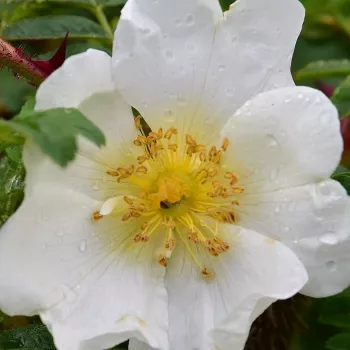
Flower Colour Description: Small, simple, mostly four-petalled flower with pure white or slightly creamy petals and a pale yellow–golden-yellow ring of stamens, single-colour overall appearance without striping.

Closed Bud: Closed bud: data not available.
Newly Opened Flower: Freshly opening flower: The freshly opening flowers are small and simple, appearing along the shoots with pure white or slightly creamy petals and a pale yellow ring of stamens in the centre; at this stage the colouring is uniform, the main contrast being
Full Bloom: Full opening: When fully open the flowers are small, simple, mostly four‑petalled, with pure white–cream petals and a conspicuous pale yellow ring of stamens; there is no significant colour difference between the petal margin and base, the flower is singl
Before Fading: Pre-flowering: data not available.
Colour Fading Description: No data on colour fading.
Colour Retention Level: Colour fading description: No data on colour fading.

Fragrance and Aroma

Fragrance Strength: mild, restrained fragrance rose
Fragrance Character: delicate, sweet, slightly oily scent
Pollinator Attraction: Pollinator attraction: its simple, four‑petalled open white flowers have readily accessible stamens, so the flower form and stamen accessibility make it particularly attractive to bees, butterflies and other insect pollinators.
Pollinator-Friendly Rating: Pollinator-friendly label: Specifically pollinator-friendly variety

Hip Characteristics

Hip Shape: egg-shaped
Hip Colour: orange-red
Hip Comment: Rose hips – note: Primarily ornamental; produces decorative, brightly coloured rose hips in autumn and winter.

Resistance and Hardiness

Hardiness (°C): -28–-23 °C
Heat and Drought Tolerance Description: Tolerates summer heat well; reliable in a sunny position and copes well with drought once well established. However, during prolonged drought it requires regular watering to maintain good condition.
Disease Resistance: resistant
  • powdery mildew – resistant
  • black spot – resistant
  • rust – resistant

Horticultural Recommendations

Recommended product path: Project mass planting
Release form: Uniform, dense, bush-trained finished product
Recommended use: Maintenance requirement low; very frost-hardy, drought-tolerant and—according to sources—particularly disease-resistant, but under unfavourable conditions roses can still suffer fungal diseases (powdery mildew, black spot, rust).
Primary Uses: highlighted uses: solitary ornamental shrub, park and group plantings, hedge and protective strip (especially for thorny, impenetrable hedges), naturalistic and wildlife gardens, insect- and bird-friendly plantings, and as floristry material for visual im

Comments

Positioning: Project (landscape architecture / mass use)
Target customer/channel: Landscape contractor, project-serving wholesaler / maintenance
Main value proposition: Fast coverage – uniformity
ROSA OMEIENSIS PTERACANTHA – white landscape shrub rose
Small, simple, mostly four-petalled flower with pure white or slightly creamy petals and a pale yellow–golden-yellow ring of stamens, single-colour overall appearance without striping. - landscape shrub rose - mild, restrained fragrance rose - delicate, s
#VALUE!
Inflorescence: solitary Height: #VALUE! Flower shape: flat Winter hardiness: 6b white - Vilmorin-Andrieux & Cie (France) landscape shrub rose - Flower size: L (2,75-3,95 in) Flower size: L (2,75-3,95 in) - Height: #VALUE! Height: #VALUE! - Flower fullness: single flowered Rosa omeiensis pteracantha - Roses in the garden | pharmaROSA® Neonatal - premium bronze -

We showcase the external appearance of the roses available for online purchase from our webshop.


Which product type is right for you?


PharmaRosa® NEONATAL is the cost‑effective starting point for rose product production.

As a uniform, own‑rooted propagation material, it provides a stable basis for further growing-on and can be integrated flexibly into different finished product production technologies.
Rooted in trays (rooted), 3–6‑month‑old, own‑rooted rose cutting.
Uniform developmental stage, with a root system that has thoroughly penetrated the plug.
For professional growing‑on.
Tray packaging: 10 pcs/tray.
Quality and varietal identity: production supported by a dedicated identification and traceability logic.
Can be transplanted during frost‑free periods, designed for finished product production.

PharmaRosa® NEONATAL provides a controlled, uniform starting stock for planned growing‑on that can be integrated into your own technology – especially where scheduling and varietal identity are paramount.


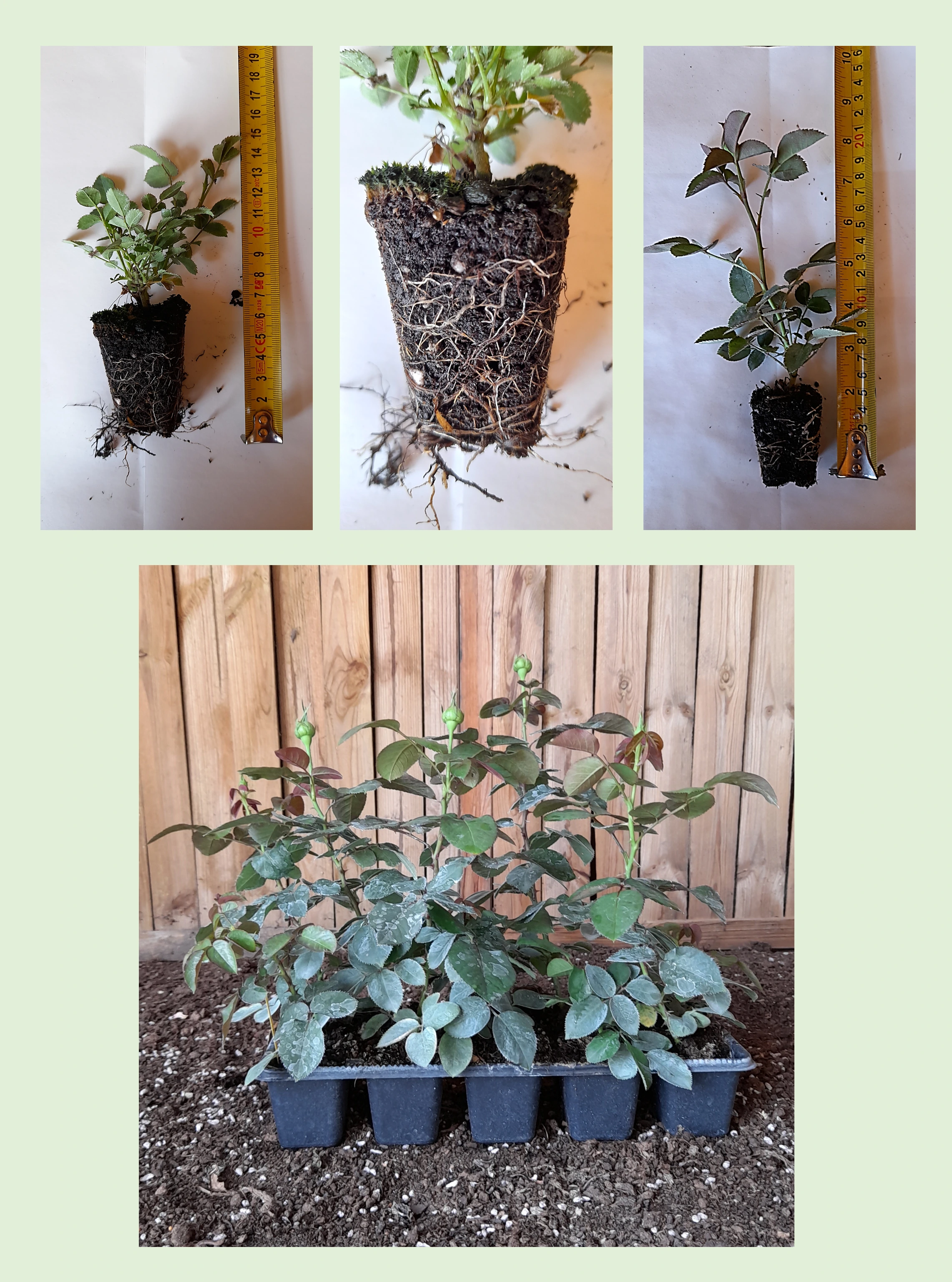
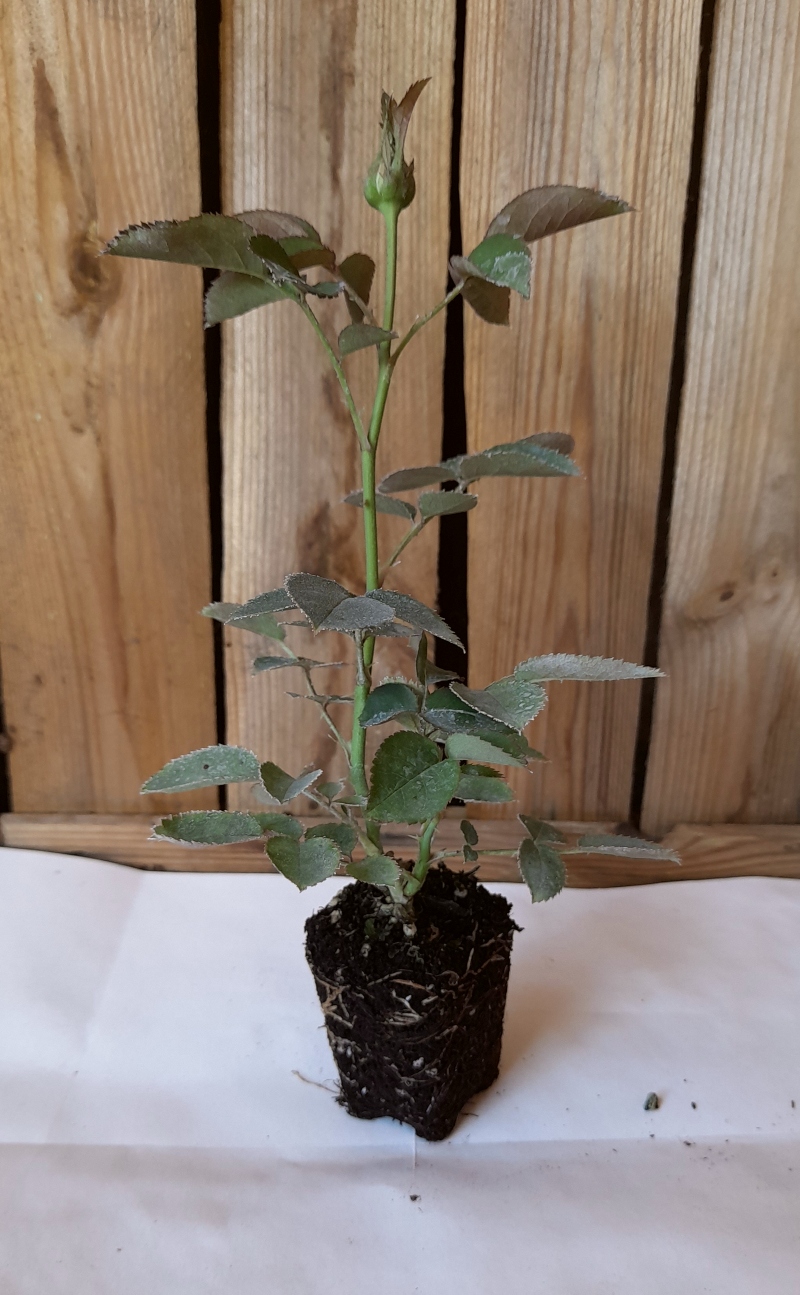
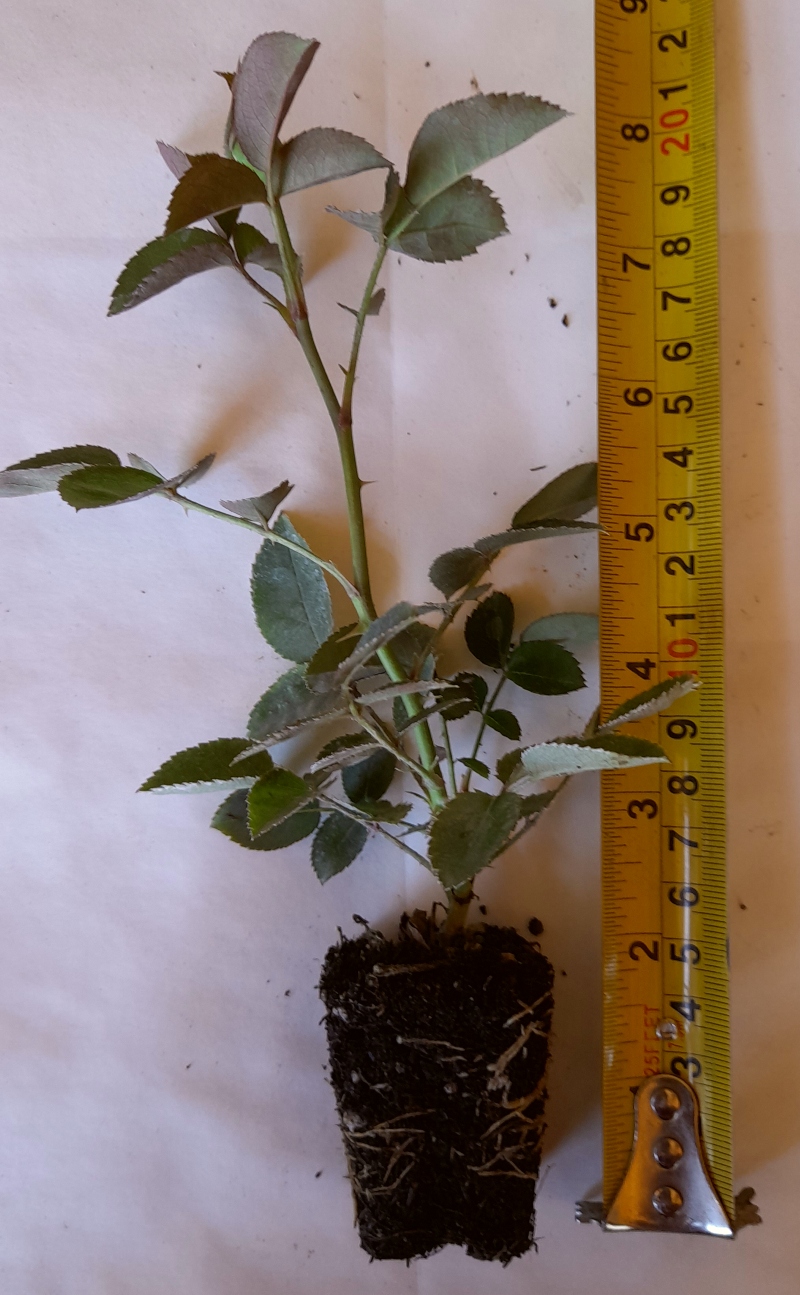
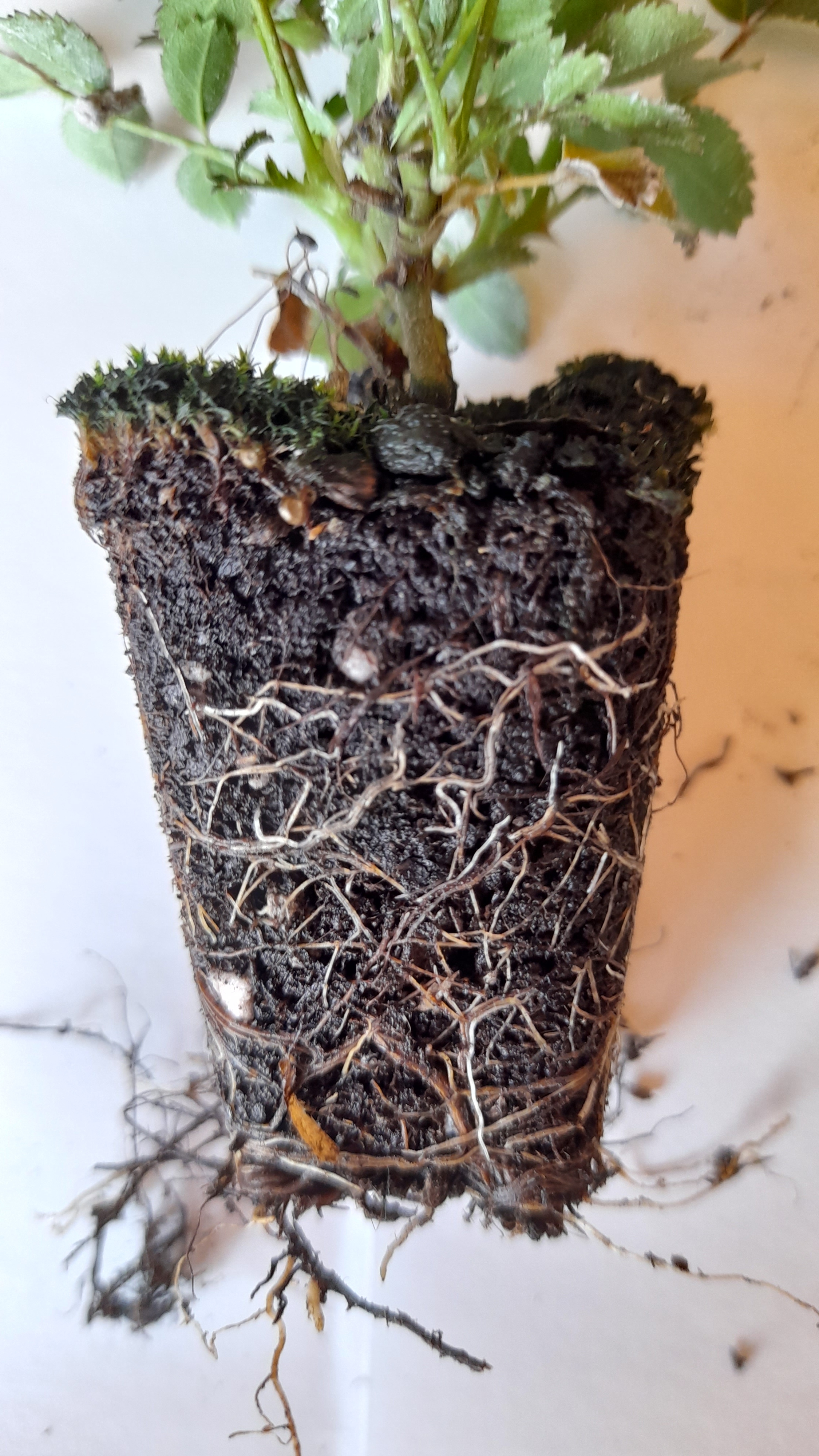
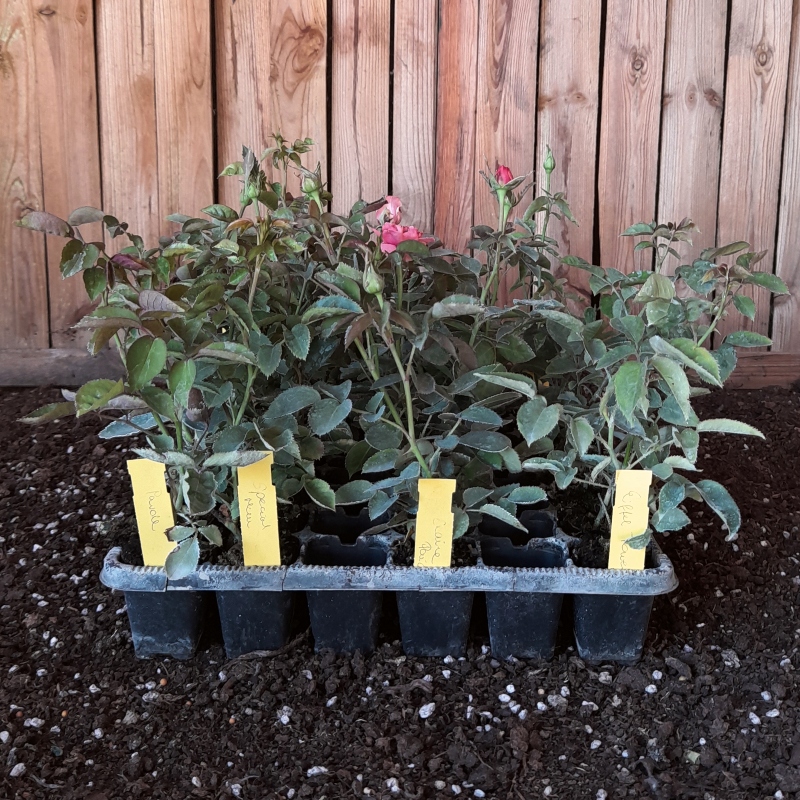
PharmaRosa® NEONATAL own-rooted rose propagation material in a plug, with a root system penetrating the plug (semi-finished product / semi-finished rose). PharmaRosa® NEONATAL rose propagation material size: 3–6‑month‑old, own-rooted cutting with a uniform developmental stage. PharmaRosa® NEONATAL rose propagation material root system: plug densely penetrated by well-developed white roots (root system detail). PharmaRosa® NEONATAL tray stock: own-rooted rose propagation material in trays, uniform developmental stage (10 pcs/tray).

Captions (from left to right): Semi-finished product (NEONATAL own-rooted rose propagation material in a plug with a fully developed root system) • Size demonstration (3–6‑month‑old, uniform cutting) • Root system detail (plug penetrated by the root system) • Tray stock (10 pcs/tray, uniform developmental stage)

pharmarosaneonatal.hupharmarosaneonatal.atpharmarosaneonatal.co.ukpharmarosaneonatal.czpharmarosaneonatal.depharmarosaneonatal.ropharmarosaneonatal.sipharmarosaneonatal.skpharmarosaneonatal.itpharmarosaneonatal.frpharmarosaneonatal.nlpharmarosaneonatal.plpharmarosaneonatal.lupharmarosaneonatal.ptpharmarosaneonatal.espharmarosaneonatal.ltpharmarosaneonatal.sepharmarosaneonatal.lvpharmarosaneonatal.eepharmarosaneonatal.fi

Which product type is right for you?

Pages for private customers
Garden roses for the family garden, with minimal care  → ORIGINAL®
Premium garden roses – instant impact, a truly showpiece garden  → EXTRA®
Pages for professionals and private customers
Roses for public spaces – large areas, sustainable maintenance  → NATURAL®
Roses for projects – hedge and row planting, fast implementation  → RAPID®
For professional partners only
Production – propagation material for garden roses, wholesale  → NEONATAL®

Company details

PharmaRosa Ltd.
Company registration number: 01-09-717479
VAT number: 13075314-2-43
Plant health registration no.: HU130721
Bank account (IBAN):
HU85117631891388688400000000
BIC (SWIFT): OTPVHUHB
Bank name: OTP Bank Nyrt.