Groundcover

20-148-1
20-148-2

The Fairy

Groundcover

- – Ann Bentall

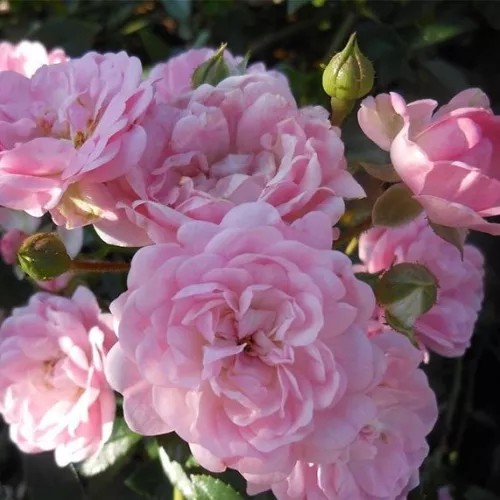
Delicate, translucent light pink, gently fading towards the edges of the petals. - groundcover rose - very weak, barely perceptible scented rose - fresh, apple character

– Legendary The Fairy with proven reliability.
– Masses of dainty light pink pompon blooms.
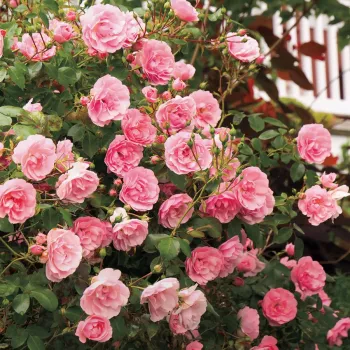
– Dense, low groundcover for fast, even coverage.
– Good heat and moderate drought tolerance.
– Exceptionally hardy down to about –30 °C.
– Special feature: RHS Award of Garden Merit winner, trusted for long-term landscape use.
Project (landscape architecture / mass use)
The Fairy
pharmaROSA® NEONATAL rooted rose cutting
26,84 £
Due to courier service regulations – and the introduction of customs clearance – delivery to Ireland is temporarily suspended.
5 (11834)
facebook   twitter

THE FAIRY – light pink groundcover rose – pharmaROSA® NEONATAL

Groundcover production with THE FAIRY in pharmaROSA® NEONATAL form offers a stable own‑root base for project‑scale beds where fast coverage and uniformity are critical; its bushy habit, dense foliage and naturally self-cleaning clusters support low-input maintenance for UK park, estate and urban green schemes. With good heat and drought tolerance suited to drier South-East conditions, nurseries can build predictable capacity for project mass planting and 1.5–2 L container routes, supplying uniform, dense, bush‑trained finished products to landscape contractors. Own‑root material supports long-term renewal and stable stands in public-realm and themed rose collections, moving from root establishment in year one, structural framework in year two and full ornamental cover by year three. As a recognised landscape cultivar with RHS endorsement, it fits professional rose ranges targeting public projects, while remontant flowering and light-pink colour maintain decorative value through the main season without complex production handling.


Usage options

Target area Reasoning
Mass groundcover for project planting The Fairy’s vigorous groundcover habit and dense, bush-trained structure give rapid, even coverage for project mass planting, aligning well with the recommended 1.5–2 L route and uniform finished form. On own roots it builds long-lived, homogeneous carpets with low replacement risk, supporting reliable scheduling for public and commercial schemes that expect stable, fast coverage in flowerbeds and parks, particularly in drier southern UK areas where its heat and drought tolerance helps maintain presentation for landscape contractor.
Edging and path-side bands The compact 60–100 cm height and 70–130 cm spread allow controlled edging and path-side bands that retain a tidy profile in project beds. NEONATAL own-root cuttings can be batch-grown into 1.5–2 L pots for uniform, dense edging units, matching the specified bush-trained release form. Predictable structure and minimal deadheading from good self-cleaning simplify maintenance for long linear runs in municipal paths, car parks and institutional grounds where repeat specification over years is valuable to project-serving wholesaler.
Container-based landscape supply While ideal for 1.5–2 L production, The Fairy also adapts well when stepped up into larger containers, including 40–50 litre and above, for immediate-impact project planting. Own-root propagation ensures stable regrowth after inevitable handling stress and allows growers to standardise batches for call-off over multiple seasons. The recommended uniform, dense bush form helps contractors drop ready-shaped units straight into urban green space designs, supporting dependable, repeatable coverage for landscape contractor.
Urban green space and street schemes H7 hardiness to approximately –32 to –29 °C and consistent moderate disease resistance make The Fairy a robust choice for exposed urban beds, where maintenance resources are limited. NEONATAL material allows nurseries to build stock fields or pot ranges geared to project mass planting, confident of long-term stand stability on own roots. The medium maintenance requirement and good self-cleaning align with municipal expectations for reliable displays in traffic islands, central reservations and civic parks supplied via project-serving wholesaler.
Thematic and collection rose gardens As a historic Bentall Nursery cultivar (1932) with clear lineage and verified authenticity, The Fairy suits thematic rose gardens and curated collections. Own-root NEONATAL cuttings support long-term cultivar maintenance plantings, with renewable growth and reduced risk of loss compared with budded material. Recommended as uniform, dense, bush-trained plants, it can be integrated as a groundcover layer beneath feature cultivars, giving a consistent light-pink understorey for specialist gardens curated by professional rose grower.
Pollinator-conscious landscape projects Semi-double, cluster-flowered blooms offer moderate pollinator interest, balancing ornamental density with some ecological value in public schemes. For growers, this allows positioning The Fairy in ranges aimed at modern public-realm specifications, where visual impact and basic ecological contribution must both be addressed. Own-root production with NEONATAL supports large-scale, repeatable batches that can be tagged into “pollinator-considerate” assortments for parks, housing landscapes and campus projects sourced through public-realm supplier.
Low-input flowerbed carpets Good self-cleaning and medium maintenance needs reduce deadheading labour, important for extensive flowerbeds in estates and parks. By following the project mass planting route with 1.5–2 L pots and delivering uniform, dense, bush-trained plants, nurseries can offer a predictable, low-intervention groundcover solution. Own-root stability underpins long runs of identical plants that keep their structure over time, helping operators plan maintenance budgets and replacement schedules more accurately for integrator systems.
Climate-resilient coastal and open-site beds Good tolerance of heat and moderate drought allows The Fairy to maintain decorative cover in open, exposed or partially coastal sites, provided watering is available in prolonged drought. NEONATAL own-root plants adapt well to stress and regenerate canopy after weather events, useful for large public or commercial grounds. When combined with the recommended mass-planting, 1.5–2 L production route, growers can position it as a reliable, climate-flexible groundcover option towards project-serving wholesaler.

Finished-product ideas

  • 1.5–2 L groundcover project line – Uniform, dense, bush-trained 1.5–2 L plants produced from NEONATAL cuttings for fast-coverage project mass planting, highlighting groundcover habit and self-cleaning for parks and estates – target: landscape contractor.
  • Large-format 40–50 L impact tubs – Step selected batches into 40–50 litre containers to deliver instant, low-height, light-pink carpets for commercial forecourts and civic entrances, leveraging bushy habit and own-root resilience – target: project-serving wholesaler.
  • Urban resilient rose mix – Integrate The Fairy into mixed urban green space assortments focused on hardy, heat- and drought-tolerant cultivars, supplied as uniform 1.5–2 L material for low-input beds – target: public-realm supplier.
  • Thematic collection underplanting unit – Offer curated batches for rose gardens and collections where The Fairy provides a historic, authentic groundcover layer beneath feature roses, capitalising on its provenance and stable own-root form – target: professional rose grower.
  • Pollinator-conscious project pack – Assemble pallets of NEONATAL-based 1.5–2 L plants positioned as moderate pollinator contributors with durable cover, fitting contemporary biodiversity-aware public planting briefs – target: integrator systems.

Technical cultivar profile
Parameter Data
Name and registration Groundcover and Polyantha shrub marketed as The Fairy Groundcover Bentall; commercial type groundcover rose within the Ground cover collection, ARS exhibition name The Fairy, unregistered cultivar with verified authenticity.
Origin and breeding Bred in the United Kingdom by Ann Bentall, Bentall Nursery, from the cross ‘Paul Crampel’ × ‘Lady Gay’; introduced in 1932 and widely adopted as a classic landscape and groundcover rose type for mass ornamental use.
Awards and recognition Holds the Royal Horticultural Society Award of Garden Merit (1993), signalling reliable garden and landscape performance; this recognition supports professional confidence for large-scale and long-term plantings.
Growth and structural characteristics Bushy, medium-height shrub with dense mid-green glossy foliage, typically 60–100 cm tall and 70–130 cm wide; moderately prickly shoots create a full, ground-hugging structure well suited to carpet effects and edging.
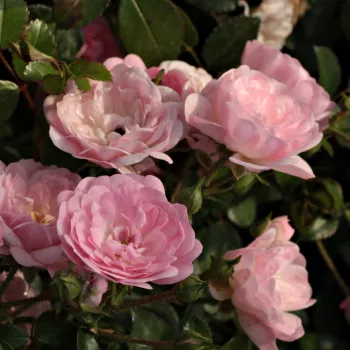
Flower morphology Small S-size globular pompon clusters, semi-double with approximately 13–25 petals; cluster-flowering habit gives high visual density, with remontant performance though the second flush is less prolific than the first.
Colour data and phenology Light-pink flowers with RHS 62D outer and 62C inner tones; buds open vivid mid-pink, then pale pearlescent pink, fading toward almost white at petal edges, with colour persistence longer in cool weather than in heat.
Fragrance and aroma Very weak, barely perceptible scent with a fresh, apple-like character; semi-double blooms provide moderate pollinator appeal, as stamens are partially obscured yet the clusters still attract some bee activity in season.
Hip characteristics Hip set is generally low due to flower form; when present, small spherical red hips of about 6–10 mm diameter may develop, offering occasional additional seasonal interest without affecting ornamental carpet function.
Resistance and winter hardiness Hardy to around –32 to –29 °C (RHS H7, Swedish zone 5, USDA 4b) with moderate resistance to powdery mildew, black spot and rust; tolerates heat and moderate drought but benefits from watering in extended dry periods.
Horticultural recommendations Suited to flowerbeds, parks, groundcover, edging, containers and urban green spaces; ideal for project mass planting and uniform dense bush-trained release from 1.5–2 L pots, with medium maintenance and occasional pest and disease control.

THE FAIRY Groundcover Bentall offers vigorous groundcover habit, good self-cleaning and robust hardiness on a predictable own-root base, supporting long-lived, homogeneous project stands; please contact us to align volumes, timelines and specification for your programmes.

Detailed product attributes

Product Identification Data

Product Name: THE FAIRY – light pink groundcover rose - Bentall
Product Type: pharmaROSA® NEONATAL - rooted rose cutting
Cultivar Authenticity: Verified:08.11.2025
Item Number: [185] 20-148 (14.02.2026) pharmarosaneonatal.co.uk

Name and Registration

Meaning of Cultivar Name: The name "A tündér" refers to the fairy.
Cultivar Synonym: Fairy; Féérie; Fairy Rose; Feerie
Original Trade Name: The Fairy
Current Trade Name: The Fairy Groundcover Bentall
Rose Group: Ground cover, Polyantha
Commercial Type: groundcover rose
Commercial Group: Ground cover
Exhibition Category: shrub rose; landscape rose
Collection: Groundcover

Origin and Breeding

Registration Year: unregistered cultivar
Breeder: Ann Bentall
Breeding Company / Institution: Bentall Nursery (United Kingdom)
Breeding Year: United Kingdom, 1932
Parentage: 'Paul Crampel' × 'Lady Gay'

Awards and Honours

Horticultural Ratings and Recommendations: RHS Award of Garden Merit (1993)
Competition and Show Awards: Royal Horticultural Society – Award of Garden Merit (1993)

Growth and Structural Characteristics

Height: 2-3.3ft (60-100 cm)
Spread: 2.3-4.3ft (70-130 cm)
Growth Habit: bushy
Foliage: This variety has dense foliage, with leaves that are glossy and mid-green in colour.
Prickliness: moderately prickly
Self-Cleaning Description: The majority of spent blooms drop off naturally and rarely require subsequent deadheading.
Self-Cleaning Intensity: Self-cleaning: good.

Flower Morphology

Petal Count: 13-25
Flower Fullness: semi-double
Flower Shape: globular, pompon
Flower Size: S (0,5-1,5 in)
Inflorescence Type: cluster-flowered
Colour Code: ARS code: lp RHS code: 62D (outer), 62C (inner)
Repeat Flowering: Remontant, the second flowering is not as prolific.

Colour Data and Phenology

Colour: light-pink
Flower Colour Description: Delicate, translucent light pink, gently fading towards the edges of the petals.
Closed Bud: Vivid mid‑pink shade with a slight carmine tone at the tip.
Newly Opened Flower: Pearlescent pale pink, with a slightly deeper rosy shade in the centre.
Full Bloom: Uniform light pink, the edges of the outer petals become almost pastel.
Before Fading: A pale pink fading almost to white, with a faint rosy flush at the base of the petals.
Colour Fading Description: During opening the mid-pink gradually lightens, in the final stage it fades to almost white; in cool conditions more slowly, in hot conditions more quickly.

Fragrance and Aroma

Fragrance Strength: very weak, barely perceptible scented rose
Fragrance Character: fresh, apple character
Pollinator Attraction: Its fragrance and blooms attract bees, but in semi-double to double forms the stamens are less accessible, reducing their attractiveness to pollinators.
Pollinator-Friendly Rating: Semi-double flowers — the scent and blooms attract bees, but the stamens are less accessible, so moderately pollinator-friendly.

Hip Characteristics

Hip Shape: spherical
Hip Colour: red
Hip Comment: Because of its very double flowers with over 40 petals, rose‑hip formation is expected to be limited; occasionally spherical red hips 6–10 mm in diameter may appear.

Resistance and Hardiness

Hardiness (°C): -32–-29 °C
Heat and Drought Tolerance Description: Tolerates heat and moderate drought well; requires watering during prolonged drought.
Disease Resistance: moderate
  • powdery mildew – moderate
  • black spot – moderate
  • rust – moderate

Horticultural Recommendations

Recommended product path: Project mass planting
Release form: Uniform, dense, bush-trained finished product
Recommended use: Maintenance requirement medium; occasionally requires pest and disease control.
Primary Uses: flowerbed, park, ground cover, edging, container-grown, urban green space

Comments

Positioning: Project (landscape architecture / mass use)
Target customer/channel: Landscape contractor, project-serving wholesaler / maintenance
Main value proposition: Fast coverage – uniformity
THE FAIRY – light pink groundcover rose - Bentall
Delicate, translucent light pink, gently fading towards the edges of the petals. - groundcover rose - very weak, barely perceptible scented rose - fresh, apple character
Online rose order - light-pink - very weak, barely perceptible scented rose - The Fairy - groundcover rose - (2-3.3ft (60-100 cm))
Inflorescence: cluster-flowered Height: 2-3.3ft (60-100 cm) Flower shape: globular, pompon Winter hardiness: 5b light-pink - - groundcover rose - Flower size: S (0,5-1,5 in) Flower size: S (0,5-1,5 in) - Height: 2-3.3ft (60-100 cm) Height: 2-3.3ft (60-100 cm) - Flower fullness: semi-double The Fairy - Roses in the garden | pharmaROSA® Neonatal - standard Ann Bentall

We showcase the external appearance of the roses available for online purchase from our webshop.


Which product type is right for you?


PharmaRosa® NEONATAL is the cost‑effective starting point for rose product production.

As a uniform, own‑rooted propagation material, it provides a stable basis for further growing-on and can be integrated flexibly into different finished product production technologies.
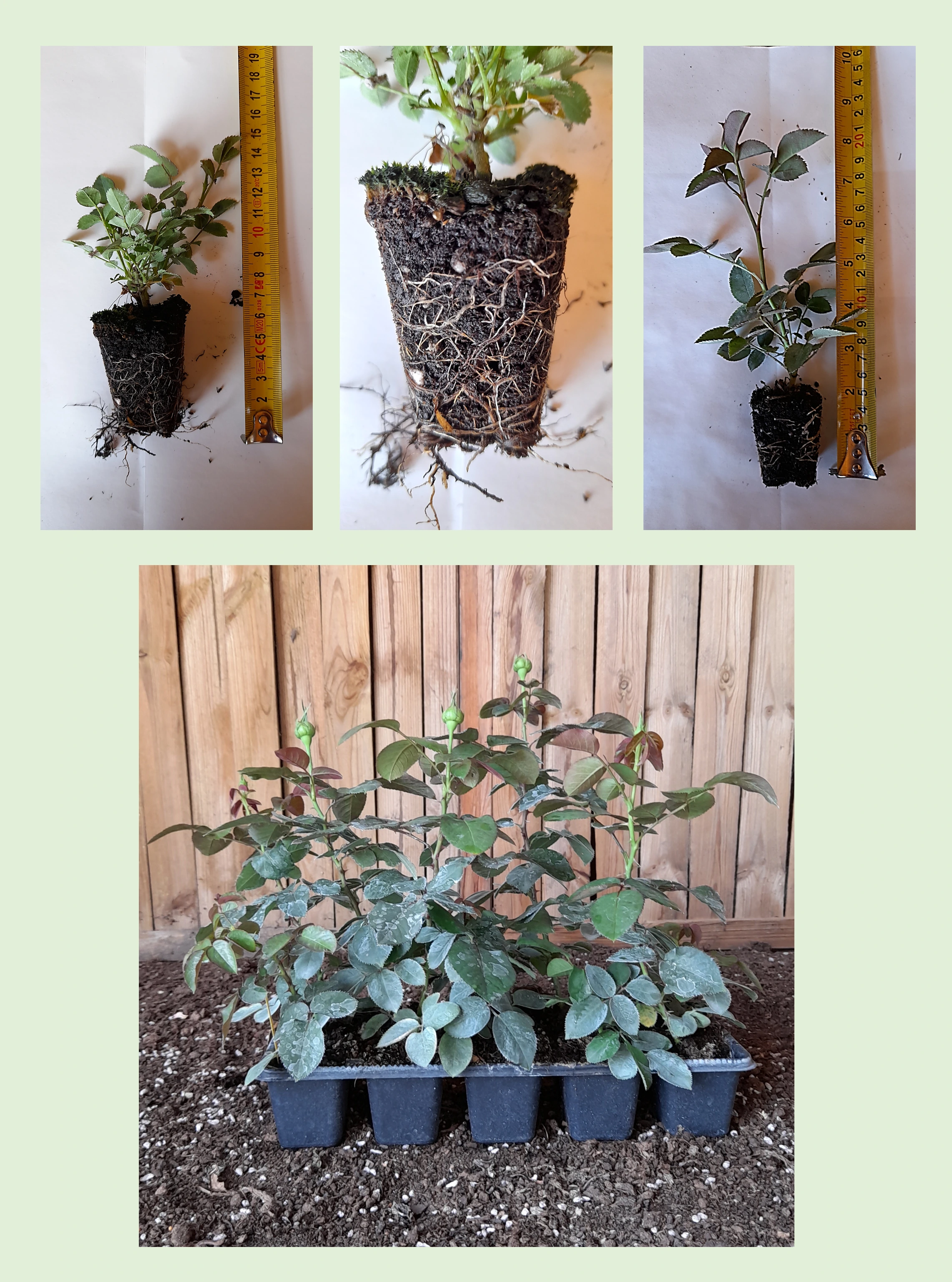
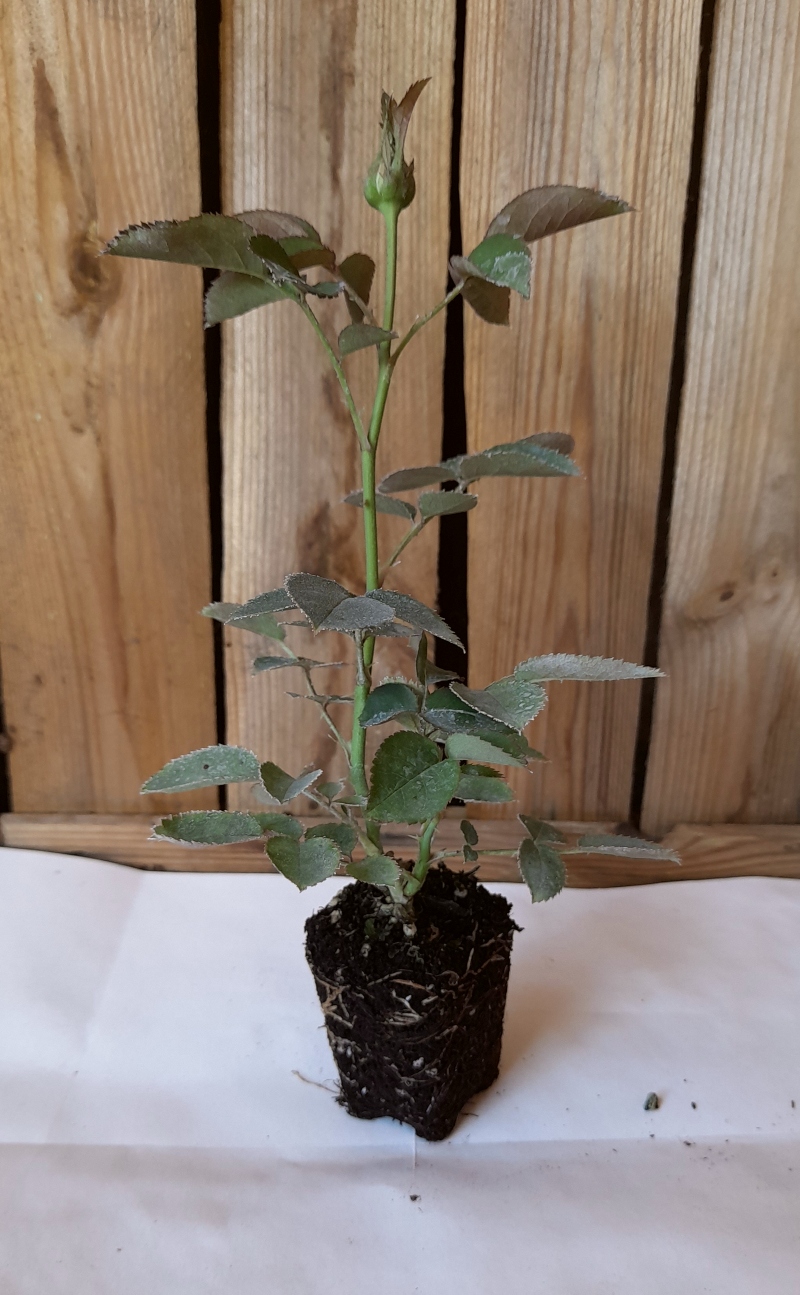
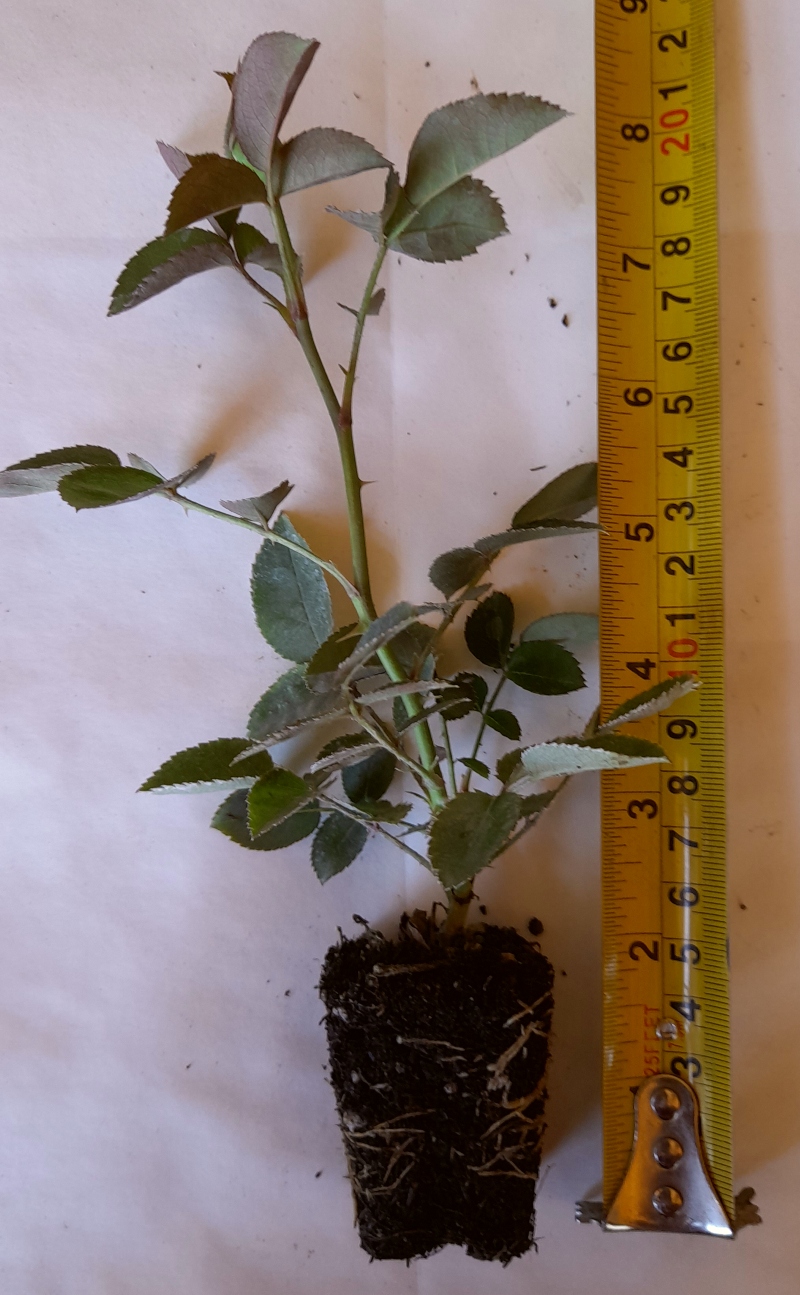
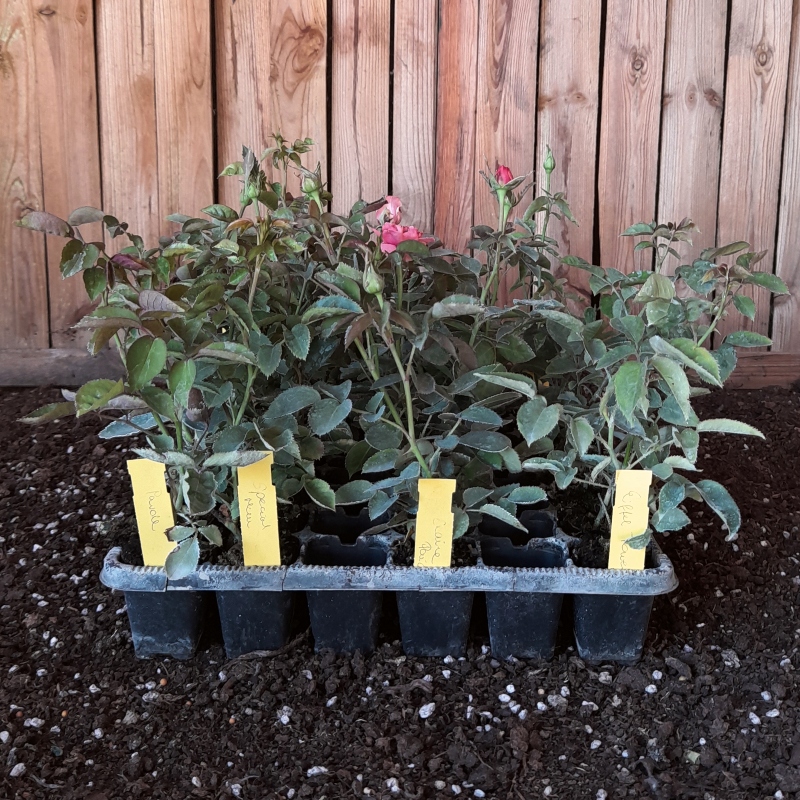
Rooted in trays (rooted), 3–6‑month‑old, own‑rooted rose cutting.
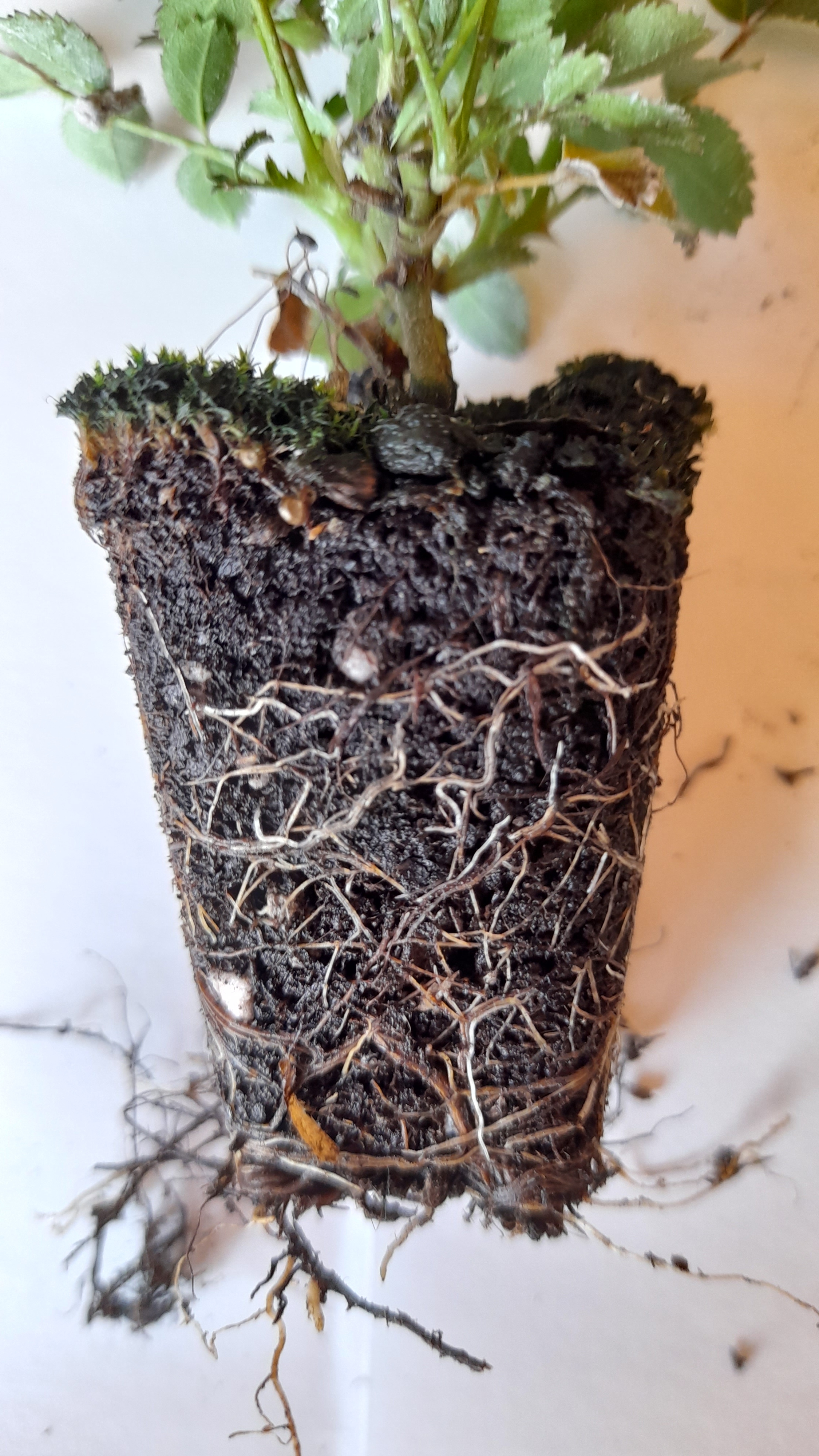
Uniform developmental stage, with a root system that has thoroughly penetrated the plug.
For professional growing‑on.
Tray packaging: 10 pcs/tray.
Quality and varietal identity: production supported by a dedicated identification and traceability logic.
Can be transplanted during frost‑free periods, designed for finished product production.

PharmaRosa® NEONATAL provides a controlled, uniform starting stock for planned growing‑on that can be integrated into your own technology – especially where scheduling and varietal identity are paramount.


PharmaRosa® NEONATAL own-rooted rose propagation material in a plug, with a root system penetrating the plug (semi-finished product / semi-finished rose). PharmaRosa® NEONATAL rose propagation material size: 3–6‑month‑old, own-rooted cutting with a uniform developmental stage. PharmaRosa® NEONATAL rose propagation material root system: plug densely penetrated by well-developed white roots (root system detail). PharmaRosa® NEONATAL tray stock: own-rooted rose propagation material in trays, uniform developmental stage (10 pcs/tray).

Captions (from left to right): Semi-finished product (NEONATAL own-rooted rose propagation material in a plug with a fully developed root system) • Size demonstration (3–6‑month‑old, uniform cutting) • Root system detail (plug penetrated by the root system) • Tray stock (10 pcs/tray, uniform developmental stage)

pharmarosaneonatal.hupharmarosaneonatal.atpharmarosaneonatal.co.ukpharmarosaneonatal.czpharmarosaneonatal.depharmarosaneonatal.ropharmarosaneonatal.sipharmarosaneonatal.skpharmarosaneonatal.itpharmarosaneonatal.frpharmarosaneonatal.nlpharmarosaneonatal.plpharmarosaneonatal.lupharmarosaneonatal.ptpharmarosaneonatal.espharmarosaneonatal.ltpharmarosaneonatal.sepharmarosaneonatal.lvpharmarosaneonatal.eepharmarosaneonatal.fi

Which product type is right for you?

Pages for private customers
Garden roses for the family garden, with minimal care  → ORIGINAL®
Premium garden roses – instant impact, a truly showpiece garden  → EXTRA®
Pages for professionals and private customers
Roses for public spaces – large areas, sustainable maintenance  → NATURAL®
Roses for projects – hedge and row planting, fast implementation  → RAPID®
For professional partners only
Production – propagation material for garden roses, wholesale  → NEONATAL®

Company details

PharmaRosa Ltd.
Company registration number: 01-09-717479
VAT number: 13075314-2-43
Plant health registration no.: HU130721
Bank account (IBAN):
HU85117631891388688400000000
BIC (SWIFT): OTPVHUHB
Bank name: OTP Bank Nyrt.