Historical Rose

20-526-1
20-526-2

Veilchenblau

Historic rose

- – Hermann Kiese

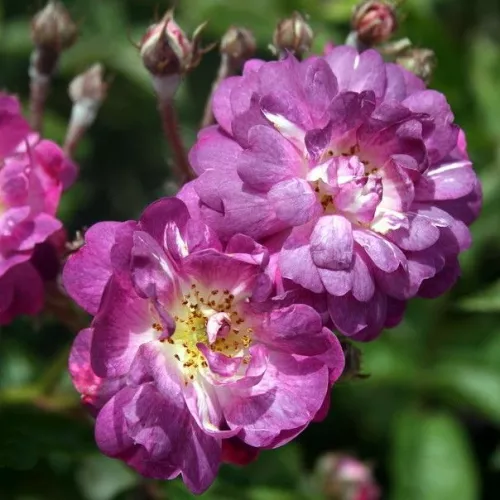
Bright crimson purple shade, paler in the centre. - historic - rambler, climbing - trailing rose - mild, subtle-scented rose - sweetly spicy

– Historic rambler with unique purple tones.
– Abundant clusters create a spectacular display.
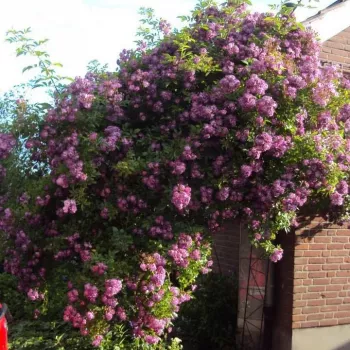
– Vigorous climber for arches, walls, pergolas.
– Medium disease resistance, reliably winter hardy.
– Bee‑friendly, open flowers with accessible pollen.
– Special feature: RHS Award of Garden Merit winner, valued for its distinctive colour and growth habit.
Exclusive, space-defining – specialty
Veilchenblau
pharmaROSA® NEONATAL rooted rose cutting
26,95 £
Due to courier service regulations – and the introduction of customs clearance – delivery to Ireland is temporarily suspended.
4.5 (6446)
facebook   twitter

Veilchenblau – historic violet‑blue rambler for professional own‑root production

Historic rambler Veilchenblau offers a distinctive, vertical surface‑covering habit ideal for pergolas, arbours and walls where an exclusive, space‑defining feature is required. Supplied as pharmaROSA® NEONATAL own‑root rooted cuttings, it gives you a stable, renewable base for trained climber lines, with tray‑grown plants easy to integrate into nursery propagation beds and container grow‑on workflows. Once‑flowering, semi‑double, clustered blooms deliver a strong seasonal display that fades from purple‑lilac to bluish‑grey, supporting high‑impact thematic rose gardens and collection plantings. Own‑root production underpins predictable stocking for retail and reseller partners, helping you plan volume for 5–7 L trained products and, where needed, larger 40–50 L structures, while its hardiness supports reliable performance even in colder, exposed parts of Scotland and northern England. In typical development the root system establishes in the first year, structural canes build in the second, and by the third season Veilchenblau achieves its full ornamental value and longevity as a resilient, space‑defining climber.


Usage options

Target area Reasoning (from a professional grower perspective)
Trained climber in 5–7 L retail containers Veilchenblau’s vigorous climbing habit and dense foliage lend themselves to the recommended trained climber route, where 3–5 main canes can be pre‑formed in 5–7 L pots. Own‑root material supports long retail shelf‑life and predictable post‑sale establishment, well suited to exclusive vertical feature ranges for retail/reseller.
Large structural feature in 40–50 L patio and project containers For higher‑value feature stock, own‑root NEONATAL cuttings can be grown on into 40–50 L containers with robust frameworks, giving nurseries a renewable, long‑lived asset for arbours and pergolas. The medium maintenance requirement and need for good ventilation fit managed display and project contexts for public‑realm suppliers.
Wall and fence coverage for landscape and municipal contracts The long, climbing canes and 200–400 cm spread enable efficient coverage of walls and fences, with the once‑per‑season flowering habit simplifying pruning and scheduling. Own‑root stands provide homogeneous lines and low replacement in trained climber programmes targeting visually strong yet robust installations for landscape contractors.
Thematic and historic rose garden collections As a 1909 historic rambler with RHS Award of Garden Merit, Veilchenblau is highly suitable for collection and show gardens where cultivar authenticity and continuity matter. Own‑root propagation allows long‑term maintenance blocks and replacement plants from a stable base, matching curated historic collections for thematic rose gardens.
Pollinator‑supporting vertical features Semi‑double, open‑centred flowers with accessible stamens attract pollinators, adding ecological value to visually striking vertical features. In trained climber 5–7 L lines, this supports a clear narrative for retailers serving environmentally aware customers, while own‑root longevity underpins repeatable assortments for garden centres.
Cool‑climate and exposed‑site trained climber production With hardiness down to approximately –32 °C (RHS H7, USDA 4b), Veilchenblau is a dependable choice for propagation destined for colder or more exposed UK regions. Own‑root plants recover well after winter stress, giving nurseries confidence when scheduling volume for networks supplying harsher northern markets for regional distributors.
High‑impact once‑flowering feature lines The non‑remontant, once‑flowering habit allows growers to position Veilchenblau as a concentrated seasonal spectacle, easy to explain in professional ranges. In trained 5–7 L products, the strong main flush simplifies crop timing and marketing windows for speciality vertical ranges, including thematic show‑garden concepts for specialist nurseries.
Space‑defining pergola and arbour projects Its tall climbing growth, dense foliage and medium self‑cleaning clusters create a soft, textural canopy ideal for pergolas and arbours, provided ventilation is good and plant protection is planned in enclosed, humid courtyards. This combination suits project‑driven, exclusive, space‑defining offers aimed at design‑led landscapers.

Finished-product ideas

  • Historic 5–7 L trained climber line – Own‑root Veilchenblau pre‑trained with 3–5 canes in 5–7 L pots, focused on its historic status and vertical feature value as a once‑flowering rambler – target: premium retail/reseller ranges.
  • 40–50 L pergola feature container – Long‑cycle grown plants in 40–50 L tubs with support frames, using vigorous growth and hardiness to create ready‑to‑install pergola or arbour elements – target: landscape contractors and public‑realm suppliers.
  • Thematic historic rambler collection – Coordinated own‑root stock for historic rose gardens, leveraging Veilchenblau’s 1909 origin and AGM recognition within curated rambler groupings – target: show gardens and institutional collections.
  • Pollinator‑friendly vertical series – Trained climbers in 5–7 L emphasising semi‑double, pollinator‑attractive flowers alongside strong seasonal colour for fences and walls – target: garden centres with ecology‑focused assortments.
  • Space‑defining courtyard climber concept – Medium‑maintenance, ventilated‑site trained climbers built around Veilchenblau’s dense foliage and surface‑covering habit, with clear care guidance – target: design‑oriented nurseries serving urban projects.

Technical cultivar profile
Parameter Data
Name and registration Current trade name Veilchenblau, historic rambler and climbing rose; American Rose Society exhibition name Veilchenblau; unregistered cultivar, verified authenticity for pharmaROSA® NEONATAL production.
Origin and breeding Bred by Hermann Kiese in Germany from ‘Turner’s Crimson Rambler’ × ‘Souvenir de Brod’; introduced in 1909 by Johann Christoph Schmidt, representing a classic early twentieth‑century multiflora‑polyantha rambler line.
Awards and recognition Holds the Royal Horticultural Society Award of Garden Merit (1993), indicating robust garden performance and ornamental value under UK conditions when correctly sited and maintained.
Growth and structural characteristics Strong climbing growth, typically 400–600 cm high with 200–400 cm spread; dense, glossy mid‑green foliage, slightly prickly shoots, forming trailing, surface‑covering structures for arbours, pergolas, fences and walls.
Flower morphology Semi‑double, flat, small clustered flowers (0.5–1.5 in), 13–20 petals, borne in large trusses; once‑flowering, with medium self‑cleaning where petals fall but some cluster remnants persist on the plant after bloom.
Colour data and phenology Bright crimson‑purple with paler centre when opening, shifting through lilac and greyish‑blue tones; in strong sun it fades quickly to bluish‑grey, producing a characteristic pastel violet‑blue effect at full flush.
Fragrance and aroma Sweetly spicy, mild fragrance that complements but does not dominate the visual impact; suitable for projects where scent is a secondary enhancement rather than the primary selection criterion.
Hip characteristics Occasional small spherical hips, about 5–9 mm, brownish‑red; visually modest but adding some seasonal structure and wildlife interest without significantly affecting plant energy in ornamental plantings.
Resistance and winter hardiness Winter hardy to around –32 to –29 °C (RHS H7, USDA 4b, Swedish Zone 5); medium resistance to powdery mildew, black spot and rust, with plant protection advisable in humid, enclosed urban sites.
Horticultural recommendations Use on arbours, pergolas, walls and fences; prefers well‑ventilated positions; maintenance requirement medium with extra care in enclosed, humid courtyards; moderate drought tolerance but requires irrigation in extended dry periods.

Veilchenblau as pharmaROSA® NEONATAL own‑root material combines vigorous historic rambler character, strong hardiness and pollinator‑friendly display with predictable, regenerative stands, making it a solid candidate for aligned capacity and scheduling discussions.
Detailed product attributes

Product Identification Data

Product Name: VEILCHENBLAU – purple historic rambler, running-climbing rose - Kiese
Product Type: pharmaROSA® NEONATAL - rooted rose cutting
Cultivar Authenticity: Verified:11.06.2025
Item Number: [40] 20-526 (14.02.2026) pharmarosaneonatal.co.uk

Name and Registration

Meaning of Cultivar Name: The name means 'violet-blue' in German.
Cultivar Synonym: Bleu-Violet; Blue Rambler; Blue Rosalie; Violet Blue
Original Trade Name: Veilchenblau
Current Trade Name: Veilchenblau Historic rose Kiese
Rose Group: Rambler, Historical roses, Climber, Hybrid Multiflora, Polyantha
Commercial Type: historic - rambler, climbing - trailing rose
Commercial Group: Historical rose
Exhibition Category: exhibition rambler; large-area surface-covering climbing rose
Collection: Historic rose

Origin and Breeding

Initial Distributor: Johann Christoph Schmidt (Germany)
Registration Year: unregistered variety
Breeder: Hermann Kiese
Breeding Company / Institution: unknown / no data
Breeding Year: Germany, 1909
Parentage: ‘Turner’s Crimson Rambler’ × ‘Souvenir de Brod’

Awards and Honours

Horticultural Ratings and Recommendations: RHS Award of Garden Merit (1993)
Competition and Show Awards: Royal Horticultural Society – Award of Garden Merit (1993)

Growth and Structural Characteristics

Height: 13.1-19.7ft (400-600 cm)
Spread: 6.6-13.1ft (200-400 cm)
Growth Habit: climbing
Foliage: The variety has dense foliage. Its leaves have a glossy surface and a mid‑green colour.
Prickliness: slightly prickly
Self-Cleaning Description: The petals of spent flowers mostly fall off, while the remnants of the clusters often remain on the plant.
Self-Cleaning Intensity: self-cleaning: medium

Flower Morphology

Petal Count: 13-20
Flower Fullness: semi-double-flowered
Flower Shape: flat
Flower Size: S (0,5-1,5 in)
Inflorescence Type: clustered
Colour Code: ARS code: M RHS code: 79A (outer), 75B (inner)
Repeat Flowering: Non-remontant; blooms once.

Colour Data and Phenology

Colour: purple
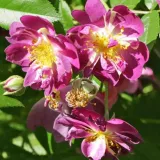
Flower Colour Description: Bright crimson purple shade, paler in the centre.
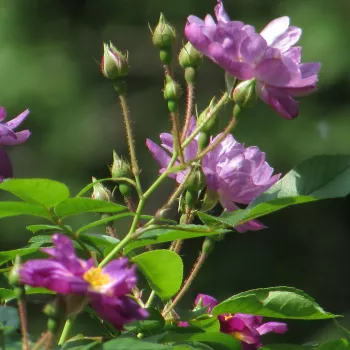
Closed Bud: Deep crimson‑purple surface with a subtle dark purple hue.
Newly Opened Flower: Lighter purple-lilac petals with delicate pink-lilac tips.
Full Bloom: Pastel lilac–blue-lilac surface with a whitish centre.
Before Fading: Pale lilac tone with a greyish-blue tinge.
Colour Fading Description: In heat and strong sunlight it lightens rapidly, fading from purplish to bluish-grey.

Fragrance and Aroma

Fragrance Strength: mild, subtle-scented rose
Fragrance Character: sweetly spicy
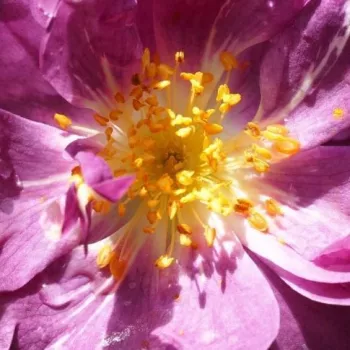
Pollinator Attraction: Semi-double flowers open flat and the exposed stamens make the pollen readily accessible, attracting pollinators.
Pollinator-Friendly Rating: Its semi-double, open-centred flowers with easily accessible stamens attract bees, so it is pollinator-friendly.

Hip Characteristics

Hip Shape: spherical
Hip Colour: brownish-red
Hip Comment: Occasionally occurring, 5–9 mm in diameter, spherical, brownish-red rose hip.

Resistance and Hardiness

Hardiness (°C): -32–-29 °C
Heat and Drought Tolerance Description: Tolerates heat well; requires watering during prolonged drought.
Disease Resistance: medium
  • powdery mildew – medium
  • black spot – medium
  • rust – medium

Horticultural Recommendations

Recommended product path: Trained climber finished product
Release form: Staked, trained (3–5 main canes)
Recommended use: Maintenance requirement medium; easily kept in a well‑ventilated position, but in enclosed, humid urban courtyards expect a need for plant protection.
Primary Uses: arbour, pergola, wall, fence

Comments

Positioning: Exclusive, space-defining – specialty
Target customer/channel: Retail / reseller
Main value proposition: Vertical garden feature, distinctive habit
VEILCHENBLAU – purple historic rambler, running-climbing rose - Kiese
Bright crimson purple shade, paler in the centre. - historic - rambler, climbing - trailing rose - mild, subtle-scented rose - sweetly spicy
Online rose purchase - purple - mild, subtle-scented rose - Veilchenblau - historic - rambler, climbing - trailing rose - (13.1-19.7ft (400-600 cm))
Inflorescence: clustered Height: 13.1-19.7ft (400-600 cm) Flower shape: flat Winter hardiness: 6b purple - Johann Christoph Schmidt (Germany) historic - rambler, climbing - trailing rose - Flower size: S (0,5-1,5 in) Flower size: S (0,5-1,5 in) - Height: 13.1-19.7ft (400-600 cm) Height: 13.1-19.7ft (400-600 cm) - Flower fullness: semi-double-flowered Veilchenblau - Roses in the garden | pharmaROSA® Neonatal - standard Hermann Kiese

We showcase the external appearance of the roses available for online purchase from our webshop.


Which product type is right for you?


PharmaRosa® NEONATAL is the cost‑effective starting point for rose product production.

As a uniform, own‑rooted propagation material, it provides a stable basis for further growing-on and can be integrated flexibly into different finished product production technologies.
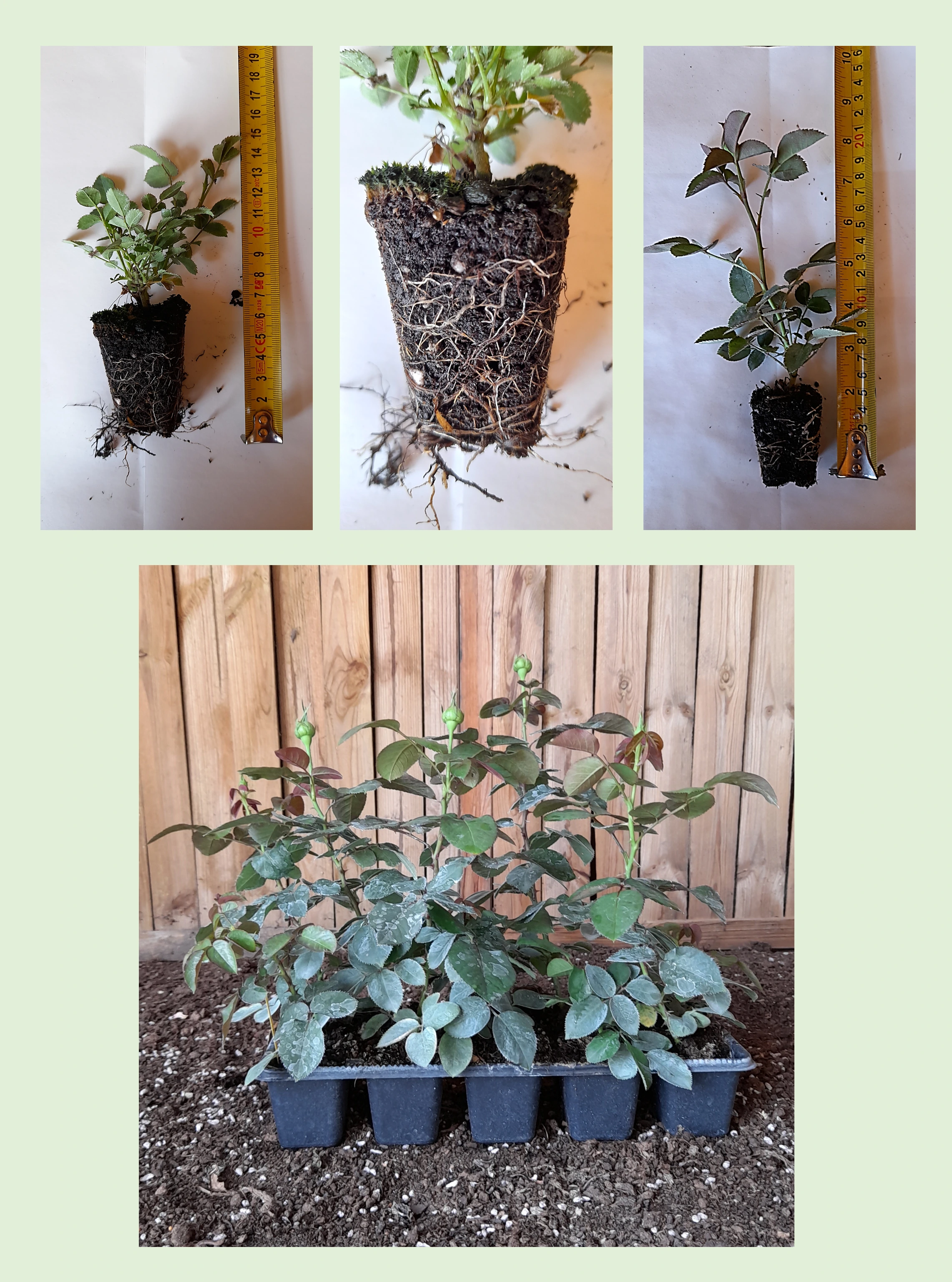
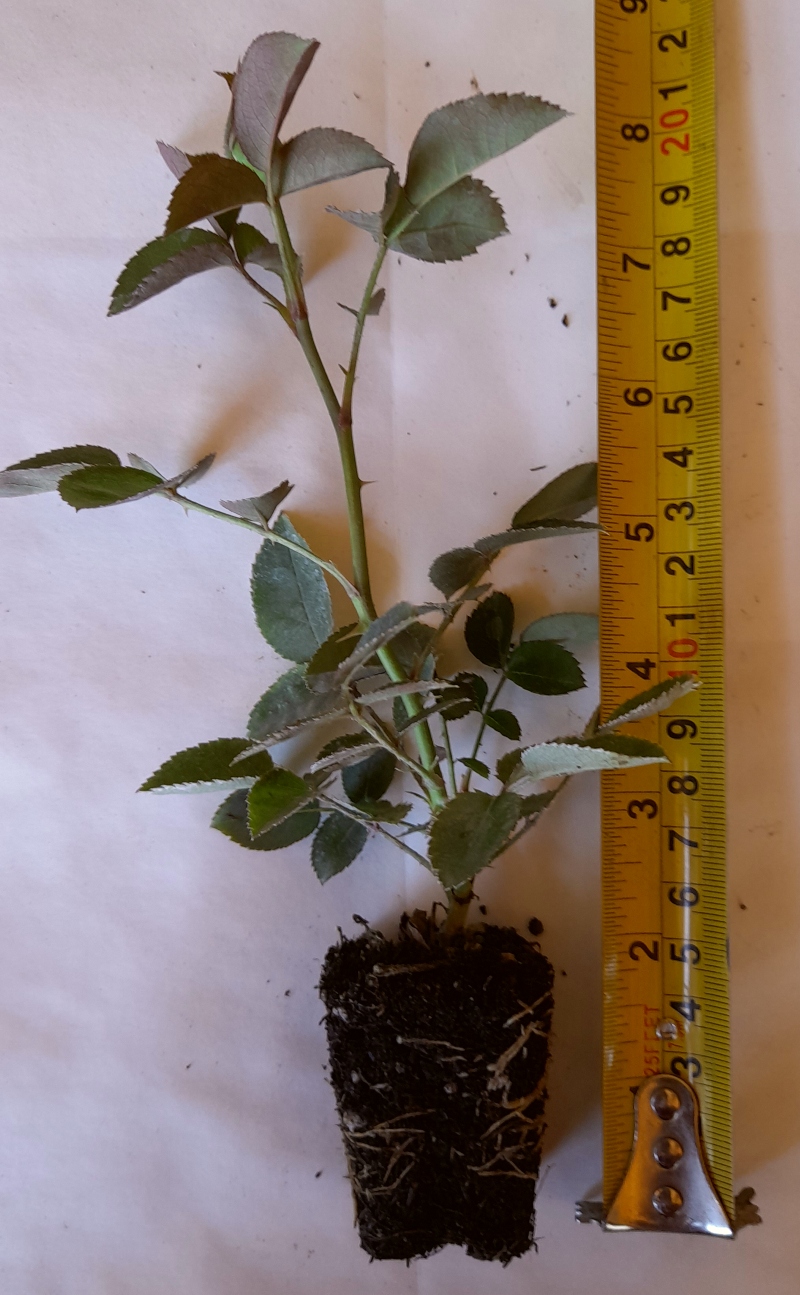
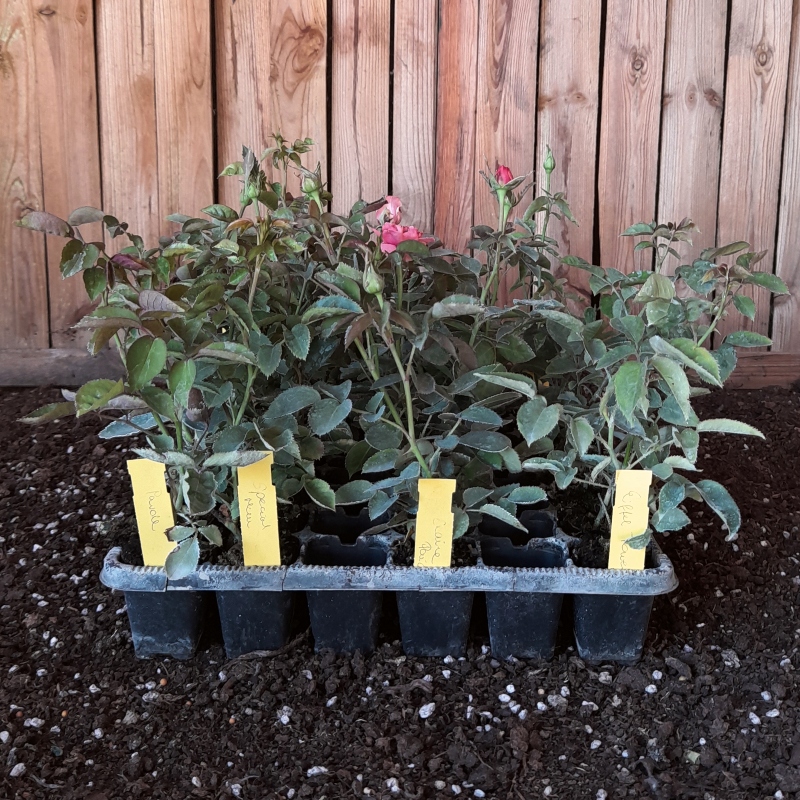
Rooted in trays (rooted), 3–6‑month‑old, own‑rooted rose cutting.
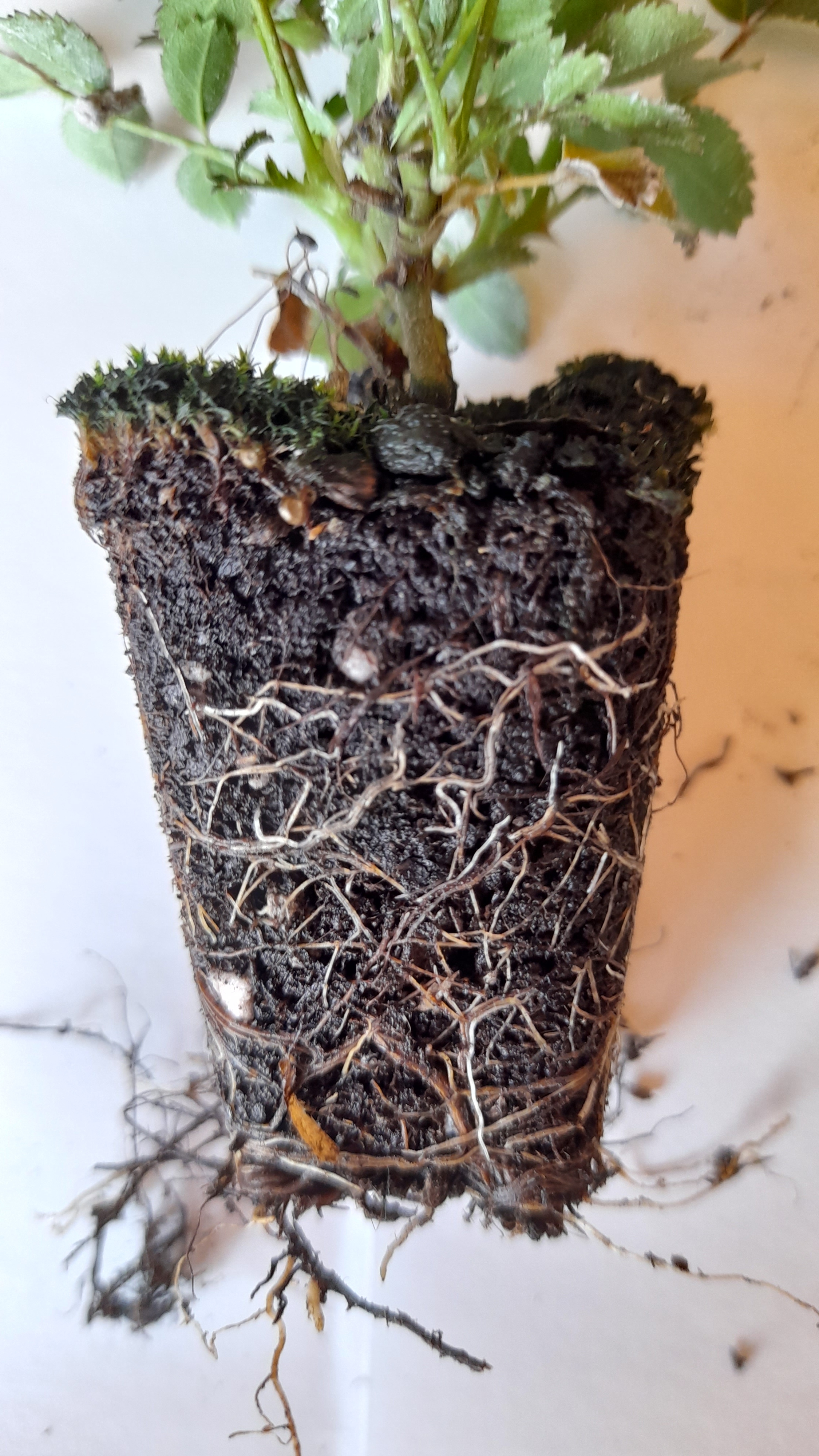
Uniform developmental stage, with a root system that has thoroughly penetrated the plug.
For professional growing‑on.
Tray packaging: 10 pcs/tray.
Quality and varietal identity: production supported by a dedicated identification and traceability logic.
Can be transplanted during frost‑free periods, designed for finished product production.

PharmaRosa® NEONATAL provides a controlled, uniform starting stock for planned growing‑on that can be integrated into your own technology – especially where scheduling and varietal identity are paramount.


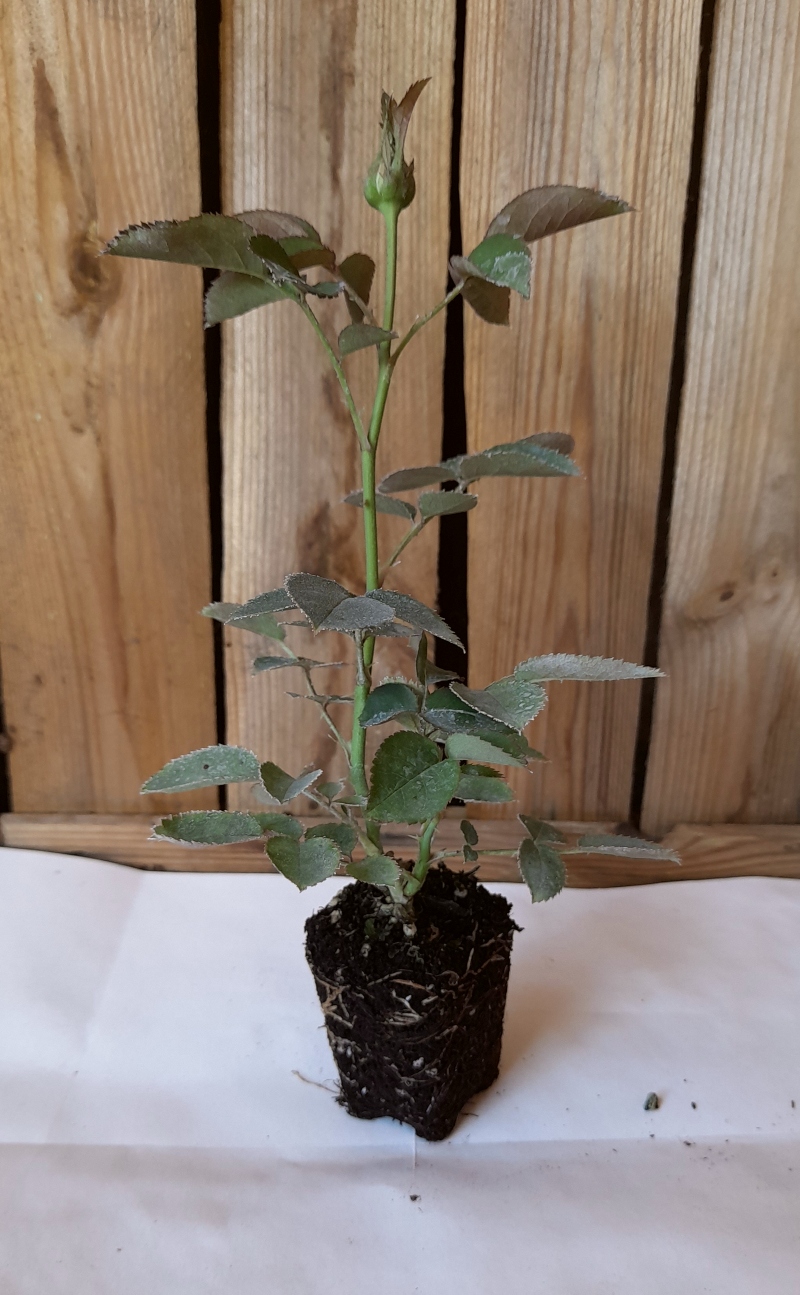
PharmaRosa® NEONATAL own-rooted rose propagation material in a plug, with a root system penetrating the plug (semi-finished product / semi-finished rose). PharmaRosa® NEONATAL rose propagation material size: 3–6‑month‑old, own-rooted cutting with a uniform developmental stage. PharmaRosa® NEONATAL rose propagation material root system: plug densely penetrated by well-developed white roots (root system detail). PharmaRosa® NEONATAL tray stock: own-rooted rose propagation material in trays, uniform developmental stage (10 pcs/tray).

Captions (from left to right): Semi-finished product (NEONATAL own-rooted rose propagation material in a plug with a fully developed root system) • Size demonstration (3–6‑month‑old, uniform cutting) • Root system detail (plug penetrated by the root system) • Tray stock (10 pcs/tray, uniform developmental stage)

pharmarosaneonatal.hupharmarosaneonatal.atpharmarosaneonatal.co.ukpharmarosaneonatal.czpharmarosaneonatal.depharmarosaneonatal.ropharmarosaneonatal.sipharmarosaneonatal.skpharmarosaneonatal.itpharmarosaneonatal.frpharmarosaneonatal.nlpharmarosaneonatal.plpharmarosaneonatal.lupharmarosaneonatal.ptpharmarosaneonatal.espharmarosaneonatal.ltpharmarosaneonatal.sepharmarosaneonatal.lvpharmarosaneonatal.eepharmarosaneonatal.fi

Which product type is right for you?

Pages for private customers
Garden roses for the family garden, with minimal care  → ORIGINAL®
Premium garden roses – instant impact, a truly showpiece garden  → EXTRA®
Pages for professionals and private customers
Roses for public spaces – large areas, sustainable maintenance  → NATURAL®
Roses for projects – hedge and row planting, fast implementation  → RAPID®
For professional partners only
Production – propagation material for garden roses, wholesale  → NEONATAL®

Company details

PharmaRosa Ltd.
Company registration number: 01-09-717479
VAT number: 13075314-2-43
Plant health registration no.: HU130721
Bank account (IBAN):
HU85117631891388688400000000
BIC (SWIFT): OTPVHUHB
Bank name: OTP Bank Nyrt.