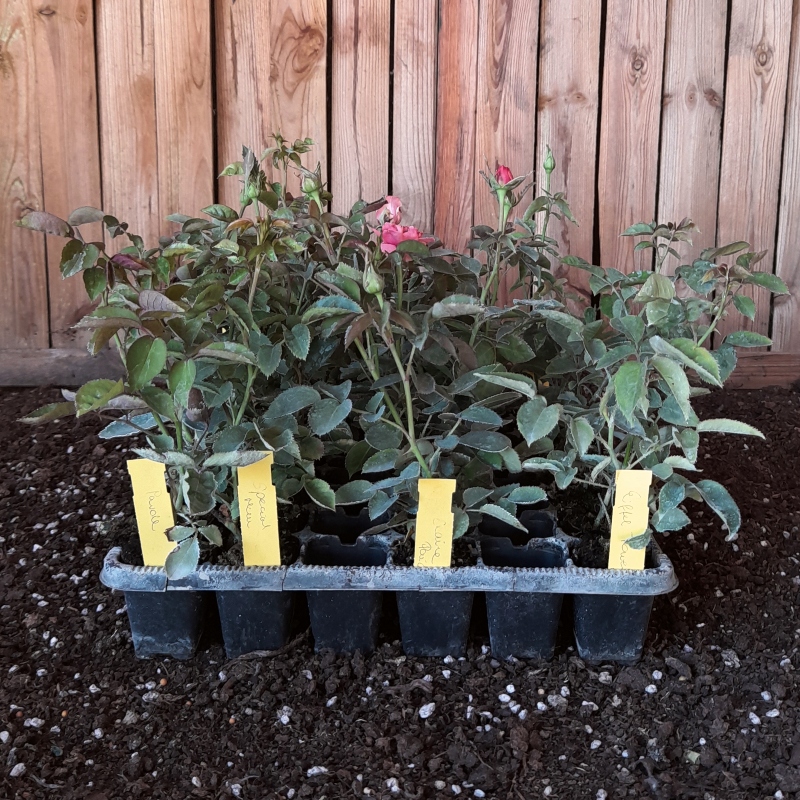
Park shrub rose

21-416-1
21-416-2

Violet Hood

Park - shrub rose

- – Louis Lens

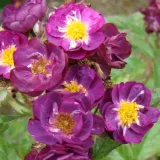
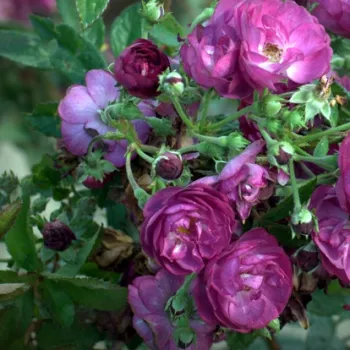
Dark purple with crimson shades and lavender tones. - park rose - scentless rose - no noticeable fragrance

– Compact, bushy shrub for versatile planting.
– Rich purple-lilac blooms with velvety tones.
– Reliable repeat flowering through the season.
– Medium disease resistance, rust resistant foliage.
– Decorative red hips add autumn interest.
– Special feature: Awarded Silver Medal at Kortrijk International Rose Exhibition (1978).
Standard finished product
Violet Hood
pharmaROSA® NEONATAL rooted rose cutting
28,30 £
Due to courier service regulations – and the introduction of customs clearance – delivery to Ireland is temporarily suspended.
3.5 (5618)
facebook   twitter

VIOLET HOOD – violet-purple park rose – Lens

Professional growers looking to extend a diverse own-root shrub offer will find Violet Hood a compact park rose that builds quickly into reliable border, specimen and low hedge material from standard 2–3 litre containers. This Hybrid Musk shrub combines compact height with moderate spread, allowing dense, homogeneous stands that are easy to schedule and bench in nursery systems where wind and winter exposure are common in many UK field sites. Semi-finished pharmaROSA® NEONATAL cuttings provide a uniform starting point for nursery propagation beds and container grow-on, supporting consistent quality for retail and reseller partners who position it as a standard finished product with reliable garden performance. The remontant, clustered flowering and good colour retention support repeat visual impact throughout the season, while own-root production underpins longevity and low replacement in landscape use. Over time, year-one root establishment, year-two structural build, and year-three full ornamental value help you plan capacity and launch windows with predictable output. Moderate disease tolerance, medium maintenance requirements and attractive hips in autumn support collection and project plantings, especially in thematic shrub borders. The semi-double, pollinator-friendly flower form and strong violet-purple colouration add character to curated ranges, while the stable, compact habit fits easily into existing production lines for park and shrub assortments.


Usage options

Target area Reasoning
Border and mixed-shrub lines in 2–3 L containers Compact height and moderate spread allow efficient density in standard container production, matching the recommended 2–3 litre route and bush-trained, compact release form. As a standard finished product with reliable garden performance, it slots easily into border and mixed-shrub programmes where nurseries prioritise predictable, repeatable SKUs for retail and reseller channels serving quality-conscious gardeners and project buyers for the nursery–retail interface
Low hedging for landscape and park projects Uniform, compact habit supports straight, coherent hedge lines from own-root stands, giving good structural reliability along paths and boundaries. Medium maintenance needs and medium disease resistance are manageable in public-realm maintenance frameworks, while standard 2–3 litre pots keep hedge pack formats practical. As a standard finished product with reliable performance, it offers landscapers a repeatable hedge unit, particularly valuable for public-realm suppliers and park-focused landscape contractors
Specimen and focal points in thematic rose gardens The intense purple-lilac colour, with deep buds and even fading to mauve, supports striking specimen planting in thematic and collection-style gardens. Remontant, clustered flowering ensures season-long focal interest from a compact, bush-trained form suited to 2–3 litre presentation, with scope for stepping up into larger feature pots. Positioned as a standard finished product, it can anchor colour-themed or breeder-focused ranges for show gardens, collection beds and specialist rose collections
Container-based collection and gene-bank style stands Own-root production provides long-term stability and easy renewal, valuable for cultivar maintenance blocks where identity and continuity matter. Moderate height and spread allow tighter spacing in nursery beds and container benches, with the standard container path ensuring logistical simplicity. As a reliable, standard finished product, it lends itself to stock-plant and gene-bank style stands that underpin thematic ranges for professional growers, trial fields and specialist wholesale assortments
Cut-flower side line from shrub plantings Clustered, semi-double stems with distinctive violet-purple colouring support limited cut-flower use from border or hedge stands, offering colour diversity in local and seasonal bunch work. The remontant habit allows repeat cutting across the season, while own-root durability supports this production load. Using the standard 2–3 litre route, nurseries can supply landscapers and farm-shops wanting dual-purpose shrub plantings positioned as standard finished products with dependable garden and cutting performance to local floriculture
Pollinator-conscious ornamental schemes Semi-double flowers with moderate stamen access provide partial pollinator appeal, useful in mixed wildlife-friendly designs where ornamental value remains primary. Reliable repeat flowering and good colour retention keep visual impact high while still contributing some ecological benefit. Through standard 2–3 litre containers and bush-trained form, nurseries can deliver a standard finished product that supports decorative yet semi-functional schemes for public gardens and institutional projects for public-realm supply
Autumn-interest planting with hips and colour fade Autumn production of numerous small, spherical red hips adds seasonal interest beyond the violet-purple blooms that fade attractively to brownish-mauve tones. This extends the sales story into late season, especially in retail ranges that highlight multi-season shrubs. Using the standard container path, growers can offer predictable, own-root plants that maintain structure and ornamental value year after year for autumn-focused retail promotions
Park and roadside schemes in cooler, exposed sites Hardiness down to approximately -21 to -18 °C with an H7 rating supports use in many UK park and roadside conditions where winter exposure is significant and nursery field sites face challenging weather and wind. Own-root plants form resilient stands with low replacement rates, while medium maintenance demands remain manageable for contractors. In standard 2–3 litre containers as a standard finished product, it integrates well into framework planting plans for municipal and highways projects across infrastructure landscapes

Finished-product ideas

  • 2–3 L park-border shrub line – Compact, bush-trained shrubs in standard 2–3 litre pots, using the uniform habit and remontant flowering for repeat seasonal colour in retail park-border assortments – garden-centre and reseller programmes
  • Low hedge multipacks – Bundled 2–3 litre plants optimised for low hedges, exploiting the compact structure and own-root durability to give landscapers and municipalities predictable, repeatable hedge units – landscape contractor and public-realm supply
  • Thematic violet collection feature – Curated colour-themed series where Violet Hood provides intense purple interest, backed by reliable garden performance and medium maintenance needs in standard containers – specialist nurseries and show-garden partners
  • Autumn-interest shrub promotion – Seasonal offer highlighting hip display and attractive colour fade, built on long-lived own-root stands from 2–3 litre production for dependable repeat sales – seasonal retail promotions and mail-order catalogues
  • Pollinator-aware mixed shrub combo – Mixed trolleys combining partially pollinator-friendly shrubs, with Violet Hood contributing semi-double blooms and steady structure from the standard container route – multiple-outlet nursery and integrator networks

Technical cultivar profile
Parameter Data
Name and registration Violet Hood is a shrub, Hybrid Musk park rose marketed as Violet Hood Park - shrub rose Lens, with American Rose Society approved exhibition name Violet Hood and no separate registered cultivar name.
Origin and breeding Bred by Louis Lens in Belgium from ‘Robin Hood’ × ‘Baby Faurax’, breeding year 1973, introduced and registered in 1975 by Lens Roses N.V. and Pépinières Louis Lens SA, reflecting classic Hybrid Musk shrub breeding.
Awards and recognition Awarded a Silver Medal at the Kortrijk International Rose Exhibition in 1978, providing historic third-party validation that can support positioning in thematic or collection-focused shrub rose ranges.
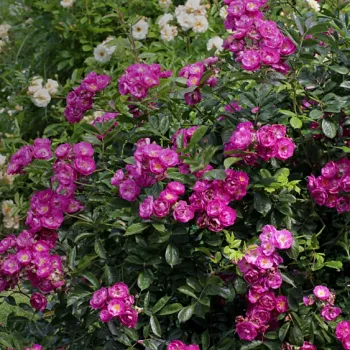
Growth and structural characteristics Compact shrub with 90–140 cm height and 50–80 cm spread, moderately dense, slightly glossy dark green foliage with a brownish tinge, and moderate prickliness; petals fall and hips form in autumn, self-cleaning level otherwise not provided.
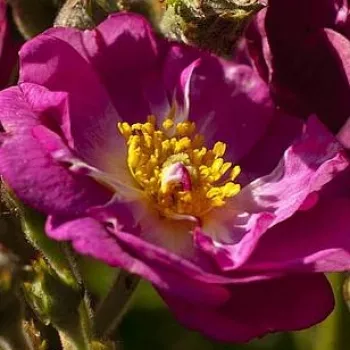
Flower morphology Semi-double, flat flowers in clusters, petal count 13–25, small blooms about 0.5–1.5 inches in diameter, remontant habit with an abundant second flush, providing repeated ornamental impact across the growing season.
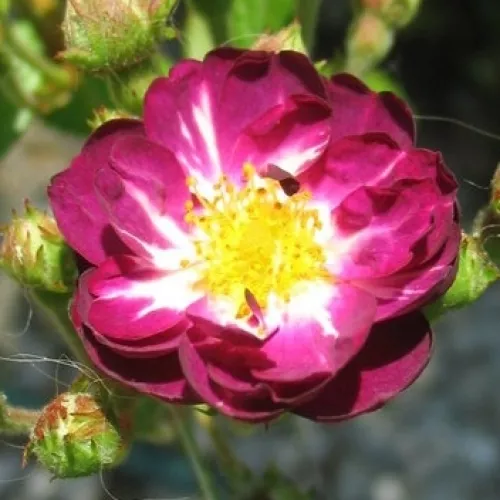
Colour data and phenology Closed buds are deep, almost black purple; newly opened flowers intense velvety lavender purple, maturing to matte purple with lightened edges, then to brownish-mauve, with good colour retention; classified as purple-lilac with ARS m and RHS 79A/79B codes.
Fragrance and aroma No noticeable fragrance is reported; the rose is considered scentless while still offering moderate pollinator interest through semi-double flowers with limited but present stamen accessibility.
Hip characteristics In autumn it may produce many small, spherical red hips 6–10 mm in diameter, which contribute additional ornamental interest and extend the landscape value of plantings beyond the main flowering period.
Resistance and winter hardiness Medium disease resistance overall, with medium susceptibility to powdery mildew and black spot but resistant to rust; hardy to around -21 to -18 °C, Swedish Zone 3 and USDA Zone 6b; no specific heat or drought data are provided.
Horticultural recommendations Suggested for borders, specimen roles, hedges, containers and some cut use; medium maintenance with occasional pest and disease control; recommended as a bush-trained, compact plant for standard container production in 2–3 litre pots.

Violet Hood offers compact, remontant shrub performance with strong visual colour, medium disease stability and own-root longevity for predictable, low-replacement stands; please contact us to align capacities, timing and assortment fit.

Detailed product attributes

Product Identification Data

Product Name: VIOLET HOOD – violet-purple park rose - Lens
Product Type: pharmaROSA® NEONATAL - rooted rose cutting
Cultivar Authenticity: Verified:07.09.2025
Cultivar Quality Rating: premium bronze
Item Number: [1409] 21-416 (14.02.2026) pharmarosaneonatal.co.uk

Name and Registration

Meaning of Cultivar Name: In the name, "Violet" denotes the violet-purple flower colour, while "Hood" refers to the "Robin Hood" parent variety.
Original Trade Name: Violet Hood
Current Trade Name: Violet Hood Park - shrub rose Lens
Rose Group: Shrub, Hybrid Musk
Commercial Type: park rose
Commercial Group: Park - shrub rose
Exhibition Category: shrub rose; landscape and park plantings
Collection: Park - shrub rose

Origin and Breeding

Initial Distributor: Lens Roses N.V. (Belgium); Pépinières Louis Lens SA (Belgium)
Breeder: Louis Lens
Breeding Company / Institution: Lens Roses N V (Belgium)
Breeding Year: Belgium, 1973
Parentage: ‘Robin Hood’ × ‘Baby Faurax’

Awards and Honours

Competition and Show Awards: Kortrijk International Rose Exhibition – Silver Medal (1978)

Growth and Structural Characteristics

Height: 3-4.6ft (90-140 cm)
Spread: 1.6-2.6ft (50-80 cm)
Growth Habit: compact
Foliage: The variety has moderately dense foliage. The leaves have a slightly glossy surface and are dark green with a brownish tinge.
Prickliness: moderately thorny
Self-Cleaning Description: The petals fall after the bloom opens and the flower base develops rose hips in autumn.
Self-Cleaning Intensity: No data on the degree of self-cleaning.

Flower Morphology

Petal Count: 13-25
Flower Fullness: semi-double
Flower Shape: flat
Flower Size: S (0,5-1,5 in)
Inflorescence Type: clustered
Colour Code: ARS code: m RHS code: 79A (outer), 79B (inner)
Repeat Flowering: Remontant; the second flowering is also abundant.

Colour Data and Phenology

Colour: purple-lilac
Flower Colour Description: Dark purple with crimson shades and lavender tones.
Closed Bud: Deep, almost black purple.
Newly Opened Flower: Intense, velvety lavender purple with a slight bluish tinge.
Full Bloom: Even, matt purple with subtly lightened edges.
Before Fading: Fading purple tending towards a brownish‑crimson tone.
Colour Fading Description: As it opens, the intense lavender purple fades evenly to a matte mauve, the edges lighten and, before the bloom fades, it shifts to a brownish-mauve tone.

Fragrance and Aroma

Fragrance Strength: scentless rose
Fragrance Character: no noticeable fragrance
Pollinator Attraction: Semi-double flowers (13–25 petals) with only moderate stamen accessibility make this variety moderately attractive to pollinators.
Pollinator-Friendly Rating: It is considered partially pollinator-friendly due to its semi-double flowers.

Hip Characteristics

Hip Shape: spherical
Hip Colour: red
Hip Comment: In autumn it may produce many spherical red rose hips 6–10 mm in diameter; they can be ornamental.

Resistance and Hardiness

Hardiness (°C): -21–-18 °C
Heat and Drought Tolerance Description: No data are available on heat–drought tolerance.
Disease Resistance: medium
  • powdery mildew – medium
  • black spot – medium
  • rust – resistant

Horticultural Recommendations

Recommended product path: Standard container
Release form: Bush-trained, compact plant
Recommended use: Maintenance requirement medium; occasionally requires pest and disease control.
Primary Uses: border, specimen, hedge, container, cut flower

Comments

Positioning: Standard finished product
Target customer/channel: Retail / reseller
Main value proposition: Reliable garden performance
VIOLET HOOD – violet-purple park rose - Lens
Dark purple with crimson shades and lavender tones. - park rose - scentless rose - no noticeable fragrance
Online rose order - purple-lilac - scentless rose - Violet Hood - park rose - (3-4.6ft (90-140 cm))
Inflorescence: clustered Height: 3-4.6ft (90-140 cm) Flower shape: flat Winter hardiness: 6b purple-lilac - Lens Roses N.V. (Belgium); Pépinières Louis Lens SA (Belgium) park rose - Flower size: S (0,5-1,5 in) Flower size: S (0,5-1,5 in) - Height: 3-4.6ft (90-140 cm) Height: 3-4.6ft (90-140 cm) - Flower fullness: semi-double Violet Hood - Roses in the garden | pharmaROSA® Neonatal - premium bronze Louis Lens

We showcase the external appearance of the roses available for online purchase from our webshop.


Which product type is right for you?


PharmaRosa® NEONATAL is the cost‑effective starting point for rose product production.

As a uniform, own‑rooted propagation material, it provides a stable basis for further growing-on and can be integrated flexibly into different finished product production technologies.
Rooted in trays (rooted), 3–6‑month‑old, own‑rooted rose cutting.
Uniform developmental stage, with a root system that has thoroughly penetrated the plug.
For professional growing‑on.
Tray packaging: 10 pcs/tray.
Quality and varietal identity: production supported by a dedicated identification and traceability logic.
Can be transplanted during frost‑free periods, designed for finished product production.

PharmaRosa® NEONATAL provides a controlled, uniform starting stock for planned growing‑on that can be integrated into your own technology – especially where scheduling and varietal identity are paramount.


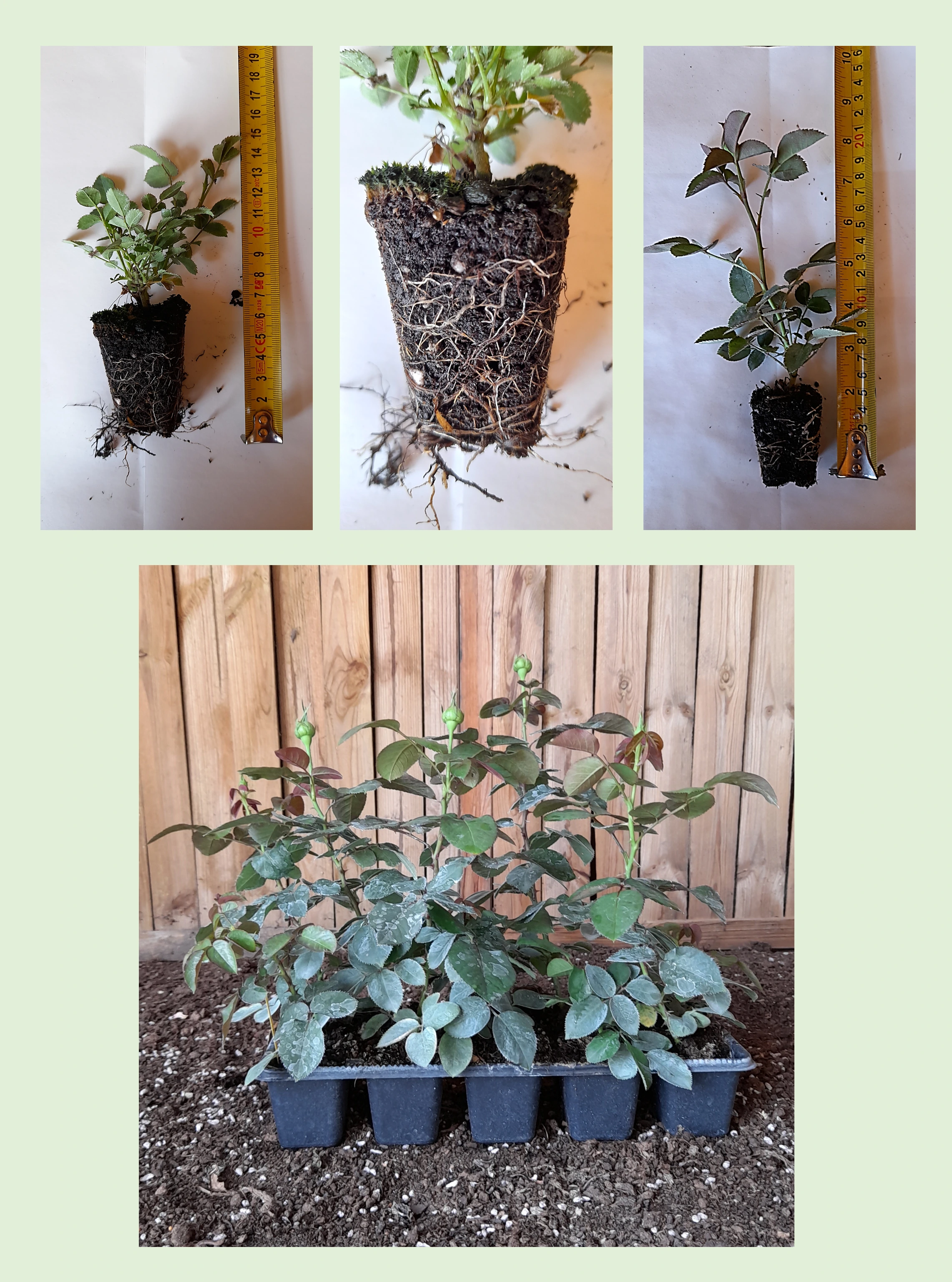
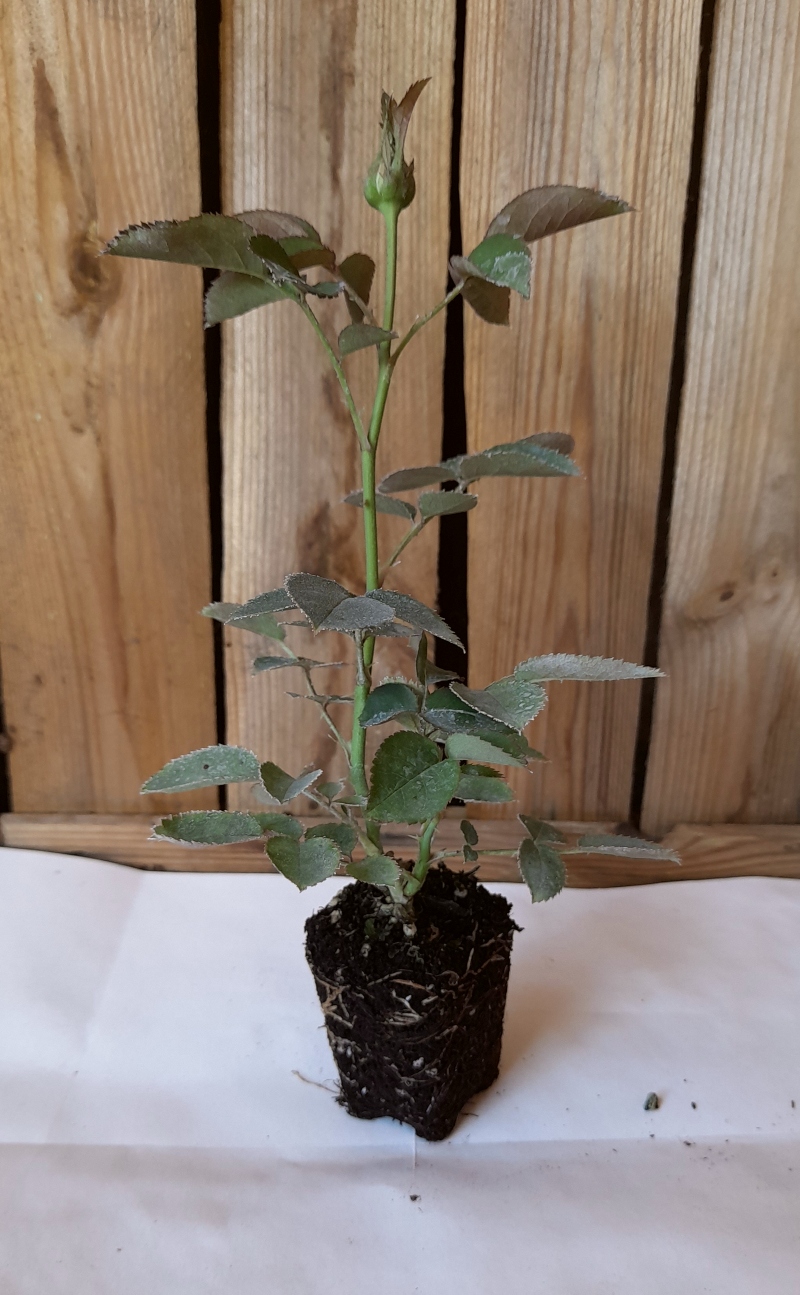
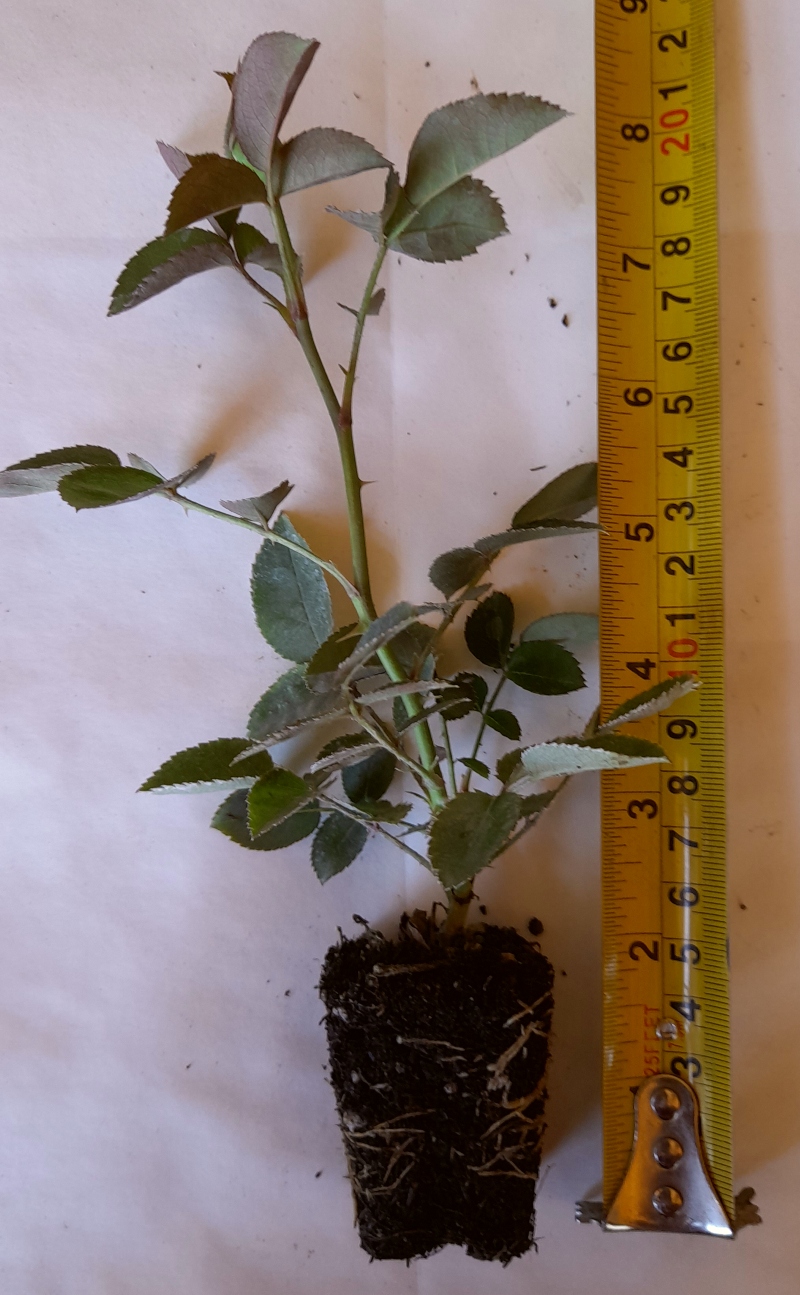
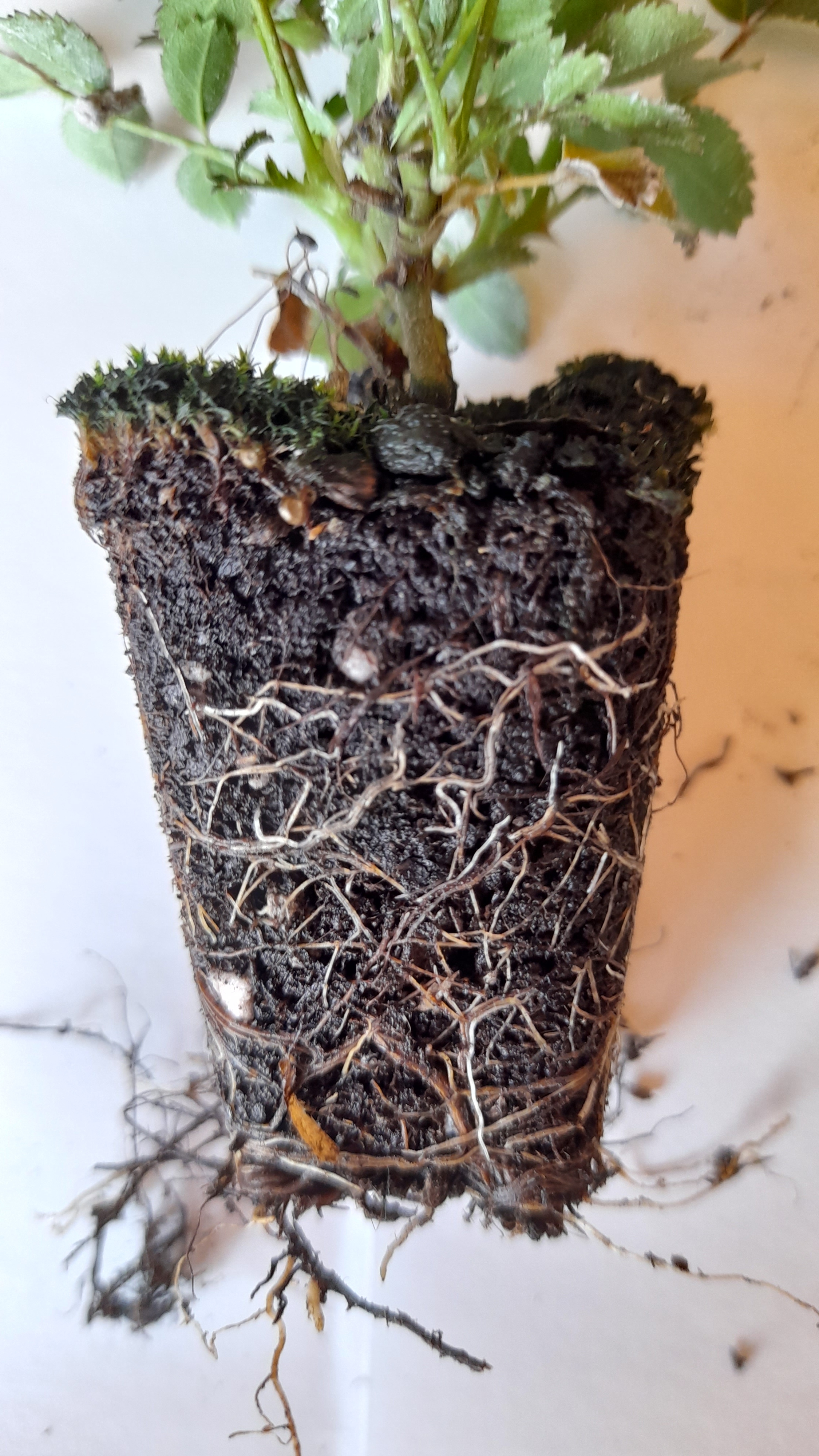
PharmaRosa® NEONATAL own-rooted rose propagation material in a plug, with a root system penetrating the plug (semi-finished product / semi-finished rose). PharmaRosa® NEONATAL rose propagation material size: 3–6‑month‑old, own-rooted cutting with a uniform developmental stage. PharmaRosa® NEONATAL rose propagation material root system: plug densely penetrated by well-developed white roots (root system detail). PharmaRosa® NEONATAL tray stock: own-rooted rose propagation material in trays, uniform developmental stage (10 pcs/tray).

Captions (from left to right): Semi-finished product (NEONATAL own-rooted rose propagation material in a plug with a fully developed root system) • Size demonstration (3–6‑month‑old, uniform cutting) • Root system detail (plug penetrated by the root system) • Tray stock (10 pcs/tray, uniform developmental stage)

pharmarosaneonatal.atpharmarosaneonatal.co.ukpharmarosaneonatal.hupharmarosaneonatal.czpharmarosaneonatal.depharmarosaneonatal.ropharmarosaneonatal.sipharmarosaneonatal.skpharmarosaneonatal.itpharmarosaneonatal.frpharmarosaneonatal.nlpharmarosaneonatal.plpharmarosaneonatal.lupharmarosaneonatal.ptpharmarosaneonatal.espharmarosaneonatal.ltpharmarosaneonatal.sepharmarosaneonatal.lvpharmarosaneonatal.eepharmarosaneonatal.fi

Which product type is right for you?

Pages for private customers
Garden roses for the family garden, with minimal care  → ORIGINAL®
Premium garden roses – instant impact, a truly showpiece garden  → EXTRA®
Pages for professionals and private customers
Roses for public spaces – large areas, sustainable maintenance  → NATURAL®
Roses for projects – hedge and row planting, fast implementation  → RAPID®
For professional partners only
Production – propagation material for garden roses, wholesale  → NEONATAL®

Company details

PharmaRosa Ltd.
Company registration number: 01-09-717479
VAT number: 13075314-2-43
Plant health registration no.: HU130721
Bank account (IBAN):
HU85117631891388688400000000
BIC (SWIFT): OTPVHUHB
Bank name: OTP Bank Nyrt.